Request Demo
What is Calfactant used for?
14 June 2024
Calfactant is a crucial medical advancement in the realm of neonatal care, specifically designed to address respiratory distress syndrome (RDS) in premature infants. Known under the drug trade name "Infasurf," Calfactant represents a synthetic surfactant that mimics the natural surfactant produced in the lungs. The primary target of Calfactant is the alveoli in the lungs, where it functions to reduce surface tension and prevent alveolar collapse, thus facilitating easier breathing.
Developed by ONY Biotech, Calfactant has undergone extensive research and development to ensure its safety and efficacy. The drug belongs to a class known as lung surfactants and is explicitly indicated for the treatment and prevention of RDS in premature infants. Given the critical nature of this condition, which is characterized by the underdevelopment of the lungs and insufficient production of natural surfactants, Calfactant has become an essential tool in neonatal intensive care units (NICUs).
The research progress surrounding Calfactant has been promising. Clinical trials have demonstrated significant improvements in the survival rates and respiratory function of preterm infants treated with this synthetic surfactant. The ongoing research aims to optimize dosage and administration techniques to maximize benefits and minimize potential risks.
Calfactant Mechanism of Action
The mechanism of action of Calfactant revolves around its role as a surfactant replacement therapy. In the lungs, surfactants are crucial for reducing surface tension within the alveoli, the tiny air sacs where gas exchange occurs. In a healthy, mature lung, natural surfactants produced by type II alveolar cells coat the inner lining of the alveoli, enabling them to expand and contract efficiently during breathing.
In premature infants, the production of natural surfactants is often insufficient, leading to a condition known as respiratory distress syndrome. The lack of surfactants results in high surface tension within the alveoli, causing them to collapse and making it extremely difficult for the infant to breathe. This is where Calfactant steps in.
Calfactant is composed of a mixture of phospholipids and surfactant-associated proteins, which work together to replicate the function of natural surfactants. When administered, Calfactant spreads across the alveolar surface, reducing surface tension and preventing the alveoli from collapsing. This action facilitates easier breathing, improves oxygenation, and stabilizes the respiratory function in premature infants.
How to Use Calfactant
The administration of Calfactant is a carefully controlled process, typically performed by skilled healthcare professionals in a NICU setting. Calfactant is delivered directly to the lungs through an endotracheal tube, a procedure known as intratracheal administration. This method ensures that the surfactant reaches the alveoli where it is needed most.
The dosing regimen for Calfactant is generally weight-based, with adjustments made according to the infant's specific condition and response to treatment. The initial dose is usually administered as soon as possible after birth, often within the first few hours. Additional doses may be given at regular intervals, depending on the severity of the RDS and the infant's ongoing needs.
The onset of action for Calfactant is relatively rapid. Once administered, the surfactant begins to work almost immediately to reduce surface tension and improve alveolar function. Healthcare providers closely monitor the infant's respiratory status and adjust the treatment plan as necessary to ensure the best possible outcomes.
What is Calfactant Side Effects
Like any medical intervention, Calfactant comes with potential side effects and contraindications that healthcare providers must consider. While the benefits of Calfactant in treating RDS are substantial, it is essential to be aware of the possible adverse effects to ensure optimal patient care.
Some of the common side effects associated with Calfactant administration include:
1. **Oxygen Desaturation:** During the administration process, there is a risk of temporary oxygen desaturation, where the infant's blood oxygen levels may drop. This is usually monitored closely, and appropriate measures are taken to stabilize oxygen levels.
2. **Bradycardia:** Calfactant administration can sometimes lead to a temporary decrease in heart rate, known as bradycardia. Healthcare providers are vigilant in monitoring heart rate and can intervene if necessary.
3. **Pulmonary Hemorrhage:** Although rare, there is a risk of pulmonary hemorrhage, or bleeding in the lungs, associated with surfactant therapy. This serious complication requires immediate medical attention.
4. **Reflux of the Surfactant:** Occasionally, some of the administered surfactant may be refluxed back into the endotracheal tube, reducing its effectiveness. Careful attention to the administration technique can help minimize this risk.
Contraindications for Calfactant use include situations where the infant has a known hypersensitivity to any of the components of the surfactant. Additionally, Calfactant is not recommended for infants with congenital diaphragmatic hernia or other structural abnormalities of the lungs that may interfere with its effectiveness.
What Other Drugs Will Affect Calfactant
The interactions between Calfactant and other medications are an important consideration in neonatal care. While Calfactant itself is a specialized therapy with a specific target, it can be influenced by other drugs administered concurrently.
Some medications that may affect the efficacy or safety of Calfactant include:
1. **Diuretics:** Medications that promote urine production, such as diuretics, can potentially alter fluid balance and affect lung function. Careful monitoring is essential when diuretics are used alongside Calfactant to ensure optimal respiratory outcomes.
2. **Corticosteroids:** Corticosteroids are sometimes used to enhance lung maturity in preterm infants. While they can be beneficial, they may also influence the response to surfactant therapy. Coordination between these treatments is necessary to achieve the best results.
3. **Antibiotics:** In cases of infection, antibiotics are commonly administered to premature infants. While generally safe, it is crucial to monitor for any potential interactions or adverse effects when antibiotics are used in conjunction with Calfactant.
4. **Bronchodilators:** Medications that help open the airways, known as bronchodilators, may be used in certain situations. However, their impact on surfactant therapy should be carefully considered to avoid any negative interactions.
In conclusion, Calfactant is a life-saving intervention in the treatment of respiratory distress syndrome in premature infants. Its mechanism of action, administration methods, potential side effects, and interactions with other drugs all play a vital role in ensuring its effective and safe use. As research continues to advance, Calfactant remains a cornerstone of neonatal care, offering hope and improved outcomes for the most vulnerable patients.
Developed by ONY Biotech, Calfactant has undergone extensive research and development to ensure its safety and efficacy. The drug belongs to a class known as lung surfactants and is explicitly indicated for the treatment and prevention of RDS in premature infants. Given the critical nature of this condition, which is characterized by the underdevelopment of the lungs and insufficient production of natural surfactants, Calfactant has become an essential tool in neonatal intensive care units (NICUs).
The research progress surrounding Calfactant has been promising. Clinical trials have demonstrated significant improvements in the survival rates and respiratory function of preterm infants treated with this synthetic surfactant. The ongoing research aims to optimize dosage and administration techniques to maximize benefits and minimize potential risks.
Calfactant Mechanism of Action
The mechanism of action of Calfactant revolves around its role as a surfactant replacement therapy. In the lungs, surfactants are crucial for reducing surface tension within the alveoli, the tiny air sacs where gas exchange occurs. In a healthy, mature lung, natural surfactants produced by type II alveolar cells coat the inner lining of the alveoli, enabling them to expand and contract efficiently during breathing.
In premature infants, the production of natural surfactants is often insufficient, leading to a condition known as respiratory distress syndrome. The lack of surfactants results in high surface tension within the alveoli, causing them to collapse and making it extremely difficult for the infant to breathe. This is where Calfactant steps in.
Calfactant is composed of a mixture of phospholipids and surfactant-associated proteins, which work together to replicate the function of natural surfactants. When administered, Calfactant spreads across the alveolar surface, reducing surface tension and preventing the alveoli from collapsing. This action facilitates easier breathing, improves oxygenation, and stabilizes the respiratory function in premature infants.
How to Use Calfactant
The administration of Calfactant is a carefully controlled process, typically performed by skilled healthcare professionals in a NICU setting. Calfactant is delivered directly to the lungs through an endotracheal tube, a procedure known as intratracheal administration. This method ensures that the surfactant reaches the alveoli where it is needed most.
The dosing regimen for Calfactant is generally weight-based, with adjustments made according to the infant's specific condition and response to treatment. The initial dose is usually administered as soon as possible after birth, often within the first few hours. Additional doses may be given at regular intervals, depending on the severity of the RDS and the infant's ongoing needs.
The onset of action for Calfactant is relatively rapid. Once administered, the surfactant begins to work almost immediately to reduce surface tension and improve alveolar function. Healthcare providers closely monitor the infant's respiratory status and adjust the treatment plan as necessary to ensure the best possible outcomes.
What is Calfactant Side Effects
Like any medical intervention, Calfactant comes with potential side effects and contraindications that healthcare providers must consider. While the benefits of Calfactant in treating RDS are substantial, it is essential to be aware of the possible adverse effects to ensure optimal patient care.
Some of the common side effects associated with Calfactant administration include:
1. **Oxygen Desaturation:** During the administration process, there is a risk of temporary oxygen desaturation, where the infant's blood oxygen levels may drop. This is usually monitored closely, and appropriate measures are taken to stabilize oxygen levels.
2. **Bradycardia:** Calfactant administration can sometimes lead to a temporary decrease in heart rate, known as bradycardia. Healthcare providers are vigilant in monitoring heart rate and can intervene if necessary.
3. **Pulmonary Hemorrhage:** Although rare, there is a risk of pulmonary hemorrhage, or bleeding in the lungs, associated with surfactant therapy. This serious complication requires immediate medical attention.
4. **Reflux of the Surfactant:** Occasionally, some of the administered surfactant may be refluxed back into the endotracheal tube, reducing its effectiveness. Careful attention to the administration technique can help minimize this risk.
Contraindications for Calfactant use include situations where the infant has a known hypersensitivity to any of the components of the surfactant. Additionally, Calfactant is not recommended for infants with congenital diaphragmatic hernia or other structural abnormalities of the lungs that may interfere with its effectiveness.
What Other Drugs Will Affect Calfactant
The interactions between Calfactant and other medications are an important consideration in neonatal care. While Calfactant itself is a specialized therapy with a specific target, it can be influenced by other drugs administered concurrently.
Some medications that may affect the efficacy or safety of Calfactant include:
1. **Diuretics:** Medications that promote urine production, such as diuretics, can potentially alter fluid balance and affect lung function. Careful monitoring is essential when diuretics are used alongside Calfactant to ensure optimal respiratory outcomes.
2. **Corticosteroids:** Corticosteroids are sometimes used to enhance lung maturity in preterm infants. While they can be beneficial, they may also influence the response to surfactant therapy. Coordination between these treatments is necessary to achieve the best results.
3. **Antibiotics:** In cases of infection, antibiotics are commonly administered to premature infants. While generally safe, it is crucial to monitor for any potential interactions or adverse effects when antibiotics are used in conjunction with Calfactant.
4. **Bronchodilators:** Medications that help open the airways, known as bronchodilators, may be used in certain situations. However, their impact on surfactant therapy should be carefully considered to avoid any negative interactions.
In conclusion, Calfactant is a life-saving intervention in the treatment of respiratory distress syndrome in premature infants. Its mechanism of action, administration methods, potential side effects, and interactions with other drugs all play a vital role in ensuring its effective and safe use. As research continues to advance, Calfactant remains a cornerstone of neonatal care, offering hope and improved outcomes for the most vulnerable patients.
How to obtain the latest development progress of all drugs?
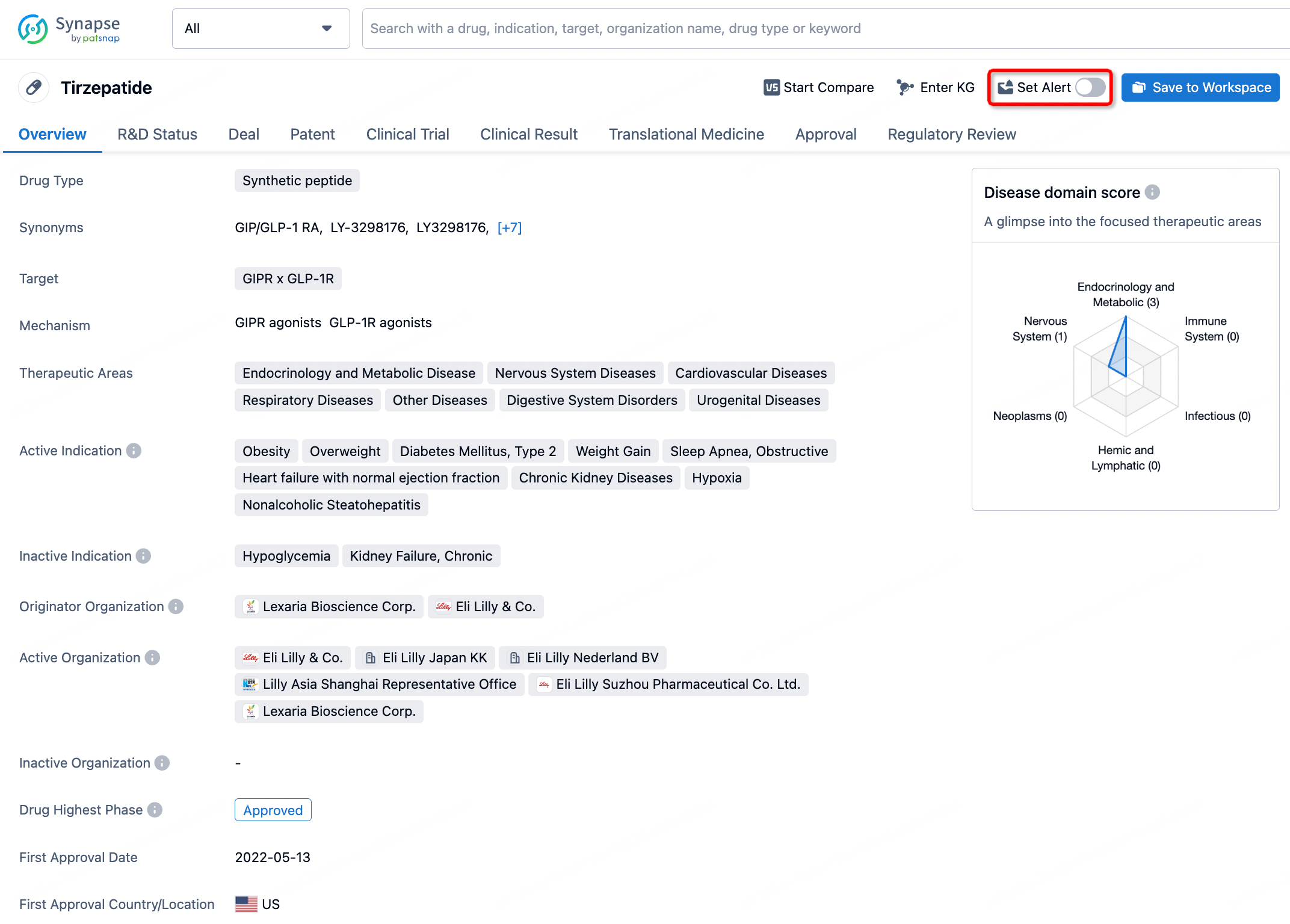
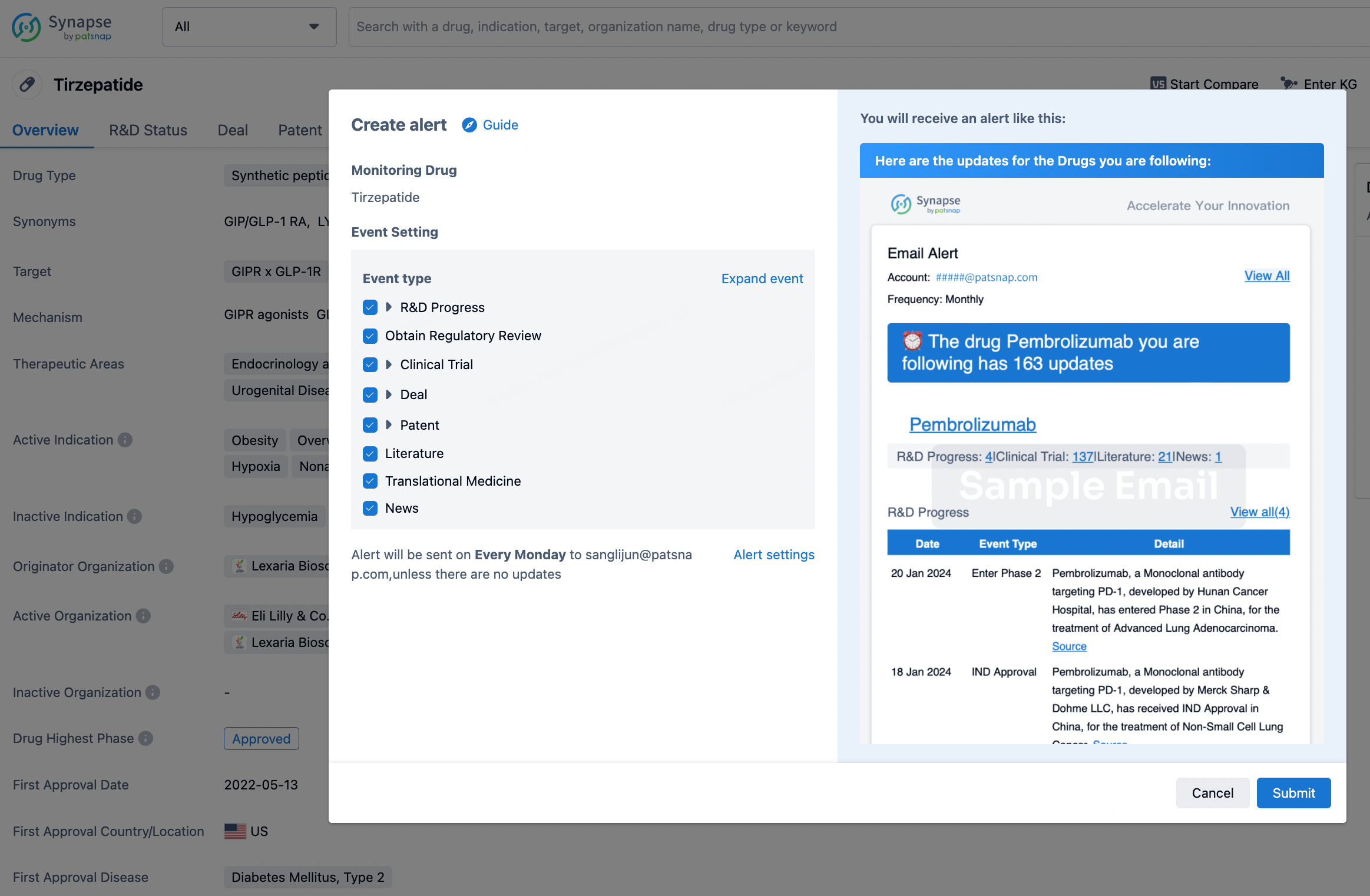
In the Synapse database, you can stay updated on the latest research and development advances of all drugs. This service is accessible anytime and anywhere, with updates available daily or weekly. Use the "Set Alert" function to stay informed. Click on the image below to embark on a brand new journey of drug discovery!
AI Agents Built for Biopharma Breakthroughs
Accelerate discovery. Empower decisions. Transform outcomes.
Get started for free today!
Accelerate Strategic R&D decision making with Synapse, PatSnap’s AI-powered Connected Innovation Intelligence Platform Built for Life Sciences Professionals.
Start your data trial now!
Synapse data is also accessible to external entities via APIs or data packages. Empower better decisions with the latest in pharmaceutical intelligence.