Request Demo
What is CDRI/80-574 used for?
28 June 2024
CDRI/80-574 is an emerging pharmaceutical candidate that has garnered significant attention in the realm of medical research. Developed by the Central Drug Research Institute (CDRI) in Lucknow, India, this compound is being investigated for its potential therapeutic effects across a variety of health conditions. As a novel drug, it falls under the category of small molecule inhibitors, specifically designed to target and modulate specific biological pathways implicated in disease processes. Currently, CDRI/80-574 is primarily being explored for its efficacy in the treatment of various chronic inflammatory conditions, though its versatile mechanism of action suggests it could be applied to other indications as well. Research on CDRI/80-574 is still in the preclinical phase, but the early results are promising, showcasing its potential to become a revolutionary treatment option.
CDRI/80-574 operates through a sophisticated mechanism of action that sets it apart from many existing treatments. It primarily functions by inhibiting specific enzymes that play a critical role in the inflammatory pathway. This action is achieved by binding to the active sites of these enzymes, thereby preventing the biochemical reactions that lead to inflammation. One of the key enzymes targeted by CDRI/80-574 is the cyclooxygenase (COX) enzyme, which is responsible for the conversion of arachidonic acid into pro-inflammatory prostaglandins. By inhibiting COX enzymes, CDRI/80-574 effectively reduces the production of these pro-inflammatory molecules, thereby mitigating inflammation. In addition to COX inhibition, CDRI/80-574 has been shown to modulate other inflammatory mediators such as cytokines and chemokines, which further enhances its anti-inflammatory properties.
The primary indication of CDRI/80-574 is for the management of chronic inflammatory conditions. Inflammation is a common underlying factor in many chronic diseases, including rheumatoid arthritis, osteoarthritis, and inflammatory bowel disease, among others. By targeting the inflammatory pathways, CDRI/80-574 has the potential to provide relief for patients suffering from these debilitating conditions. In preclinical studies, CDRI/80-574 has demonstrated significant efficacy in reducing inflammation and alleviating symptoms associated with these diseases. Furthermore, its ability to modulate multiple inflammatory mediators suggests that it could offer a broader therapeutic effect compared to existing treatments that typically target a single component of the inflammatory pathway.
In addition to its primary indication for inflammatory conditions, CDRI/80-574 is also being investigated for its potential application in other diseases where inflammation plays a secondary role. For instance, there is growing evidence to suggest that chronic inflammation is a contributing factor in the development and progression of various cancers. As such, CDRI/80-574 could potentially be explored as an adjunct therapy in oncology to help manage inflammation-associated cancer progression. Similarly, chronic inflammation has been implicated in neurodegenerative diseases such as Alzheimer's and Parkinson's disease. By mitigating inflammation, CDRI/80-574 could potentially offer neuroprotective benefits and slow the progression of these debilitating conditions.
The ongoing research on CDRI/80-574 is still in its early stages, but the preliminary results are encouraging. The compound has shown a favorable safety profile in preclinical studies, with no significant adverse effects reported at therapeutic doses. This is a critical factor, as the safety and tolerability of a new drug are essential for its successful translation from bench to bedside. Moving forward, the next steps in the research process will involve further preclinical studies to better understand the pharmacokinetics and pharmacodynamics of CDRI/80-574, followed by clinical trials to evaluate its efficacy and safety in human subjects.
In conclusion, CDRI/80-574 represents a promising new candidate in the field of anti-inflammatory therapeutics. Its unique mechanism of action, targeting multiple components of the inflammatory pathway, sets it apart from existing treatments and offers the potential for broader therapeutic effects. While more research is needed to fully understand its potential, the preliminary findings suggest that CDRI/80-574 could become a valuable tool in the management of chronic inflammatory conditions and potentially other diseases where inflammation plays a critical role. As research progresses, the medical community eagerly awaits further developments on this exciting new compound.
CDRI/80-574 operates through a sophisticated mechanism of action that sets it apart from many existing treatments. It primarily functions by inhibiting specific enzymes that play a critical role in the inflammatory pathway. This action is achieved by binding to the active sites of these enzymes, thereby preventing the biochemical reactions that lead to inflammation. One of the key enzymes targeted by CDRI/80-574 is the cyclooxygenase (COX) enzyme, which is responsible for the conversion of arachidonic acid into pro-inflammatory prostaglandins. By inhibiting COX enzymes, CDRI/80-574 effectively reduces the production of these pro-inflammatory molecules, thereby mitigating inflammation. In addition to COX inhibition, CDRI/80-574 has been shown to modulate other inflammatory mediators such as cytokines and chemokines, which further enhances its anti-inflammatory properties.
The primary indication of CDRI/80-574 is for the management of chronic inflammatory conditions. Inflammation is a common underlying factor in many chronic diseases, including rheumatoid arthritis, osteoarthritis, and inflammatory bowel disease, among others. By targeting the inflammatory pathways, CDRI/80-574 has the potential to provide relief for patients suffering from these debilitating conditions. In preclinical studies, CDRI/80-574 has demonstrated significant efficacy in reducing inflammation and alleviating symptoms associated with these diseases. Furthermore, its ability to modulate multiple inflammatory mediators suggests that it could offer a broader therapeutic effect compared to existing treatments that typically target a single component of the inflammatory pathway.
In addition to its primary indication for inflammatory conditions, CDRI/80-574 is also being investigated for its potential application in other diseases where inflammation plays a secondary role. For instance, there is growing evidence to suggest that chronic inflammation is a contributing factor in the development and progression of various cancers. As such, CDRI/80-574 could potentially be explored as an adjunct therapy in oncology to help manage inflammation-associated cancer progression. Similarly, chronic inflammation has been implicated in neurodegenerative diseases such as Alzheimer's and Parkinson's disease. By mitigating inflammation, CDRI/80-574 could potentially offer neuroprotective benefits and slow the progression of these debilitating conditions.
The ongoing research on CDRI/80-574 is still in its early stages, but the preliminary results are encouraging. The compound has shown a favorable safety profile in preclinical studies, with no significant adverse effects reported at therapeutic doses. This is a critical factor, as the safety and tolerability of a new drug are essential for its successful translation from bench to bedside. Moving forward, the next steps in the research process will involve further preclinical studies to better understand the pharmacokinetics and pharmacodynamics of CDRI/80-574, followed by clinical trials to evaluate its efficacy and safety in human subjects.
In conclusion, CDRI/80-574 represents a promising new candidate in the field of anti-inflammatory therapeutics. Its unique mechanism of action, targeting multiple components of the inflammatory pathway, sets it apart from existing treatments and offers the potential for broader therapeutic effects. While more research is needed to fully understand its potential, the preliminary findings suggest that CDRI/80-574 could become a valuable tool in the management of chronic inflammatory conditions and potentially other diseases where inflammation plays a critical role. As research progresses, the medical community eagerly awaits further developments on this exciting new compound.
How to obtain the latest development progress of all drugs?
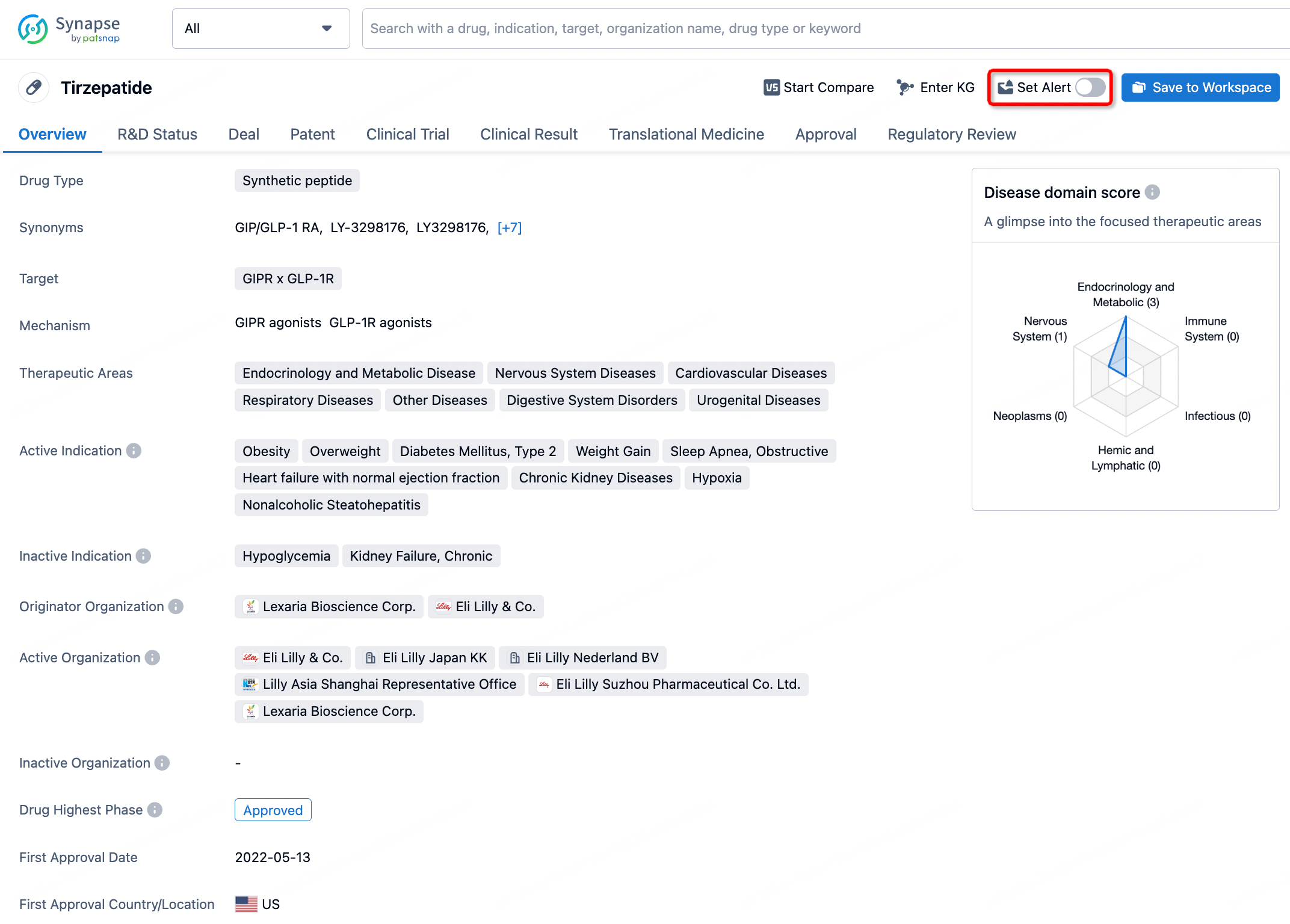
In the Synapse database, you can stay updated on the latest research and development advances of all drugs. This service is accessible anytime and anywhere, with updates available daily or weekly. Use the "Set Alert" function to stay informed. Click on the image below to embark on a brand new journey of drug discovery!


AI Agents Built for Biopharma Breakthroughs
Accelerate discovery. Empower decisions. Transform outcomes.
Get started for free today!
Accelerate Strategic R&D decision making with Synapse, PatSnap’s AI-powered Connected Innovation Intelligence Platform Built for Life Sciences Professionals.
Start your data trial now!
Synapse data is also accessible to external entities via APIs or data packages. Empower better decisions with the latest in pharmaceutical intelligence.