Request Demo
What is CHOLINE C-11 used for?
14 June 2024
Introduction to CHOLINE C-11
CHOLINE C-11, also known by its trade name [^11C]Choline, is a PET (Positron Emission Tomography) radiotracer used primarily in the field of nuclear medicine. This compound has garnered significant attention in clinical research for its ability to provide detailed images of cellular activity, particularly in the detection and staging of certain cancers such as prostate cancer. Researchers and clinicians working in institutions focused on oncology and diagnostic imaging have been keenly studying CHOLINE C-11 for its potential to improve cancer diagnosis and treatment planning.
CHOLINE C-11 is classified as an imaging agent and not a therapeutic drug. Its primary target is the choline transport mechanisms and choline kinase within cells, which are often upregulated in cancerous tissues. Developed and primarily researched in leading medical and academic centers such as Mayo Clinic, CHOLINE C-11 has seen promising advancements. The drug has been approved by the FDA for specific usage in prostate cancer imaging, reflecting its utility and the progress made in its clinical application.
CHOLINE C-11 Mechanism of Action
The mechanism of action for CHOLINE C-11 hinges on its role as a radiolabeled choline analog. Choline is a vital nutrient that plays a key role in the synthesis of phosphatidylcholine, a major component of cell membranes. Cancer cells typically exhibit increased choline uptake due to their heightened need for membrane synthesis and cell proliferation, making choline an excellent marker for identifying malignancies.
When CHOLINE C-11 is administered to a patient, it is absorbed and metabolized in a manner similar to natural choline. However, because it is radiolabeled with the isotope carbon-11, it emits positrons as it decays. These positrons interact with electrons in the body, producing gamma photons which are detectable by PET scanners. The PET scanner then constructs detailed images showing the distribution and concentration of CHOLINE C-11 in the body, highlighting areas of increased uptake that often correspond to cancerous tissues. This allows for precise localization and characterization of tumors, significantly aiding in both diagnosis and treatment planning.
How to Use CHOLINE C-11
The administration of CHOLINE C-11 is a specialized procedure that must be conducted in a clinical setting equipped with PET imaging capabilities. The drug is administered intravenously, typically as a single bolus injection. The onset of its imaging capability is rapid, with PET imaging commonly initiated shortly after the injection—usually within minutes. This rapid uptake and imaging capability is crucial for obtaining clear and accurate diagnostic images.
Patients are generally advised to fast for several hours before the procedure to enhance image quality and reduce background noise. During the imaging process, patients are positioned on the PET scanner table, and the scan itself typically takes about 20-30 minutes, although this can vary depending on the specific clinical scenario and area being imaged.
Given that CHOLINE C-11 involves exposure to ionizing radiation, its use is carefully regulated and justified by the potential diagnostic benefits. The entire procedure, from injection to imaging, is performed under the supervision of a nuclear medicine specialist who ensures both efficacy and safety.
What is CHOLINE C-11 Side Effects
CHOLINE C-11 is generally well-tolerated, with most patients experiencing minimal to no side effects. However, as with any drug, particularly those involving radiolabeling, there are potential risks and side effects that need to be considered.
The most common side effects reported are typically mild and may include localized pain or discomfort at the injection site, a sensation of warmth as the tracer circulates, and, in rare cases, allergic reactions. These reactions might manifest as itching, rash, or more severe symptoms like difficulty breathing, although such instances are exceedingly rare.
Contraindications for the use of CHOLINE C-11 are primarily centered around its radiolabeled nature. Pregnant or breastfeeding women are generally advised against undergoing CHOLINE C-11 PET imaging due to the potential risk of radiation exposure to the fetus or infant. Additionally, patients with known hypersensitivity to any component of the CHOLINE C-11 preparation should avoid its use.
While the radiation dose from CHOLINE C-11 is relatively low and considered safe for most patients, cumulative radiation exposure from multiple imaging studies can be a concern. Therefore, the decision to use CHOLINE C-11 must be carefully weighed against the clinical necessity and potential diagnostic benefits it offers.
What Other Drugs Will Affect CHOLINE C-11
As an imaging agent, CHOLINE C-11 does not have significant interactions with most medications. However, certain factors and concurrent medications can influence the uptake and distribution of the tracer, potentially affecting the quality and accuracy of the PET images.
One key consideration is any medication or substance that alters choline metabolism or cell membrane synthesis. For instance, drugs that modulate choline uptake or choline kinase activity might influence the distribution of CHOLINE C-11. However, specific drug-drug interactions are not well-documented, and more research is needed to fully understand how different medications might impact the imaging results.
Patients are usually advised to provide a comprehensive list of their current medications to their healthcare provider before undergoing a CHOLINE C-11 PET scan. This includes over-the-counter medications, supplements, and herbal products. The nuclear medicine team can then assess whether any of these might interfere with the imaging process and provide appropriate guidance.
In conclusion, CHOLINE C-11 represents a significant advancement in the field of diagnostic imaging, particularly for cancer detection and staging. Its ability to highlight areas of increased cellular activity provides invaluable information for clinicians, aiding in accurate diagnosis and effective treatment planning. While generally safe and well-tolerated, careful consideration of patient-specific factors and potential interactions is essential to maximize the benefits of CHOLINE C-11 PET imaging.
CHOLINE C-11, also known by its trade name [^11C]Choline, is a PET (Positron Emission Tomography) radiotracer used primarily in the field of nuclear medicine. This compound has garnered significant attention in clinical research for its ability to provide detailed images of cellular activity, particularly in the detection and staging of certain cancers such as prostate cancer. Researchers and clinicians working in institutions focused on oncology and diagnostic imaging have been keenly studying CHOLINE C-11 for its potential to improve cancer diagnosis and treatment planning.
CHOLINE C-11 is classified as an imaging agent and not a therapeutic drug. Its primary target is the choline transport mechanisms and choline kinase within cells, which are often upregulated in cancerous tissues. Developed and primarily researched in leading medical and academic centers such as Mayo Clinic, CHOLINE C-11 has seen promising advancements. The drug has been approved by the FDA for specific usage in prostate cancer imaging, reflecting its utility and the progress made in its clinical application.
CHOLINE C-11 Mechanism of Action
The mechanism of action for CHOLINE C-11 hinges on its role as a radiolabeled choline analog. Choline is a vital nutrient that plays a key role in the synthesis of phosphatidylcholine, a major component of cell membranes. Cancer cells typically exhibit increased choline uptake due to their heightened need for membrane synthesis and cell proliferation, making choline an excellent marker for identifying malignancies.
When CHOLINE C-11 is administered to a patient, it is absorbed and metabolized in a manner similar to natural choline. However, because it is radiolabeled with the isotope carbon-11, it emits positrons as it decays. These positrons interact with electrons in the body, producing gamma photons which are detectable by PET scanners. The PET scanner then constructs detailed images showing the distribution and concentration of CHOLINE C-11 in the body, highlighting areas of increased uptake that often correspond to cancerous tissues. This allows for precise localization and characterization of tumors, significantly aiding in both diagnosis and treatment planning.
How to Use CHOLINE C-11
The administration of CHOLINE C-11 is a specialized procedure that must be conducted in a clinical setting equipped with PET imaging capabilities. The drug is administered intravenously, typically as a single bolus injection. The onset of its imaging capability is rapid, with PET imaging commonly initiated shortly after the injection—usually within minutes. This rapid uptake and imaging capability is crucial for obtaining clear and accurate diagnostic images.
Patients are generally advised to fast for several hours before the procedure to enhance image quality and reduce background noise. During the imaging process, patients are positioned on the PET scanner table, and the scan itself typically takes about 20-30 minutes, although this can vary depending on the specific clinical scenario and area being imaged.
Given that CHOLINE C-11 involves exposure to ionizing radiation, its use is carefully regulated and justified by the potential diagnostic benefits. The entire procedure, from injection to imaging, is performed under the supervision of a nuclear medicine specialist who ensures both efficacy and safety.
What is CHOLINE C-11 Side Effects
CHOLINE C-11 is generally well-tolerated, with most patients experiencing minimal to no side effects. However, as with any drug, particularly those involving radiolabeling, there are potential risks and side effects that need to be considered.
The most common side effects reported are typically mild and may include localized pain or discomfort at the injection site, a sensation of warmth as the tracer circulates, and, in rare cases, allergic reactions. These reactions might manifest as itching, rash, or more severe symptoms like difficulty breathing, although such instances are exceedingly rare.
Contraindications for the use of CHOLINE C-11 are primarily centered around its radiolabeled nature. Pregnant or breastfeeding women are generally advised against undergoing CHOLINE C-11 PET imaging due to the potential risk of radiation exposure to the fetus or infant. Additionally, patients with known hypersensitivity to any component of the CHOLINE C-11 preparation should avoid its use.
While the radiation dose from CHOLINE C-11 is relatively low and considered safe for most patients, cumulative radiation exposure from multiple imaging studies can be a concern. Therefore, the decision to use CHOLINE C-11 must be carefully weighed against the clinical necessity and potential diagnostic benefits it offers.
What Other Drugs Will Affect CHOLINE C-11
As an imaging agent, CHOLINE C-11 does not have significant interactions with most medications. However, certain factors and concurrent medications can influence the uptake and distribution of the tracer, potentially affecting the quality and accuracy of the PET images.
One key consideration is any medication or substance that alters choline metabolism or cell membrane synthesis. For instance, drugs that modulate choline uptake or choline kinase activity might influence the distribution of CHOLINE C-11. However, specific drug-drug interactions are not well-documented, and more research is needed to fully understand how different medications might impact the imaging results.
Patients are usually advised to provide a comprehensive list of their current medications to their healthcare provider before undergoing a CHOLINE C-11 PET scan. This includes over-the-counter medications, supplements, and herbal products. The nuclear medicine team can then assess whether any of these might interfere with the imaging process and provide appropriate guidance.
In conclusion, CHOLINE C-11 represents a significant advancement in the field of diagnostic imaging, particularly for cancer detection and staging. Its ability to highlight areas of increased cellular activity provides invaluable information for clinicians, aiding in accurate diagnosis and effective treatment planning. While generally safe and well-tolerated, careful consideration of patient-specific factors and potential interactions is essential to maximize the benefits of CHOLINE C-11 PET imaging.
How to obtain the latest development progress of all drugs?
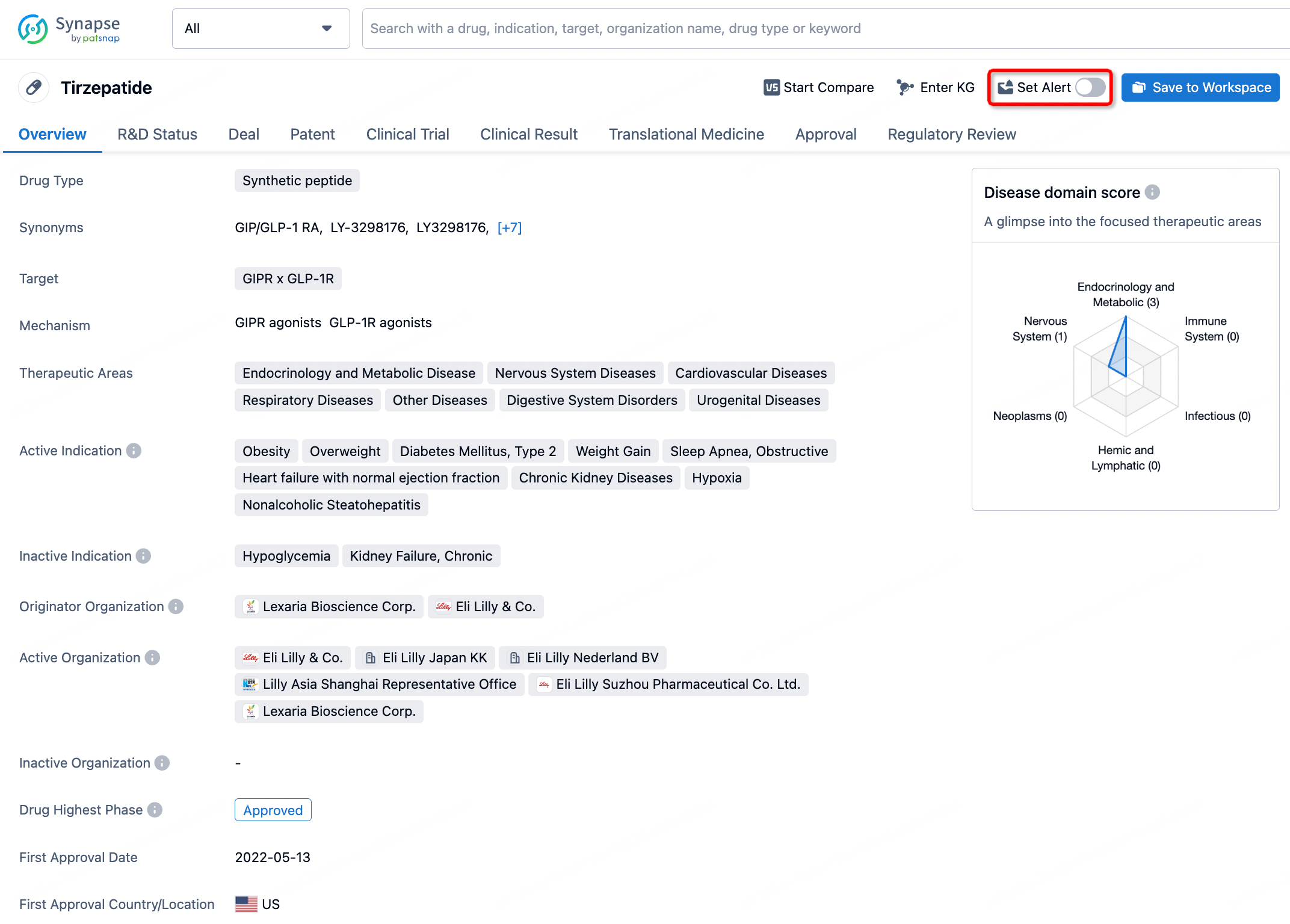
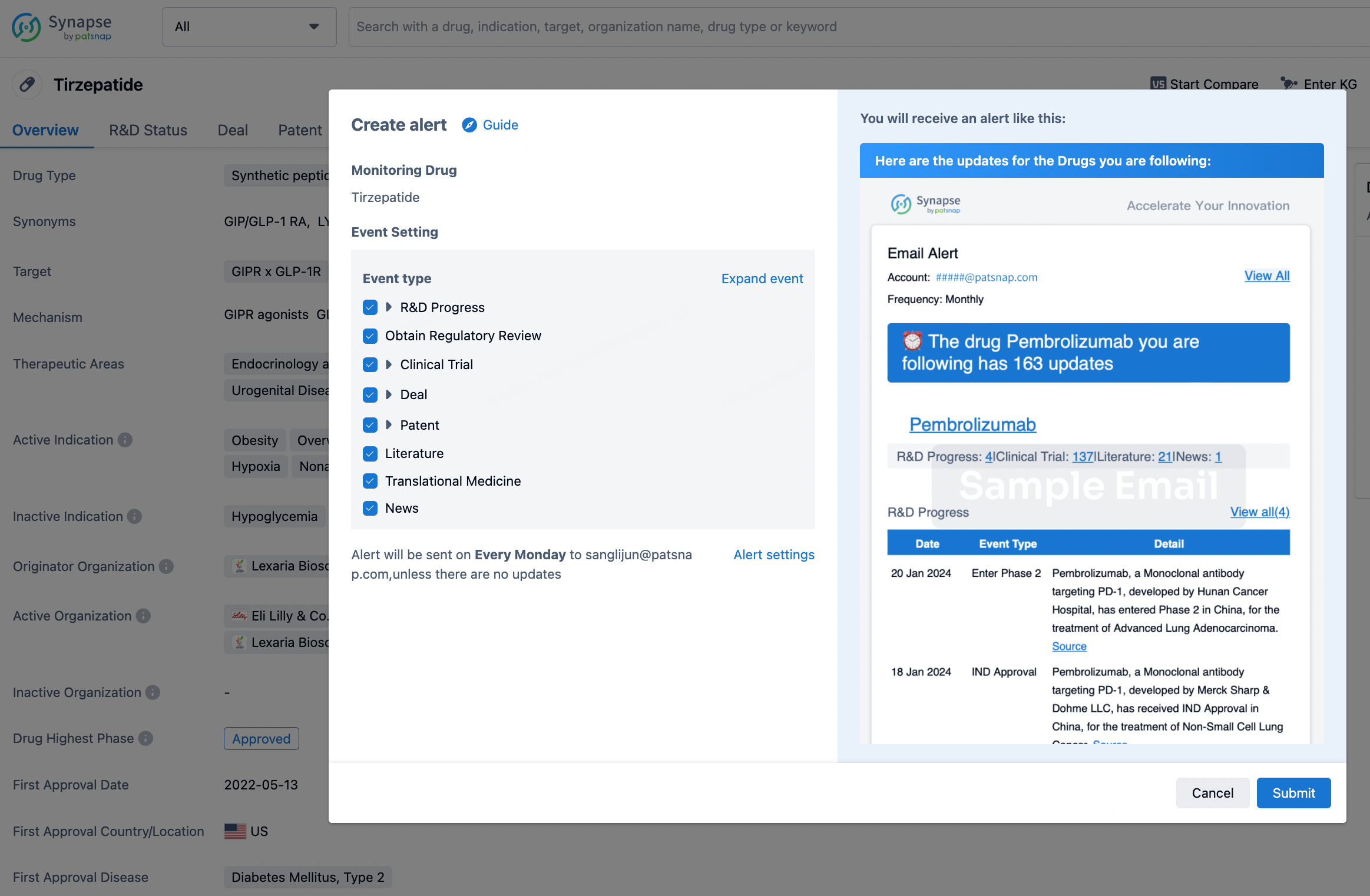
In the Synapse database, you can stay updated on the latest research and development advances of all drugs. This service is accessible anytime and anywhere, with updates available daily or weekly. Use the "Set Alert" function to stay informed. Click on the image below to embark on a brand new journey of drug discovery!
AI Agents Built for Biopharma Breakthroughs
Accelerate discovery. Empower decisions. Transform outcomes.
Get started for free today!
Accelerate Strategic R&D decision making with Synapse, PatSnap’s AI-powered Connected Innovation Intelligence Platform Built for Life Sciences Professionals.
Start your data trial now!
Synapse data is also accessible to external entities via APIs or data packages. Empower better decisions with the latest in pharmaceutical intelligence.