Request Demo
What is Clascoterone used for?
14 June 2024
Introduction to Clascoterone:
Clascoterone, marketed under the trade name Winlevi, represents a novel therapeutic advance in dermatology, particularly for the treatment of acne vulgaris. This topical medication has been researched and developed by Cassiopea, an Italian pharmaceutical company focused on dermatological solutions. Unlike traditional acne treatments that commonly target bacterial infection or inflammation, Clascoterone operates as an androgen receptor inhibitor, providing a unique approach to managing acne by targeting the hormonal pathways involved in its pathogenesis. The drug has successfully navigated through various phases of clinical trials, demonstrating efficacy and safety, and was approved by the U.S. Food and Drug Administration (FDA) in August 2020 for the treatment of acne in patients aged 12 years and older. The approval of Clascoterone marks a significant milestone in acne treatment, offering a new option for patients who may not respond well to other therapies.
Clascoterone Mechanism of Action:
Clascoterone’s mechanism of action sets it apart from other acne treatments. The drug functions by inhibiting the androgen receptors found in the skin. Androgens are male hormones, such as testosterone, which are present in both men and women. These hormones are known to stimulate the sebaceous glands in the skin to produce more sebum, an oily substance that can clog pores and lead to the formation of acne. By blocking androgen receptors, Clascoterone reduces the effects of these hormones on the sebaceous glands, thereby decreasing sebum production. This reduction in sebum helps in preventing the formation of acne lesions. Additionally, Clascoterone’s topical application ensures that its effects are localized to the skin, minimizing systemic exposure and potential side effects associated with hormonal treatments.
How to Use Clascoterone:
Clascoterone is administered as a topical cream, typically applied to the affected areas of the skin twice daily, once in the morning and once in the evening. It is important to follow the prescribed regimen closely to achieve optimal results. Before applying the cream, the skin should be gently cleansed and dried. A small amount of Clascoterone cream is then applied in a thin layer to the entire affected area. It is crucial to wash hands thoroughly after application to avoid unintentional transfer to other parts of the body or to other individuals. Patients usually begin to notice improvement in their acne symptoms within 4 to 8 weeks of consistent use, although it may take longer for some individuals. As with any medication, adherence to the prescribed routine is essential for obtaining the best therapeutic outcomes.
What is Clascoterone Side Effects:
While Clascoterone has been generally well-tolerated in clinical trials, it is not without potential side effects. The most commonly reported side effects include localized skin reactions such as erythema (redness), pruritus (itching), and scaling. These side effects are usually mild to moderate in severity and tend to diminish with continued use of the medication. In rare instances, patients may experience more severe skin reactions or allergic responses, which necessitate discontinuation of the treatment and consultation with a healthcare provider. Additionally, individuals with known hypersensitivity to any component of Clascoterone should avoid using the medication. It is also important to note that the safety of Clascoterone during pregnancy and breastfeeding has not been established, and its use should be discussed with a healthcare provider in these circumstances. Monitoring for side effects and communicating any adverse reactions to a healthcare professional is key to ensuring safe and effective use of Clascoterone.
What Other Drugs Will Affect Clascoterone:
Currently, there is limited information on specific drug interactions with Clascoterone. However, as with any topical medication, it is generally advisable to avoid using other topical treatments or cosmetics on the same area of skin without prior consultation with a healthcare provider. Combining multiple topical products can increase the risk of skin irritation and may interfere with the efficacy of Clascoterone. Additionally, patients should inform their healthcare provider of all prescription and over-the-counter medications, supplements, and herbal products they are using to rule out potential interactions. Due to its localized action, the likelihood of systemic drug interactions is low, but caution is always warranted when introducing a new medication into one’s treatment regimen.
In summary, Clascoterone offers a novel and effective approach to acne treatment by targeting androgen receptors and reducing sebum production. Its topical application ensures localized action with minimal systemic exposure, making it a promising option for individuals struggling with acne. Adherence to the prescribed application regimen and monitoring for potential side effects are essential for achieving the best outcomes with Clascoterone. As always, consultation with a healthcare provider is crucial for personalized medical advice and safe use of the medication.
Clascoterone, marketed under the trade name Winlevi, represents a novel therapeutic advance in dermatology, particularly for the treatment of acne vulgaris. This topical medication has been researched and developed by Cassiopea, an Italian pharmaceutical company focused on dermatological solutions. Unlike traditional acne treatments that commonly target bacterial infection or inflammation, Clascoterone operates as an androgen receptor inhibitor, providing a unique approach to managing acne by targeting the hormonal pathways involved in its pathogenesis. The drug has successfully navigated through various phases of clinical trials, demonstrating efficacy and safety, and was approved by the U.S. Food and Drug Administration (FDA) in August 2020 for the treatment of acne in patients aged 12 years and older. The approval of Clascoterone marks a significant milestone in acne treatment, offering a new option for patients who may not respond well to other therapies.
Clascoterone Mechanism of Action:
Clascoterone’s mechanism of action sets it apart from other acne treatments. The drug functions by inhibiting the androgen receptors found in the skin. Androgens are male hormones, such as testosterone, which are present in both men and women. These hormones are known to stimulate the sebaceous glands in the skin to produce more sebum, an oily substance that can clog pores and lead to the formation of acne. By blocking androgen receptors, Clascoterone reduces the effects of these hormones on the sebaceous glands, thereby decreasing sebum production. This reduction in sebum helps in preventing the formation of acne lesions. Additionally, Clascoterone’s topical application ensures that its effects are localized to the skin, minimizing systemic exposure and potential side effects associated with hormonal treatments.
How to Use Clascoterone:
Clascoterone is administered as a topical cream, typically applied to the affected areas of the skin twice daily, once in the morning and once in the evening. It is important to follow the prescribed regimen closely to achieve optimal results. Before applying the cream, the skin should be gently cleansed and dried. A small amount of Clascoterone cream is then applied in a thin layer to the entire affected area. It is crucial to wash hands thoroughly after application to avoid unintentional transfer to other parts of the body or to other individuals. Patients usually begin to notice improvement in their acne symptoms within 4 to 8 weeks of consistent use, although it may take longer for some individuals. As with any medication, adherence to the prescribed routine is essential for obtaining the best therapeutic outcomes.
What is Clascoterone Side Effects:
While Clascoterone has been generally well-tolerated in clinical trials, it is not without potential side effects. The most commonly reported side effects include localized skin reactions such as erythema (redness), pruritus (itching), and scaling. These side effects are usually mild to moderate in severity and tend to diminish with continued use of the medication. In rare instances, patients may experience more severe skin reactions or allergic responses, which necessitate discontinuation of the treatment and consultation with a healthcare provider. Additionally, individuals with known hypersensitivity to any component of Clascoterone should avoid using the medication. It is also important to note that the safety of Clascoterone during pregnancy and breastfeeding has not been established, and its use should be discussed with a healthcare provider in these circumstances. Monitoring for side effects and communicating any adverse reactions to a healthcare professional is key to ensuring safe and effective use of Clascoterone.
What Other Drugs Will Affect Clascoterone:
Currently, there is limited information on specific drug interactions with Clascoterone. However, as with any topical medication, it is generally advisable to avoid using other topical treatments or cosmetics on the same area of skin without prior consultation with a healthcare provider. Combining multiple topical products can increase the risk of skin irritation and may interfere with the efficacy of Clascoterone. Additionally, patients should inform their healthcare provider of all prescription and over-the-counter medications, supplements, and herbal products they are using to rule out potential interactions. Due to its localized action, the likelihood of systemic drug interactions is low, but caution is always warranted when introducing a new medication into one’s treatment regimen.
In summary, Clascoterone offers a novel and effective approach to acne treatment by targeting androgen receptors and reducing sebum production. Its topical application ensures localized action with minimal systemic exposure, making it a promising option for individuals struggling with acne. Adherence to the prescribed application regimen and monitoring for potential side effects are essential for achieving the best outcomes with Clascoterone. As always, consultation with a healthcare provider is crucial for personalized medical advice and safe use of the medication.
How to obtain the latest development progress of all drugs?
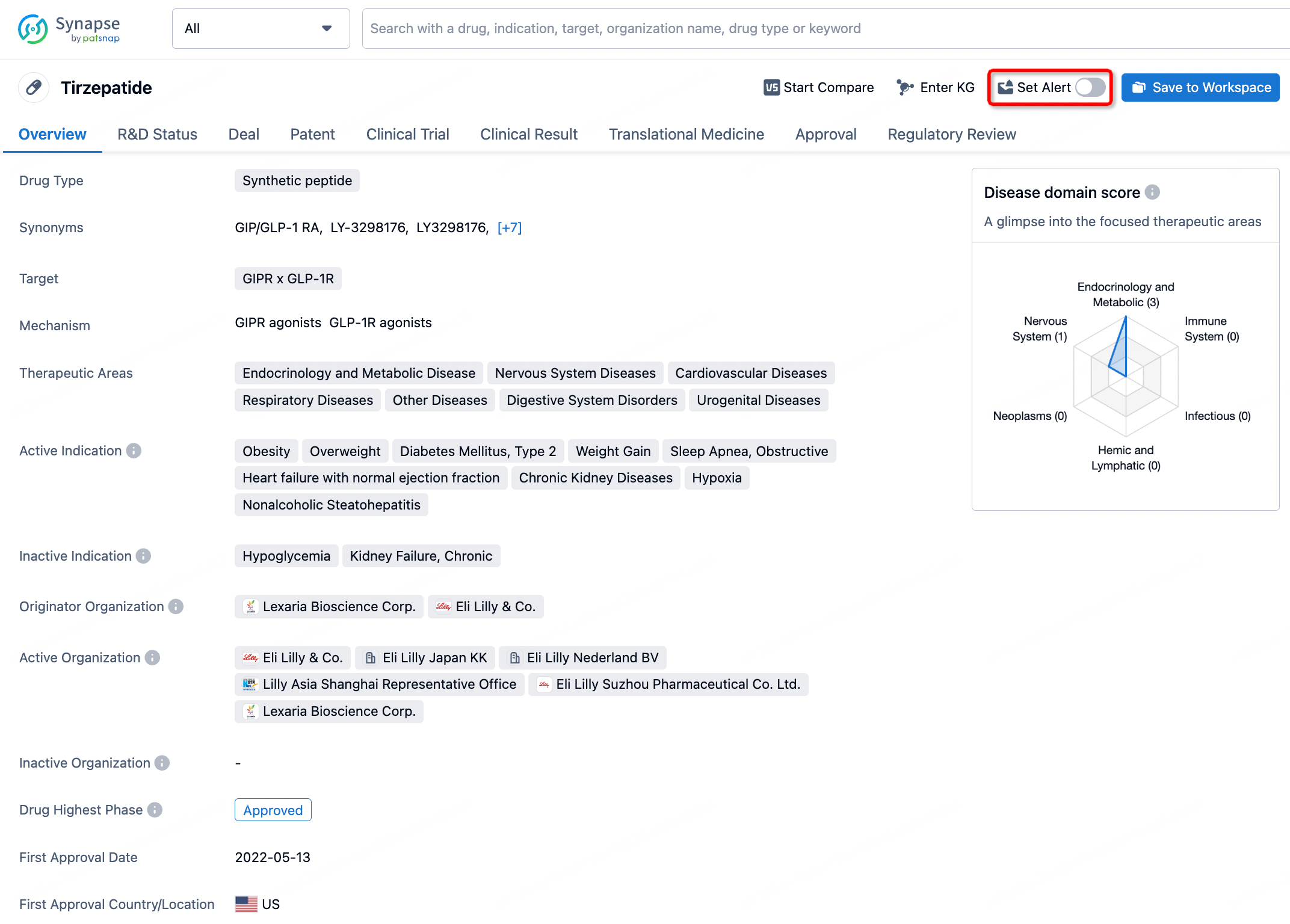
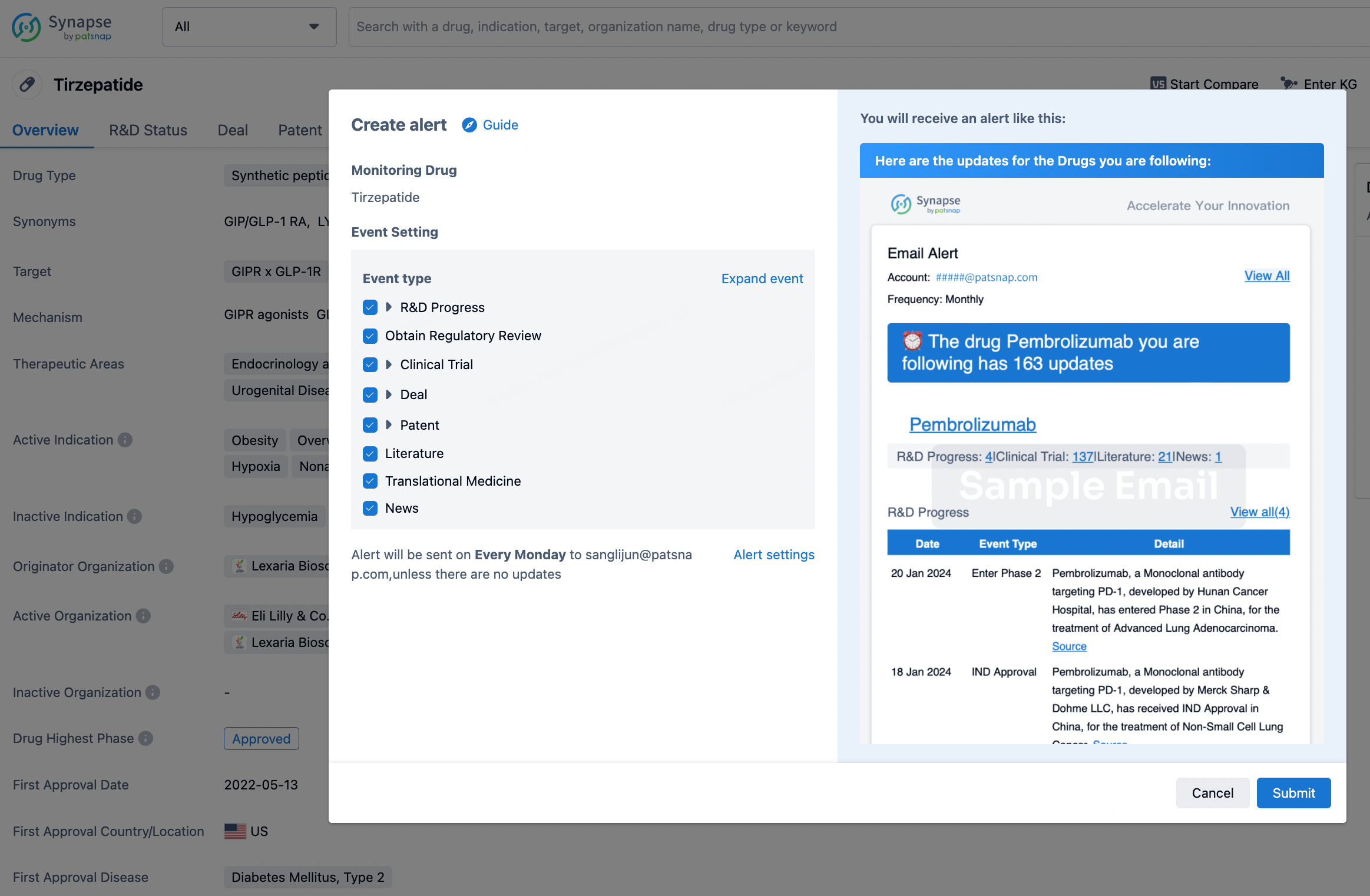
In the Synapse database, you can stay updated on the latest research and development advances of all drugs. This service is accessible anytime and anywhere, with updates available daily or weekly. Use the "Set Alert" function to stay informed. Click on the image below to embark on a brand new journey of drug discovery!

AI Agents Built for Biopharma Breakthroughs
Accelerate discovery. Empower decisions. Transform outcomes.
Get started for free today!
Accelerate Strategic R&D decision making with Synapse, PatSnap’s AI-powered Connected Innovation Intelligence Platform Built for Life Sciences Professionals.
Start your data trial now!
Synapse data is also accessible to external entities via APIs or data packages. Empower better decisions with the latest in pharmaceutical intelligence.