What is Codeine Sulfate used for?
Overview of Inactivated Vaccines
Inactivated vaccines are a category of vaccines in which the pathogen—whether a virus or bacterium—is killed or “inactivated” by chemical, thermal, or radiation methods before formulation into the vaccine product. This process renders the pathogen non-infectious while maintaining the integrity of its antigenic properties so that the immune system can still recognize and mount a response against it. The mechanism of action relies on the presentation of multiple antigens, which—when introduced into the body—stimulate both humoral and, to a certain extent, cell-mediated immune responses, although typically the neutralizing antibody response predominates.
Researching For what indications are Inactivated vaccine being investigated beyond the basics?
Synapse Hiro LS Researcher, the Synapse AI Insight Engine, is built to accelerate biopharma decisions. Search across billion-scale life sciences data to uncover signals, validate evidence, and act with confidence. Explore For what indications are Inactivated vaccine being investigated with Hiro LS Researcher →

Definition and Mechanism of Action
An inactivated vaccine is created by killing the target pathogen using one or more inactivation methods, such as formaldehyde treatment, heat, β-propiolactone, or irradiation. Despite the loss of infectivity, the antigens remain intact and act as immunogens that prompt the body’s immune system to produce specific antibodies and memory cells. When immunized, individuals are able to mount a prompt antibody-mediated defense upon encounter with the live pathogen, thereby mitigating the severity of the disease or preventing it altogether. Notably, because the vaccine contains killed organisms, the chances of reversion to a virulent form are eliminated—a feature that underscores the safety advantage of this approach.
Advantages and Limitations
There are several advantages of using inactivated vaccines. First, their safety profile is generally excellent since the vaccine cannot replicate inside the host. This is particularly important in immunocompromised individuals, who might be at risk with live-attenuated vaccines. Moreover, inactivated vaccines are relatively stable and, with modern manufacturing advancements, can be produced consistently and at scale. Their production does not depend on the need to cultivate highly pathogenic viruses to a replicative state, thereby reducing biosafety risks during the manufacturing process.
However, these vaccines are not without limitations. A significant drawback is the often lower immunogenicity compared to live vaccines, which can necessitate multiple doses or the inclusion of adjuvants to achieve adequate immune response. The immune response induced by inactivated vaccines is predominantly antibody-mediated and may not robustly stimulate cellular (T-cell) immunity, which is essential for the clearance of certain intracellular pathogens. Additionally, because the antigens do not replicate in the host, the duration of the conferred immunity can be shorter, requiring periodic booster immunizations. Regulatory pathways, while well established, demand exhaustive evidence of quality control in the inactivation process, as any residual live pathogen could lead to severe consequences.
Current Indications of Inactivated Vaccines
Inactivated vaccines have a long-established role in the prevention of infectious diseases. The majority of the approved commercial products that use this platform are targeted primarily against viral pathogens, although there are bacterial applications as well. The robust track record in influenza prevention is particularly noteworthy, as are examples in the prevention of other critical infections.
Approved Indications
The most prominent and well-documented indications for inactivated vaccines, according to the synapse-based references, include:
- Influenza Vaccination:
Multiple inactivated influenza vaccines are approved worldwide. For example, the “Influenza vaccine (surface antigen, inactivated, prepared in cell cultures)” developed by Seqirus is approved, with its first approval for influenza A subtype H5N1 infection in several European countries including Iceland, Liechtenstein, and Norway. In China and other regions, several brands—such as “Influenza Vaccine (Split Virion), Inactivated, Quadrivalent” by Sinovac Biotech, “Quadrivalent Influenza Vaccine, MF-59 Adjuvanted” by CSL, “Tetravalent influenza split virion vaccine, inactivated” by Hualan Biological, and “Tetravalent inactivated influenza vaccine” by Zydus Cadila Healthcare—highlight the global emphasis on influenza immunization. These vaccines are crucial in preventing seasonal as well as pandemic influenza outbreaks, offering significant public health benefits.
- Pneumococcal Disease Prevention:
Though traditionally pneumococcal vaccines have been based on polysaccharide-protein conjugation technologies, the newer formulations, such as the “20-valent Pneumococcal Conjugate Vaccine” by Wyeth Pharmaceuticals LLC indicate an evolving strategy that sometimes incorporates inactivated components in their production process. These vaccines are designed to prevent invasive bacterial diseases including invasive streptococcal disease and are part of immunization programs, especially in populations vulnerable to invasive infections.
- Poliovirus:
While not explicitly detailed in these particular synapse results, globally, the Inactivated Poliovirus Vaccine (IPV) serves as a model indication for the success and utility of inactivated vaccine technology. It remains a cornerstone in polio eradication efforts across many countries, demonstrating the scalability and safety of this platform.
- Other Traditional Indications:
Apart from influenza and polio, inactivated vaccines have been used historically or are being used for infections such as hepatitis A, rabies, and certain bacterial infections. Their well-documented safety has led to widespread approval in immunization schedules in various regions around the world, though specific details in our reference set primarily emphasize influenza and pneumococcal indications.
Commonly Targeted Diseases
The current landscape of approved and widely used inactivated vaccines shows a dominance in the area of respiratory and invasive infections:
- Respiratory Diseases:
Inactivated influenza vaccines are the primary example. With seasonal changes and the ever-present risk of pandemic strains like H5N1, these vaccines are central to global public health strategies. Their repeated use across different populations (including children, adults, elderly, and at-risk groups) underscores their importance in respiratory disease prevention.
- Invasive Bacterial Diseases:
Some innovations in pneumococcal vaccines using inactivation strategies or in combination with conjugate vaccine technology target invasive diseases caused by Streptococcus pneumoniae and other pathogenic bacteria. These vaccines are essential in reducing incidents of pneumonia, meningitis, and bacteremia in high-risk groups such as infants and the elderly.
- Poliomyelitis and Other Viral Infections:
The traditional use of inactivated vaccines to target poliovirus is a testament to their long-standing safety and effectiveness. Additional viral pathogens such as those causing hepatitis A or rabies have also been historically addressed using inactivated vaccine technology, although these are less emphasized in the current set of synapse references.
Research and Development in New Indications
While the current approved indications of inactivated vaccines focus on well-known pathogens like influenza virus and certain bacteria, research and developmental efforts are increasingly exploring their application in new and emerging areas. This expansion is driven by the continuous evolution of pathogens, advances in technology, and a growing need for safe vaccine modalities for novel public health threats.
Emerging Infectious Diseases
Recent years have witnessed a surge in emerging infectious diseases—pathogens that can rapidly spread across populations and cause pandemics. Inactivated vaccine platforms offer a safe and relatively straightforward method to address these threats by leveraging established production techniques and rigorous quality control measures. Areas of development include:
- Pandemic Influenza Strains:
Beyond the seasonal influenza strains, research is actively investigating inactivated vaccines for novel influenza subtypes such as H5N1 and other avian influenza viruses. Given the approval of vaccines like the “Influenza vaccine (surface antigen, inactivated, prepared in cell cultures)” for H5N1 targeting, ongoing studies aim to broaden the immunogenic profile to address potential pandemic strains. The inclusion of advanced adjuvants (e.g., MF-59 in CSL’s formulation) further improves immunogenicity and protective efficacy, which is critical for rapid response during outbreaks.
- SARS-CoV-2 and Other Coronaviridae:
Although many of the COVID-19 vaccine candidates have predominantly focused on mRNA or viral vector platforms, inactivated virus vaccines have been investigated extensively as well. The straightforward approach of chemically inactivating the virus while preserving spike protein structure has allowed manufacturers worldwide to produce candidates rapidly. This is evident from timelines and accelerated research outlined in synapse-based reviews on vaccine platforms. Inactivated SARS-CoV-2 vaccines have been particularly emphasized in countries where established manufacturing facilities can quickly pivot to seasonal and pandemic response.
- Other Emerging Viral Pathogens:
The field of emerging infectious diseases is not limited to influenza or coronavirus outbreaks. Researchers are also investigating inactivated vaccine candidates against viruses like Zika, Ebola, and other hemorrhagic fevers. These efforts capitalize on the safety profile of inactivated vaccines to minimize risk when handling high-consequence pathogens. In these cases, the antigens are derived from cultures of these viruses that are then subjected to chemical or physical inactivation processes that maintain key antigenic determinants.
- Biodefense Applications:
In the modern era of biodefense and global security, inactivated vaccines are being evaluated against pathogens that could be used as biological weapons. The predictable safety margin and reduced risk of vaccine-induced disease make inactivated formulations appealing candidates. Studies and reviews in the biodefense space emphasize the role of nonhuman primate models to validate the efficacy and safety of such vaccines under stringent regulatory conditions.
- Reverse Vaccinology and Systems Biology Integration:
Emerging research methodologies, such as reverse vaccinology and systems immunology, are being applied to enhance inactivated vaccine design. These approaches aid in identifying conserved epitopes that can be used to formulate broad-spectrum vaccines for emerging pathogens. By integrating omics data, researchers can streamline candidate selection and optimize the inactivation process to better preserve immunologically relevant antigens.
Non-Infectious Diseases
Historically, vaccines have been predominantly used to prevent infectious diseases. However, the concept of vaccination is now being extended to the prevention and even treatment of non-infectious disorders by targeting endogenous molecules implicated in disease processes. Although the application of inactivated vaccines in this domain is still in earlier stages compared to infectious disease indications, several innovative lines of research merit discussion:
- Cardiovascular Diseases:
Some preclinical and early clinical research efforts are exploring the use of vaccine technology in the management of cardiovascular diseases. For instance, vaccine development for cardiovascular conditions is progressing by targeting endogenous proteins involved in pathological processes such as atherosclerosis or hypertension. While these studies might employ various modalities, the favorable safety profile of inactivated vaccines makes them attractive candidates for conditions where immune modulation must be finely balanced to avoid autoimmune reactions.
- Therapeutic Vaccines for Cancer:
Inactivated vaccine platforms have also been evaluated for their potential use in cancer immunotherapy. The strategy here involves repurposing vaccines—traditionally aimed at infectious diseases—to induce an immune response against tumor-associated antigens. As elaborated in studies on the repurposing of existing vaccines for oncology, inactivated vaccines in their unmodified form may serve as adjuvant components or be used in combination with other immunotherapies to enhance antigen presentation and stimulate anti-tumor immunity. The approach calls for careful balancing of immunogenicity and the risk of cancer-associated immune modulation.
- Neurodegenerative and Metabolic Disorders:
Although still largely experimental, the concept of vaccinating against self-antigens to mitigate disease progression has been explored in conditions such as Alzheimer’s disease, where misfolded or aggregated proteins are implicated in pathogenesis. In these cases, an inactivated vaccine approach may offer a controlled delivery of epitopes derived from pathogenic proteins—enabling the immune system to target and clear pathological deposits without triggering a full-blown autoimmune response. Researchers are investigating the potential of such approaches to delay disease onset or progression.
- Autoimmune Conditions:
There is also emerging interest in the potential for inactivated vaccine strategies to modulate immune responses in autoimmune diseases. The idea is to use a vaccine formulation to induce regulatory immune responses or to “reset” the immune system’s balance. Although this application is in its infancy, the extensive safety data available for inactivated vaccines provide a strong rationale for exploring this application, where an overstimulated immune environment must be carefully corrected without inducing further pathology.
Challenges and Future Prospects
Despite the considerable successes achieved with inactivated vaccines in several approved indications, their expansion into newer clinical areas, both for emerging infectious and non-infectious diseases, comes with its own set of challenges. Addressing these issues is paramount for ensuring the continued evolution of the vaccine platform.
Technical and Regulatory Challenges
One of the primary technical challenges is maintaining the delicate balance between complete pathogen inactivation and the preservation of antigen integrity. Overexposure to inactivation agents can denature epitopes crucial for eliciting an effective immune response, whereas under-treatment may leave residual live pathogens that pose serious safety risks. Modern techniques aim to optimize inactivation protocols using chemical versus physical methods; however, these methods still require rigorous validation. This validation process impacts both the timeline and the cost of vaccine development.
The need for appropriate adjuvants to boost the immune response to inactivated vaccines is another technical challenge. Due to their inability to replicate, inactivated vaccines tend to induce a weaker immune response, often necessitating the use of adjuvants such as MF-59 or aluminum salts to provoke sufficient immunogenicity. Integrating these adjuvants without increasing the risk of adverse reactions is a delicate process that must be carefully optimized during formulation.
On the regulatory front, the development of inactivated vaccines is guided by well-established protocols; however, the introduction of novel components, manufacturing processes, or applications to new disease indications can trigger additional scrutiny. Regulatory authorities such as the European Medicines Agency (EMA) and the U.S. Food and Drug Administration (FDA) require comprehensive data on the chemical composition, immunogenicity, and stability of vaccine products, as well as extensive clinical trial data demonstrating efficacy and safety across diverse populations. The multi-phase clinical trial process, which includes Phase I (safety), Phase II (dosage optimization and immunogenicity), and Phase III (efficacy and broad safety assessment), extends the timeline of vaccine development—even for platforms that are otherwise well understood. For emerging indications like those aimed at novel viruses or non-infectious diseases, the absence of well-defined correlates of protection further complicates approval, as the regulatory benchmarks previously established for traditional pathogens may not directly apply.
Another regulatory challenge lies in the scalability of production and ensuring consistency throughout the manufacturing process. As inactivated vaccines rely on a robust and repeatable inactivation step, any variability between batches can have significant implications for both safety and efficacy. This challenge is compounded when vaccines are developed for emerging infectious diseases where rapid production and deployment are critical. Adaptive clinical trial designs and parallel manufacturing processes have been suggested as solutions to accelerate development while maintaining high-quality standards.
Future Research Directions
Future research on inactivated vaccines is expected to leverage cutting-edge technologies and a deeper understanding of immunology to address existing challenges and expand on new indications. Several promising avenues of investigation include:
- Improvement of Inactivation Methods:
Ongoing research is focused on refining inactivation protocols to better preserve key antigenic structures while ensuring complete inactivation. Innovative methods, including the use of specific chemical agents or controlled irradiation techniques, are under development to maximize immunogenicity. These novel inactivation methods are likely to reduce the need for multiple booster doses and improve the overall efficacy of the vaccine.
- Adjuvant Innovation:
There is a significant push to develop and refine adjuvants that can enhance the immune response elicited by inactivated vaccines without compromising their safety profile. Systems biology approaches are being used to understand the molecular mechanisms underpinning adjuvant activity, which may lead to the discovery of biomarkers that predict an optimal response. The development of adjuvants that can specifically target dendritic cells or modulate the immune response towards a more balanced Th1/Th2 profile is a key area of ongoing research.
- Application of Systems Vaccinology and Reverse Vaccinology:
Integrating high-throughput “omics” technologies, including transcriptomics, proteomics, and metabolomics, with traditional vaccine research is paving the way for a more personalized understanding of vaccine-induced immunity. These approaches help in identifying conserved epitopes and novel antigens that can be used to design more effective inactivated vaccines. Reverse vaccinology, in particular, allows researchers to mine genomic data to select antigen candidates that would otherwise be overlooked through conventional methods.
- Expansion to Emerging and Non-Infectious Indications:
Researchers are exploring the utility of inactivated vaccines beyond their classical role in infectious disease prevention. For emerging infectious diseases such as novel influenza strains, SARS-CoV-2, Zika, and Ebola, inactivated vaccine platforms offer an immediate and safe countermeasure while other technologies (such as mRNA vaccines) are still undergoing rapid development and scaling. Moreover, early-stage research into vaccines for non-infectious conditions—ranging from cardiovascular diseases to certain cancers and neurodegenerative disorders—indicates a potential for inactivated vaccine technology to be repurposed as a therapeutic or prophylactic tool in these realms. Although these applications are still highly experimental, they open up new frontiers in vaccine research and hold promise for addressing conditions that currently rely largely on conventional pharmacotherapy.
- Adaptive and Innovative Clinical Trial Designs:
Given that the traditional pathway for vaccine development can be time-consuming, novel clinical trial designs that incorporate adaptive elements—where trial parameters are modified in real time based on incoming data—are being considered for inactivated vaccines targeting emerging pathogens. These designs leverage advanced statistical techniques and rapid biomarker assessments to shorten development timelines without compromising safety. In addition, increasing international collaboration and public-private partnerships could further accelerate research, manufacturing scale-up, and regulatory review processes.
- Manufacturing and Supply Chain Innovations:
Future research is also focused on overcoming logistical challenges related to the manufacturing, storage, and distribution of inactivated vaccines. College and university collaborations with industrial partners are exploring ways to stabilize vaccine formulations further, reducing dependency on ultra-cold chain storage while maintaining vaccine efficacy. Improvements in manufacturing technologies could also reduce production costs, making vaccines more accessible to immunization programs in low- and middle-income countries (LMICs).
Conclusion
In summary, inactivated vaccines represent a time-tested, scientifically robust platform that has played and continues to play a critical role in preventing several high-burden infectious diseases, especially respiratory illnesses like influenza and invasive bacterial infections such as those caused by Streptococcus pneumoniae. Their safety, owing to the inability of inactivated pathogens to revert to a virulent form, makes them particularly appealing for vulnerable populations and safe for mass immunization campaigns.
Currently, the approved indications of inactivated vaccines emphasize well-known infectious diseases; however, ongoing clinical research and preclinical studies are broadening their application spectrum considerably. In the realm of emerging infectious diseases, rigorous research is underway to develop inactivated vaccines against novel and re–emerging viral pathogens—including pandemic influenza strains and coronaviruses—with efforts supported by a range of adaptive manufacturing and clinical trial strategies. Moreover, the safety profile and well-characterized immunogenic properties of inactivated vaccines are being harnessed to investigate their potential utility in non-infectious diseases. Pioneering research in cardiovascular diseases, oncology, and even neurodegenerative disorders points to a future in which inactivated vaccines might act as therapeutic agents or modulators of chronic disease processes.
The future of inactivated vaccines lies in overcoming technical challenges such as optimizing inactivation processes to preserve antigenicity, enhancing immunogenicity through innovative adjuvants, and streamlining the extensive regulatory requirements. At the same time, the advent of systems biology and reverse vaccinology offers unprecedented insights into immune mechanisms and promises to accelerate the development of next-generation vaccines with improved efficacy and broader protective coverage. Adaptations in clinical trial design and manufacturing processes are also expected to reduce production timelines and costs, expanding the reach of these vaccines globally.
In conclusion, the investigation of inactivated vaccines spans multiple indications—from well-established infectious diseases like influenza and pneumococcal infections to emerging threats such as novel influenza viruses and SARS-CoV-2, and extends to innovative therapeutic roles in non-infectious diseases such as cardiovascular conditions and cancer. While these vaccines currently excel in safety and proven efficacy, continued advancements in inactivation technology, adjuvant development, and trial design will be pivotal in extending their utility. The integrated approach—emphasizing a general understanding of the platform’s established strengths, detailed exploration of specific emerging needs, and returning to the overarching principle of safe and effective immunization—ensures that inactivated vaccines remain at the forefront of our public health arsenal for years to come.
Continue your For what indications are Inactivated vaccine being investigated research with Synapse Hiro LS Researcher
This article provides an overview. For a broader research view, use Synapse Hiro LS Researcher—the Synapse AI Insight Engine—to search across drugs, targets, indications, clinical trials, literature, organizations, news, deals, and competitor signals. Ask any biopharma research question in natural language.

Questions to explore:
- What approved and investigational uses have been reported for For what indications are Inactivated vaccine being investigated?
- What is the mechanism of action of For what indications are Inactivated vaccine being investigated, and which targets or pathways are involved?
- Which clinical trials are evaluating For what indications are Inactivated vaccine being investigated, and what outcomes have been reported?
- What patents, publications, and regulatory sources provide the latest evidence on For what indications are Inactivated vaccine being investigated?
Ask Synapse Hiro LS Researcher →
AI may make mistakes. Check important info.
How to obtain the latest development progress of all drugs?
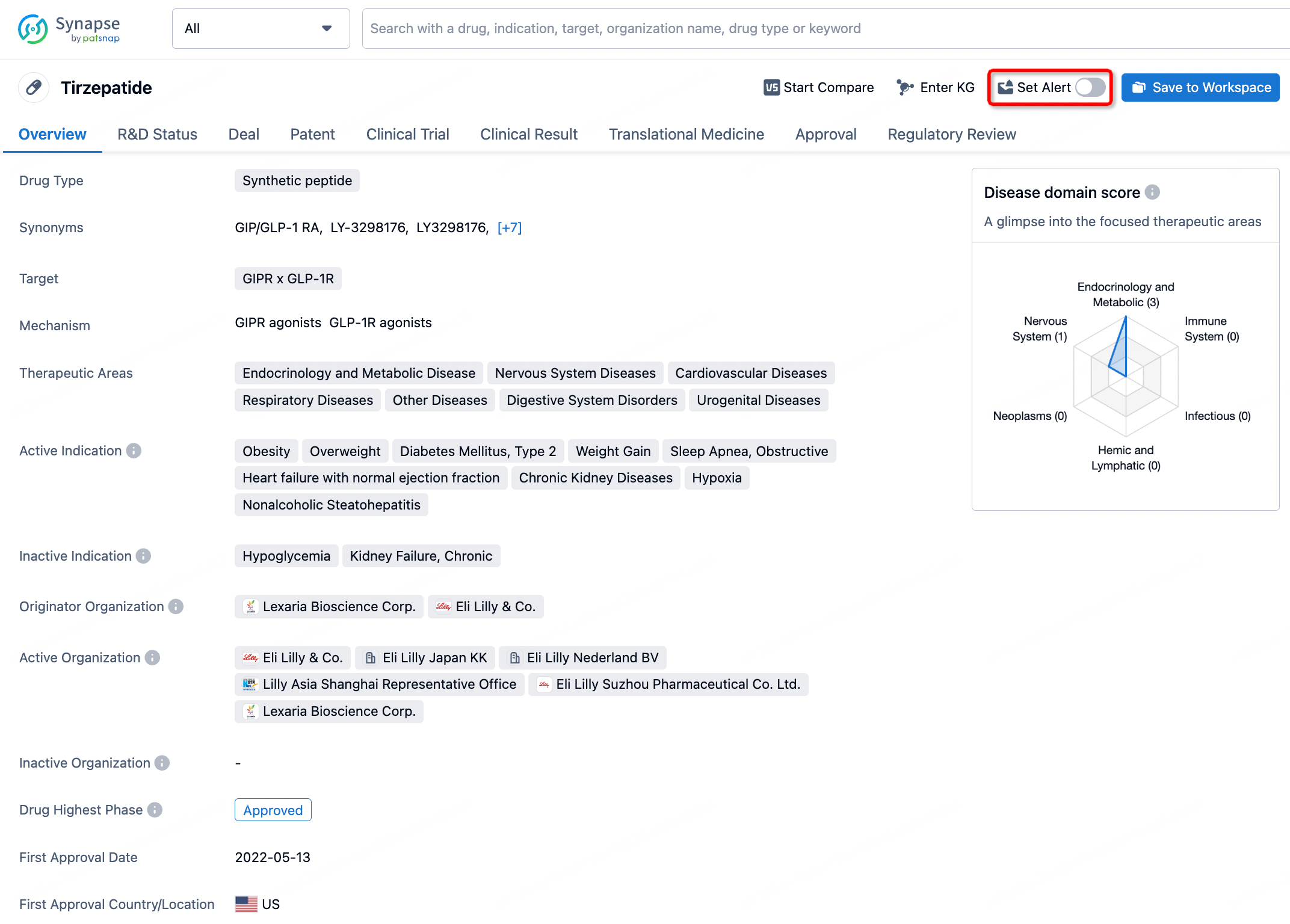
In the Synapse database, you can stay updated on the latest research and development advances of all drugs. This service is accessible anytime and anywhere, with updates available daily or weekly. Use the "Set Alert" function to stay informed. Click on the image below to embark on a brand new journey of drug discovery!