Request Demo
What is Emicizumab used for?
14 June 2024
**Introduction to Emicizumab**
Emicizumab, marketed under the trade name Hemlibra, is a groundbreaking therapeutic agent in the treatment of hemophilia A. Developed through a collaborative effort led primarily by Chugai Pharmaceutical, a member of the Roche Group, its unique mechanism of action targets factor IXa and factor X, essential components in the blood clotting cascade. Unlike traditional treatments that involve direct administration of the missing clotting factor VIII, Emicizumab offers a novel approach that has transformed the landscape of hemophilia A management. This bispecific monoclonal antibody is designed for patients with hemophilia A, including those who have developed inhibitors against factor VIII. Since receiving FDA approval in 2017 for those with inhibitors and subsequently in 2018 for all patients with hemophilia A, Emicizumab has been lauded for its efficacy and convenient administration route, proving to be a pivotal advancement in hematology.
**Emicizumab Mechanism of Action**
Emicizumab operates through a mechanism that mimics the function of factor VIII, albeit through a distinct biological pathway. Hemophilia A is characterized by the deficiency or dysfunction of factor VIII, an essential protein in the coagulation cascade. This deficiency prevents proper blood clot formation, leading to prolonged bleeding episodes. Emicizumab, a bispecific monoclonal antibody, binds to both activated factor IX (factor IXa) and factor X. By bringing these two factors into close proximity, Emicizumab facilitates the activation of factor X without the need for factor VIII, thereby promoting the conversion of prothrombin to thrombin and ultimately enabling the formation of a blood clot. This unique bridging action substitutes the activity of factor VIII, effectively bypassing the inhibitor problem and ensuring clot formation.
**How to Use Emicizumab**
Emicizumab is designed for subcutaneous administration, which significantly enhances its convenience over traditional intravenous factor VIII infusions. The recommended starting dose is 3 mg/kg once weekly for the first four weeks. Following this initial loading phase, the maintenance dose can be adjusted to 1.5 mg/kg once weekly, 3 mg/kg every two weeks, or 6 mg/kg every four weeks, based on patient preference and clinical response. The onset of action is relatively rapid, with clinical benefits observable within the first week of treatment. Due to its prolonged half-life, Emicizumab ensures sustained hemostatic protection, reducing the frequency of bleeding episodes and improving overall quality of life for patients with hemophilia A. It can be administered at home, providing a significant advantage in terms of convenience and adherence to therapy.
**What are Emicizumab Side Effects**
While Emicizumab has been a significant advancement in hemophilia A treatment, it is not without potential side effects. Common adverse reactions include injection site reactions such as redness, pain, and swelling, which are generally mild to moderate in severity. Other frequently reported side effects include headache, fever, and arthralgia (joint pain). More concerning, though rare, are the risks of thrombotic microangiopathy (TMA) and thromboembolism. These serious conditions have been observed in a small number of patients, particularly those receiving concomitant high doses of activated prothrombin complex concentrate (aPCC) for breakthrough bleeding. Contraindications for Emicizumab include known hypersensitivity to the drug or any of its components. Patients with a history of TMA or thromboembolism should be closely monitored when using Emicizumab, and the concurrent use of aPCC should be approached with caution. It's imperative that healthcare providers balance the benefits of Emicizumab with its potential risks, ensuring that patients are well-informed and monitored for any adverse reactions.
**What Other Drugs Will Affect Emicizumab**
Drug interactions are an essential consideration in the management of hemophilia A with Emicizumab. As mentioned, the most notable interaction is with aPCC. High cumulative doses of aPCC in patients receiving Emicizumab have been associated with an increased risk of thrombotic events and TMA, necessitating careful dose management and monitoring. In contrast, recombinant factor VIIa (rFVIIa) has been used safely in conjunction with Emicizumab for the management of breakthrough bleeding episodes. However, it's crucial to follow recommended guidelines for dosing to avoid any potential complications. Other coagulation products and antifibrinolytics should be used with caution, and patients should always inform their healthcare providers of all medications they are taking to ensure there are no contraindications or risks of adverse interactions.
In conclusion, Emicizumab represents a revolutionary advance in the treatment of hemophilia A, offering a new horizon of hope for patients. Its innovative mechanism of action, coupled with convenient administration and significant clinical benefits, positions it as a cornerstone therapy in the hematology field. Nevertheless, like all potent therapies, it requires mindful administration and vigilant monitoring to ensure patient safety and optimal therapeutic outcomes.
Emicizumab, marketed under the trade name Hemlibra, is a groundbreaking therapeutic agent in the treatment of hemophilia A. Developed through a collaborative effort led primarily by Chugai Pharmaceutical, a member of the Roche Group, its unique mechanism of action targets factor IXa and factor X, essential components in the blood clotting cascade. Unlike traditional treatments that involve direct administration of the missing clotting factor VIII, Emicizumab offers a novel approach that has transformed the landscape of hemophilia A management. This bispecific monoclonal antibody is designed for patients with hemophilia A, including those who have developed inhibitors against factor VIII. Since receiving FDA approval in 2017 for those with inhibitors and subsequently in 2018 for all patients with hemophilia A, Emicizumab has been lauded for its efficacy and convenient administration route, proving to be a pivotal advancement in hematology.
**Emicizumab Mechanism of Action**
Emicizumab operates through a mechanism that mimics the function of factor VIII, albeit through a distinct biological pathway. Hemophilia A is characterized by the deficiency or dysfunction of factor VIII, an essential protein in the coagulation cascade. This deficiency prevents proper blood clot formation, leading to prolonged bleeding episodes. Emicizumab, a bispecific monoclonal antibody, binds to both activated factor IX (factor IXa) and factor X. By bringing these two factors into close proximity, Emicizumab facilitates the activation of factor X without the need for factor VIII, thereby promoting the conversion of prothrombin to thrombin and ultimately enabling the formation of a blood clot. This unique bridging action substitutes the activity of factor VIII, effectively bypassing the inhibitor problem and ensuring clot formation.
**How to Use Emicizumab**
Emicizumab is designed for subcutaneous administration, which significantly enhances its convenience over traditional intravenous factor VIII infusions. The recommended starting dose is 3 mg/kg once weekly for the first four weeks. Following this initial loading phase, the maintenance dose can be adjusted to 1.5 mg/kg once weekly, 3 mg/kg every two weeks, or 6 mg/kg every four weeks, based on patient preference and clinical response. The onset of action is relatively rapid, with clinical benefits observable within the first week of treatment. Due to its prolonged half-life, Emicizumab ensures sustained hemostatic protection, reducing the frequency of bleeding episodes and improving overall quality of life for patients with hemophilia A. It can be administered at home, providing a significant advantage in terms of convenience and adherence to therapy.
**What are Emicizumab Side Effects**
While Emicizumab has been a significant advancement in hemophilia A treatment, it is not without potential side effects. Common adverse reactions include injection site reactions such as redness, pain, and swelling, which are generally mild to moderate in severity. Other frequently reported side effects include headache, fever, and arthralgia (joint pain). More concerning, though rare, are the risks of thrombotic microangiopathy (TMA) and thromboembolism. These serious conditions have been observed in a small number of patients, particularly those receiving concomitant high doses of activated prothrombin complex concentrate (aPCC) for breakthrough bleeding. Contraindications for Emicizumab include known hypersensitivity to the drug or any of its components. Patients with a history of TMA or thromboembolism should be closely monitored when using Emicizumab, and the concurrent use of aPCC should be approached with caution. It's imperative that healthcare providers balance the benefits of Emicizumab with its potential risks, ensuring that patients are well-informed and monitored for any adverse reactions.
**What Other Drugs Will Affect Emicizumab**
Drug interactions are an essential consideration in the management of hemophilia A with Emicizumab. As mentioned, the most notable interaction is with aPCC. High cumulative doses of aPCC in patients receiving Emicizumab have been associated with an increased risk of thrombotic events and TMA, necessitating careful dose management and monitoring. In contrast, recombinant factor VIIa (rFVIIa) has been used safely in conjunction with Emicizumab for the management of breakthrough bleeding episodes. However, it's crucial to follow recommended guidelines for dosing to avoid any potential complications. Other coagulation products and antifibrinolytics should be used with caution, and patients should always inform their healthcare providers of all medications they are taking to ensure there are no contraindications or risks of adverse interactions.
In conclusion, Emicizumab represents a revolutionary advance in the treatment of hemophilia A, offering a new horizon of hope for patients. Its innovative mechanism of action, coupled with convenient administration and significant clinical benefits, positions it as a cornerstone therapy in the hematology field. Nevertheless, like all potent therapies, it requires mindful administration and vigilant monitoring to ensure patient safety and optimal therapeutic outcomes.
How to obtain the latest development progress of all drugs?
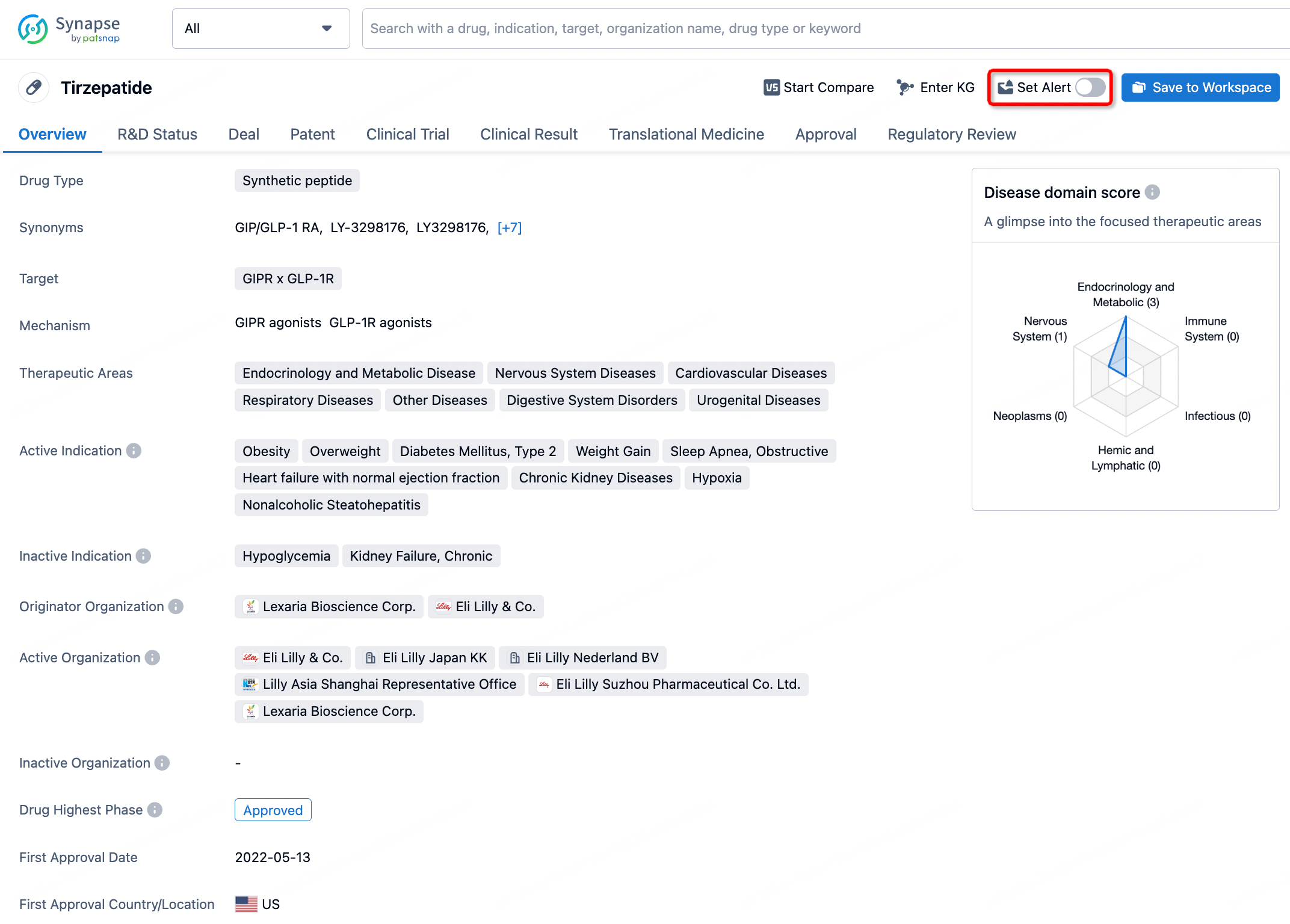
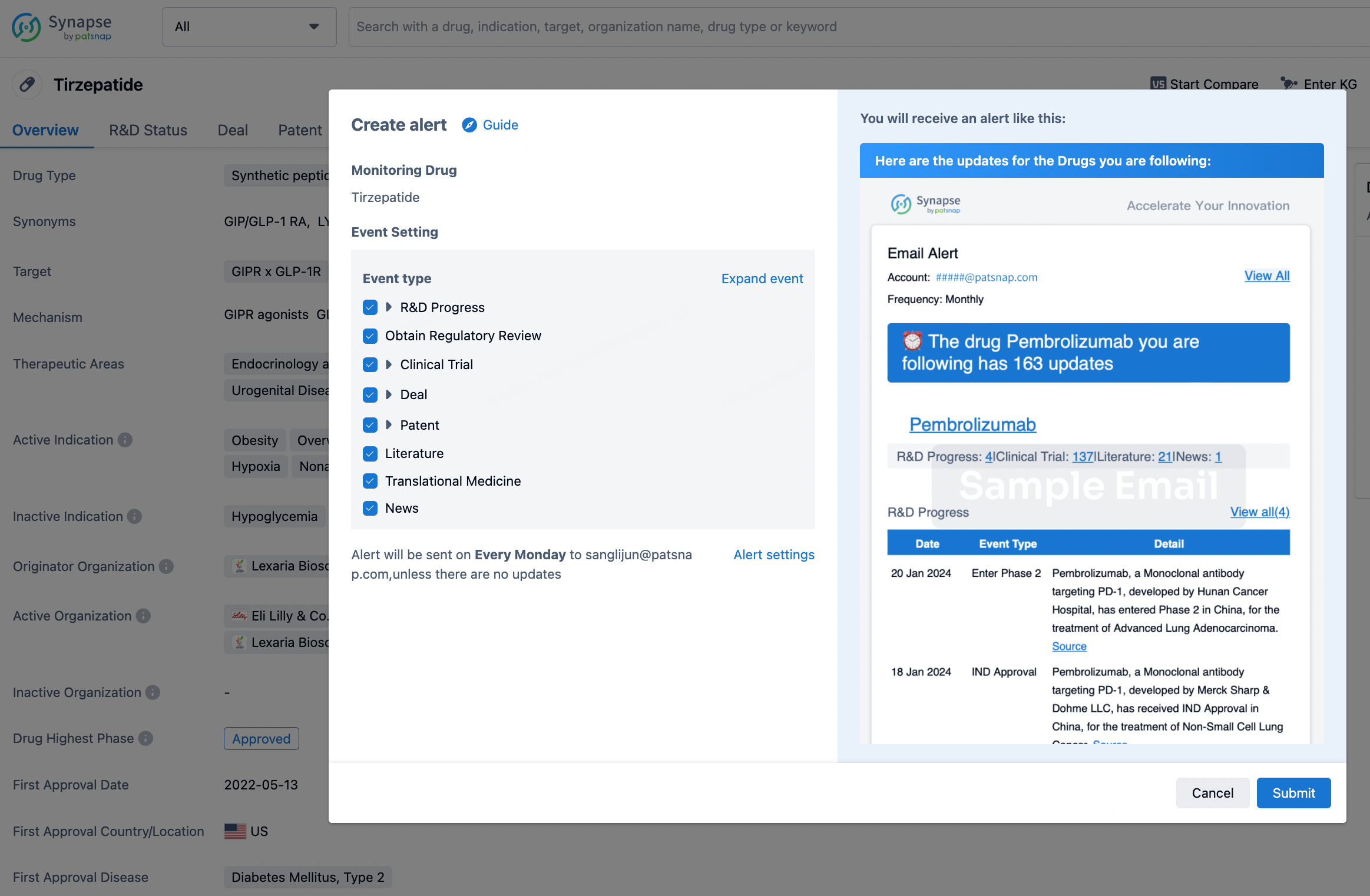
In the Synapse database, you can stay updated on the latest research and development advances of all drugs. This service is accessible anytime and anywhere, with updates available daily or weekly. Use the "Set Alert" function to stay informed. Click on the image below to embark on a brand new journey of drug discovery!
AI Agents Built for Biopharma Breakthroughs
Accelerate discovery. Empower decisions. Transform outcomes.
Get started for free today!
Accelerate Strategic R&D decision making with Synapse, PatSnap’s AI-powered Connected Innovation Intelligence Platform Built for Life Sciences Professionals.
Start your data trial now!
Synapse data is also accessible to external entities via APIs or data packages. Empower better decisions with the latest in pharmaceutical intelligence.