Request Demo
What is Fidanacogene elaparvovec used for?
14 June 2024
Fidanacogene elaparvovec, also known by its trade name, is a groundbreaking drug designed to address a critical need in modern medicine. This gene therapy targets severe hemophilia B, a genetic disorder caused by a deficiency in factor IX, a protein essential for blood clotting. The primary institutions involved in researching and developing this drug include several renowned biopharmaceutical companies and academic research centers. As a gene therapy, Fidanacogene elaparvovec represents a novel approach to treatment by addressing the root cause of hemophilia B rather than merely alleviating its symptoms. The drug is currently in the advanced stages of clinical trials, with promising results that suggest a significant improvement in the quality of life for individuals affected by this condition.
The mechanism of action for Fidanacogene elaparvovec is both innovative and complex. Unlike traditional therapies that require regular infusions of clotting factor IX, this gene therapy aims to provide a more permanent solution. The drug uses an adeno-associated virus (AAV) vector to deliver a functional copy of the factor IX gene directly into the patient's liver cells. Once inside the liver cells, the introduced gene begins to produce factor IX, thereby correcting the underlying deficiency. This approach not only reduces the frequency of bleeding episodes but also decreases the need for ongoing clotting factor infusions. The use of AAV vectors is particularly advantageous because they are not known to cause disease in humans and have a low risk of integrating into the host genome, which minimizes potential complications.
The administration of Fidanacogene elaparvovec is relatively straightforward but requires careful orchestration by medical professionals. The drug is delivered via a single intravenous infusion, which typically takes a few hours to complete. The onset time for the therapeutic effects varies among patients but generally begins within a few weeks after the infusion. During this period, the patient's liver cells start producing the factor IX protein, leading to a gradual normalization of blood clotting function. It's essential for patients to undergo comprehensive screening and monitoring before and after the administration to ensure optimal outcomes and manage any potential adverse effects.
Despite its groundbreaking potential, Fidanacogene elaparvovec is not without side effects and contraindications. One of the most common side effects reported in clinical trials is an elevated liver enzyme level, indicating inflammation or damage to liver cells. This side effect is typically manageable with corticosteroids but requires close monitoring. Other less common side effects include headaches, flu-like symptoms, and mild allergic reactions at the infusion site. Contraindications for the use of this gene therapy include pre-existing liver conditions, active infections, and known hypersensitivity to any component of the drug formulation. Pregnant or breastfeeding women are also advised against using this therapy due to the lack of sufficient safety data in these populations.
The interaction of Fidanacogene elaparvovec with other drugs is an important consideration for both patients and healthcare providers. Since this gene therapy involves the liver, any medication that affects liver function or enzyme levels could potentially alter the efficacy and safety of the treatment. Drugs known to induce or inhibit liver enzymes, such as certain antibiotics, antifungals, and anticonvulsants, may have a significant impact. Additionally, immunosuppressive drugs could interfere with the body's response to the gene therapy, potentially reducing its effectiveness or increasing the risk of adverse effects. Therefore, a thorough review of the patient's medication history is crucial before initiating treatment.
In conclusion, Fidanacogene elaparvovec represents a significant advancement in the treatment of severe hemophilia B. Its innovative mechanism of action, involving the delivery of a functional factor IX gene via an AAV vector, offers the potential for long-term correction of the underlying genetic deficiency. While the administration process is relatively straightforward, careful monitoring and management of side effects are essential to ensure patient safety. As with any new therapy, understanding potential drug interactions is crucial for optimizing outcomes. Despite these challenges, the promise of a more permanent solution for hemophilia B makes Fidanacogene elaparvovec a highly anticipated addition to the arsenal of treatments for this debilitating condition.
The mechanism of action for Fidanacogene elaparvovec is both innovative and complex. Unlike traditional therapies that require regular infusions of clotting factor IX, this gene therapy aims to provide a more permanent solution. The drug uses an adeno-associated virus (AAV) vector to deliver a functional copy of the factor IX gene directly into the patient's liver cells. Once inside the liver cells, the introduced gene begins to produce factor IX, thereby correcting the underlying deficiency. This approach not only reduces the frequency of bleeding episodes but also decreases the need for ongoing clotting factor infusions. The use of AAV vectors is particularly advantageous because they are not known to cause disease in humans and have a low risk of integrating into the host genome, which minimizes potential complications.
The administration of Fidanacogene elaparvovec is relatively straightforward but requires careful orchestration by medical professionals. The drug is delivered via a single intravenous infusion, which typically takes a few hours to complete. The onset time for the therapeutic effects varies among patients but generally begins within a few weeks after the infusion. During this period, the patient's liver cells start producing the factor IX protein, leading to a gradual normalization of blood clotting function. It's essential for patients to undergo comprehensive screening and monitoring before and after the administration to ensure optimal outcomes and manage any potential adverse effects.
Despite its groundbreaking potential, Fidanacogene elaparvovec is not without side effects and contraindications. One of the most common side effects reported in clinical trials is an elevated liver enzyme level, indicating inflammation or damage to liver cells. This side effect is typically manageable with corticosteroids but requires close monitoring. Other less common side effects include headaches, flu-like symptoms, and mild allergic reactions at the infusion site. Contraindications for the use of this gene therapy include pre-existing liver conditions, active infections, and known hypersensitivity to any component of the drug formulation. Pregnant or breastfeeding women are also advised against using this therapy due to the lack of sufficient safety data in these populations.
The interaction of Fidanacogene elaparvovec with other drugs is an important consideration for both patients and healthcare providers. Since this gene therapy involves the liver, any medication that affects liver function or enzyme levels could potentially alter the efficacy and safety of the treatment. Drugs known to induce or inhibit liver enzymes, such as certain antibiotics, antifungals, and anticonvulsants, may have a significant impact. Additionally, immunosuppressive drugs could interfere with the body's response to the gene therapy, potentially reducing its effectiveness or increasing the risk of adverse effects. Therefore, a thorough review of the patient's medication history is crucial before initiating treatment.
In conclusion, Fidanacogene elaparvovec represents a significant advancement in the treatment of severe hemophilia B. Its innovative mechanism of action, involving the delivery of a functional factor IX gene via an AAV vector, offers the potential for long-term correction of the underlying genetic deficiency. While the administration process is relatively straightforward, careful monitoring and management of side effects are essential to ensure patient safety. As with any new therapy, understanding potential drug interactions is crucial for optimizing outcomes. Despite these challenges, the promise of a more permanent solution for hemophilia B makes Fidanacogene elaparvovec a highly anticipated addition to the arsenal of treatments for this debilitating condition.
How to obtain the latest development progress of all drugs?
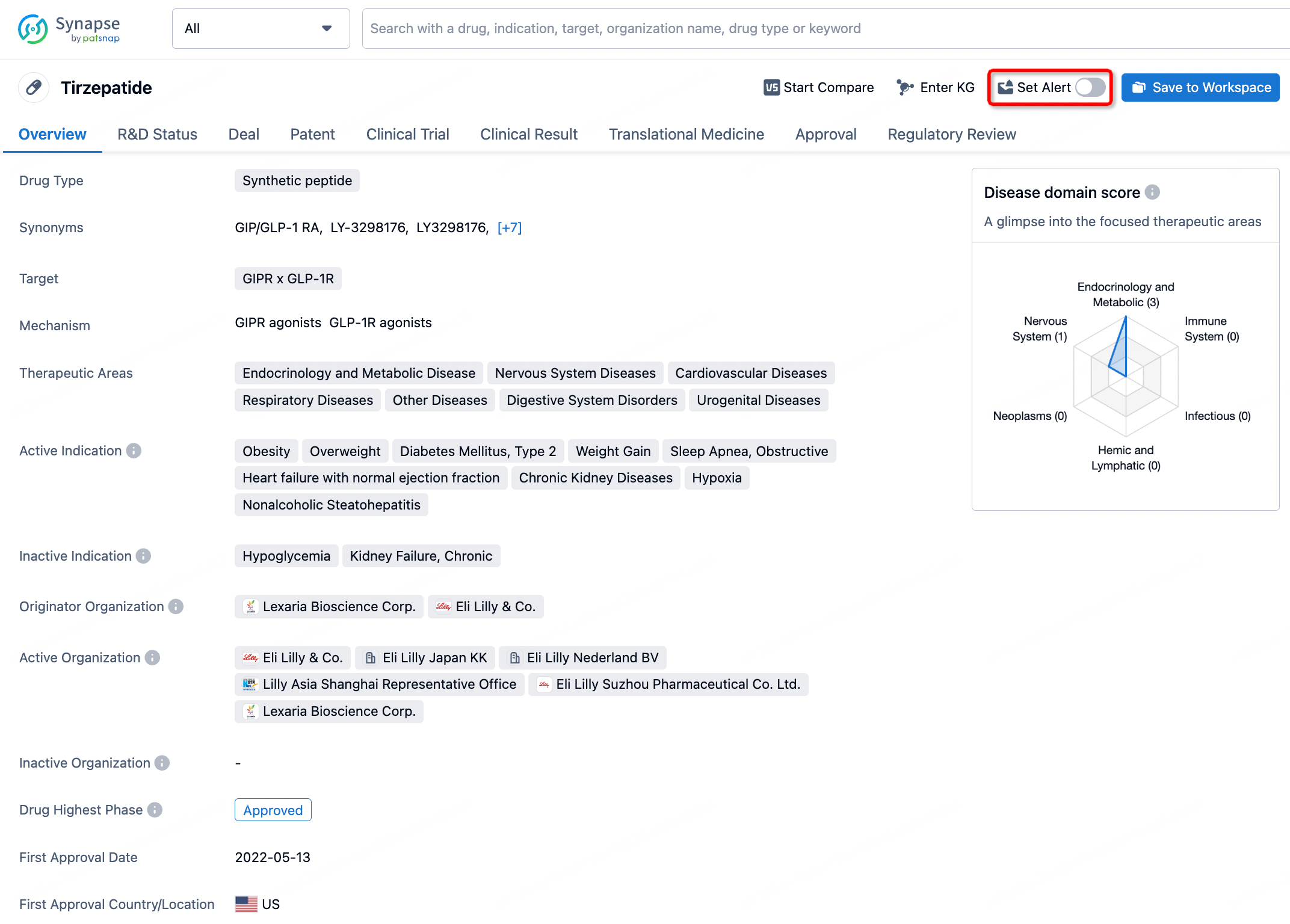
In the Synapse database, you can stay updated on the latest research and development advances of all drugs. This service is accessible anytime and anywhere, with updates available daily or weekly. Use the "Set Alert" function to stay informed. Click on the image below to embark on a brand new journey of drug discovery!


AI Agents Built for Biopharma Breakthroughs
Accelerate discovery. Empower decisions. Transform outcomes.
Get started for free today!
Accelerate Strategic R&D decision making with Synapse, PatSnap’s AI-powered Connected Innovation Intelligence Platform Built for Life Sciences Professionals.
Start your data trial now!
Synapse data is also accessible to external entities via APIs or data packages. Empower better decisions with the latest in pharmaceutical intelligence.