Request Demo
What is Flotufolastat F-18 used for?
14 June 2024
Flotufolastat F-18, also known by its trade name PYLARIFY, is a radiopharmaceutical agent used in the field of nuclear medicine. It has garnered significant attention due to its potential in improving diagnostic accuracy for certain medical conditions, particularly prostate cancer. The drug targets the prostate-specific membrane antigen (PSMA), which is abundantly expressed in prostate cancer cells. Research institutions and pharmaceutical companies have been actively involved in the development and evaluation of Flotufolastat F-18, focusing on its diagnostic capabilities and potential clinical benefits. The drug type falls under the category of PET (positron emission tomography) radiotracers, which are crucial in imaging and diagnostic procedures. Clinical trials and research studies have demonstrated promising results in terms of its effectiveness and safety profile, leading to its approval by regulatory authorities for specific indications.
Flotufolastat F-18 Mechanism of Action
Flotufolastat F-18 works by targeting PSMA, a protein highly expressed on the surface of prostate cancer cells, but with limited presence in normal tissues. Once administered, the radiopharmaceutical binds to PSMA, allowing for precise localization of prostate cancer cells within the body. The F-18 isotope emits positrons, which are detected by PET scanners, providing high-resolution images that highlight cancerous lesions. This targeted approach enhances the accuracy of cancer detection and staging, enabling clinicians to make more informed decisions regarding treatment strategies. The specificity of Flotufolastat F-18 for PSMA makes it a valuable tool in the management of prostate cancer, offering a non-invasive method to assess the extent and spread of the disease.
How to Use Flotufolastat F-18
Flotufolastat F-18 is administered via intravenous injection, typically in a clinical setting such as a hospital or specialized imaging center. Before administration, patients are usually advised to remain well-hydrated and may be asked to avoid certain foods or medications that could interfere with the imaging process. The onset time for the radiopharmaceutical to bind to PSMA and provide optimal imaging results is relatively short, usually within an hour of injection. During the PET scan, patients are positioned on the imaging table, and the scanner captures detailed images of the targeted areas. The entire procedure, from injection to image acquisition, can take a few hours, depending on the specific protocol and the extent of imaging required. The non-invasive nature of the procedure, combined with the precise diagnostic information obtained, makes Flotufolastat F-18 a valuable addition to the diagnostic toolkit for prostate cancer.
What Is Flotufolastat F-18 Side Effects
While Flotufolastat F-18 is generally well-tolerated, there are potential side effects and contraindications that patients and healthcare providers should be aware of. Common side effects may include mild reactions at the injection site, such as pain, swelling, or redness. Some patients might experience headaches, dizziness, or nausea, although these symptoms are typically transient and resolve without intervention. More severe allergic reactions, though rare, could occur and may present as difficulty breathing, rash, or swelling, requiring immediate medical attention.
Contraindications for the use of Flotufolastat F-18 include patients with a known hypersensitivity to the drug or any of its components. Additionally, caution is advised when administering this radiopharmaceutical to individuals with severe renal impairment, as reduced kidney function can affect the clearance of the drug from the body. It is crucial for healthcare providers to review the patient's medical history, including any allergies or pre-existing conditions, before proceeding with the administration of Flotufolastat F-18.
What Other Drugs Will Affect Flotufolastat F-18
The interaction of Flotufolastat F-18 with other medications is an important consideration for ensuring the safety and efficacy of the diagnostic procedure. Certain drugs may interfere with the binding of the radiopharmaceutical to PSMA or alter its pharmacokinetics. For example, medications that influence the expression of PSMA or affect renal function could potentially impact the imaging results.
Patients are advised to inform their healthcare provider of all medications they are currently taking, including prescription drugs, over-the-counter medications, herbal supplements, and vitamins. Specifically, drugs that are known to impact renal function, such as nonsteroidal anti-inflammatory drugs (NSAIDs) or certain antibiotics, may need to be temporarily discontinued or adjusted before the administration of Flotufolastat F-18. Additionally, hormonal therapies used in prostate cancer treatment may also affect PSMA expression and should be considered when planning the imaging procedure.
Healthcare providers will assess the potential for drug interactions on a case-by-case basis, ensuring that any necessary adjustments are made to optimize the diagnostic outcomes of Flotufolastat F-18. By carefully managing these interactions, clinicians can maximize the accuracy of imaging results and provide patients with the most effective diagnostic and treatment strategies.
Flotufolastat F-18 Mechanism of Action
Flotufolastat F-18 works by targeting PSMA, a protein highly expressed on the surface of prostate cancer cells, but with limited presence in normal tissues. Once administered, the radiopharmaceutical binds to PSMA, allowing for precise localization of prostate cancer cells within the body. The F-18 isotope emits positrons, which are detected by PET scanners, providing high-resolution images that highlight cancerous lesions. This targeted approach enhances the accuracy of cancer detection and staging, enabling clinicians to make more informed decisions regarding treatment strategies. The specificity of Flotufolastat F-18 for PSMA makes it a valuable tool in the management of prostate cancer, offering a non-invasive method to assess the extent and spread of the disease.
How to Use Flotufolastat F-18
Flotufolastat F-18 is administered via intravenous injection, typically in a clinical setting such as a hospital or specialized imaging center. Before administration, patients are usually advised to remain well-hydrated and may be asked to avoid certain foods or medications that could interfere with the imaging process. The onset time for the radiopharmaceutical to bind to PSMA and provide optimal imaging results is relatively short, usually within an hour of injection. During the PET scan, patients are positioned on the imaging table, and the scanner captures detailed images of the targeted areas. The entire procedure, from injection to image acquisition, can take a few hours, depending on the specific protocol and the extent of imaging required. The non-invasive nature of the procedure, combined with the precise diagnostic information obtained, makes Flotufolastat F-18 a valuable addition to the diagnostic toolkit for prostate cancer.
What Is Flotufolastat F-18 Side Effects
While Flotufolastat F-18 is generally well-tolerated, there are potential side effects and contraindications that patients and healthcare providers should be aware of. Common side effects may include mild reactions at the injection site, such as pain, swelling, or redness. Some patients might experience headaches, dizziness, or nausea, although these symptoms are typically transient and resolve without intervention. More severe allergic reactions, though rare, could occur and may present as difficulty breathing, rash, or swelling, requiring immediate medical attention.
Contraindications for the use of Flotufolastat F-18 include patients with a known hypersensitivity to the drug or any of its components. Additionally, caution is advised when administering this radiopharmaceutical to individuals with severe renal impairment, as reduced kidney function can affect the clearance of the drug from the body. It is crucial for healthcare providers to review the patient's medical history, including any allergies or pre-existing conditions, before proceeding with the administration of Flotufolastat F-18.
What Other Drugs Will Affect Flotufolastat F-18
The interaction of Flotufolastat F-18 with other medications is an important consideration for ensuring the safety and efficacy of the diagnostic procedure. Certain drugs may interfere with the binding of the radiopharmaceutical to PSMA or alter its pharmacokinetics. For example, medications that influence the expression of PSMA or affect renal function could potentially impact the imaging results.
Patients are advised to inform their healthcare provider of all medications they are currently taking, including prescription drugs, over-the-counter medications, herbal supplements, and vitamins. Specifically, drugs that are known to impact renal function, such as nonsteroidal anti-inflammatory drugs (NSAIDs) or certain antibiotics, may need to be temporarily discontinued or adjusted before the administration of Flotufolastat F-18. Additionally, hormonal therapies used in prostate cancer treatment may also affect PSMA expression and should be considered when planning the imaging procedure.
Healthcare providers will assess the potential for drug interactions on a case-by-case basis, ensuring that any necessary adjustments are made to optimize the diagnostic outcomes of Flotufolastat F-18. By carefully managing these interactions, clinicians can maximize the accuracy of imaging results and provide patients with the most effective diagnostic and treatment strategies.
How to obtain the latest development progress of all drugs?
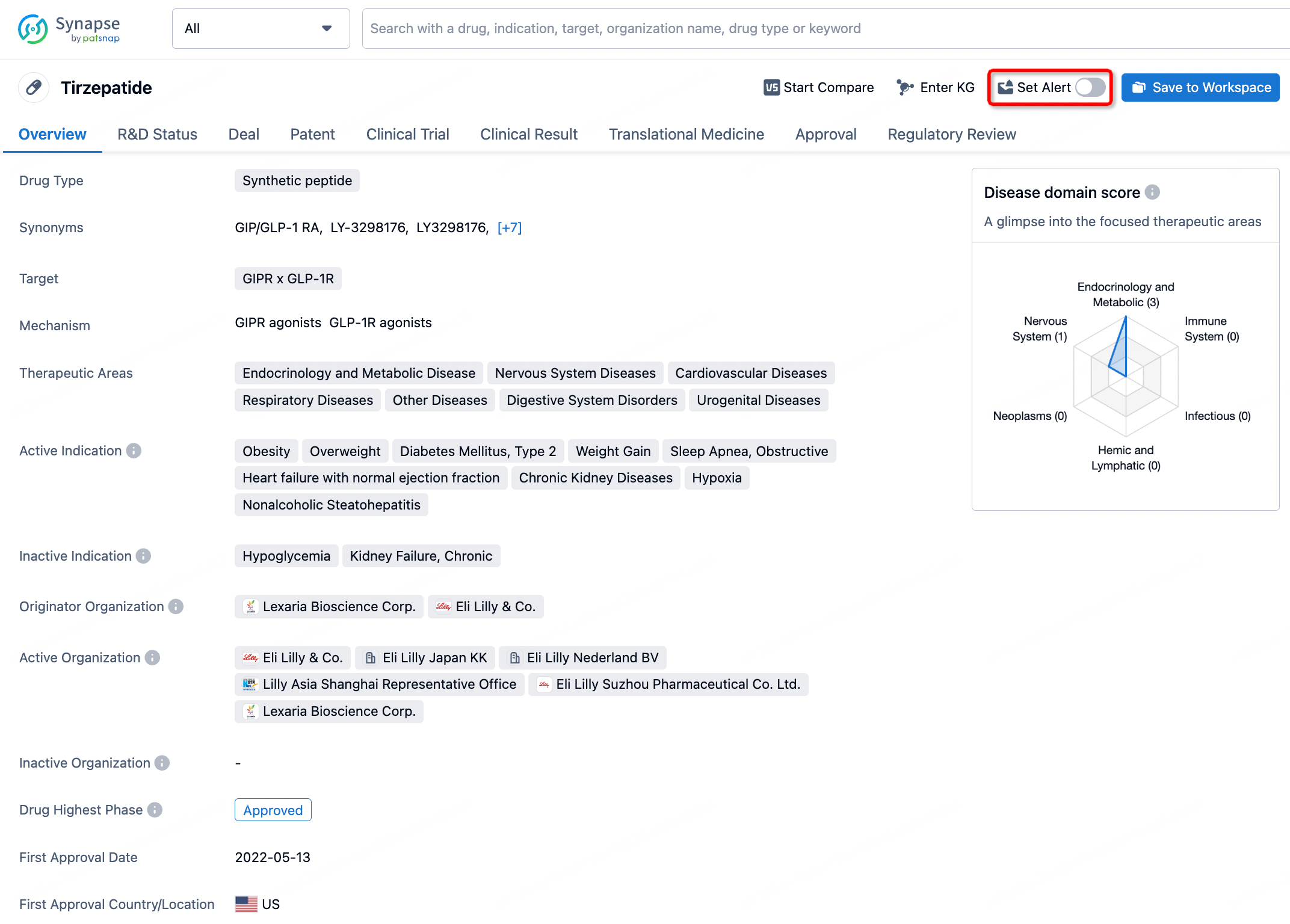
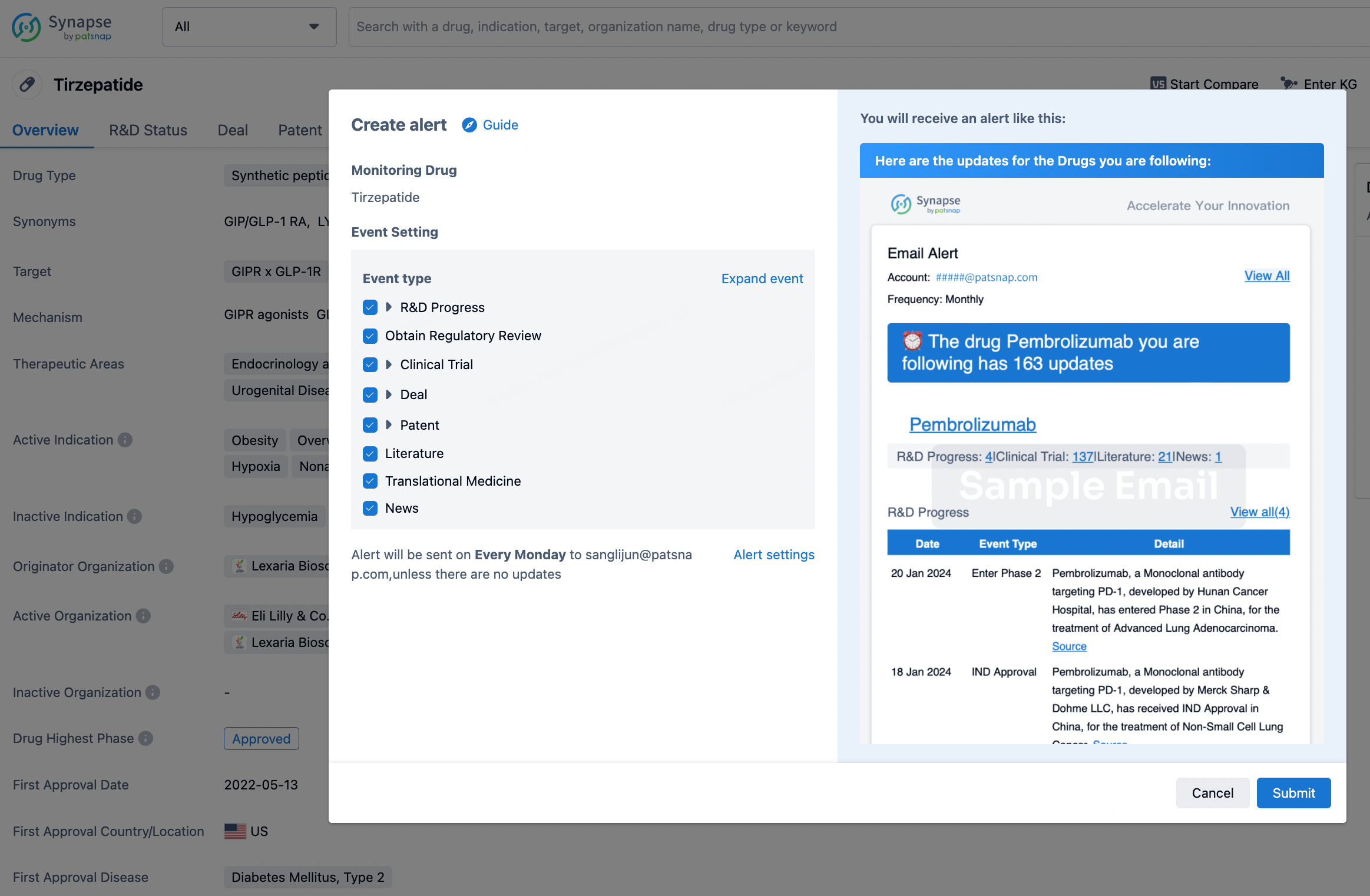
In the Synapse database, you can stay updated on the latest research and development advances of all drugs. This service is accessible anytime and anywhere, with updates available daily or weekly. Use the "Set Alert" function to stay informed. Click on the image below to embark on a brand new journey of drug discovery!
AI Agents Built for Biopharma Breakthroughs
Accelerate discovery. Empower decisions. Transform outcomes.
Get started for free today!
Accelerate Strategic R&D decision making with Synapse, PatSnap’s AI-powered Connected Innovation Intelligence Platform Built for Life Sciences Professionals.
Start your data trial now!
Synapse data is also accessible to external entities via APIs or data packages. Empower better decisions with the latest in pharmaceutical intelligence.