Request Demo
What is Fluoroestradiol F 18 used for?
14 June 2024
Fluoroestradiol F 18, also known by its trade name Cerianna, is an innovative radiopharmaceutical agent used primarily for diagnostic purposes in the field of oncology. Specifically, it is a fluorine-18 labeled estrogen analog, designed to bind to estrogen receptors (ER) with high specificity. The development and research around Fluoroestradiol F 18 have been carried out by various institutions, including the National Institutes of Health (NIH) and a number of universities and specialized medical centers. This agent falls under the category of positron emission tomography (PET) imaging agents. Its primary indication is for the detection and evaluation of estrogen receptor-positive breast cancer, providing oncologists with a detailed map of estrogen receptor distribution that can guide treatment decisions. As of recent years, Fluoroestradiol F 18 has received FDA approval for clinical use, marking a significant advancement in breast cancer diagnostics.
Fluoroestradiol F 18 functions through a mechanism of action centered on its ability to bind to estrogen receptors within the body. Estrogen receptors are proteins that are activated by the hormone estrogen, influencing the growth and development of certain cancers, particularly breast cancer. When injected into the body, Fluoroestradiol F 18 circulates and binds to these receptors. The fluorine-18 isotope emits positrons, which are detected by PET scanners. This process results in highly detailed, three-dimensional images that reveal the density and distribution of estrogen receptors in tissues. By visualizing these receptors, physicians can determine the extent of cancer spread and its receptor status, which is crucial for tailoring specific treatment plans that may include hormone therapies.
The administration of Fluoroestradiol F 18 is relatively straightforward but requires precise handling due to its radioactive nature. It is typically injected intravenously by a healthcare professional trained in the use of radiopharmaceuticals. The onset time for optimal imaging usually occurs within 20-30 minutes post-injection, allowing the agent to adequately circulate and bind to estrogen receptors. The patient is then positioned within a PET scanner, and the imaging process begins. The entire procedure, from injection to the completion of the scan, generally spans about 60 to 90 minutes. Patient preparation may involve fasting for a few hours before the procedure and ensuring hydration to aid in the elimination of the radioactive substance post-imaging.
Like all medical procedures, the use of Fluoroestradiol F 18 is associated with potential side effects and contraindications. Commonly reported side effects are generally mild and may include headaches, dizziness, and nausea. It is important for patients to inform their healthcare provider of any existing medical conditions, allergies, or medications they are currently taking, as these can influence the safety and effectiveness of the PET scan. Contraindications for the use of Fluoroestradiol F 18 include pregnancy and breastfeeding, due to the potential risk of radiation exposure to the fetus or infant. Additionally, patients with severe renal impairment may not be suitable candidates, as the elimination of the radioactive agent could be compromised, leading to prolonged radiation exposure.
The interaction of Fluoroestradiol F 18 with other drugs is an important consideration for ensuring accurate diagnostic outcomes. Certain medications, particularly those that influence estrogen receptor activity, can affect the binding and imaging efficacy of Fluoroestradiol F 18. For instance, hormone therapies such as tamoxifen or aromatase inhibitors, commonly used in breast cancer treatment, can alter estrogen receptor density and availability, potentially impacting the PET scan results. It is crucial for patients to discuss all ongoing medications with their healthcare provider prior to undergoing a Fluoroestradiol F 18 PET scan. Another consideration is the use of other diagnostic agents or therapies that might interfere with PET imaging, although such cases are rare.
In conclusion, Fluoroestradiol F 18 represents a significant advancement in the diagnostic landscape for estrogen receptor-positive breast cancer. By providing detailed images of estrogen receptor distribution, it aids oncologists in making informed decisions regarding treatment strategies. Understanding its mechanism of action, administration protocols, potential side effects, and interactions with other drugs ensures its safe and effective use in clinical settings. As research continues and more data becomes available, the role of Fluoroestradiol F 18 in personalized cancer care is expected to expand, offering hope for better outcomes in breast cancer management.
Fluoroestradiol F 18 functions through a mechanism of action centered on its ability to bind to estrogen receptors within the body. Estrogen receptors are proteins that are activated by the hormone estrogen, influencing the growth and development of certain cancers, particularly breast cancer. When injected into the body, Fluoroestradiol F 18 circulates and binds to these receptors. The fluorine-18 isotope emits positrons, which are detected by PET scanners. This process results in highly detailed, three-dimensional images that reveal the density and distribution of estrogen receptors in tissues. By visualizing these receptors, physicians can determine the extent of cancer spread and its receptor status, which is crucial for tailoring specific treatment plans that may include hormone therapies.
The administration of Fluoroestradiol F 18 is relatively straightforward but requires precise handling due to its radioactive nature. It is typically injected intravenously by a healthcare professional trained in the use of radiopharmaceuticals. The onset time for optimal imaging usually occurs within 20-30 minutes post-injection, allowing the agent to adequately circulate and bind to estrogen receptors. The patient is then positioned within a PET scanner, and the imaging process begins. The entire procedure, from injection to the completion of the scan, generally spans about 60 to 90 minutes. Patient preparation may involve fasting for a few hours before the procedure and ensuring hydration to aid in the elimination of the radioactive substance post-imaging.
Like all medical procedures, the use of Fluoroestradiol F 18 is associated with potential side effects and contraindications. Commonly reported side effects are generally mild and may include headaches, dizziness, and nausea. It is important for patients to inform their healthcare provider of any existing medical conditions, allergies, or medications they are currently taking, as these can influence the safety and effectiveness of the PET scan. Contraindications for the use of Fluoroestradiol F 18 include pregnancy and breastfeeding, due to the potential risk of radiation exposure to the fetus or infant. Additionally, patients with severe renal impairment may not be suitable candidates, as the elimination of the radioactive agent could be compromised, leading to prolonged radiation exposure.
The interaction of Fluoroestradiol F 18 with other drugs is an important consideration for ensuring accurate diagnostic outcomes. Certain medications, particularly those that influence estrogen receptor activity, can affect the binding and imaging efficacy of Fluoroestradiol F 18. For instance, hormone therapies such as tamoxifen or aromatase inhibitors, commonly used in breast cancer treatment, can alter estrogen receptor density and availability, potentially impacting the PET scan results. It is crucial for patients to discuss all ongoing medications with their healthcare provider prior to undergoing a Fluoroestradiol F 18 PET scan. Another consideration is the use of other diagnostic agents or therapies that might interfere with PET imaging, although such cases are rare.
In conclusion, Fluoroestradiol F 18 represents a significant advancement in the diagnostic landscape for estrogen receptor-positive breast cancer. By providing detailed images of estrogen receptor distribution, it aids oncologists in making informed decisions regarding treatment strategies. Understanding its mechanism of action, administration protocols, potential side effects, and interactions with other drugs ensures its safe and effective use in clinical settings. As research continues and more data becomes available, the role of Fluoroestradiol F 18 in personalized cancer care is expected to expand, offering hope for better outcomes in breast cancer management.
How to obtain the latest development progress of all drugs?
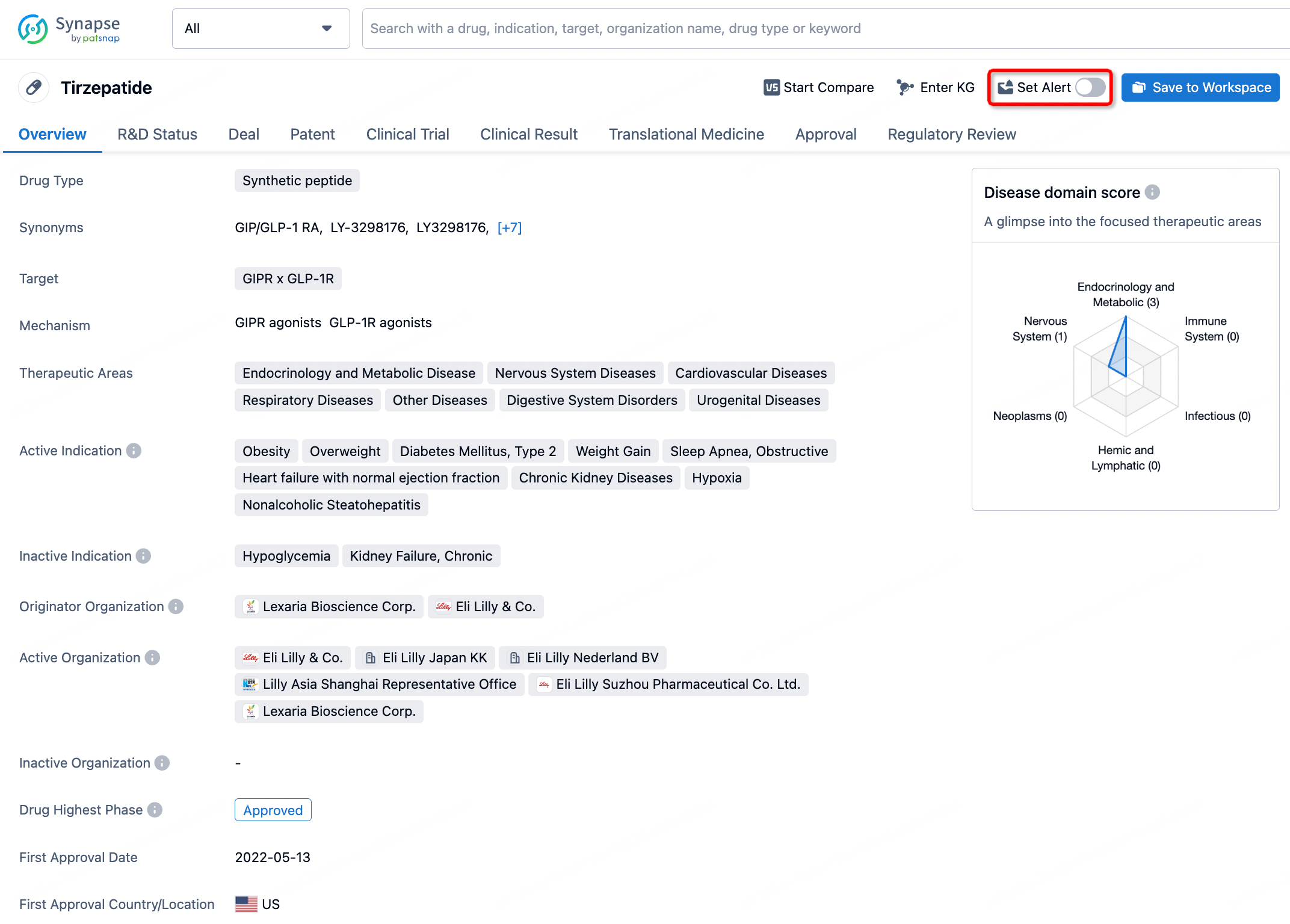
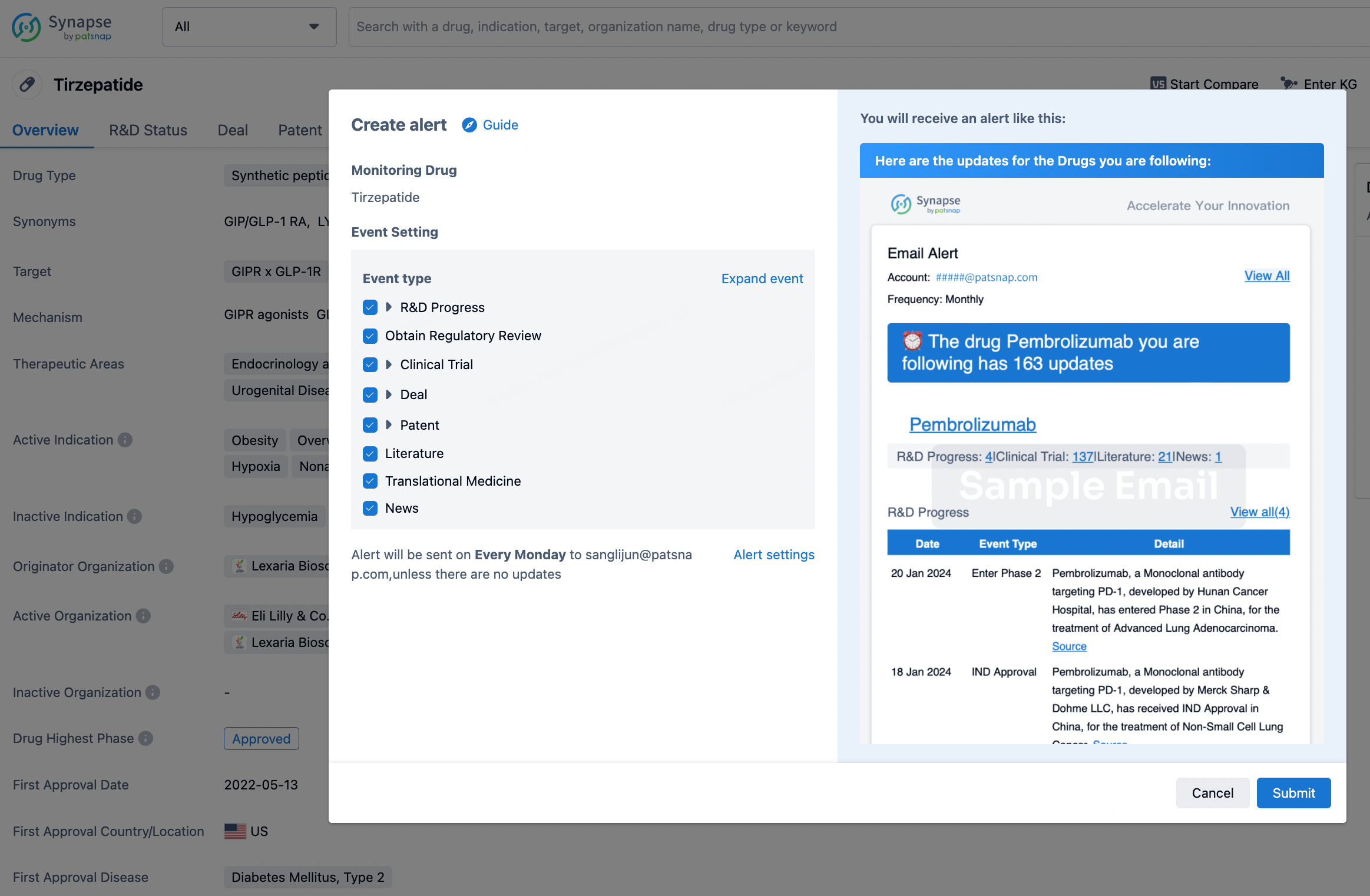
In the Synapse database, you can stay updated on the latest research and development advances of all drugs. This service is accessible anytime and anywhere, with updates available daily or weekly. Use the "Set Alert" function to stay informed. Click on the image below to embark on a brand new journey of drug discovery!
AI Agents Built for Biopharma Breakthroughs
Accelerate discovery. Empower decisions. Transform outcomes.
Get started for free today!
Accelerate Strategic R&D decision making with Synapse, PatSnap’s AI-powered Connected Innovation Intelligence Platform Built for Life Sciences Professionals.
Start your data trial now!
Synapse data is also accessible to external entities via APIs or data packages. Empower better decisions with the latest in pharmaceutical intelligence.