Request Demo
What is GED-0507-34 used for?
28 June 2024
GED-0507-34, a promising pharmaceutical compound, is capturing the attention of researchers and medical professionals globally. Developed initially by a consortium of research institutions dedicated to pioneering innovative treatments, GED-0507-34 is making waves in the world of drug development. This compound falls under the category of small molecule drugs, which are known for their ability to easily penetrate cells and treat a variety of conditions at a molecular level.
The primary targets of GED-0507-34 include inflammatory pathways and immune response mechanisms, making it a potential game-changer in the treatment of inflammatory disorders. Research institutions involved in its development have conducted extensive preclinical and early clinical trials, showing encouraging results that suggest GED-0507-34 could be a significant advancement in the field of immunology and inflammation.
The current research progress indicates that GED-0507-34 has moved beyond the initial stages of drug development and is now undergoing phase II clinical trials. This stage is critical as it involves a larger sample size of patients and focuses on assessing the drug's efficacy, optimal dosing, and potential side effects. If the data continues to be positive, GED-0507-34 could soon progress to phase III trials, bringing it one step closer to becoming a widely available treatment option.
GED-0507-34 operates through a unique and intricate mechanism of action that distinguishes it from other treatments in its category. At its core, GED-0507-34 targets specific signaling molecules and pathways that are involved in the inflammatory process. By modulating these pathways, the drug aims to reduce inflammation and restore normal immune function.
One of the primary targets of GED-0507-34 is the nuclear factor-kappa B (NF-κB) pathway, a critical regulator of immune response and inflammation. NF-κB is often found to be overactive in chronic inflammatory conditions, leading to sustained inflammation and tissue damage. GED-0507-34 works by inhibiting the activation of NF-κB, thereby reducing the production of pro-inflammatory cytokines and other inflammatory mediators.
Additionally, GED-0507-34 has shown potential in modulating other key pathways involved in cell proliferation and apoptosis, which are often dysregulated in inflammatory diseases. By normalizing these processes, GED-0507-34 not only helps in reducing inflammation but also promotes the healing and regeneration of damaged tissues.
The indication for GED-0507-34 is primarily focused on treating inflammatory bowel disease (IBD), a chronic condition characterized by persistent inflammation of the gastrointestinal tract. IBD includes two main types: Crohn's disease and ulcerative colitis. Both conditions cause severe symptoms such as abdominal pain, diarrhea, fatigue, and weight loss, significantly impacting the quality of life of affected individuals.
Current treatments for IBD include anti-inflammatory drugs, immunosuppressants, and biologics, but they often come with significant side effects and may not be effective for all patients. GED-0507-34 offers a novel approach by specifically targeting the underlying mechanisms of inflammation, potentially providing a more effective and safer alternative for IBD patients.
In clinical trials, GED-0507-34 has demonstrated promising results in reducing disease activity and improving symptoms in patients with IBD. The drug's ability to selectively modulate key inflammatory pathways while sparing normal immune function sets it apart from existing treatments, which often suppress the immune system broadly and can lead to increased risk of infections and other complications.
In conclusion, GED-0507-34 represents a significant advancement in the treatment of inflammatory disorders, particularly inflammatory bowel disease. With its unique mechanism of action and promising clinical trial results, this compound has the potential to offer a more effective and safer treatment option for patients suffering from chronic inflammation. As research continues to progress, the medical community remains hopeful that GED-0507-34 will soon become a widely available therapeutic option, providing much-needed relief to millions of individuals worldwide.
The primary targets of GED-0507-34 include inflammatory pathways and immune response mechanisms, making it a potential game-changer in the treatment of inflammatory disorders. Research institutions involved in its development have conducted extensive preclinical and early clinical trials, showing encouraging results that suggest GED-0507-34 could be a significant advancement in the field of immunology and inflammation.
The current research progress indicates that GED-0507-34 has moved beyond the initial stages of drug development and is now undergoing phase II clinical trials. This stage is critical as it involves a larger sample size of patients and focuses on assessing the drug's efficacy, optimal dosing, and potential side effects. If the data continues to be positive, GED-0507-34 could soon progress to phase III trials, bringing it one step closer to becoming a widely available treatment option.
GED-0507-34 operates through a unique and intricate mechanism of action that distinguishes it from other treatments in its category. At its core, GED-0507-34 targets specific signaling molecules and pathways that are involved in the inflammatory process. By modulating these pathways, the drug aims to reduce inflammation and restore normal immune function.
One of the primary targets of GED-0507-34 is the nuclear factor-kappa B (NF-κB) pathway, a critical regulator of immune response and inflammation. NF-κB is often found to be overactive in chronic inflammatory conditions, leading to sustained inflammation and tissue damage. GED-0507-34 works by inhibiting the activation of NF-κB, thereby reducing the production of pro-inflammatory cytokines and other inflammatory mediators.
Additionally, GED-0507-34 has shown potential in modulating other key pathways involved in cell proliferation and apoptosis, which are often dysregulated in inflammatory diseases. By normalizing these processes, GED-0507-34 not only helps in reducing inflammation but also promotes the healing and regeneration of damaged tissues.
The indication for GED-0507-34 is primarily focused on treating inflammatory bowel disease (IBD), a chronic condition characterized by persistent inflammation of the gastrointestinal tract. IBD includes two main types: Crohn's disease and ulcerative colitis. Both conditions cause severe symptoms such as abdominal pain, diarrhea, fatigue, and weight loss, significantly impacting the quality of life of affected individuals.
Current treatments for IBD include anti-inflammatory drugs, immunosuppressants, and biologics, but they often come with significant side effects and may not be effective for all patients. GED-0507-34 offers a novel approach by specifically targeting the underlying mechanisms of inflammation, potentially providing a more effective and safer alternative for IBD patients.
In clinical trials, GED-0507-34 has demonstrated promising results in reducing disease activity and improving symptoms in patients with IBD. The drug's ability to selectively modulate key inflammatory pathways while sparing normal immune function sets it apart from existing treatments, which often suppress the immune system broadly and can lead to increased risk of infections and other complications.
In conclusion, GED-0507-34 represents a significant advancement in the treatment of inflammatory disorders, particularly inflammatory bowel disease. With its unique mechanism of action and promising clinical trial results, this compound has the potential to offer a more effective and safer treatment option for patients suffering from chronic inflammation. As research continues to progress, the medical community remains hopeful that GED-0507-34 will soon become a widely available therapeutic option, providing much-needed relief to millions of individuals worldwide.
How to obtain the latest development progress of all drugs?
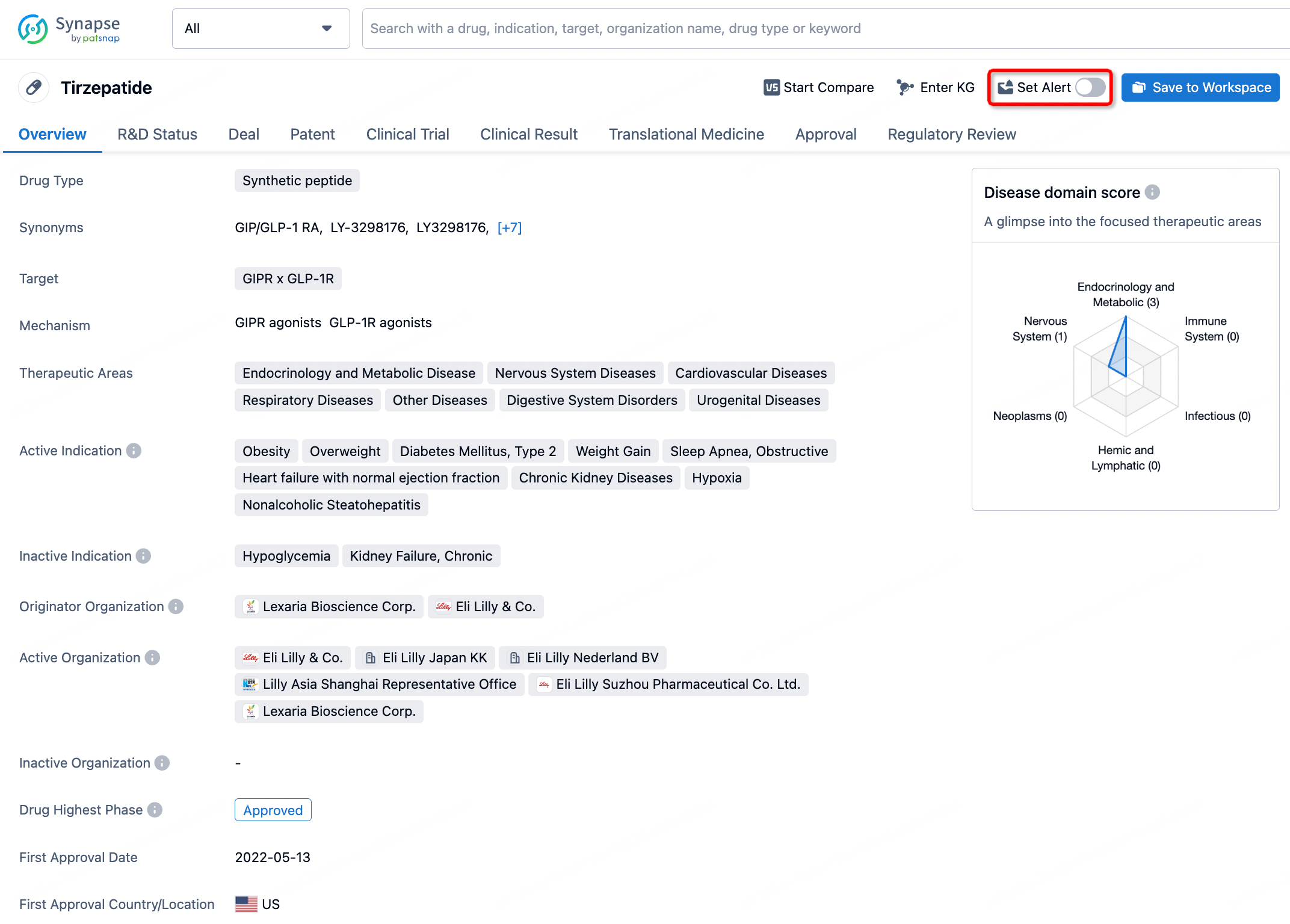
In the Synapse database, you can stay updated on the latest research and development advances of all drugs. This service is accessible anytime and anywhere, with updates available daily or weekly. Use the "Set Alert" function to stay informed. Click on the image below to embark on a brand new journey of drug discovery!

AI Agents Built for Biopharma Breakthroughs
Accelerate discovery. Empower decisions. Transform outcomes.
Get started for free today!
Accelerate Strategic R&D decision making with Synapse, PatSnap’s AI-powered Connected Innovation Intelligence Platform Built for Life Sciences Professionals.
Start your data trial now!
Synapse data is also accessible to external entities via APIs or data packages. Empower better decisions with the latest in pharmaceutical intelligence.