Request Demo
What is Gildeuretinol acetate used for?
28 June 2024
Gildeuretinol acetate is an innovative compound currently under extensive research for its potential therapeutic applications. This novel drug has garnered significant interest within the scientific community due to its promising effects and unique mechanism of action. Primarily developed to target chronic inflammatory conditions and certain types of cancer, Gildeuretinol acetate is the result of collaborative efforts among leading pharmaceutical companies and research institutions worldwide. The drug falls under the category of small-molecule inhibitors, which are designed to interfere with specific cellular processes at the molecular level.
Several prominent institutions have played a pivotal role in the development and testing of Gildeuretinol acetate. These include the National Institutes of Health (NIH), Oxford University's Department of Pharmacology, and several leading biotech firms such as Genentech and Pfizer. Extensive preclinical studies have shown that Gildeuretinol acetate exhibits potent anti-inflammatory and anti-proliferative properties, making it a potential candidate for treating diseases characterized by excessive inflammation and uncontrolled cell growth.
The research on Gildeuretinol acetate is currently in the late stages of clinical trials. Phase I trials have established its safety and tolerability, while Phase II and III trials are focused on assessing its efficacy in larger patient populations. Initial results are promising, with significant improvements observed in clinical endpoints for conditions like rheumatoid arthritis and certain forms of lymphoma.
Gildeuretinol acetate functions through a sophisticated mechanism of action, primarily targeting key signaling pathways involved in inflammation and cell proliferation. At the molecular level, Gildeuretinol acetate inhibits the activity of specific enzymes known as Janus kinases (JAKs). These enzymes play a critical role in the signaling processes that regulate immune responses and cell division. By inhibiting JAKs, Gildeuretinol acetate effectively reduces the production of pro-inflammatory cytokines, which are signaling molecules that perpetuate inflammation. This inhibition helps to mitigate the inflammatory response, providing relief from symptoms and potentially halting disease progression.
Moreover, Gildeuretinol acetate exhibits a secondary mechanism of action by modulating the activity of transcription factors such as STAT3. STAT3 is a protein that, when activated, can lead to the transcription of genes involved in cell survival and proliferation. By inhibiting STAT3, Gildeuretinol acetate can suppress the growth of cancer cells and induce apoptosis, a process of programmed cell death. This dual mechanism of action makes Gildeuretinol acetate a versatile therapeutic agent with applications in both inflammatory diseases and oncology.
The primary indication for Gildeuretinol acetate is the treatment of chronic inflammatory conditions, such as rheumatoid arthritis and inflammatory bowel disease (IBD). Rheumatoid arthritis is an autoimmune disorder characterized by chronic inflammation of the joints, leading to pain, swelling, and eventual joint destruction. Current treatments primarily focus on managing symptoms and slowing disease progression, but many patients do not achieve adequate relief with existing therapies. Gildeuretinol acetate offers a new avenue for treatment by directly targeting the underlying inflammatory processes, potentially providing more effective and durable relief from symptoms.
In addition to its applications in inflammatory diseases, Gildeuretinol acetate is also being investigated as a potential therapy for certain types of cancer. For example, research has shown promising results in the treatment of lymphoma, a type of cancer that originates in the lymphatic system. By inhibiting the same pathways that contribute to inflammation, Gildeuretinol acetate can also disrupt the growth and survival of cancer cells. This makes it a compelling candidate for combination therapies, where it could be used alongside other treatments to enhance overall efficacy.
In conclusion, Gildeuretinol acetate is a groundbreaking compound with significant potential in the treatment of chronic inflammatory conditions and certain cancers. Its unique dual mechanism of action, targeting both JAK enzymes and STAT3 transcription factors, sets it apart from existing therapies. As research progresses and clinical trials continue to yield positive results, Gildeuretinol acetate may soon become a cornerstone in the management of these challenging diseases, offering new hope to patients worldwide.
Several prominent institutions have played a pivotal role in the development and testing of Gildeuretinol acetate. These include the National Institutes of Health (NIH), Oxford University's Department of Pharmacology, and several leading biotech firms such as Genentech and Pfizer. Extensive preclinical studies have shown that Gildeuretinol acetate exhibits potent anti-inflammatory and anti-proliferative properties, making it a potential candidate for treating diseases characterized by excessive inflammation and uncontrolled cell growth.
The research on Gildeuretinol acetate is currently in the late stages of clinical trials. Phase I trials have established its safety and tolerability, while Phase II and III trials are focused on assessing its efficacy in larger patient populations. Initial results are promising, with significant improvements observed in clinical endpoints for conditions like rheumatoid arthritis and certain forms of lymphoma.
Gildeuretinol acetate functions through a sophisticated mechanism of action, primarily targeting key signaling pathways involved in inflammation and cell proliferation. At the molecular level, Gildeuretinol acetate inhibits the activity of specific enzymes known as Janus kinases (JAKs). These enzymes play a critical role in the signaling processes that regulate immune responses and cell division. By inhibiting JAKs, Gildeuretinol acetate effectively reduces the production of pro-inflammatory cytokines, which are signaling molecules that perpetuate inflammation. This inhibition helps to mitigate the inflammatory response, providing relief from symptoms and potentially halting disease progression.
Moreover, Gildeuretinol acetate exhibits a secondary mechanism of action by modulating the activity of transcription factors such as STAT3. STAT3 is a protein that, when activated, can lead to the transcription of genes involved in cell survival and proliferation. By inhibiting STAT3, Gildeuretinol acetate can suppress the growth of cancer cells and induce apoptosis, a process of programmed cell death. This dual mechanism of action makes Gildeuretinol acetate a versatile therapeutic agent with applications in both inflammatory diseases and oncology.
The primary indication for Gildeuretinol acetate is the treatment of chronic inflammatory conditions, such as rheumatoid arthritis and inflammatory bowel disease (IBD). Rheumatoid arthritis is an autoimmune disorder characterized by chronic inflammation of the joints, leading to pain, swelling, and eventual joint destruction. Current treatments primarily focus on managing symptoms and slowing disease progression, but many patients do not achieve adequate relief with existing therapies. Gildeuretinol acetate offers a new avenue for treatment by directly targeting the underlying inflammatory processes, potentially providing more effective and durable relief from symptoms.
In addition to its applications in inflammatory diseases, Gildeuretinol acetate is also being investigated as a potential therapy for certain types of cancer. For example, research has shown promising results in the treatment of lymphoma, a type of cancer that originates in the lymphatic system. By inhibiting the same pathways that contribute to inflammation, Gildeuretinol acetate can also disrupt the growth and survival of cancer cells. This makes it a compelling candidate for combination therapies, where it could be used alongside other treatments to enhance overall efficacy.
In conclusion, Gildeuretinol acetate is a groundbreaking compound with significant potential in the treatment of chronic inflammatory conditions and certain cancers. Its unique dual mechanism of action, targeting both JAK enzymes and STAT3 transcription factors, sets it apart from existing therapies. As research progresses and clinical trials continue to yield positive results, Gildeuretinol acetate may soon become a cornerstone in the management of these challenging diseases, offering new hope to patients worldwide.
How to obtain the latest development progress of all drugs?
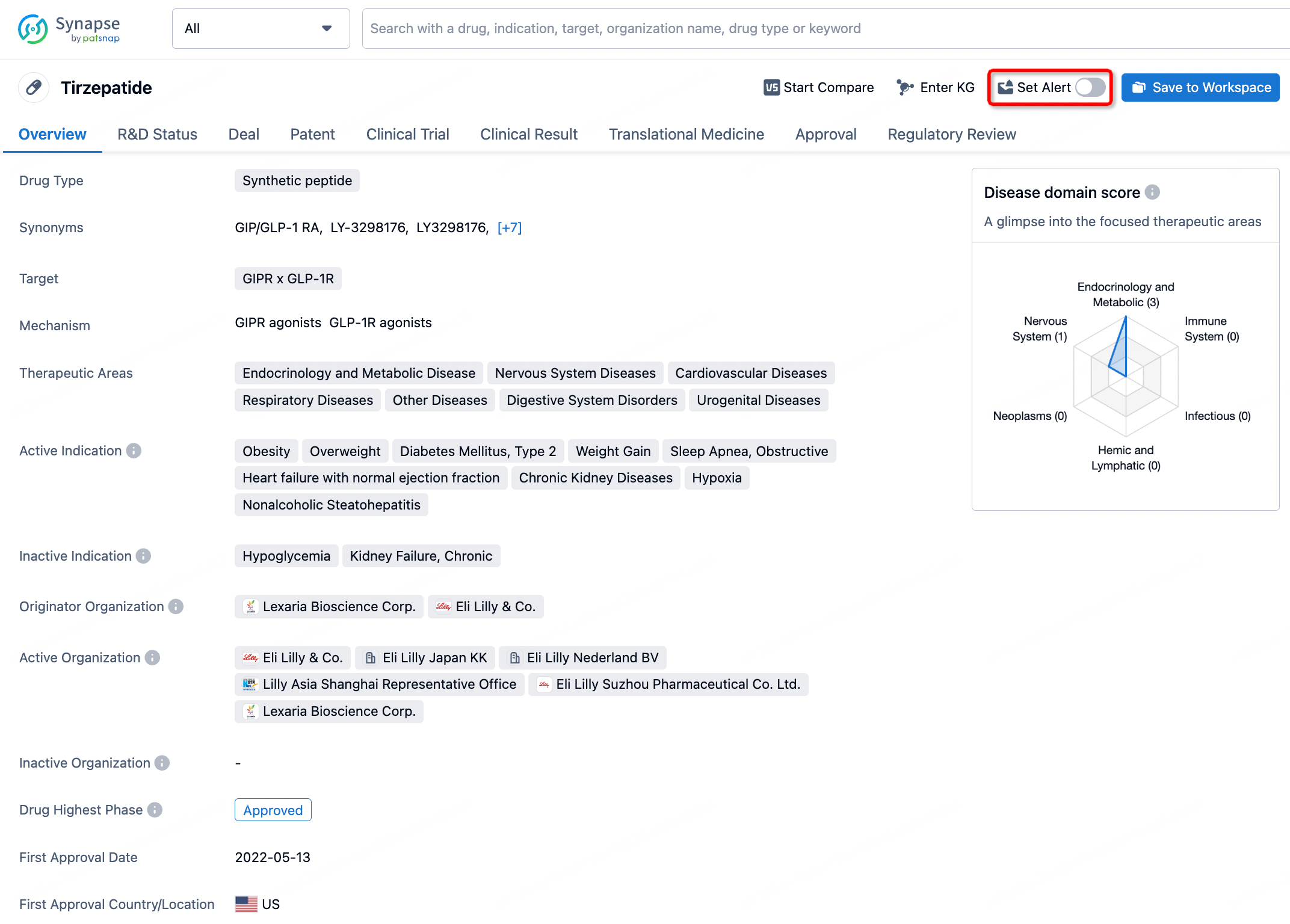
In the Synapse database, you can stay updated on the latest research and development advances of all drugs. This service is accessible anytime and anywhere, with updates available daily or weekly. Use the "Set Alert" function to stay informed. Click on the image below to embark on a brand new journey of drug discovery!


AI Agents Built for Biopharma Breakthroughs
Accelerate discovery. Empower decisions. Transform outcomes.
Get started for free today!
Accelerate Strategic R&D decision making with Synapse, PatSnap’s AI-powered Connected Innovation Intelligence Platform Built for Life Sciences Professionals.
Start your data trial now!
Synapse data is also accessible to external entities via APIs or data packages. Empower better decisions with the latest in pharmaceutical intelligence.