Request Demo
What is HP-5070 used for?
28 June 2024
In the rapidly evolving field of pharmaceutical research, the HP-5070 has emerged as a game-changer, showing promise across a diverse range of medical applications. This innovative drug candidate has garnered attention from top research institutions and pharmaceutical companies due to its potential to address unmet medical needs. The HP-5070 is a small molecule drug that has been developed primarily to target specific types of cancer, though its applications may extend beyond oncology. Research institutions globally are collaborating to explore its full potential, with several clinical trials already in various phases of completion. The drug's progress from early discovery stages to advanced clinical testing underscores its potential efficacy and safety profile, positioning it as a potential breakthrough in modern medicine.
The HP-5070 operates through a sophisticated mechanism of action that sets it apart from other therapeutic agents. At its core, HP-5070 functions as an inhibitor of a specific enzyme crucial to the proliferation and survival of cancer cells. This enzyme, often overexpressed in certain cancer types, plays a pivotal role in the regulation of cell growth and apoptosis (programmed cell death). By inhibiting this enzyme, HP-5070 disrupts the cancer cells' metabolic pathways, leading to a reduction in their growth and an increase in cell death. Furthermore, HP-5070's selective targeting minimizes damage to healthy cells, which is a significant advantage over traditional chemotherapy that often affects both cancerous and non-cancerous cells indiscriminately. This selectivity not only enhances the efficacy of the treatment but also reduces the side effects experienced by patients, thereby improving the overall quality of life for those undergoing therapy.
The primary indication for HP-5070 is the treatment of certain types of cancer, including but not limited to, advanced metastatic breast cancer, non-small cell lung cancer, and colorectal cancer. These cancer types are known for their aggressive nature and poor prognosis, making the need for effective treatment options critical. In addition to oncology, preliminary studies suggest that HP-5070 may also have potential applications in treating autoimmune diseases and chronic inflammatory conditions. This versatility stems from its underlying mechanism of action, which can modulate immune responses and inflammatory pathways in the body.
Collaborative research efforts are underway to further investigate these potential applications, with several clinical trials currently in progress. The results from Phase I and Phase II trials have been promising, indicating that HP-5070 is well tolerated by patients and shows significant activity against target cancer cells. As it progresses into Phase III trials, the focus will be on confirming these early findings in larger patient populations and determining the optimal dosing regimens. The pharmaceutical industry is watching closely, as a successful Phase III outcome could pave the way for regulatory approval and eventual commercialization of HP-5070.
In conclusion, HP-5070 represents a beacon of hope in the fight against cancer and other serious diseases. Its innovative approach to targeting specific enzymes involved in disease progression holds the potential to transform treatment paradigms and improve patient outcomes. As research continues to unfold, the medical community remains optimistic about the future of HP-5070 and its ability to make a meaningful impact on global health. With ongoing clinical trials and collaborative research efforts, the horizon looks promising for this groundbreaking drug candidate.
The HP-5070 operates through a sophisticated mechanism of action that sets it apart from other therapeutic agents. At its core, HP-5070 functions as an inhibitor of a specific enzyme crucial to the proliferation and survival of cancer cells. This enzyme, often overexpressed in certain cancer types, plays a pivotal role in the regulation of cell growth and apoptosis (programmed cell death). By inhibiting this enzyme, HP-5070 disrupts the cancer cells' metabolic pathways, leading to a reduction in their growth and an increase in cell death. Furthermore, HP-5070's selective targeting minimizes damage to healthy cells, which is a significant advantage over traditional chemotherapy that often affects both cancerous and non-cancerous cells indiscriminately. This selectivity not only enhances the efficacy of the treatment but also reduces the side effects experienced by patients, thereby improving the overall quality of life for those undergoing therapy.
The primary indication for HP-5070 is the treatment of certain types of cancer, including but not limited to, advanced metastatic breast cancer, non-small cell lung cancer, and colorectal cancer. These cancer types are known for their aggressive nature and poor prognosis, making the need for effective treatment options critical. In addition to oncology, preliminary studies suggest that HP-5070 may also have potential applications in treating autoimmune diseases and chronic inflammatory conditions. This versatility stems from its underlying mechanism of action, which can modulate immune responses and inflammatory pathways in the body.
Collaborative research efforts are underway to further investigate these potential applications, with several clinical trials currently in progress. The results from Phase I and Phase II trials have been promising, indicating that HP-5070 is well tolerated by patients and shows significant activity against target cancer cells. As it progresses into Phase III trials, the focus will be on confirming these early findings in larger patient populations and determining the optimal dosing regimens. The pharmaceutical industry is watching closely, as a successful Phase III outcome could pave the way for regulatory approval and eventual commercialization of HP-5070.
In conclusion, HP-5070 represents a beacon of hope in the fight against cancer and other serious diseases. Its innovative approach to targeting specific enzymes involved in disease progression holds the potential to transform treatment paradigms and improve patient outcomes. As research continues to unfold, the medical community remains optimistic about the future of HP-5070 and its ability to make a meaningful impact on global health. With ongoing clinical trials and collaborative research efforts, the horizon looks promising for this groundbreaking drug candidate.
How to obtain the latest development progress of all drugs?
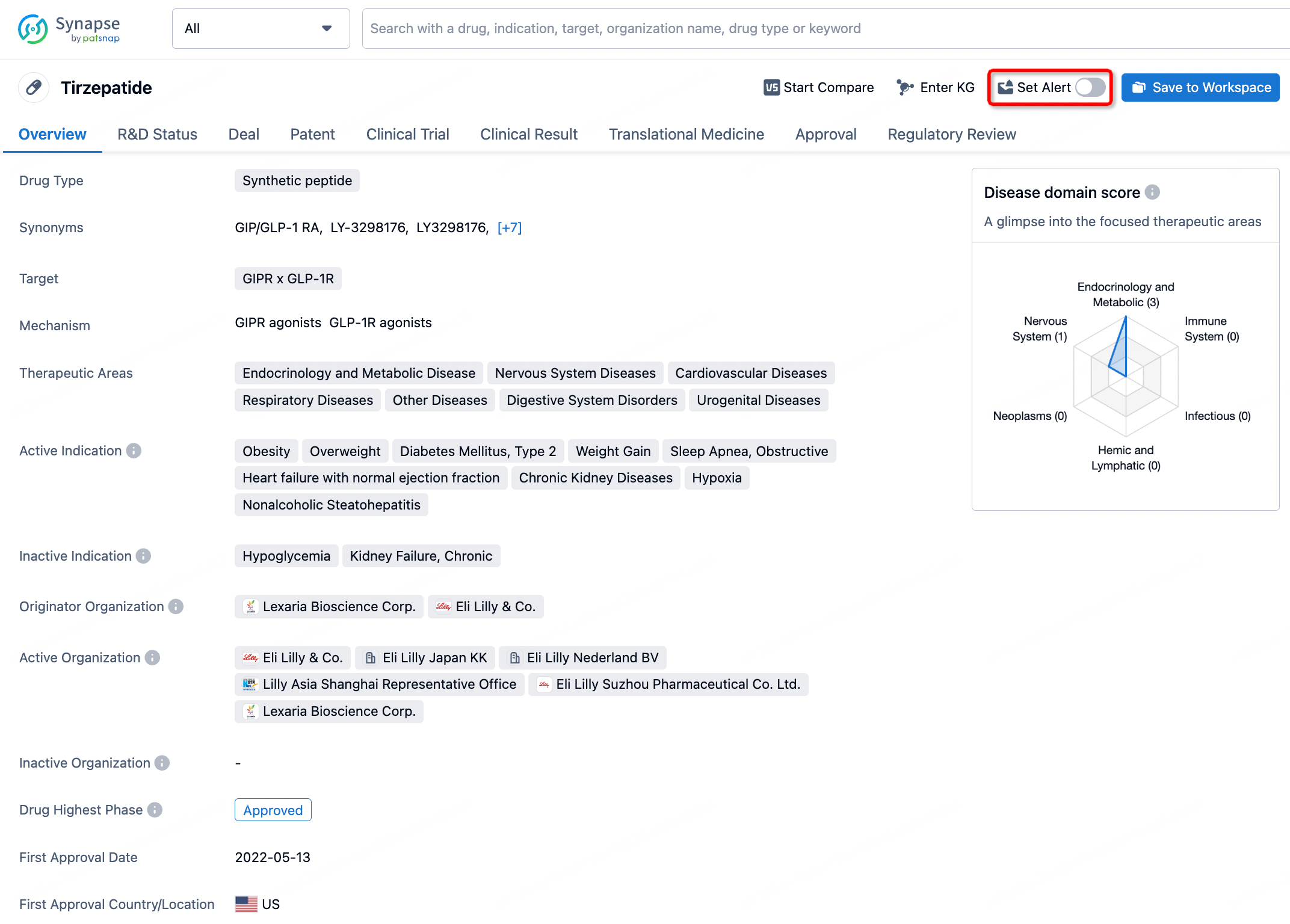
In the Synapse database, you can stay updated on the latest research and development advances of all drugs. This service is accessible anytime and anywhere, with updates available daily or weekly. Use the "Set Alert" function to stay informed. Click on the image below to embark on a brand new journey of drug discovery!


AI Agents Built for Biopharma Breakthroughs
Accelerate discovery. Empower decisions. Transform outcomes.
Get started for free today!
Accelerate Strategic R&D decision making with Synapse, PatSnap’s AI-powered Connected Innovation Intelligence Platform Built for Life Sciences Professionals.
Start your data trial now!
Synapse data is also accessible to external entities via APIs or data packages. Empower better decisions with the latest in pharmaceutical intelligence.