Request Demo
What is Idursulfase used for?
14 June 2024
Idursulfase, marketed under the trade name Elaprase, is a significant medical breakthrough in the treatment of Hunter syndrome, also known as Mucopolysaccharidosis II (MPS II). This rare, inherited disorder is a result of the deficient activity of the enzyme iduronate-2-sulfatase. The drug idursulfase aims to supplement this enzyme, thereby addressing the underlying cause of the disease rather than merely alleviating its symptoms.
Elaprase was developed by Shire, now part of Takeda Pharmaceutical Company, and received FDA approval in 2006. The drug is a recombinant form of the human iduronate-2-sulfatase enzyme and is thus categorized as an enzyme replacement therapy (ERT). Idursulfase targets the lysosomal storage disorder characteristic of Hunter syndrome by supplying the body with the missing enzyme. As a result, it is specifically indicated for patients diagnosed with this rare genetic condition.
**Idursulfase Mechanism of Action**
The primary mechanism of action of idursulfase revolves around its function as a replacement enzyme. In patients with Hunter syndrome, mutations in the IDS gene lead to the deficiency or complete absence of the iduronate-2-sulfatase enzyme. This enzyme is crucial for the degradation of glycosaminoglycans (GAGs), specifically heparan sulfate and dermatan sulfate. Without adequate enzyme activity, GAGs accumulate within the lysosomes of various cells, leading to progressive cellular and tissue damage.
Idursulfase works by supplementing the defective or deficient enzyme in the patient's body. Once administered, idursulfase is taken up by cells through receptor-mediated endocytosis via the mannose-6-phosphate receptor. Inside the lysosomes, the enzyme breaks down the accumulated GAGs, thereby reducing cellular storage material and alleviating the clinical symptoms associated with their accumulation. This action helps in mitigating the clinical manifestations of Hunter syndrome, including issues with mobility, respiratory function, and organ function.
**How to Use Idursulfase**
Idursulfase is administered via intravenous infusion. The recommended dosage is 0.5 mg/kg of body weight, given once a week. Each infusion typically lasts about 1 to 3 hours and should be administered in a clinical setting by healthcare professionals experienced in managing enzyme replacement therapy. The precise duration and frequency of the treatment may be adjusted based on the patient's response and tolerance to the therapy.
The onset time for noticing improvements varies among patients. Some individuals may observe benefits within a few months, while others may require longer periods of consistent treatment. Regular monitoring and assessments are crucial to evaluate the effectiveness of the therapy and make necessary adjustments.
**What is Idursulfase Side Effects**
Like all medications, idursulfase can cause side effects, though not everyone experiences them. Common side effects include headache, fever, chills, rash, and infusion-related reactions such as nausea, vomiting, and abdominal pain. These infusion-related reactions are generally managed by slowing the infusion rate or pre-medicating the patient with antihistamines or corticosteroids.
More severe side effects can occur, although they are less common. These may include severe allergic reactions (anaphylaxis), respiratory distress, and severe infusion reactions. Patients are typically monitored closely during and after infusions to manage any adverse events promptly.
There are also specific contraindications for the use of idursulfase. It is not recommended for patients with severe hypersensitivity to the active substance or any of its excipients. Additionally, caution is advised for patients with compromised respiratory function or those who have experienced severe infusion-related reactions.
**What Other Drugs Will Affect Idursulfase**
Drug interactions are an essential consideration for any therapeutic regimen. However, idursulfase does not have a high potential for drug-drug interactions. It is a protein-based enzyme replacement therapy, and its primary mechanism involves replacing the missing or deficient enzyme rather than interacting with other drugs through metabolic pathways commonly seen with small molecule drugs.
Nevertheless, clinicians should always review all medications a patient is taking to rule out potential interactions or overlapping side effects. For instance, caution may be necessary when combining idursulfase with drugs that have immunosuppressive effects, as these could potentially modify the patient's immune response to the enzyme replacement therapy.
In summary, idursulfase (Elaprase) represents a critical advancement in the management of Hunter syndrome by addressing the root cause of this lysosomal storage disorder. Its mechanism of action, involving the replacement of the deficient iduronate-2-sulfatase enzyme, offers a targeted approach to reduce the accumulation of harmful GAGs within cells. Administered via intravenous infusion, idursulfase has demonstrated efficacy in improving various clinical outcomes for patients with Hunter syndrome. While it is generally well-tolerated, monitoring for side effects and potential drug interactions remains a key component of patient management.
Elaprase was developed by Shire, now part of Takeda Pharmaceutical Company, and received FDA approval in 2006. The drug is a recombinant form of the human iduronate-2-sulfatase enzyme and is thus categorized as an enzyme replacement therapy (ERT). Idursulfase targets the lysosomal storage disorder characteristic of Hunter syndrome by supplying the body with the missing enzyme. As a result, it is specifically indicated for patients diagnosed with this rare genetic condition.
**Idursulfase Mechanism of Action**
The primary mechanism of action of idursulfase revolves around its function as a replacement enzyme. In patients with Hunter syndrome, mutations in the IDS gene lead to the deficiency or complete absence of the iduronate-2-sulfatase enzyme. This enzyme is crucial for the degradation of glycosaminoglycans (GAGs), specifically heparan sulfate and dermatan sulfate. Without adequate enzyme activity, GAGs accumulate within the lysosomes of various cells, leading to progressive cellular and tissue damage.
Idursulfase works by supplementing the defective or deficient enzyme in the patient's body. Once administered, idursulfase is taken up by cells through receptor-mediated endocytosis via the mannose-6-phosphate receptor. Inside the lysosomes, the enzyme breaks down the accumulated GAGs, thereby reducing cellular storage material and alleviating the clinical symptoms associated with their accumulation. This action helps in mitigating the clinical manifestations of Hunter syndrome, including issues with mobility, respiratory function, and organ function.
**How to Use Idursulfase**
Idursulfase is administered via intravenous infusion. The recommended dosage is 0.5 mg/kg of body weight, given once a week. Each infusion typically lasts about 1 to 3 hours and should be administered in a clinical setting by healthcare professionals experienced in managing enzyme replacement therapy. The precise duration and frequency of the treatment may be adjusted based on the patient's response and tolerance to the therapy.
The onset time for noticing improvements varies among patients. Some individuals may observe benefits within a few months, while others may require longer periods of consistent treatment. Regular monitoring and assessments are crucial to evaluate the effectiveness of the therapy and make necessary adjustments.
**What is Idursulfase Side Effects**
Like all medications, idursulfase can cause side effects, though not everyone experiences them. Common side effects include headache, fever, chills, rash, and infusion-related reactions such as nausea, vomiting, and abdominal pain. These infusion-related reactions are generally managed by slowing the infusion rate or pre-medicating the patient with antihistamines or corticosteroids.
More severe side effects can occur, although they are less common. These may include severe allergic reactions (anaphylaxis), respiratory distress, and severe infusion reactions. Patients are typically monitored closely during and after infusions to manage any adverse events promptly.
There are also specific contraindications for the use of idursulfase. It is not recommended for patients with severe hypersensitivity to the active substance or any of its excipients. Additionally, caution is advised for patients with compromised respiratory function or those who have experienced severe infusion-related reactions.
**What Other Drugs Will Affect Idursulfase**
Drug interactions are an essential consideration for any therapeutic regimen. However, idursulfase does not have a high potential for drug-drug interactions. It is a protein-based enzyme replacement therapy, and its primary mechanism involves replacing the missing or deficient enzyme rather than interacting with other drugs through metabolic pathways commonly seen with small molecule drugs.
Nevertheless, clinicians should always review all medications a patient is taking to rule out potential interactions or overlapping side effects. For instance, caution may be necessary when combining idursulfase with drugs that have immunosuppressive effects, as these could potentially modify the patient's immune response to the enzyme replacement therapy.
In summary, idursulfase (Elaprase) represents a critical advancement in the management of Hunter syndrome by addressing the root cause of this lysosomal storage disorder. Its mechanism of action, involving the replacement of the deficient iduronate-2-sulfatase enzyme, offers a targeted approach to reduce the accumulation of harmful GAGs within cells. Administered via intravenous infusion, idursulfase has demonstrated efficacy in improving various clinical outcomes for patients with Hunter syndrome. While it is generally well-tolerated, monitoring for side effects and potential drug interactions remains a key component of patient management.
How to obtain the latest development progress of all drugs?
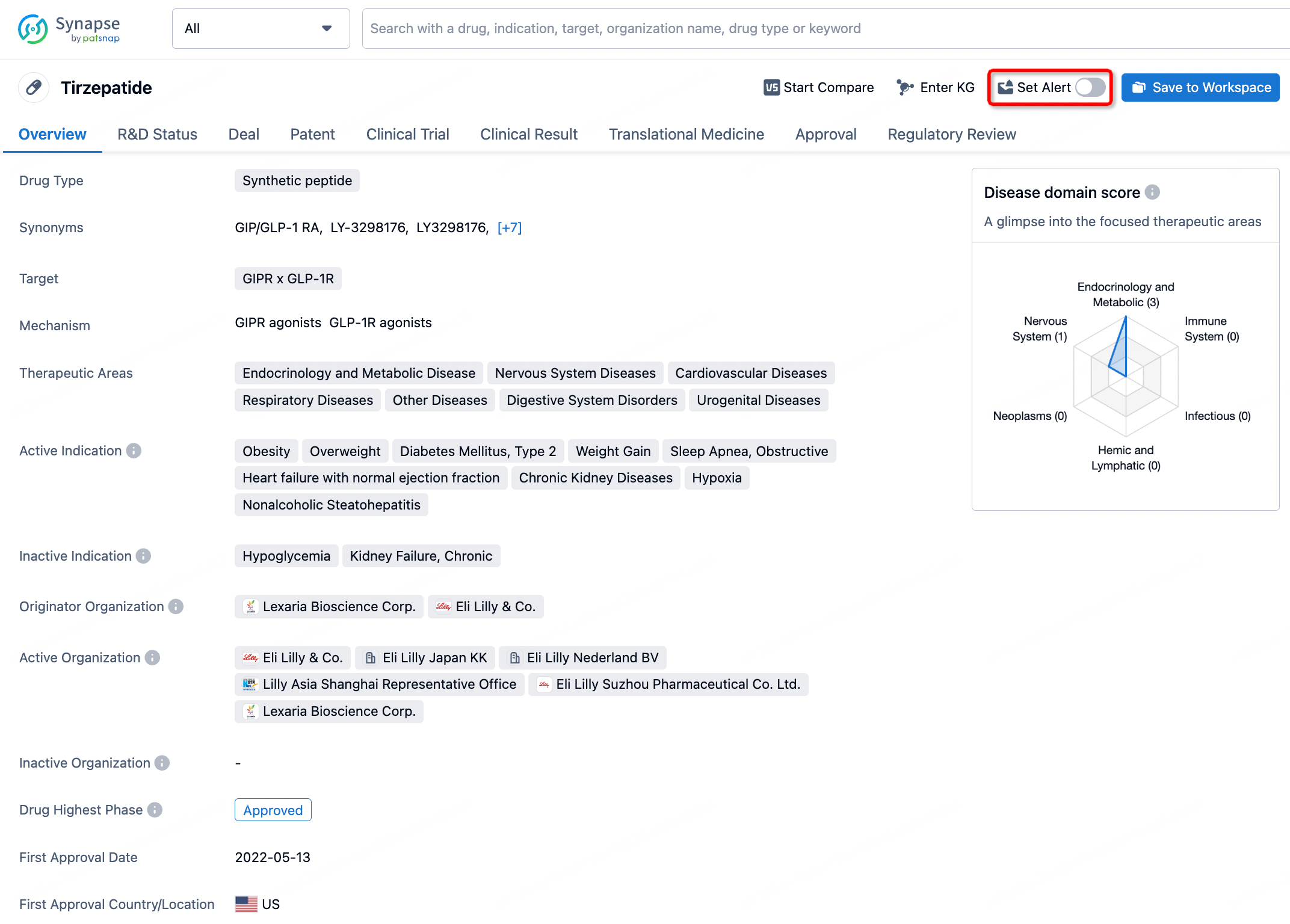
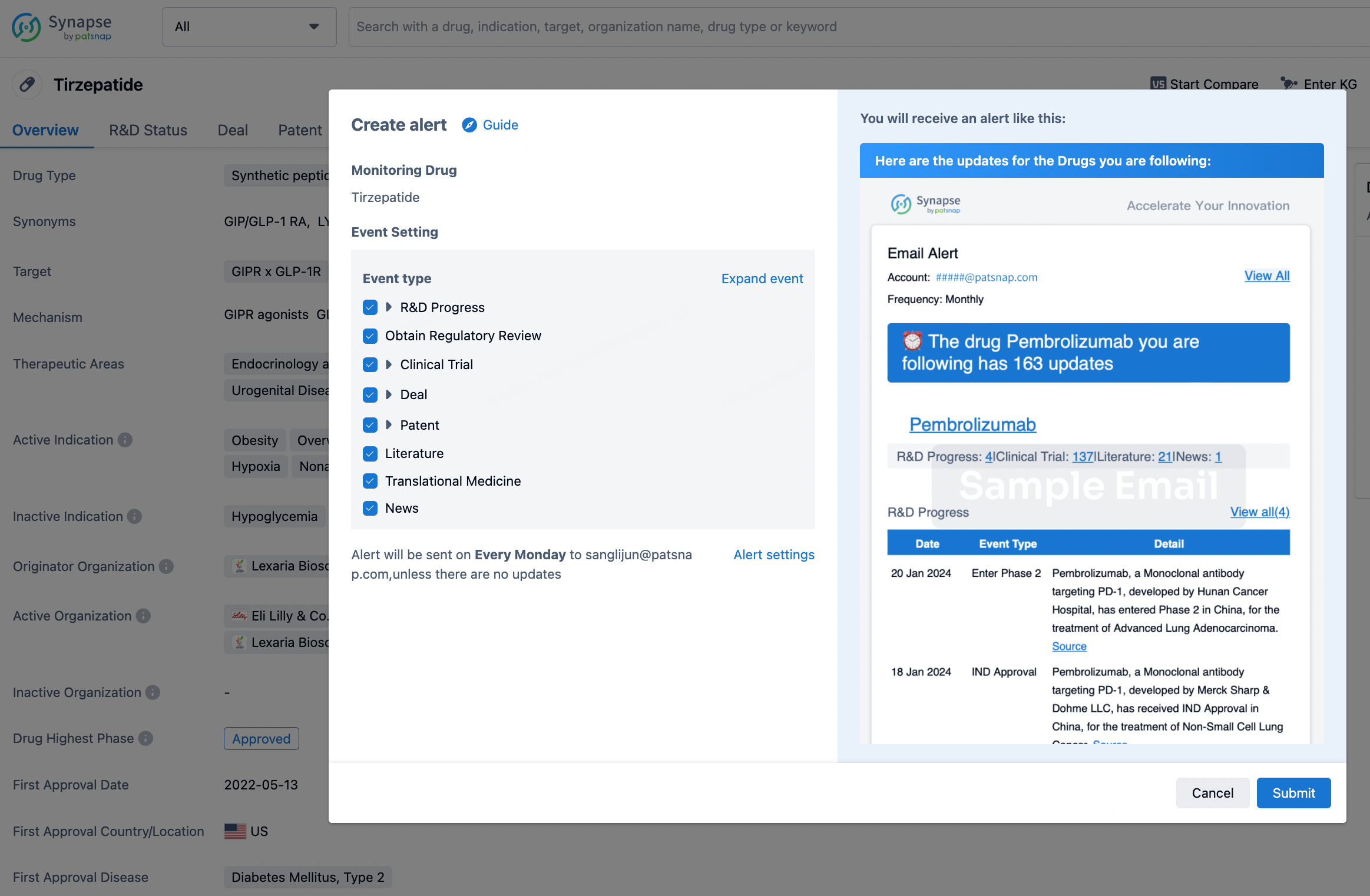
In the Synapse database, you can stay updated on the latest research and development advances of all drugs. This service is accessible anytime and anywhere, with updates available daily or weekly. Use the "Set Alert" function to stay informed. Click on the image below to embark on a brand new journey of drug discovery!

Hiro LS Researcher
The AI Search Engine Built to Accelerate Biopharma Decisions
Search across billion-scale life sciences data to uncover signals, validate evidence, and act with confidence.
Ask any biopharma research question→
Get started for free today!
Accelerate Strategic R&D decision making with Synapse, Patsnap’s AI-powered Connected Innovation Intelligence Platform Built for Life Sciences Professionals.
Discover Synapse Data Servers
Synapse data is now integrated into the PatSnap LS Model Context Protocol (MCP) service. Customize your LLM agent now using our MCP server!