Request Demo
What is IN-C029 used for?
28 June 2024
IN-C029 is an innovative therapeutic agent currently under extensive research due to its promising potential in targeting specific medical conditions. The development of IN-C029 is spearheaded by a collaboration of prominent research institutions and pharmaceutical companies, aiming to address the unmet medical needs in the field of oncology. This drug is classified as a small molecule inhibitor, specifically designed to target and inhibit certain proteins that are crucial for the proliferation and survival of cancer cells. The primary focus of IN-C029 is on advanced-stage cancers, particularly those that have shown resistance to conventional therapies. As of the latest updates, IN-C029 is in the mid-to-late stages of clinical trials, with researchers and clinicians closely monitoring its efficacy and safety profile.
The mechanism of action of IN-C029 is centered around its ability to selectively inhibit a protein known as the receptor tyrosine kinase (RTK). RTKs are a family of cell surface receptors that play a key role in the regulation of various cellular processes, including growth, differentiation, and metabolism. In many cancer types, RTKs are overexpressed or mutated, leading to uncontrolled cell division and tumor progression. IN-C029 works by binding to the ATP-binding site of the RTK, thereby preventing its activation and subsequent downstream signaling pathways. This inhibition effectively disrupts the cancer cell’s growth and survival mechanisms, leading to apoptosis, or programmed cell death. Unlike traditional chemotherapy, which nonspecifically targets rapidly dividing cells, IN-C029 offers a more targeted approach, thereby potentially reducing the risk of adverse effects.
The primary indication for IN-C029 is the treatment of certain types of advanced and refractory cancers. These include non-small cell lung cancer (NSCLC), colorectal cancer, and certain subtypes of breast cancer, among others. These cancers are often characterized by mutations or overexpression of RTKs, making them suitable targets for IN-C029 therapy. The selection of patients for clinical trials typically involves genetic screening to identify those who are most likely to benefit from this targeted treatment approach.
The progress in the clinical development of IN-C029 has been promising, with early-phase trials demonstrating its potent anticancer activity and manageable safety profile. In Phase I trials, the primary focus was on determining the optimal dosing regimen and assessing the drug's safety in a small cohort of patients. These studies revealed that IN-C029 was well-tolerated, with the most common side effects being mild to moderate in severity, such as fatigue, nausea, and transient liver enzyme elevations. Importantly, several patients experienced significant tumor shrinkage or stabilization of their disease, paving the way for larger Phase II and III trials.
In the subsequent phases, researchers have focused on evaluating the efficacy of IN-C029 in a larger, more diverse patient population, while continuing to monitor its safety. These trials aim to compare the outcomes of patients receiving IN-C029 to those receiving standard-of-care treatments, with endpoints including progression-free survival, overall survival, and quality of life measures. Preliminary data from these studies have been encouraging, suggesting that IN-C029 may offer a viable treatment option for patients with limited alternatives.
One of the notable aspects of IN-C029 development is the emphasis on biomarker-driven research. By identifying specific genetic and molecular markers associated with response to IN-C029, researchers hope to further refine patient selection, enhancing the likelihood of treatment success. This approach aligns with the broader trend towards personalized medicine in oncology, where treatments are tailored to the individual characteristics of each patient's cancer.
In conclusion, IN-C029 represents a promising advancement in the field of targeted cancer therapy. With its specific mechanism of action and focus on challenging cancer types, it holds the potential to significantly improve outcomes for patients with advanced and refractory cancers. Ongoing and future clinical trials will be crucial in determining its place within the oncology treatment landscape, potentially offering new hope for those battling these formidable diseases.
The mechanism of action of IN-C029 is centered around its ability to selectively inhibit a protein known as the receptor tyrosine kinase (RTK). RTKs are a family of cell surface receptors that play a key role in the regulation of various cellular processes, including growth, differentiation, and metabolism. In many cancer types, RTKs are overexpressed or mutated, leading to uncontrolled cell division and tumor progression. IN-C029 works by binding to the ATP-binding site of the RTK, thereby preventing its activation and subsequent downstream signaling pathways. This inhibition effectively disrupts the cancer cell’s growth and survival mechanisms, leading to apoptosis, or programmed cell death. Unlike traditional chemotherapy, which nonspecifically targets rapidly dividing cells, IN-C029 offers a more targeted approach, thereby potentially reducing the risk of adverse effects.
The primary indication for IN-C029 is the treatment of certain types of advanced and refractory cancers. These include non-small cell lung cancer (NSCLC), colorectal cancer, and certain subtypes of breast cancer, among others. These cancers are often characterized by mutations or overexpression of RTKs, making them suitable targets for IN-C029 therapy. The selection of patients for clinical trials typically involves genetic screening to identify those who are most likely to benefit from this targeted treatment approach.
The progress in the clinical development of IN-C029 has been promising, with early-phase trials demonstrating its potent anticancer activity and manageable safety profile. In Phase I trials, the primary focus was on determining the optimal dosing regimen and assessing the drug's safety in a small cohort of patients. These studies revealed that IN-C029 was well-tolerated, with the most common side effects being mild to moderate in severity, such as fatigue, nausea, and transient liver enzyme elevations. Importantly, several patients experienced significant tumor shrinkage or stabilization of their disease, paving the way for larger Phase II and III trials.
In the subsequent phases, researchers have focused on evaluating the efficacy of IN-C029 in a larger, more diverse patient population, while continuing to monitor its safety. These trials aim to compare the outcomes of patients receiving IN-C029 to those receiving standard-of-care treatments, with endpoints including progression-free survival, overall survival, and quality of life measures. Preliminary data from these studies have been encouraging, suggesting that IN-C029 may offer a viable treatment option for patients with limited alternatives.
One of the notable aspects of IN-C029 development is the emphasis on biomarker-driven research. By identifying specific genetic and molecular markers associated with response to IN-C029, researchers hope to further refine patient selection, enhancing the likelihood of treatment success. This approach aligns with the broader trend towards personalized medicine in oncology, where treatments are tailored to the individual characteristics of each patient's cancer.
In conclusion, IN-C029 represents a promising advancement in the field of targeted cancer therapy. With its specific mechanism of action and focus on challenging cancer types, it holds the potential to significantly improve outcomes for patients with advanced and refractory cancers. Ongoing and future clinical trials will be crucial in determining its place within the oncology treatment landscape, potentially offering new hope for those battling these formidable diseases.
How to obtain the latest development progress of all drugs?
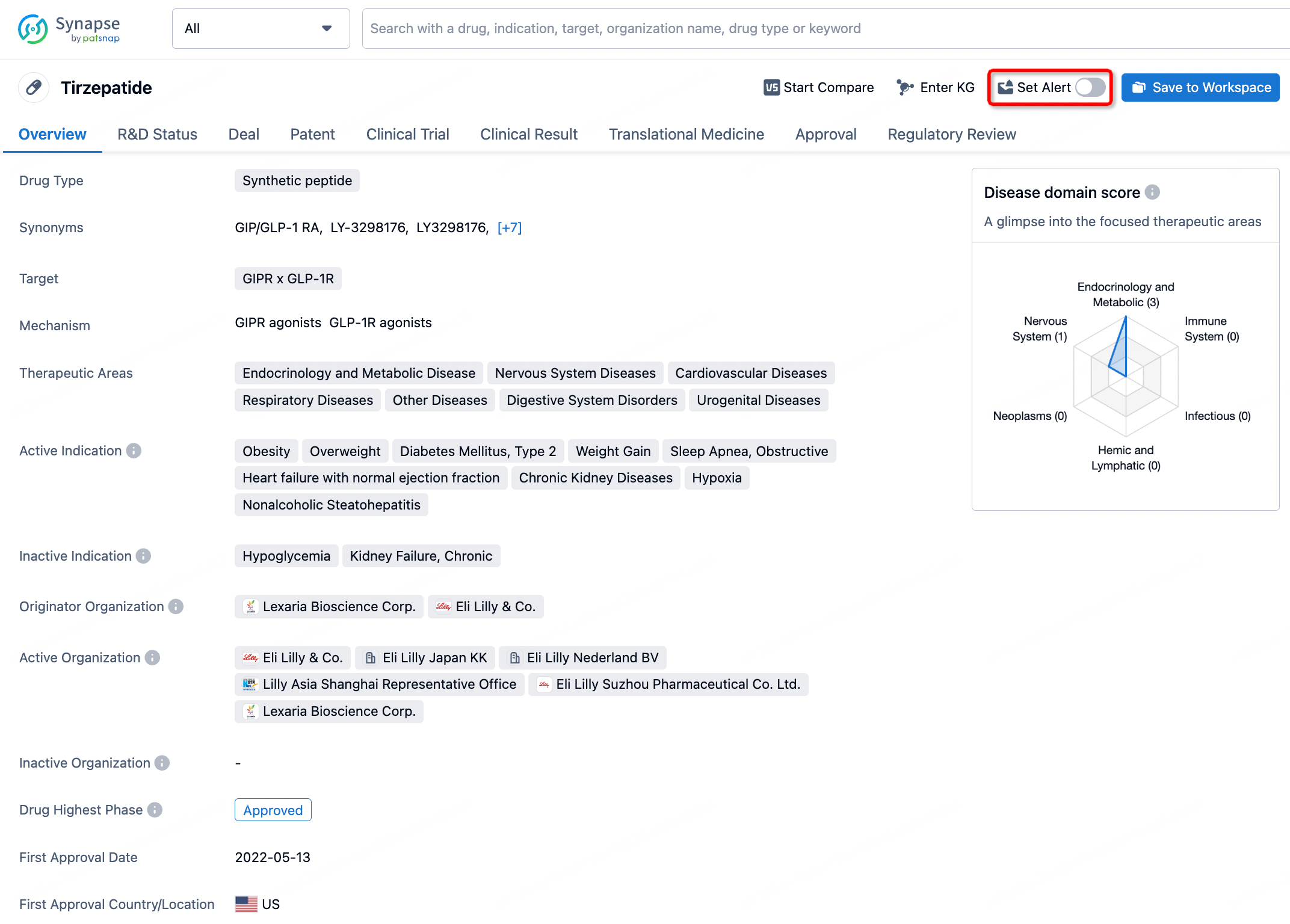
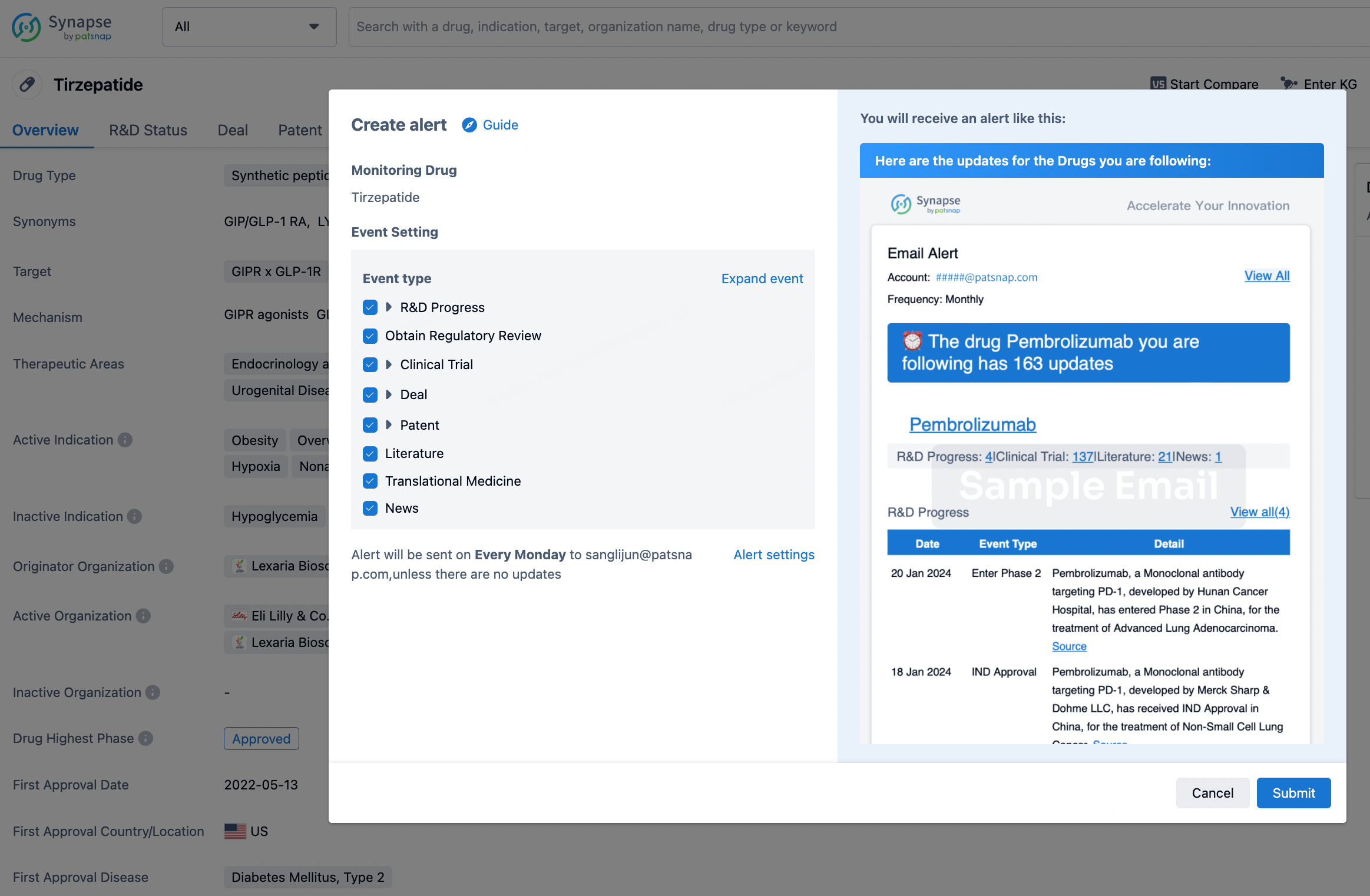
In the Synapse database, you can stay updated on the latest research and development advances of all drugs. This service is accessible anytime and anywhere, with updates available daily or weekly. Use the "Set Alert" function to stay informed. Click on the image below to embark on a brand new journey of drug discovery!
AI Agents Built for Biopharma Breakthroughs
Accelerate discovery. Empower decisions. Transform outcomes.
Get started for free today!
Accelerate Strategic R&D decision making with Synapse, PatSnap’s AI-powered Connected Innovation Intelligence Platform Built for Life Sciences Professionals.
Start your data trial now!
Synapse data is also accessible to external entities via APIs or data packages. Empower better decisions with the latest in pharmaceutical intelligence.