Request Demo
What is JJH201501 used for?
28 June 2024
In the dynamic field of pharmaceuticals, the development of new drugs is essential to combat various diseases and improve patient outcomes. One of the promising drug candidates making headlines is JJH201501. This compound is gaining attention due to its unique properties and potential therapeutic benefits. This blog post will delve into the specifics of JJH201501, exploring its targets, the research institutions involved, its classification as a drug, its indications, and the progress made in its research. We will also examine its mechanism of action and discuss the indications for which it is being developed.
JJH201501 is a novel drug candidate currently under investigation for its potential therapeutic applications. The compound is being developed by a collaboration of leading research institutions and pharmaceutical companies, aiming to address unmet medical needs. It is classified as a small molecule drug and shows promise in treating specific diseases through targeted mechanisms. The primary research focus for JJH201501 has been on conditions that have limited effective treatments, making this compound an exciting development in the medical field.
The mechanism of action for JJH201501 involves targeting specific pathways within the body that contribute to disease progression. Unlike many traditional drugs that might have broad and sometimes unfocused effects, JJH201501 is designed to interact with molecular components directly involved in the pathology of the disease. This specificity allows for potentially higher efficacy and reduced side effects, as the drug can hone in on the problem areas without affecting other systems in the body. The exact molecular targets of JJH201501 are proteins or receptors known to play a critical role in disease mechanisms. By binding to these targets, JJH201501 can inhibit their activity, thereby slowing or halting disease progression. The precise mechanism may involve modulation of signaling pathways, inhibition of enzyme activity, or interference with protein-protein interactions crucial for disease development.
JJH201501's indication primarily focuses on treating complex diseases with significant patient populations and few effective therapeutic options. Among these, cancer is a primary target. The drug has shown promising preclinical results in various cancer types, including solid tumors and hematological malignancies. The rationale behind using JJH201501 in cancer treatment is its ability to interfere with pathways critical for cancer cell survival and proliferation. By targeting these pathways, JJH201501 can potentially inhibit tumor growth and spread, offering new hope for patients who have exhausted other treatment options.
In addition to cancer, JJH201501 is being investigated for its potential in treating chronic inflammatory diseases. Conditions such as rheumatoid arthritis and inflammatory bowel disease could benefit from the drug’s mechanism of action since these diseases often involve dysregulated pathways similar to those in certain cancers. The anti-inflammatory properties of JJH201501 could provide relief by reducing inflammation and preventing tissue damage, thereby improving patient quality of life.
Research progress for JJH201501 has been encouraging. Preclinical studies have demonstrated the drug’s efficacy in various disease models, showcasing its potential to alter disease progression significantly. These studies have laid the groundwork for clinical trials, which are essential to confirm the drug's safety and effectiveness in humans. Currently, JJH201501 is in the early phases of clinical trials, with Phase I studies assessing its safety, tolerability, and optimal dosing in healthy volunteers or patients. Preliminary results from these trials are promising, indicating that JJH201501 is well-tolerated with manageable side effects, which supports further investigation in larger patient populations.
As research progresses, there is anticipation for Phase II and III trials, which will provide more comprehensive data on the drug’s efficacy and long-term safety. These studies will involve larger groups of patients and will help determine whether JJH201501 can achieve its therapeutic goals in real-world settings. If successful, JJH201501 could represent a significant advancement in treating cancer and chronic inflammatory diseases, offering new hope to patients with limited options.
In conclusion, JJH201501 is an exciting drug candidate with the potential to address significant unmet medical needs. Its targeted mechanism of action and promising preclinical and early clinical results make it a compound to watch. As research continues, the medical community eagerly awaits further data that could confirm JJH201501’s place as a vital new therapy in the fight against complex diseases.
JJH201501 is a novel drug candidate currently under investigation for its potential therapeutic applications. The compound is being developed by a collaboration of leading research institutions and pharmaceutical companies, aiming to address unmet medical needs. It is classified as a small molecule drug and shows promise in treating specific diseases through targeted mechanisms. The primary research focus for JJH201501 has been on conditions that have limited effective treatments, making this compound an exciting development in the medical field.
The mechanism of action for JJH201501 involves targeting specific pathways within the body that contribute to disease progression. Unlike many traditional drugs that might have broad and sometimes unfocused effects, JJH201501 is designed to interact with molecular components directly involved in the pathology of the disease. This specificity allows for potentially higher efficacy and reduced side effects, as the drug can hone in on the problem areas without affecting other systems in the body. The exact molecular targets of JJH201501 are proteins or receptors known to play a critical role in disease mechanisms. By binding to these targets, JJH201501 can inhibit their activity, thereby slowing or halting disease progression. The precise mechanism may involve modulation of signaling pathways, inhibition of enzyme activity, or interference with protein-protein interactions crucial for disease development.
JJH201501's indication primarily focuses on treating complex diseases with significant patient populations and few effective therapeutic options. Among these, cancer is a primary target. The drug has shown promising preclinical results in various cancer types, including solid tumors and hematological malignancies. The rationale behind using JJH201501 in cancer treatment is its ability to interfere with pathways critical for cancer cell survival and proliferation. By targeting these pathways, JJH201501 can potentially inhibit tumor growth and spread, offering new hope for patients who have exhausted other treatment options.
In addition to cancer, JJH201501 is being investigated for its potential in treating chronic inflammatory diseases. Conditions such as rheumatoid arthritis and inflammatory bowel disease could benefit from the drug’s mechanism of action since these diseases often involve dysregulated pathways similar to those in certain cancers. The anti-inflammatory properties of JJH201501 could provide relief by reducing inflammation and preventing tissue damage, thereby improving patient quality of life.
Research progress for JJH201501 has been encouraging. Preclinical studies have demonstrated the drug’s efficacy in various disease models, showcasing its potential to alter disease progression significantly. These studies have laid the groundwork for clinical trials, which are essential to confirm the drug's safety and effectiveness in humans. Currently, JJH201501 is in the early phases of clinical trials, with Phase I studies assessing its safety, tolerability, and optimal dosing in healthy volunteers or patients. Preliminary results from these trials are promising, indicating that JJH201501 is well-tolerated with manageable side effects, which supports further investigation in larger patient populations.
As research progresses, there is anticipation for Phase II and III trials, which will provide more comprehensive data on the drug’s efficacy and long-term safety. These studies will involve larger groups of patients and will help determine whether JJH201501 can achieve its therapeutic goals in real-world settings. If successful, JJH201501 could represent a significant advancement in treating cancer and chronic inflammatory diseases, offering new hope to patients with limited options.
In conclusion, JJH201501 is an exciting drug candidate with the potential to address significant unmet medical needs. Its targeted mechanism of action and promising preclinical and early clinical results make it a compound to watch. As research continues, the medical community eagerly awaits further data that could confirm JJH201501’s place as a vital new therapy in the fight against complex diseases.
How to obtain the latest development progress of all drugs?
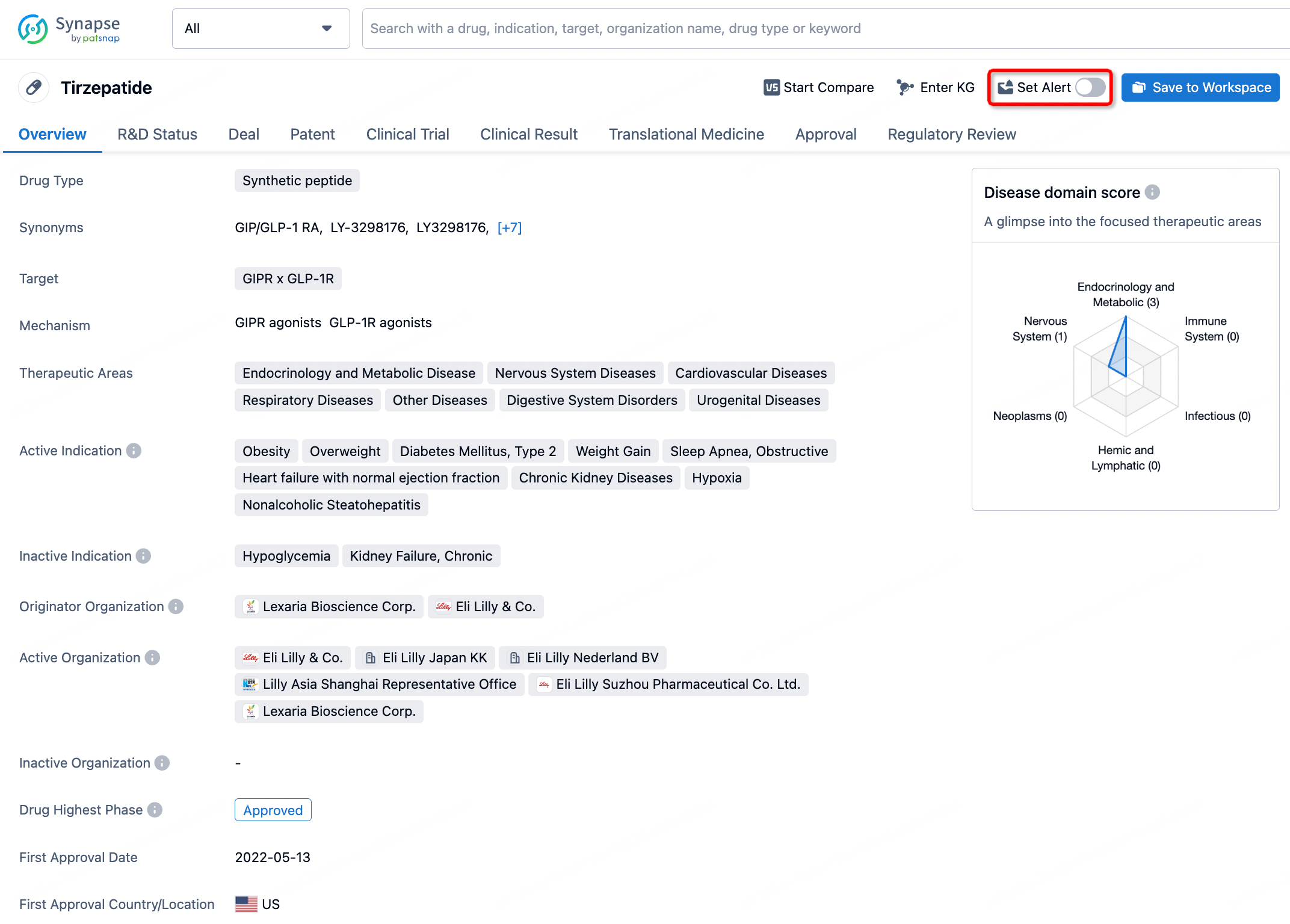
In the Synapse database, you can stay updated on the latest research and development advances of all drugs. This service is accessible anytime and anywhere, with updates available daily or weekly. Use the "Set Alert" function to stay informed. Click on the image below to embark on a brand new journey of drug discovery!

AI Agents Built for Biopharma Breakthroughs
Accelerate discovery. Empower decisions. Transform outcomes.
Get started for free today!
Accelerate Strategic R&D decision making with Synapse, PatSnap’s AI-powered Connected Innovation Intelligence Platform Built for Life Sciences Professionals.
Start your data trial now!
Synapse data is also accessible to external entities via APIs or data packages. Empower better decisions with the latest in pharmaceutical intelligence.