Request Demo
What is Laronidase used for?
14 June 2024
Laronidase, also known by its trade name Aldurazyme, is an enzyme replacement therapy designed to treat mucopolysaccharidosis type I (MPS I), specifically targeting the deficiency of the enzyme alpha-L-iduronidase. Developed through a collaboration between BioMarin Pharmaceutical Inc. and Genzyme Corporation, Laronidase has been a significant advancement in the treatment of this rare but debilitating genetic disorder. MPS I manifests in various forms, ranging from Hurler syndrome, the most severe form, to Hurler-Scheie and Scheie syndromes, which are less severe. The drug has been approved by major regulatory bodies, including the FDA and EMA, and has gone through extensive clinical trials to establish its efficacy and safety profile.
In terms of research progress, Laronidase has been continually monitored through post-marketing studies to ensure its long-term safety and effectiveness. It stands as a prime example of how biotechnology can provide life-altering treatments for rare diseases that previously had limited options. The enzyme works by breaking down glycosaminoglycans (GAGs), which accumulate in various tissues due to the body's inability to produce sufficient alpha-L-iduronidase. This accumulation leads to a range of symptoms, affecting the respiratory system, cardiovascular system, bones, joints, and other tissues.
Laronidase operates by supplementing the deficient enzyme in patients with MPS I. Alpha-L-iduronidase is crucial for the lysosomal degradation of glycosaminoglycans (GAGs), specifically dermatan sulfate and heparan sulfate. In patients with MPS I, mutations in the IDUA gene lead to a significant reduction or complete lack of this enzyme, resulting in the accumulation of GAGs in lysosomes. This accumulation disrupts cellular function and leads to the progressive symptoms of MPS I.
When administered, Laronidase is taken up by cells through mannose-6-phosphate receptors, which are then directed to lysosomes. Once in the lysosomes, Laronidase hydrolyzes the terminal alpha-L-iduronic acid residues from dermatan sulfate and heparan sulfate, thus reducing the pathological accumulation of these substrates. The reduction in GAG accumulation helps to alleviate the symptoms associated with MPS I, improving the quality of life for patients. However, it is critical to note that while Laronidase can manage and reduce many symptoms, it does not cure MPS I, and early diagnosis and treatment are essential for optimal outcomes.
Laronidase is administered via intravenous (IV) infusion, typically given once a week. Each infusion lasts around 3 to 4 hours, depending on the patient's weight and specific medical instructions. The dose is calculated based on the patient's body weight, ensuring that the appropriate amount of enzyme is provided to achieve therapeutic effects. Onset time for noticeable benefits can vary; some patients may observe improvements within a few weeks, while others might take several months to see significant changes. Regular infusions are crucial for maintaining enzyme levels in the body, as the enzyme has a limited half-life and needs replenishment.
Before starting Laronidase therapy, patients are often pre-medicated with antihistamines and antipyretics to reduce the risk of infusion-related reactions, which are among the most common side effects. The infusion procedure is usually carried out in a clinical setting under the supervision of healthcare professionals, although home infusions may be an option for some patients after thorough training and evaluation.
As with any medication, Laronidase is associated with potential side effects. The most commonly reported adverse effects are infusion-related reactions, which can include symptoms like fever, chills, rash, headaches, and nausea. These reactions are usually manageable with pre-medication and by slowing the infusion rate. In rare cases, severe allergic reactions or anaphylaxis can occur, necessitating immediate medical attention.
Patients with a known hypersensitivity to Laronidase or any of its components should not use the drug. Precautions are also necessary for patients with respiratory illnesses or compromised lung function, as they may be at higher risk for severe infusion reactions. Additionally, the safety and efficacy of Laronidase in pregnant or breastfeeding women have not been thoroughly studied, and it should be used in these populations only if clearly needed and after careful consideration of potential risks and benefits.
Long-term use of Laronidase also requires regular monitoring for the development of antibodies against the enzyme, which can reduce its effectiveness and increase the risk of adverse reactions. Patients are typically monitored through blood tests to assess antibody levels and adjust treatment protocols as necessary.
The interaction of Laronidase with other medications is an important consideration in the management of MPS I. Currently, no significant drug-drug interactions have been identified, which means Laronidase can generally be used alongside other medications prescribed to manage the various symptoms and complications of MPS I. However, it is essential for healthcare providers to be aware of all medications that a patient is taking to avoid potential interactions and to monitor for any unexpected side effects.
For instance, patients receiving immunosuppressive therapies or those with a history of severe allergic reactions may require special consideration and monitoring. As always, communication between the patient and healthcare provider is crucial to ensure that all aspects of the treatment plan are working harmoniously.
In conclusion, Laronidase represents a significant advancement in the treatment of MPS I, providing a therapeutic option that can markedly improve the quality of life for affected individuals. By understanding its mechanism of action, administration protocols, potential side effects, and interactions with other drugs, healthcare providers can optimize the use of Laronidase in managing this challenging and complex condition. Early diagnosis and consistent treatment are key to achieving the best possible outcomes, highlighting the importance of ongoing research and awareness in the field of rare genetic disorders.
In terms of research progress, Laronidase has been continually monitored through post-marketing studies to ensure its long-term safety and effectiveness. It stands as a prime example of how biotechnology can provide life-altering treatments for rare diseases that previously had limited options. The enzyme works by breaking down glycosaminoglycans (GAGs), which accumulate in various tissues due to the body's inability to produce sufficient alpha-L-iduronidase. This accumulation leads to a range of symptoms, affecting the respiratory system, cardiovascular system, bones, joints, and other tissues.
Laronidase operates by supplementing the deficient enzyme in patients with MPS I. Alpha-L-iduronidase is crucial for the lysosomal degradation of glycosaminoglycans (GAGs), specifically dermatan sulfate and heparan sulfate. In patients with MPS I, mutations in the IDUA gene lead to a significant reduction or complete lack of this enzyme, resulting in the accumulation of GAGs in lysosomes. This accumulation disrupts cellular function and leads to the progressive symptoms of MPS I.
When administered, Laronidase is taken up by cells through mannose-6-phosphate receptors, which are then directed to lysosomes. Once in the lysosomes, Laronidase hydrolyzes the terminal alpha-L-iduronic acid residues from dermatan sulfate and heparan sulfate, thus reducing the pathological accumulation of these substrates. The reduction in GAG accumulation helps to alleviate the symptoms associated with MPS I, improving the quality of life for patients. However, it is critical to note that while Laronidase can manage and reduce many symptoms, it does not cure MPS I, and early diagnosis and treatment are essential for optimal outcomes.
Laronidase is administered via intravenous (IV) infusion, typically given once a week. Each infusion lasts around 3 to 4 hours, depending on the patient's weight and specific medical instructions. The dose is calculated based on the patient's body weight, ensuring that the appropriate amount of enzyme is provided to achieve therapeutic effects. Onset time for noticeable benefits can vary; some patients may observe improvements within a few weeks, while others might take several months to see significant changes. Regular infusions are crucial for maintaining enzyme levels in the body, as the enzyme has a limited half-life and needs replenishment.
Before starting Laronidase therapy, patients are often pre-medicated with antihistamines and antipyretics to reduce the risk of infusion-related reactions, which are among the most common side effects. The infusion procedure is usually carried out in a clinical setting under the supervision of healthcare professionals, although home infusions may be an option for some patients after thorough training and evaluation.
As with any medication, Laronidase is associated with potential side effects. The most commonly reported adverse effects are infusion-related reactions, which can include symptoms like fever, chills, rash, headaches, and nausea. These reactions are usually manageable with pre-medication and by slowing the infusion rate. In rare cases, severe allergic reactions or anaphylaxis can occur, necessitating immediate medical attention.
Patients with a known hypersensitivity to Laronidase or any of its components should not use the drug. Precautions are also necessary for patients with respiratory illnesses or compromised lung function, as they may be at higher risk for severe infusion reactions. Additionally, the safety and efficacy of Laronidase in pregnant or breastfeeding women have not been thoroughly studied, and it should be used in these populations only if clearly needed and after careful consideration of potential risks and benefits.
Long-term use of Laronidase also requires regular monitoring for the development of antibodies against the enzyme, which can reduce its effectiveness and increase the risk of adverse reactions. Patients are typically monitored through blood tests to assess antibody levels and adjust treatment protocols as necessary.
The interaction of Laronidase with other medications is an important consideration in the management of MPS I. Currently, no significant drug-drug interactions have been identified, which means Laronidase can generally be used alongside other medications prescribed to manage the various symptoms and complications of MPS I. However, it is essential for healthcare providers to be aware of all medications that a patient is taking to avoid potential interactions and to monitor for any unexpected side effects.
For instance, patients receiving immunosuppressive therapies or those with a history of severe allergic reactions may require special consideration and monitoring. As always, communication between the patient and healthcare provider is crucial to ensure that all aspects of the treatment plan are working harmoniously.
In conclusion, Laronidase represents a significant advancement in the treatment of MPS I, providing a therapeutic option that can markedly improve the quality of life for affected individuals. By understanding its mechanism of action, administration protocols, potential side effects, and interactions with other drugs, healthcare providers can optimize the use of Laronidase in managing this challenging and complex condition. Early diagnosis and consistent treatment are key to achieving the best possible outcomes, highlighting the importance of ongoing research and awareness in the field of rare genetic disorders.
How to obtain the latest development progress of all drugs?
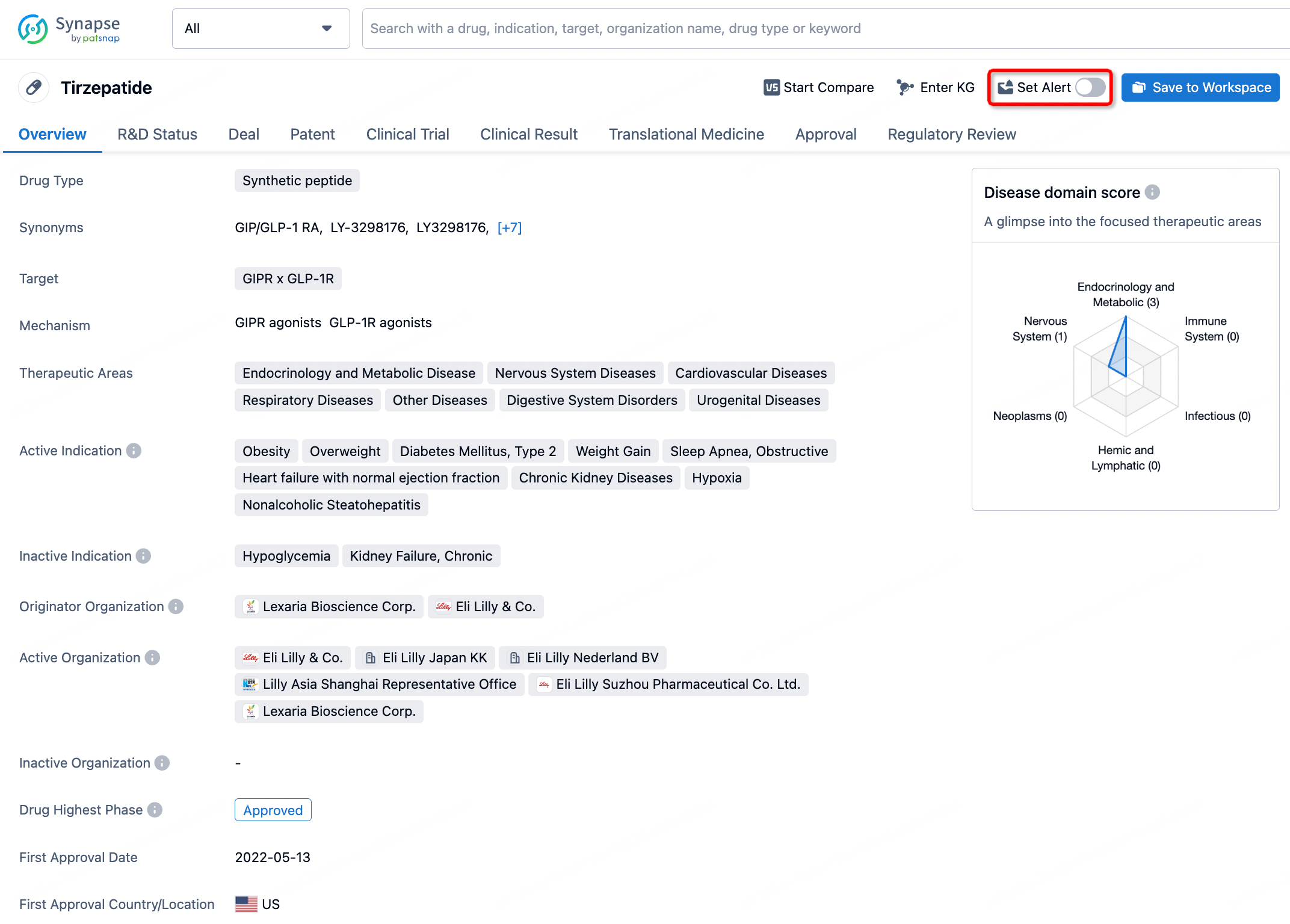
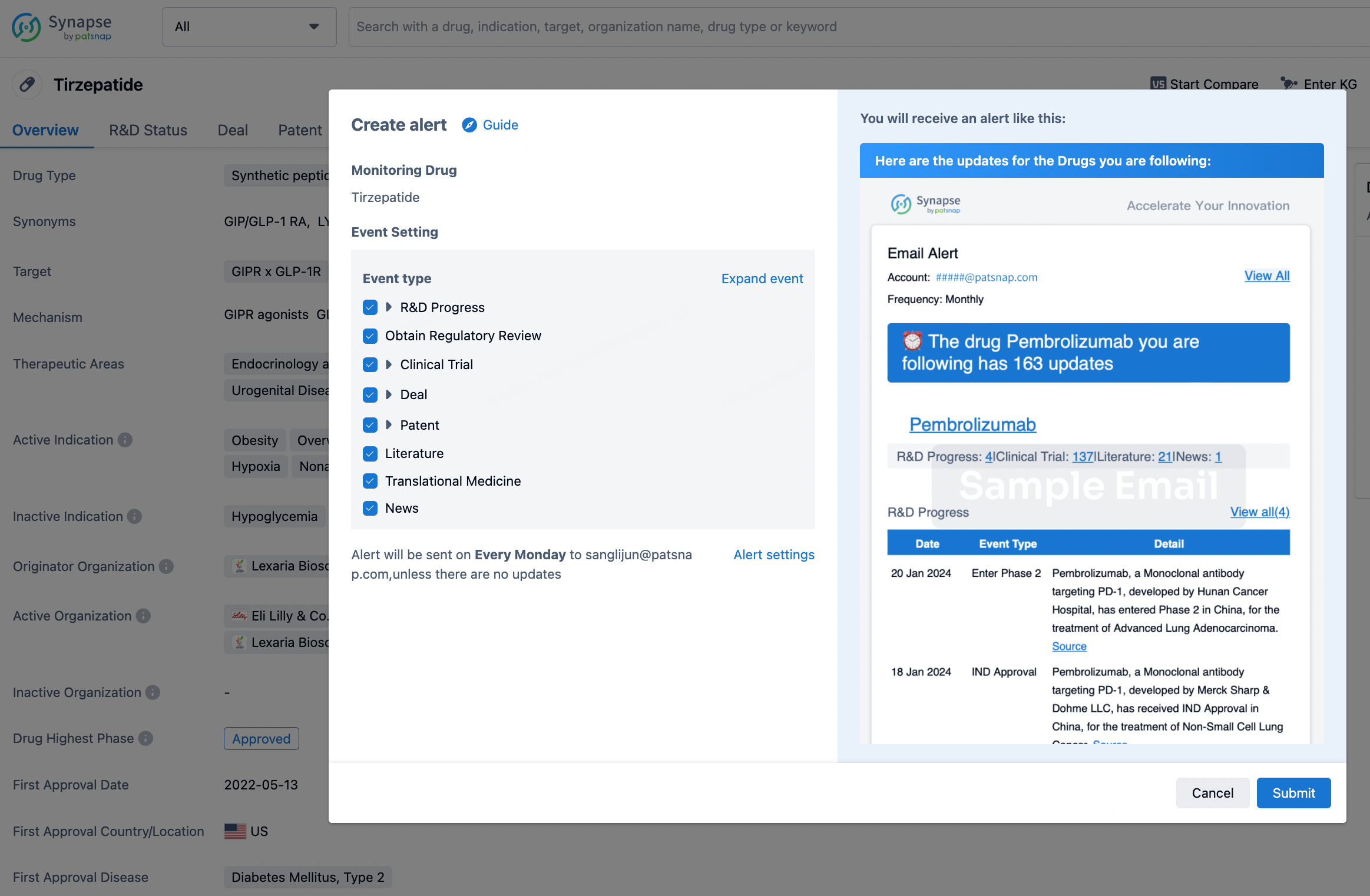
In the Synapse database, you can stay updated on the latest research and development advances of all drugs. This service is accessible anytime and anywhere, with updates available daily or weekly. Use the "Set Alert" function to stay informed. Click on the image below to embark on a brand new journey of drug discovery!

AI Agents Built for Biopharma Breakthroughs
Accelerate discovery. Empower decisions. Transform outcomes.
Get started for free today!
Accelerate Strategic R&D decision making with Synapse, PatSnap’s AI-powered Connected Innovation Intelligence Platform Built for Life Sciences Professionals.
Start your data trial now!
Synapse data is also accessible to external entities via APIs or data packages. Empower better decisions with the latest in pharmaceutical intelligence.