Request Demo
What is Latrodectus antivenin used for?
14 June 2024
Latrodectus antivenin is a crucial medication used to treat envenomation by spiders of the genus Latrodectus, commonly known as widow spiders. This group includes the infamous black widow spider, known for its potent neurotoxic venom. The antivenin is typically referred to by its generic name, Latrodectus antivenin, but it may also be known under various trade names depending on the manufacturer and region. Produced by several pharmaceutical companies and research institutions, this antivenin is a type of immunoglobulin therapy specifically indicated for individuals who exhibit severe symptoms following a widow spider bite. Research and development over the years have significantly advanced our understanding of the antivenin's efficacy and safety profile, making it an indispensable tool in emergency medicine.
Widow spider bites can lead to a condition known as latrodectism, characterized by severe muscle pain, abdominal cramps, hyperhidrosis, and, in some cases, more severe systemic effects. The primary target of Latrodectus antivenin is the α-latrotoxin, a major component of widow spider venom that disrupts neuronal function. Institutions across the globe continue to conduct research to improve the efficacy, safety, and accessibility of Latrodectus antivenin, with some focusing on developing synthetic alternatives to traditional antivenin derived from equine serum.
The mechanism of action of Latrodectus antivenin involves the neutralization of the α-latrotoxin present in the venom. α-Latrotoxin acts by forming pores in neuronal membranes, causing an influx of calcium ions which then leads to the massive release of neurotransmitters. This excessive neurotransmitter release results in the severe pain and muscle spasms characteristic of latrodectism. The antivenin contains specific antibodies that bind to the toxin, preventing it from interacting with neuronal membranes and facilitating its clearance from the body. By neutralizing the toxin, the antivenin helps alleviate the symptoms and accelerates the recovery process.
The administration of Latrodectus antivenin is typically carried out in a hospital setting under the supervision of medical professionals. The drug is administered intravenously, allowing for rapid distribution throughout the body. The onset of action is generally swift, with many patients experiencing relief from severe symptoms within 30 to 60 minutes post-administration. The exact dosage and duration of administration may vary depending on the severity of the symptoms and the patient's response to the treatment. In some cases, a single dose may be sufficient, while in others, additional doses may be required to achieve the desired therapeutic effect.
Patients receiving Latrodectus antivenin are closely monitored for any adverse reactions during and after the infusion. The most common side effects associated with the antivenin include mild to moderate allergic reactions such as rash, itching, and swelling at the injection site. However, more severe hypersensitivity reactions, including anaphylaxis, can occur, albeit rarely. It is crucial for healthcare providers to be prepared to manage these potential side effects promptly. Contraindications for the use of Latrodectus antivenin include known hypersensitivity to equine proteins, as the antivenin is traditionally derived from horse serum. In such cases, alternative management strategies should be considered.
The use of Latrodectus antivenin may be influenced by the concurrent administration of other medications. For instance, patients receiving certain immunosuppressive therapies may exhibit an altered response to the antivenin. Additionally, drugs that affect the immune system or alter the pharmacokinetics of the antivenin could impact its efficacy and safety. It is essential for healthcare providers to review the patient's medication history and consider potential drug interactions before administering the antivenin. In some cases, adjustments to the patient's treatment regimen may be necessary to ensure the optimal therapeutic outcome.
In conclusion, Latrodectus antivenin remains a critical intervention for managing severe envenomation by widow spiders. Its ability to neutralize α-latrotoxin and mitigate the debilitating symptoms of latrodectism underscores its importance in clinical settings. Ongoing research and development efforts continue to enhance our understanding of the antivenin's mechanisms, improve its safety profile, and expand its accessibility. While the administration of Latrodectus antivenin is generally safe and effective, it is essential for healthcare providers to be vigilant about potential side effects and drug interactions to ensure the best possible care for their patients.
Widow spider bites can lead to a condition known as latrodectism, characterized by severe muscle pain, abdominal cramps, hyperhidrosis, and, in some cases, more severe systemic effects. The primary target of Latrodectus antivenin is the α-latrotoxin, a major component of widow spider venom that disrupts neuronal function. Institutions across the globe continue to conduct research to improve the efficacy, safety, and accessibility of Latrodectus antivenin, with some focusing on developing synthetic alternatives to traditional antivenin derived from equine serum.
The mechanism of action of Latrodectus antivenin involves the neutralization of the α-latrotoxin present in the venom. α-Latrotoxin acts by forming pores in neuronal membranes, causing an influx of calcium ions which then leads to the massive release of neurotransmitters. This excessive neurotransmitter release results in the severe pain and muscle spasms characteristic of latrodectism. The antivenin contains specific antibodies that bind to the toxin, preventing it from interacting with neuronal membranes and facilitating its clearance from the body. By neutralizing the toxin, the antivenin helps alleviate the symptoms and accelerates the recovery process.
The administration of Latrodectus antivenin is typically carried out in a hospital setting under the supervision of medical professionals. The drug is administered intravenously, allowing for rapid distribution throughout the body. The onset of action is generally swift, with many patients experiencing relief from severe symptoms within 30 to 60 minutes post-administration. The exact dosage and duration of administration may vary depending on the severity of the symptoms and the patient's response to the treatment. In some cases, a single dose may be sufficient, while in others, additional doses may be required to achieve the desired therapeutic effect.
Patients receiving Latrodectus antivenin are closely monitored for any adverse reactions during and after the infusion. The most common side effects associated with the antivenin include mild to moderate allergic reactions such as rash, itching, and swelling at the injection site. However, more severe hypersensitivity reactions, including anaphylaxis, can occur, albeit rarely. It is crucial for healthcare providers to be prepared to manage these potential side effects promptly. Contraindications for the use of Latrodectus antivenin include known hypersensitivity to equine proteins, as the antivenin is traditionally derived from horse serum. In such cases, alternative management strategies should be considered.
The use of Latrodectus antivenin may be influenced by the concurrent administration of other medications. For instance, patients receiving certain immunosuppressive therapies may exhibit an altered response to the antivenin. Additionally, drugs that affect the immune system or alter the pharmacokinetics of the antivenin could impact its efficacy and safety. It is essential for healthcare providers to review the patient's medication history and consider potential drug interactions before administering the antivenin. In some cases, adjustments to the patient's treatment regimen may be necessary to ensure the optimal therapeutic outcome.
In conclusion, Latrodectus antivenin remains a critical intervention for managing severe envenomation by widow spiders. Its ability to neutralize α-latrotoxin and mitigate the debilitating symptoms of latrodectism underscores its importance in clinical settings. Ongoing research and development efforts continue to enhance our understanding of the antivenin's mechanisms, improve its safety profile, and expand its accessibility. While the administration of Latrodectus antivenin is generally safe and effective, it is essential for healthcare providers to be vigilant about potential side effects and drug interactions to ensure the best possible care for their patients.
How to obtain the latest development progress of all drugs?
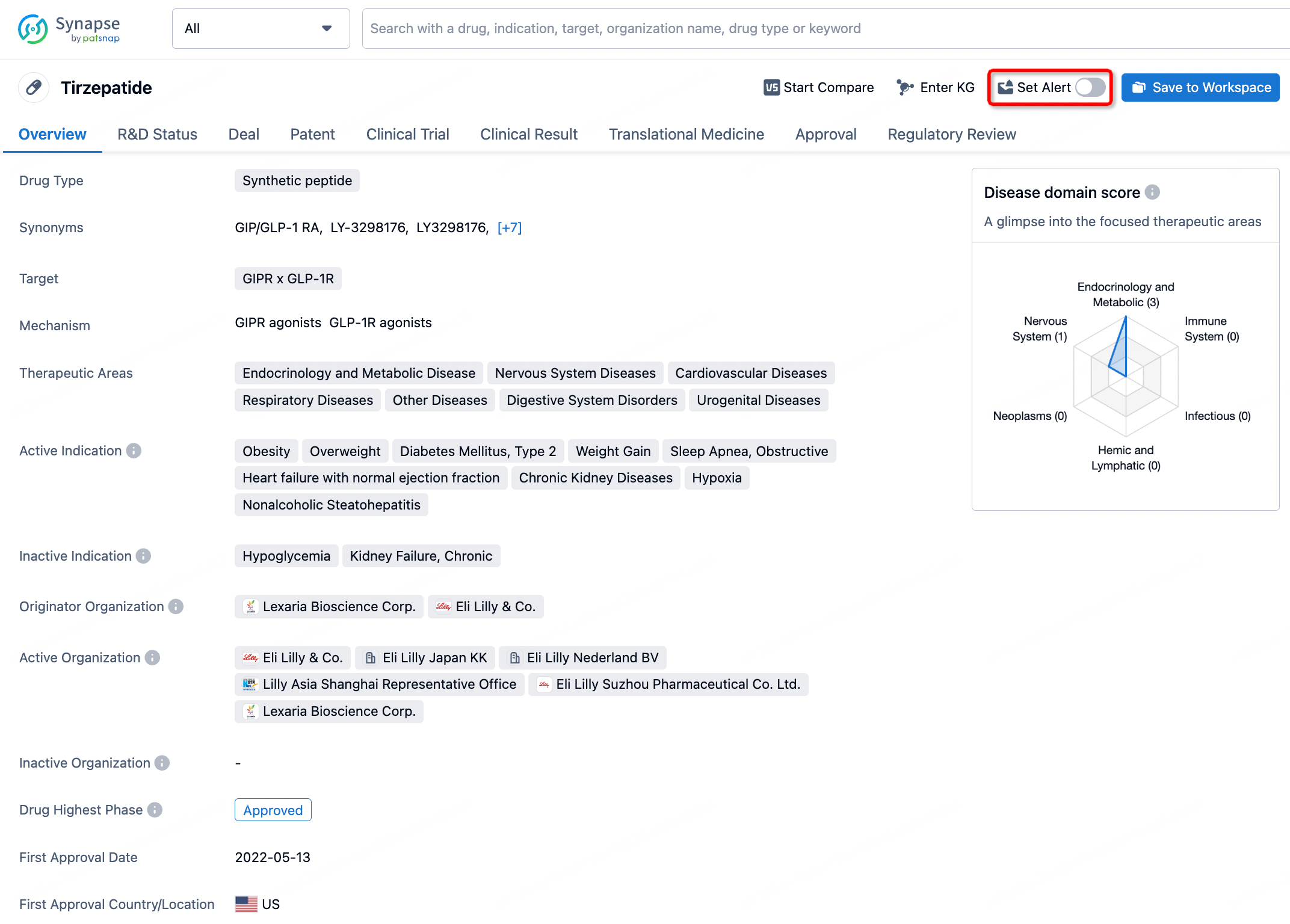
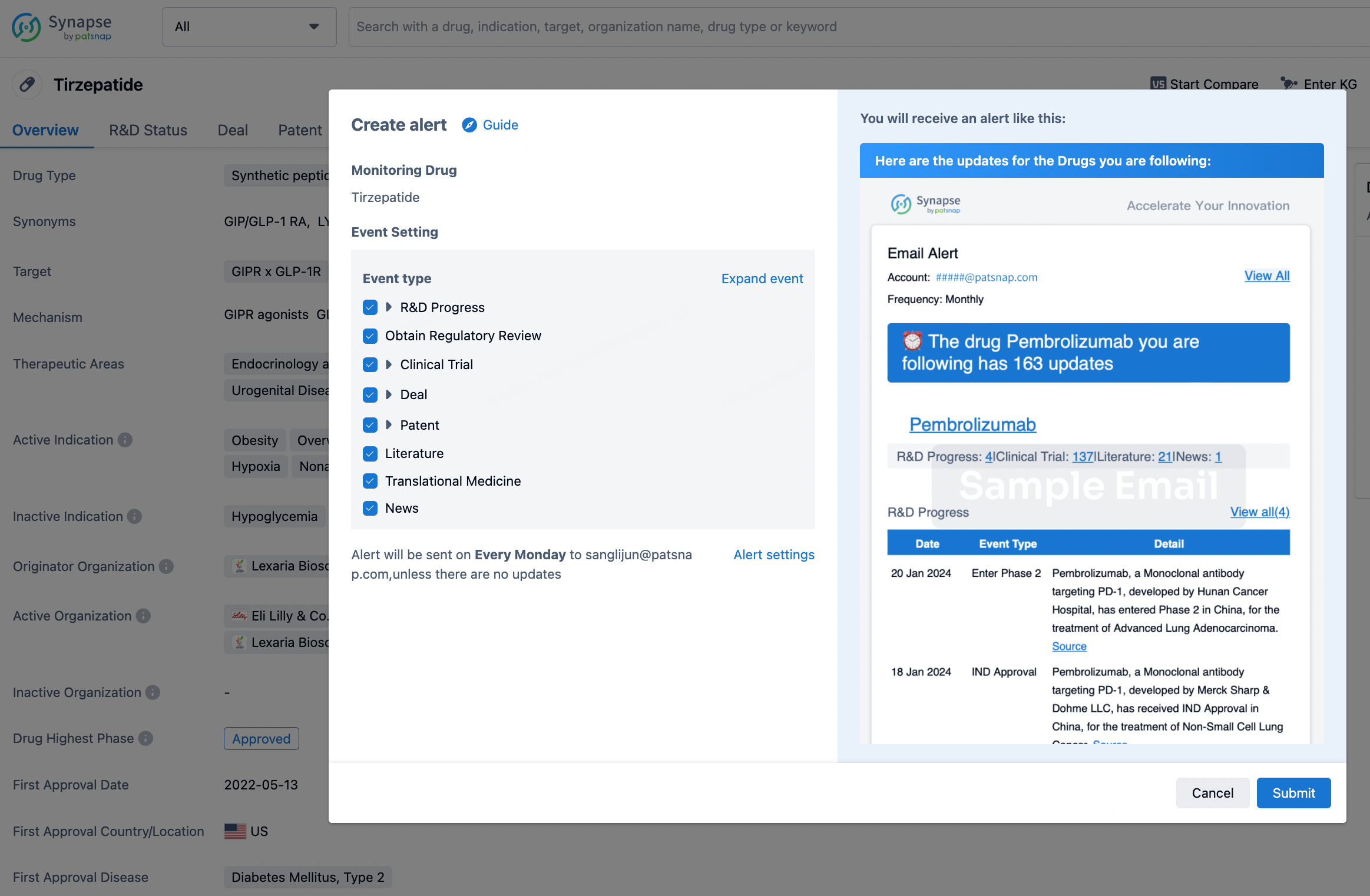
In the Synapse database, you can stay updated on the latest research and development advances of all drugs. This service is accessible anytime and anywhere, with updates available daily or weekly. Use the "Set Alert" function to stay informed. Click on the image below to embark on a brand new journey of drug discovery!

AI Agents Built for Biopharma Breakthroughs
Accelerate discovery. Empower decisions. Transform outcomes.
Get started for free today!
Accelerate Strategic R&D decision making with Synapse, PatSnap’s AI-powered Connected Innovation Intelligence Platform Built for Life Sciences Professionals.
Start your data trial now!
Synapse data is also accessible to external entities via APIs or data packages. Empower better decisions with the latest in pharmaceutical intelligence.