Request Demo
What is LVRNA-021 used for?
28 June 2024
LVRNA-021 is an innovative investigational drug that has been the subject of increasing interest in the medical and scientific communities. This promising compound is being developed primarily by leading research institutions, including top-tier universities and pharmaceutical companies. LVRNA-021 is classified as an RNA-targeting therapeutic, a category of drugs designed to interact specifically with RNA molecules to modulate gene expression. The drug targets a specific RNA sequence associated with a particular disease pathway, providing a novel approach to treatment.
The primary indication for LVRNA-021 is a rare, genetically inherited disorder known as Spinal Muscular Atrophy (SMA). SMA is a debilitating condition characterized by the progressive destruction of motor neurons in the spinal cord, leading to muscle wasting and weakness. LVRNA-021 aims to address the underlying genetic cause of SMA by modulating the splicing of the SMN2 gene, thereby increasing the production of the functional SMN protein, which is deficient in patients with SMA. Currently, LVRNA-021 is in the mid-stages of clinical trials, with initial results demonstrating significant promise in both efficacy and safety.
### LVRNA-021 Mechanism of Action
The mechanism of action of LVRNA-021 revolves around its unique capability to target RNA molecules. Specifically, LVRNA-021 is designed to bind to a specific sequence within the SMN2 pre-mRNA. The SMN2 gene is a homolog of the SMN1 gene, which is mutated in SMA patients. While the SMN1 gene produces a full-length, functional SMN protein, the SMN2 gene typically produces a truncated, less functional version due to alternative splicing that skips exon 7.
LVRNA-021 works by binding to the ISS-N1 (intronic splicing silencer N1) region of the SMN2 pre-mRNA. By binding to this site, LVRNA-021 prevents the splicing machinery from skipping exon 7 during the processing of SMN2 pre-mRNA into mature mRNA. This results in the inclusion of exon 7 in the final mRNA transcript, thereby producing a full-length, functional SMN protein, much like the protein produced by the SMN1 gene. By increasing the levels of functional SMN protein in motor neurons, LVRNA-021 aims to halt or even reverse the progression of SMA.
### What is the indication of LVRNA-021?
The primary indication for LVRNA-021 is Spinal Muscular Atrophy (SMA), a severe neuromuscular disorder caused by genetic mutations in the SMN1 gene. SMA affects approximately 1 in 10,000 live births and is classified into several types based on the age of onset and severity of symptoms. The most severe form, Type 1 SMA, manifests in infants and is often fatal within the first two years of life without intervention. Types 2 and 3 have later onset and a more prolonged course but still result in significant physical disability.
SMA is characterized by the loss of motor neurons in the anterior horn of the spinal cord, leading to muscle atrophy and weakness. In the absence of a functional SMN1 gene, motor neurons gradually die, resulting in the hallmark symptoms of SMA. Current treatments for SMA, such as gene therapy and small molecule splicing modifiers, have shown efficacy but also come with limitations related to delivery, cost, and long-term effectiveness.
LVRNA-021 represents a potential breakthrough in SMA treatment. By specifically targeting the SMN2 gene and modifying its splicing to produce more functional SMN protein, LVRNA-021 offers a tailored approach aimed at rectifying the underlying genetic defect of the disease. Early clinical trial data has indicated that LVRNA-021 not only increases SMN protein levels but also translates into meaningful clinical improvements, such as enhanced motor function and delayed disease progression.
In conclusion, LVRNA-021 is a pioneering RNA-targeting therapeutic that holds significant promise for the treatment of Spinal Muscular Atrophy. Its mechanism of action, which involves modifying the splicing of the SMN2 gene to produce more functional SMN protein, addresses the root cause of SMA at a molecular level. As research progresses, LVRNA-021 could become a cornerstone in the management of SMA, offering new hope to patients and their families.
The primary indication for LVRNA-021 is a rare, genetically inherited disorder known as Spinal Muscular Atrophy (SMA). SMA is a debilitating condition characterized by the progressive destruction of motor neurons in the spinal cord, leading to muscle wasting and weakness. LVRNA-021 aims to address the underlying genetic cause of SMA by modulating the splicing of the SMN2 gene, thereby increasing the production of the functional SMN protein, which is deficient in patients with SMA. Currently, LVRNA-021 is in the mid-stages of clinical trials, with initial results demonstrating significant promise in both efficacy and safety.
### LVRNA-021 Mechanism of Action
The mechanism of action of LVRNA-021 revolves around its unique capability to target RNA molecules. Specifically, LVRNA-021 is designed to bind to a specific sequence within the SMN2 pre-mRNA. The SMN2 gene is a homolog of the SMN1 gene, which is mutated in SMA patients. While the SMN1 gene produces a full-length, functional SMN protein, the SMN2 gene typically produces a truncated, less functional version due to alternative splicing that skips exon 7.
LVRNA-021 works by binding to the ISS-N1 (intronic splicing silencer N1) region of the SMN2 pre-mRNA. By binding to this site, LVRNA-021 prevents the splicing machinery from skipping exon 7 during the processing of SMN2 pre-mRNA into mature mRNA. This results in the inclusion of exon 7 in the final mRNA transcript, thereby producing a full-length, functional SMN protein, much like the protein produced by the SMN1 gene. By increasing the levels of functional SMN protein in motor neurons, LVRNA-021 aims to halt or even reverse the progression of SMA.
### What is the indication of LVRNA-021?
The primary indication for LVRNA-021 is Spinal Muscular Atrophy (SMA), a severe neuromuscular disorder caused by genetic mutations in the SMN1 gene. SMA affects approximately 1 in 10,000 live births and is classified into several types based on the age of onset and severity of symptoms. The most severe form, Type 1 SMA, manifests in infants and is often fatal within the first two years of life without intervention. Types 2 and 3 have later onset and a more prolonged course but still result in significant physical disability.
SMA is characterized by the loss of motor neurons in the anterior horn of the spinal cord, leading to muscle atrophy and weakness. In the absence of a functional SMN1 gene, motor neurons gradually die, resulting in the hallmark symptoms of SMA. Current treatments for SMA, such as gene therapy and small molecule splicing modifiers, have shown efficacy but also come with limitations related to delivery, cost, and long-term effectiveness.
LVRNA-021 represents a potential breakthrough in SMA treatment. By specifically targeting the SMN2 gene and modifying its splicing to produce more functional SMN protein, LVRNA-021 offers a tailored approach aimed at rectifying the underlying genetic defect of the disease. Early clinical trial data has indicated that LVRNA-021 not only increases SMN protein levels but also translates into meaningful clinical improvements, such as enhanced motor function and delayed disease progression.
In conclusion, LVRNA-021 is a pioneering RNA-targeting therapeutic that holds significant promise for the treatment of Spinal Muscular Atrophy. Its mechanism of action, which involves modifying the splicing of the SMN2 gene to produce more functional SMN protein, addresses the root cause of SMA at a molecular level. As research progresses, LVRNA-021 could become a cornerstone in the management of SMA, offering new hope to patients and their families.
How to obtain the latest development progress of all drugs?
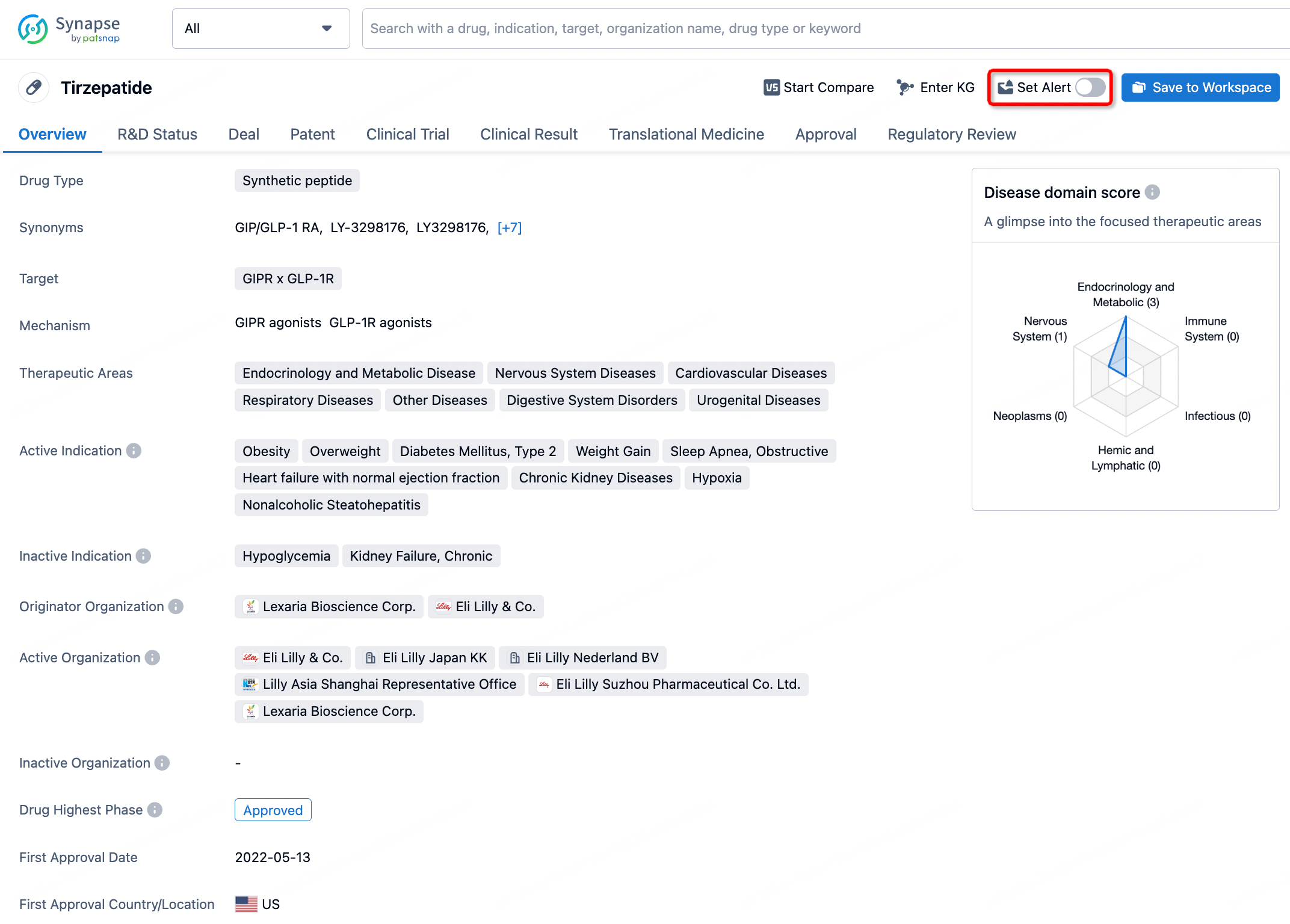
In the Synapse database, you can stay updated on the latest research and development advances of all drugs. This service is accessible anytime and anywhere, with updates available daily or weekly. Use the "Set Alert" function to stay informed. Click on the image below to embark on a brand new journey of drug discovery!


AI Agents Built for Biopharma Breakthroughs
Accelerate discovery. Empower decisions. Transform outcomes.
Get started for free today!
Accelerate Strategic R&D decision making with Synapse, PatSnap’s AI-powered Connected Innovation Intelligence Platform Built for Life Sciences Professionals.
Start your data trial now!
Synapse data is also accessible to external entities via APIs or data packages. Empower better decisions with the latest in pharmaceutical intelligence.