Request Demo
What is M-6100 used for?
28 June 2024
In the rapidly evolving landscape of medical science, M-6100 has emerged as a noteworthy development in the field of pharmacology and therapeutic treatments. This investigational drug is primarily aimed at providing innovative solutions for complex medical conditions that have been challenging to manage with existing medications. Developed by a coalition of leading research institutions and pharmaceutical companies, M-6100 represents the cutting edge of drug discovery and development.
The primary targets of M-6100 are neurological disorders and certain autoimmune diseases, areas where traditional treatments often fall short in efficacy or come with significant side effects. The drug is currently classified as a biological agent, utilizing advanced biotechnological methods to interact precisely with specific cellular pathways. Early-stage clinical trials have shown promise, with ongoing research aimed at verifying its effectiveness and safety across a broader patient population. The research institutions involved in this groundbreaking work include several renowned universities and specialized biotech firms, all collaborating to unlock the full potential of M-6100 as a therapeutic agent.
M-6100's mechanism of action is both fascinating and complex, involving multiple layers of interaction within the human body. At the core of its functionality, M-6100 operates by modulating the immune response and neuronal communication pathways. For neurological disorders, the drug targets synaptic transmission processes, aiming to restore balanced neural activity. This is particularly beneficial in conditions characterized by excessive or insufficient neuronal firing, such as epilepsy or neuropathic pain. By fine-tuning synaptic signaling, M-6100 helps stabilize neuronal networks and improve overall neurological function.
In the context of autoimmune diseases, M-6100 works by selectively inhibiting specific immune cells that contribute to the pathological immune response. These cells, often overactive in autoimmune conditions, lead to unnecessary inflammation and tissue damage. M-6100's selective inhibition ensures that the immune system's normal protective functions remain intact while preventing the destructive behavior that characterizes autoimmune disorders. This dual functionality makes M-6100 a versatile tool in the medical arsenal, capable of addressing a range of conditions with a single therapeutic approach.
The primary indications for M-6100 are, as noted, neurological disorders and autoimmune diseases. Specifically, the drug is being investigated for its potential to treat conditions such as multiple sclerosis (MS), rheumatoid arthritis (RA), and certain forms of epilepsy. Multiple sclerosis, a chronic illness involving the central nervous system, often leads to significant physical and cognitive impairments. Current treatments mainly focus on slowing disease progression and managing symptoms, but M-6100 aims to go a step further by addressing the underlying immune dysfunction that drives the disease.
In rheumatoid arthritis, an autoimmune condition characterized by chronic inflammation of the joints, M-6100 offers hope for reducing joint damage and improving quality of life. Traditional treatments for RA include nonsteroidal anti-inflammatory drugs (NSAIDs) and corticosteroids, which can have significant side effects over long-term use. M-6100's targeted approach promises a more sustainable and less invasive treatment option, addressing the root cause of inflammation without broadly suppressing the immune system.
For epilepsy, particularly drug-resistant forms of the condition, M-6100 could represent a significant breakthrough. Epilepsy is marked by recurrent seizures, which can be debilitating and life-threatening. By stabilizing synaptic transmission, M-6100 has the potential to reduce seizure frequency and severity, offering a new avenue of hope for patients who have not responded well to existing medications.
In conclusion, M-6100 stands at the forefront of modern pharmacological innovation, with the potential to transform the treatment landscape for several challenging medical conditions. Its dual mechanism of action allows it to address both neurological dysfunction and immune dysregulation effectively. As research progresses, the medical community eagerly anticipates further validation of its benefits and potential approval for widespread clinical use. M-6100’s journey from the lab to the clinic could herald a new era of targeted, efficient, and safer treatments for patients worldwide.
The primary targets of M-6100 are neurological disorders and certain autoimmune diseases, areas where traditional treatments often fall short in efficacy or come with significant side effects. The drug is currently classified as a biological agent, utilizing advanced biotechnological methods to interact precisely with specific cellular pathways. Early-stage clinical trials have shown promise, with ongoing research aimed at verifying its effectiveness and safety across a broader patient population. The research institutions involved in this groundbreaking work include several renowned universities and specialized biotech firms, all collaborating to unlock the full potential of M-6100 as a therapeutic agent.
M-6100's mechanism of action is both fascinating and complex, involving multiple layers of interaction within the human body. At the core of its functionality, M-6100 operates by modulating the immune response and neuronal communication pathways. For neurological disorders, the drug targets synaptic transmission processes, aiming to restore balanced neural activity. This is particularly beneficial in conditions characterized by excessive or insufficient neuronal firing, such as epilepsy or neuropathic pain. By fine-tuning synaptic signaling, M-6100 helps stabilize neuronal networks and improve overall neurological function.
In the context of autoimmune diseases, M-6100 works by selectively inhibiting specific immune cells that contribute to the pathological immune response. These cells, often overactive in autoimmune conditions, lead to unnecessary inflammation and tissue damage. M-6100's selective inhibition ensures that the immune system's normal protective functions remain intact while preventing the destructive behavior that characterizes autoimmune disorders. This dual functionality makes M-6100 a versatile tool in the medical arsenal, capable of addressing a range of conditions with a single therapeutic approach.
The primary indications for M-6100 are, as noted, neurological disorders and autoimmune diseases. Specifically, the drug is being investigated for its potential to treat conditions such as multiple sclerosis (MS), rheumatoid arthritis (RA), and certain forms of epilepsy. Multiple sclerosis, a chronic illness involving the central nervous system, often leads to significant physical and cognitive impairments. Current treatments mainly focus on slowing disease progression and managing symptoms, but M-6100 aims to go a step further by addressing the underlying immune dysfunction that drives the disease.
In rheumatoid arthritis, an autoimmune condition characterized by chronic inflammation of the joints, M-6100 offers hope for reducing joint damage and improving quality of life. Traditional treatments for RA include nonsteroidal anti-inflammatory drugs (NSAIDs) and corticosteroids, which can have significant side effects over long-term use. M-6100's targeted approach promises a more sustainable and less invasive treatment option, addressing the root cause of inflammation without broadly suppressing the immune system.
For epilepsy, particularly drug-resistant forms of the condition, M-6100 could represent a significant breakthrough. Epilepsy is marked by recurrent seizures, which can be debilitating and life-threatening. By stabilizing synaptic transmission, M-6100 has the potential to reduce seizure frequency and severity, offering a new avenue of hope for patients who have not responded well to existing medications.
In conclusion, M-6100 stands at the forefront of modern pharmacological innovation, with the potential to transform the treatment landscape for several challenging medical conditions. Its dual mechanism of action allows it to address both neurological dysfunction and immune dysregulation effectively. As research progresses, the medical community eagerly anticipates further validation of its benefits and potential approval for widespread clinical use. M-6100’s journey from the lab to the clinic could herald a new era of targeted, efficient, and safer treatments for patients worldwide.
How to obtain the latest development progress of all drugs?
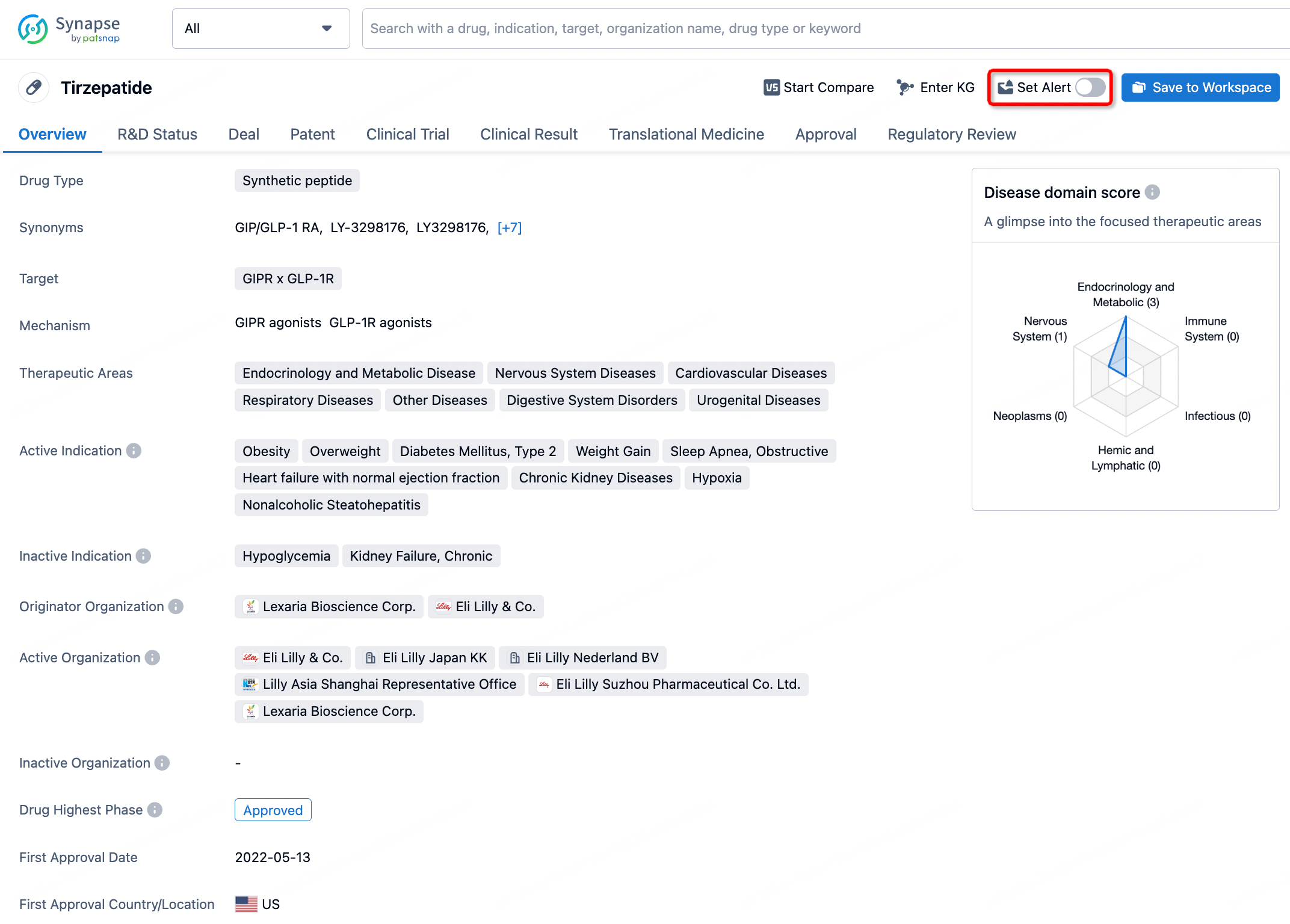
In the Synapse database, you can stay updated on the latest research and development advances of all drugs. This service is accessible anytime and anywhere, with updates available daily or weekly. Use the "Set Alert" function to stay informed. Click on the image below to embark on a brand new journey of drug discovery!


AI Agents Built for Biopharma Breakthroughs
Accelerate discovery. Empower decisions. Transform outcomes.
Get started for free today!
Accelerate Strategic R&D decision making with Synapse, PatSnap’s AI-powered Connected Innovation Intelligence Platform Built for Life Sciences Professionals.
Start your data trial now!
Synapse data is also accessible to external entities via APIs or data packages. Empower better decisions with the latest in pharmaceutical intelligence.