Request Demo
What is Mirococept used for?
28 June 2024
Mirococept is an innovative biopharmaceutical drug designed to address the complex challenges of organ transplantation and inflammatory diseases. Developed by researchers at King's College London, Mirococept represents a promising advancement in the field of transplant medicine and immunological research. Classified as a membrane-targeted complement regulator, its primary target is the complement system, a crucial component of the body's immune defense mechanism. This system plays a significant role in inflammation and is often implicated in the rejection of transplanted organs.
Mirococept's journey from the laboratory to clinical trials has been marked by a series of rigorous studies aimed at validating its efficacy and safety. These studies have explored its potential across various indications, primarily in organ transplantation, where it aims to reduce the risk of organ rejection and improve long-term graft survival. The drug has also shown potential in treating other inflammatory conditions, positioning it as a versatile tool in managing immune-mediated diseases. As of now, Mirococept is in the advanced stages of clinical trials, with researchers and clinicians eagerly awaiting more definitive results that could pave the way for its widespread clinical use.
The mechanism of action of Mirococept is centered on modulating the activity of the complement system. The complement system is a critical part of the immune response, comprising a series of small proteins that interact to facilitate the clearance of pathogens and damaged cells. However, in the context of organ transplantation, the activation of this system can lead to the destruction of transplanted tissues, contributing to acute and chronic rejection.
Mirococept works by attaching itself to the cell membranes of transplanted organs, thereby targeting the complement system locally. This targeted approach helps to inhibit the activation of complement proteins on the surface of the transplanted tissue without broadly suppressing the immune system. Essentially, Mirococept acts as a shield for the transplanted organ, preventing the complement system from recognizing and attacking it. This localized regulation helps to mitigate the immune response specifically at the site of the transplant, reducing the risk of rejection while preserving the overall immune function of the recipient.
The primary indication for Mirococept is in organ transplantation. One of the most significant challenges in transplantation medicine is the recipient's immune system recognizing the new organ as foreign and mounting an attack against it. This immune response, mediated in part by the complement system, can lead to acute rejection, which occurs within the first few weeks after the transplant, or chronic rejection, which can develop over months or years. By inhibiting complement activation specifically in the transplanted organ, Mirococept aims to reduce these risks and improve the longevity and function of the graft.
In clinical trials, Mirococept has demonstrated promising results in reducing the incidence of acute rejection episodes and improving graft survival rates. Studies have shown that patients treated with Mirococept require lower doses of traditional immunosuppressive drugs, which are associated with significant side effects, including increased susceptibility to infections and malignancies. By providing a more targeted approach to complement inhibition, Mirococept holds the potential to enhance the efficacy and safety of transplantation protocols.
Beyond its primary application in organ transplantation, Mirococept is also being explored for its potential in treating other inflammatory conditions. Diseases characterized by excessive complement activation, such as certain types of kidney diseases and autoimmune disorders, may benefit from the localized inhibitory effects of Mirococept. Researchers are investigating its role in these conditions, hoping to extend its therapeutic benefits to a broader range of patients suffering from complement-mediated diseases.
In conclusion, Mirococept represents a significant advancement in the field of immunology and transplant medicine. By specifically targeting the complement system at the site of the transplanted organ, it offers a novel approach to preventing organ rejection and improving transplant outcomes. Ongoing research and clinical trials will further elucidate its full potential, but the current evidence positions Mirococept as a promising therapeutic agent with the capacity to transform the management of organ transplantation and other complement-mediated diseases.
Mirococept's journey from the laboratory to clinical trials has been marked by a series of rigorous studies aimed at validating its efficacy and safety. These studies have explored its potential across various indications, primarily in organ transplantation, where it aims to reduce the risk of organ rejection and improve long-term graft survival. The drug has also shown potential in treating other inflammatory conditions, positioning it as a versatile tool in managing immune-mediated diseases. As of now, Mirococept is in the advanced stages of clinical trials, with researchers and clinicians eagerly awaiting more definitive results that could pave the way for its widespread clinical use.
The mechanism of action of Mirococept is centered on modulating the activity of the complement system. The complement system is a critical part of the immune response, comprising a series of small proteins that interact to facilitate the clearance of pathogens and damaged cells. However, in the context of organ transplantation, the activation of this system can lead to the destruction of transplanted tissues, contributing to acute and chronic rejection.
Mirococept works by attaching itself to the cell membranes of transplanted organs, thereby targeting the complement system locally. This targeted approach helps to inhibit the activation of complement proteins on the surface of the transplanted tissue without broadly suppressing the immune system. Essentially, Mirococept acts as a shield for the transplanted organ, preventing the complement system from recognizing and attacking it. This localized regulation helps to mitigate the immune response specifically at the site of the transplant, reducing the risk of rejection while preserving the overall immune function of the recipient.
The primary indication for Mirococept is in organ transplantation. One of the most significant challenges in transplantation medicine is the recipient's immune system recognizing the new organ as foreign and mounting an attack against it. This immune response, mediated in part by the complement system, can lead to acute rejection, which occurs within the first few weeks after the transplant, or chronic rejection, which can develop over months or years. By inhibiting complement activation specifically in the transplanted organ, Mirococept aims to reduce these risks and improve the longevity and function of the graft.
In clinical trials, Mirococept has demonstrated promising results in reducing the incidence of acute rejection episodes and improving graft survival rates. Studies have shown that patients treated with Mirococept require lower doses of traditional immunosuppressive drugs, which are associated with significant side effects, including increased susceptibility to infections and malignancies. By providing a more targeted approach to complement inhibition, Mirococept holds the potential to enhance the efficacy and safety of transplantation protocols.
Beyond its primary application in organ transplantation, Mirococept is also being explored for its potential in treating other inflammatory conditions. Diseases characterized by excessive complement activation, such as certain types of kidney diseases and autoimmune disorders, may benefit from the localized inhibitory effects of Mirococept. Researchers are investigating its role in these conditions, hoping to extend its therapeutic benefits to a broader range of patients suffering from complement-mediated diseases.
In conclusion, Mirococept represents a significant advancement in the field of immunology and transplant medicine. By specifically targeting the complement system at the site of the transplanted organ, it offers a novel approach to preventing organ rejection and improving transplant outcomes. Ongoing research and clinical trials will further elucidate its full potential, but the current evidence positions Mirococept as a promising therapeutic agent with the capacity to transform the management of organ transplantation and other complement-mediated diseases.
How to obtain the latest development progress of all drugs?
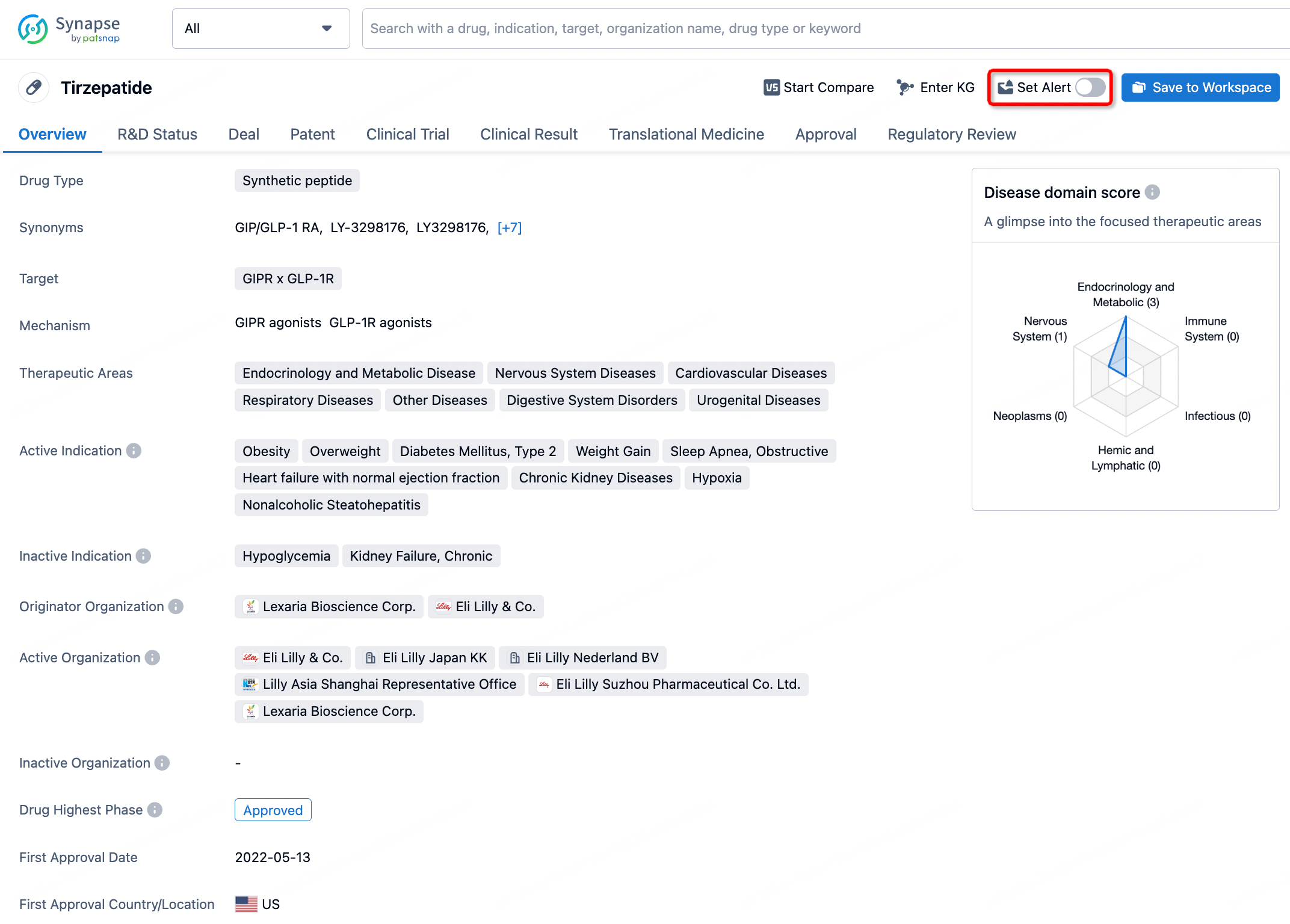
In the Synapse database, you can stay updated on the latest research and development advances of all drugs. This service is accessible anytime and anywhere, with updates available daily or weekly. Use the "Set Alert" function to stay informed. Click on the image below to embark on a brand new journey of drug discovery!


AI Agents Built for Biopharma Breakthroughs
Accelerate discovery. Empower decisions. Transform outcomes.
Get started for free today!
Accelerate Strategic R&D decision making with Synapse, PatSnap’s AI-powered Connected Innovation Intelligence Platform Built for Life Sciences Professionals.
Start your data trial now!
Synapse data is also accessible to external entities via APIs or data packages. Empower better decisions with the latest in pharmaceutical intelligence.