Request Demo
What is Nedosiran used for?
14 June 2024
In the evolving field of pharmaceuticals, discovering effective treatments for rare diseases is critical. One such promising treatment is Nedosiran, a drug currently being researched and developed for its potential in addressing primary hyperoxaluria, a rare genetic disorder. This blog post provides an in-depth exploration of Nedosiran, its mechanism of action, administration methods, side effects, and interactions with other drugs.
Nedosiran is a novel therapeutic agent being investigated primarily for the treatment of primary hyperoxaluria (PH), a condition characterized by the overproduction of oxalate, a substance that can lead to kidney stones and renal failure. The drug is currently under development by Dicerna Pharmaceuticals and has shown promising results in clinical trials. Unlike conventional treatments, Nedosiran employs a sophisticated approach targeting the root cause of the disease rather than just alleviating symptoms.
The mechanism of action of Nedosiran is an excellent example of precision medicine. The drug utilizes RNA interference (RNAi) technology to target the liver enzyme glycolate oxidase (GO), which plays a crucial role in oxalate production. By silencing the expression of the HAO1 gene that encodes the GO enzyme, Nedosiran effectively reduces the conversion of glycolate to glyoxylate, subsequently decreasing oxalate levels in the body. This targeted mechanism addresses the disease at its genetic and enzymatic root, offering a more effective treatment option compared to current therapies that primarily focus on managing symptoms and complications.
Administering Nedosiran is straightforward and patient-friendly, which is crucial for a drug intended for chronic conditions. The drug is administered via subcutaneous injection, a method that allows for controlled release and absorption. In clinical trials, Nedosiran has been administered once every four weeks, providing a convenient dosing schedule for patients. The onset of action is relatively rapid; initial studies have shown significant reductions in urinary oxalate levels within days of the first administration. This quick onset is particularly beneficial for patients suffering from severe oxalate-related symptoms and complications.
Despite its promising potential, Nedosiran, like all medications, comes with a profile of side effects. Most clinical trials have reported mild to moderate adverse effects, with the most common being injection site reactions, such as redness, swelling, and pain. These side effects are generally well-tolerated and subside on their own. However, as with any new treatment, there are contraindications to consider. Patients with a history of severe allergic reactions to any component of Nedosiran should avoid its use. Additionally, comprehensive monitoring during treatment is advised to ensure that any adverse effects are promptly identified and managed.
Another important aspect to consider is the potential for drug interactions. Given that Nedosiran is a relatively new pharmaceutical agent, comprehensive interaction studies are still ongoing. However, it is crucial to note that the drug's mechanism, which involves the RNA interference pathway, could theoretically interact with other medications that also impact gene expression or RNA interference. Patients should inform their healthcare providers of all medications they are currently taking, including over-the-counter drugs and supplements, to avoid potential interactions. Specific interactions with commonly used medications like anticoagulants, antiplatelets, and other enzyme-modulating drugs should be closely monitored.
In conclusion, Nedosiran represents a significant advancement in the treatment of primary hyperoxaluria, offering a targeted approach that addresses the genetic and enzymatic roots of the disease. With its innovative mechanism of action, convenient administration method, and manageable side effect profile, Nedosiran has the potential to improve the quality of life for patients suffering from this debilitating condition. As ongoing research continues to elucidate its full potential and interactions, Nedosiran stands as a beacon of hope for those affected by primary hyperoxaluria.
Nedosiran is a novel therapeutic agent being investigated primarily for the treatment of primary hyperoxaluria (PH), a condition characterized by the overproduction of oxalate, a substance that can lead to kidney stones and renal failure. The drug is currently under development by Dicerna Pharmaceuticals and has shown promising results in clinical trials. Unlike conventional treatments, Nedosiran employs a sophisticated approach targeting the root cause of the disease rather than just alleviating symptoms.
The mechanism of action of Nedosiran is an excellent example of precision medicine. The drug utilizes RNA interference (RNAi) technology to target the liver enzyme glycolate oxidase (GO), which plays a crucial role in oxalate production. By silencing the expression of the HAO1 gene that encodes the GO enzyme, Nedosiran effectively reduces the conversion of glycolate to glyoxylate, subsequently decreasing oxalate levels in the body. This targeted mechanism addresses the disease at its genetic and enzymatic root, offering a more effective treatment option compared to current therapies that primarily focus on managing symptoms and complications.
Administering Nedosiran is straightforward and patient-friendly, which is crucial for a drug intended for chronic conditions. The drug is administered via subcutaneous injection, a method that allows for controlled release and absorption. In clinical trials, Nedosiran has been administered once every four weeks, providing a convenient dosing schedule for patients. The onset of action is relatively rapid; initial studies have shown significant reductions in urinary oxalate levels within days of the first administration. This quick onset is particularly beneficial for patients suffering from severe oxalate-related symptoms and complications.
Despite its promising potential, Nedosiran, like all medications, comes with a profile of side effects. Most clinical trials have reported mild to moderate adverse effects, with the most common being injection site reactions, such as redness, swelling, and pain. These side effects are generally well-tolerated and subside on their own. However, as with any new treatment, there are contraindications to consider. Patients with a history of severe allergic reactions to any component of Nedosiran should avoid its use. Additionally, comprehensive monitoring during treatment is advised to ensure that any adverse effects are promptly identified and managed.
Another important aspect to consider is the potential for drug interactions. Given that Nedosiran is a relatively new pharmaceutical agent, comprehensive interaction studies are still ongoing. However, it is crucial to note that the drug's mechanism, which involves the RNA interference pathway, could theoretically interact with other medications that also impact gene expression or RNA interference. Patients should inform their healthcare providers of all medications they are currently taking, including over-the-counter drugs and supplements, to avoid potential interactions. Specific interactions with commonly used medications like anticoagulants, antiplatelets, and other enzyme-modulating drugs should be closely monitored.
In conclusion, Nedosiran represents a significant advancement in the treatment of primary hyperoxaluria, offering a targeted approach that addresses the genetic and enzymatic roots of the disease. With its innovative mechanism of action, convenient administration method, and manageable side effect profile, Nedosiran has the potential to improve the quality of life for patients suffering from this debilitating condition. As ongoing research continues to elucidate its full potential and interactions, Nedosiran stands as a beacon of hope for those affected by primary hyperoxaluria.
How to obtain the latest development progress of all drugs?
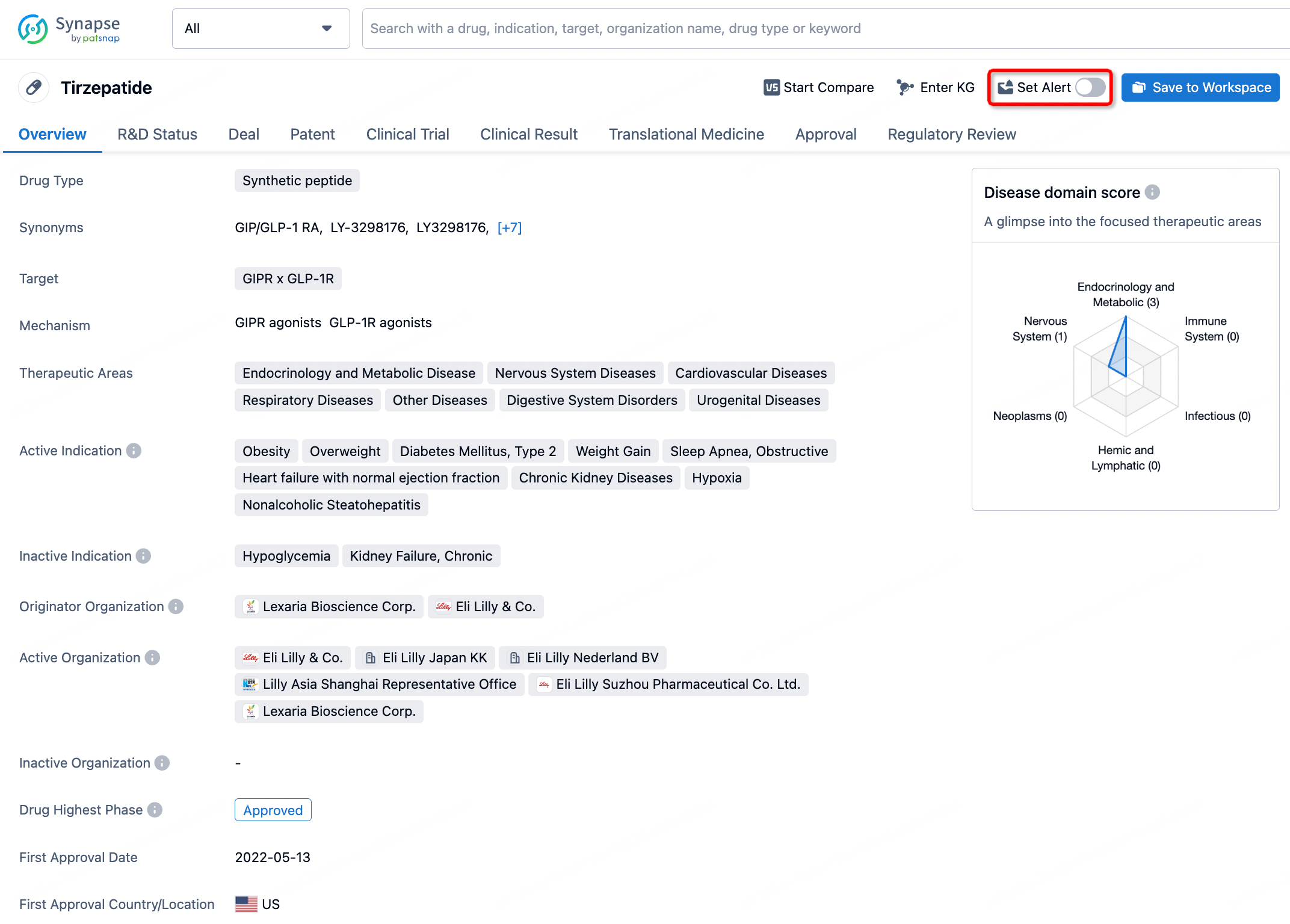
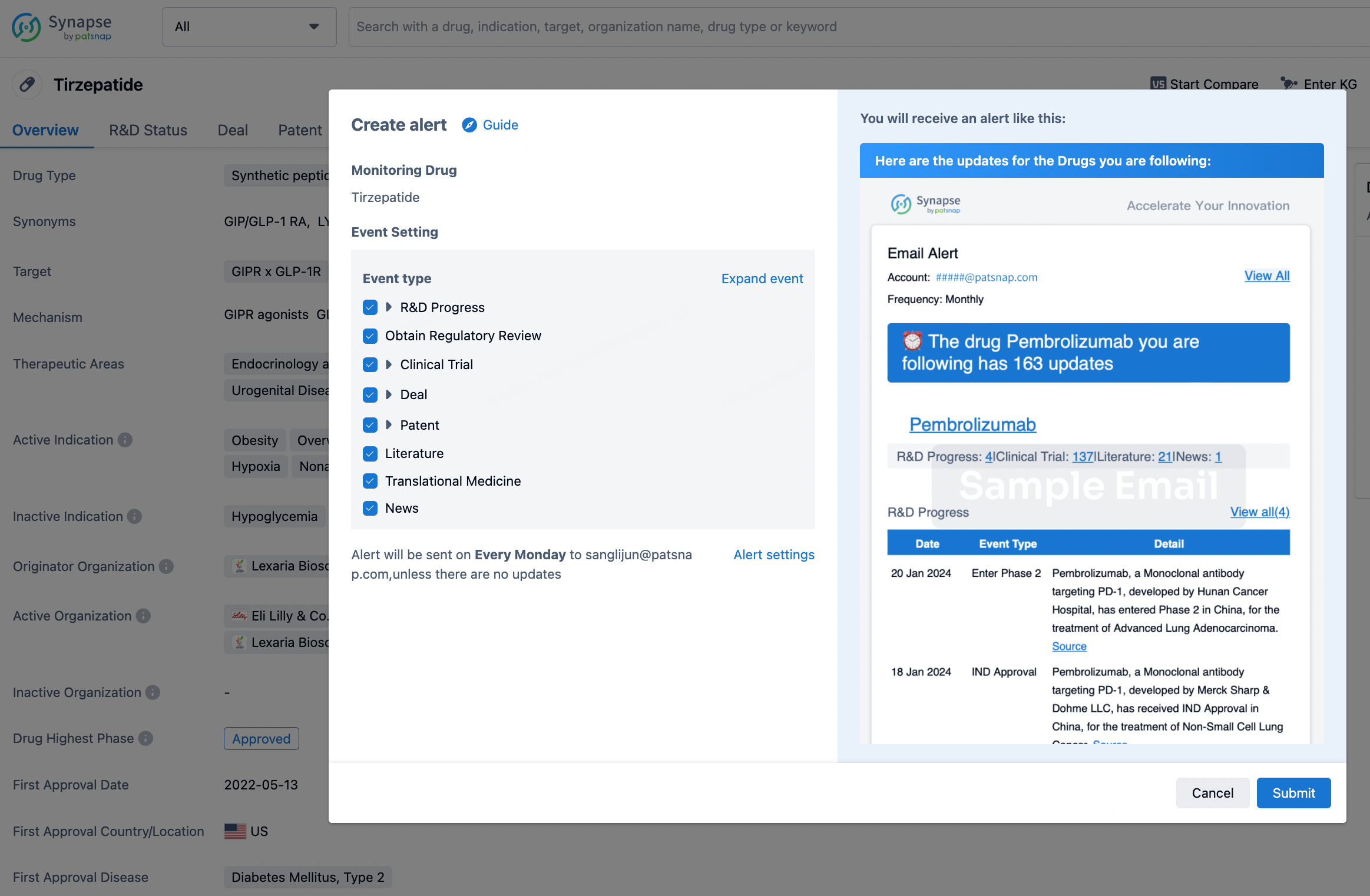
In the Synapse database, you can stay updated on the latest research and development advances of all drugs. This service is accessible anytime and anywhere, with updates available daily or weekly. Use the "Set Alert" function to stay informed. Click on the image below to embark on a brand new journey of drug discovery!
AI Agents Built for Biopharma Breakthroughs
Accelerate discovery. Empower decisions. Transform outcomes.
Get started for free today!
Accelerate Strategic R&D decision making with Synapse, PatSnap’s AI-powered Connected Innovation Intelligence Platform Built for Life Sciences Professionals.
Start your data trial now!
Synapse data is also accessible to external entities via APIs or data packages. Empower better decisions with the latest in pharmaceutical intelligence.