Request Demo
What is Obecabatagene autoleucel used for?
28 June 2024
In recent years, the field of cancer immunotherapy has seen significant advancements, with chimeric antigen receptor (CAR) T-cell therapies emerging as a groundbreaking approach. Among these innovative treatments, Obecabatagene autoleucel has garnered substantial attention. Developed through the collaborative efforts of leading research institutions, this novel CAR T-cell therapy targets specific antigens on cancer cells, holds promise for various indications, and has shown encouraging results in clinical trials.
Obecabatagene autoleucel is a type of CAR T-cell therapy, a revolutionary form of immunotherapy designed to harness the body’s own immune system to fight cancer. The therapy is primarily being explored for its efficacy in treating hematologic malignancies, particularly B-cell lymphomas and leukemias. The research and development of Obecabatagene autoleucel are spearheaded by a consortium of biotechnological companies and academic research institutions, striving to push the boundaries of cancer treatment. This CAR T-cell therapy has undergone rigorous preclinical studies and is currently being assessed in multiple phases of clinical trials to determine its safety, efficacy, and potential role in the oncological therapeutic landscape.
The mechanism of action of Obecabatagene autoleucel is both sophisticated and elegant. CAR T-cell therapies function by genetically modifying a patient’s own T-cells to express a chimeric antigen receptor (CAR) that specifically targets cancer cells. The process begins with the extraction of T-cells from the patient’s blood. These T-cells are then genetically engineered in the laboratory to produce CARs on their surface. The CARs consist of an extracellular domain designed to bind to a specific antigen on cancer cells, an intracellular signaling domain that activates the T-cell, and a co-stimulatory domain that enhances T-cell function and proliferation.
For Obecabatagene autoleucel, the targeted antigen is typically CD19, a protein abundantly expressed on the surface of B-cell malignancies but minimally present on normal cells. Once the CAR T-cells are infused back into the patient, they seek out and bind to the CD19 antigen on cancer cells. This binding triggers the CAR T-cells to become activated, proliferate, and launch a potent immune response against the cancer cells. The activated CAR T-cells release cytotoxic molecules that induce apoptosis, or programmed cell death, in the targeted cancer cells, thereby reducing the tumor burden and promoting cancer remission.
The primary indication for Obecabatagene autoleucel is the treatment of refractory or relapsed B-cell malignancies, particularly B-cell lymphomas and acute lymphoblastic leukemia (ALL). These types of cancers often express the CD19 antigen, making them suitable candidates for CD19-directed CAR T-cell therapy. B-cell lymphomas, a diverse group of blood cancers that originate in the lymphocytes, can be challenging to treat, especially in patients who have not responded to conventional therapies such as chemotherapy, radiation, or monoclonal antibodies. Similarly, acute lymphoblastic leukemia, a fast-growing cancer of the blood and bone marrow, often becomes refractory to standard treatments, necessitating novel therapeutic approaches.
In clinical trials, Obecabatagene autoleucel has shown remarkable efficacy in patients with heavily pretreated B-cell malignancies. Many patients who received this therapy have achieved complete or partial remissions, highlighting its potential as a transformative treatment option. The therapy's success in trials has led to its consideration for regulatory approval and potential incorporation into standard treatment protocols for eligible patients.
Moreover, ongoing research aims to expand the indications of Obecabatagene autoleucel to other hematologic malignancies and solid tumors by targeting different antigens. Scientists are also investigating strategies to enhance the durability of the therapeutic response, manage potential toxicities, and improve the overall safety profile of this therapy.
In conclusion, Obecabatagene autoleucel represents a significant advancement in the realm of CAR T-cell therapies, offering new hope for patients with refractory or relapsed B-cell malignancies. Its targeted mechanism of action, promising clinical outcomes, and potential for broader applications underscore its importance in the evolving landscape of cancer treatment. As research progresses, Obecabatagene autoleucel may become an integral part of the oncological armamentarium, transforming the lives of countless patients battling cancer.
Obecabatagene autoleucel is a type of CAR T-cell therapy, a revolutionary form of immunotherapy designed to harness the body’s own immune system to fight cancer. The therapy is primarily being explored for its efficacy in treating hematologic malignancies, particularly B-cell lymphomas and leukemias. The research and development of Obecabatagene autoleucel are spearheaded by a consortium of biotechnological companies and academic research institutions, striving to push the boundaries of cancer treatment. This CAR T-cell therapy has undergone rigorous preclinical studies and is currently being assessed in multiple phases of clinical trials to determine its safety, efficacy, and potential role in the oncological therapeutic landscape.
The mechanism of action of Obecabatagene autoleucel is both sophisticated and elegant. CAR T-cell therapies function by genetically modifying a patient’s own T-cells to express a chimeric antigen receptor (CAR) that specifically targets cancer cells. The process begins with the extraction of T-cells from the patient’s blood. These T-cells are then genetically engineered in the laboratory to produce CARs on their surface. The CARs consist of an extracellular domain designed to bind to a specific antigen on cancer cells, an intracellular signaling domain that activates the T-cell, and a co-stimulatory domain that enhances T-cell function and proliferation.
For Obecabatagene autoleucel, the targeted antigen is typically CD19, a protein abundantly expressed on the surface of B-cell malignancies but minimally present on normal cells. Once the CAR T-cells are infused back into the patient, they seek out and bind to the CD19 antigen on cancer cells. This binding triggers the CAR T-cells to become activated, proliferate, and launch a potent immune response against the cancer cells. The activated CAR T-cells release cytotoxic molecules that induce apoptosis, or programmed cell death, in the targeted cancer cells, thereby reducing the tumor burden and promoting cancer remission.
The primary indication for Obecabatagene autoleucel is the treatment of refractory or relapsed B-cell malignancies, particularly B-cell lymphomas and acute lymphoblastic leukemia (ALL). These types of cancers often express the CD19 antigen, making them suitable candidates for CD19-directed CAR T-cell therapy. B-cell lymphomas, a diverse group of blood cancers that originate in the lymphocytes, can be challenging to treat, especially in patients who have not responded to conventional therapies such as chemotherapy, radiation, or monoclonal antibodies. Similarly, acute lymphoblastic leukemia, a fast-growing cancer of the blood and bone marrow, often becomes refractory to standard treatments, necessitating novel therapeutic approaches.
In clinical trials, Obecabatagene autoleucel has shown remarkable efficacy in patients with heavily pretreated B-cell malignancies. Many patients who received this therapy have achieved complete or partial remissions, highlighting its potential as a transformative treatment option. The therapy's success in trials has led to its consideration for regulatory approval and potential incorporation into standard treatment protocols for eligible patients.
Moreover, ongoing research aims to expand the indications of Obecabatagene autoleucel to other hematologic malignancies and solid tumors by targeting different antigens. Scientists are also investigating strategies to enhance the durability of the therapeutic response, manage potential toxicities, and improve the overall safety profile of this therapy.
In conclusion, Obecabatagene autoleucel represents a significant advancement in the realm of CAR T-cell therapies, offering new hope for patients with refractory or relapsed B-cell malignancies. Its targeted mechanism of action, promising clinical outcomes, and potential for broader applications underscore its importance in the evolving landscape of cancer treatment. As research progresses, Obecabatagene autoleucel may become an integral part of the oncological armamentarium, transforming the lives of countless patients battling cancer.
How to obtain the latest development progress of all drugs?
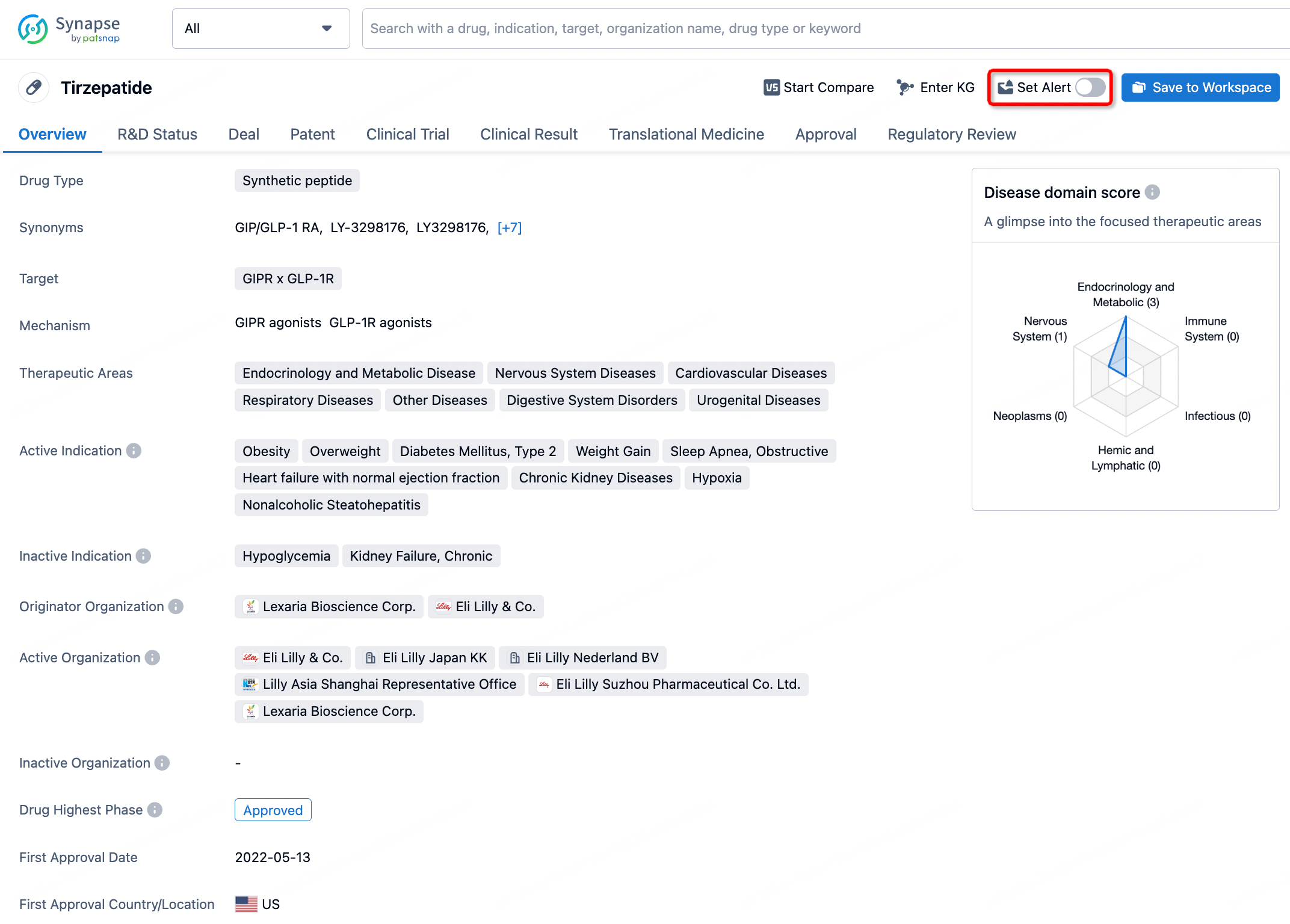
In the Synapse database, you can stay updated on the latest research and development advances of all drugs. This service is accessible anytime and anywhere, with updates available daily or weekly. Use the "Set Alert" function to stay informed. Click on the image below to embark on a brand new journey of drug discovery!


AI Agents Built for Biopharma Breakthroughs
Accelerate discovery. Empower decisions. Transform outcomes.
Get started for free today!
Accelerate Strategic R&D decision making with Synapse, PatSnap’s AI-powered Connected Innovation Intelligence Platform Built for Life Sciences Professionals.
Start your data trial now!
Synapse data is also accessible to external entities via APIs or data packages. Empower better decisions with the latest in pharmaceutical intelligence.