Request Demo
What is Pegtibatinase used for?
28 June 2024
Pegtibatinase is an innovative enzyme replacement therapy that has drawn significant attention in the pharmaceutical and medical research communities. Developed by a consortium of leading research institutions and biotechnology firms, Pegtibatinase targets conditions associated with metabolic imbalances, specifically focusing on enzymatic deficiencies. This novel drug is engineered to replace or supplement deficient enzymes in patients, thereby addressing the underlying cause of several metabolic disorders. Currently, Pegtibatinase is in various stages of clinical trials, with early results showing promising efficacy and safety profiles.
The primary target of Pegtibatinase is the metabolic disorder known as hyperoxaluria, an ailment characterized by an excessive accumulation of oxalate in the body. The drug is designed to replace the function of the deficient enzyme in patients, thereby reducing oxalate levels and preventing the formation of kidney stones and other related complications. Research into Pegtibatinase has been spearheaded by companies like Synlogic, which has leveraged advanced genetic engineering techniques to develop this next-generation enzyme therapy. The drug is classified as a biologic, specifically a pegylated enzyme, which enhances its stability and efficacy in the human body. As of now, Pegtibatinase is undergoing rigorous clinical testing, with several Phase II and Phase III trials currently underway to assess its long-term benefits and potential risks.
The mechanism of action for Pegtibatinase is both innovative and intricate. At its core, Pegtibatinase is a recombinant enzyme that has been pegylated to improve its pharmacokinetic properties. Pegylation involves the attachment of polyethylene glycol (PEG) chains to the enzyme, which extends its half-life in the bloodstream and reduces its immunogenicity. This pegylated enzyme specifically targets and breaks down oxalate, a naturally occurring substance in the body that can become problematic when accumulated in excessive amounts. Pegtibatinase mimics the action of the naturally occurring enzyme oxalate decarboxylase, converting oxalate into formate and carbon dioxide, both of which are harmless and easily excreted by the body. By supplementing the deficient or non-functional enzyme in patients with hyperoxaluria, Pegtibatinase effectively reduces oxalate levels, thereby mitigating the risk of kidney stone formation and other related complications.
The indication for Pegtibatinase is primarily for the treatment of primary hyperoxaluria, a rare genetic disorder that leads to the overproduction of oxalate. Primary hyperoxaluria has several types, each caused by a different genetic mutation that results in the lack or dysfunction of a specific enzyme in the glyoxylate and oxalate metabolic pathway. Patients suffering from this condition often experience recurrent kidney stones, nephrocalcinosis (deposition of calcium oxalate in the kidneys), and in severe cases, renal failure. By addressing the root cause of oxalate overproduction, Pegtibatinase offers a targeted treatment option that goes beyond symptomatic relief, aiming to correct the metabolic imbalance at its source.
In addition to primary hyperoxaluria, Pegtibatinase may also hold potential for secondary hyperoxaluria, a condition often resulting from other medical treatments or conditions such as bariatric surgery or inflammatory bowel disease. These conditions can disrupt normal oxalate metabolism, leading to increased levels and subsequent complications. While the primary focus remains on primary hyperoxaluria, ongoing research aims to explore the efficacy of Pegtibatinase in these secondary cases as well.
In conclusion, Pegtibatinase represents a significant advancement in the treatment of metabolic disorders associated with oxalate accumulation. Its innovative mechanism of action, combined with the promising results from early clinical trials, positions it as a potentially transformative therapy for patients suffering from hyperoxaluria. As research progresses, the medical community remains hopeful that Pegtibatinase will offer a new lease on life for those grappling with the debilitating effects of this rare metabolic disorder.
The primary target of Pegtibatinase is the metabolic disorder known as hyperoxaluria, an ailment characterized by an excessive accumulation of oxalate in the body. The drug is designed to replace the function of the deficient enzyme in patients, thereby reducing oxalate levels and preventing the formation of kidney stones and other related complications. Research into Pegtibatinase has been spearheaded by companies like Synlogic, which has leveraged advanced genetic engineering techniques to develop this next-generation enzyme therapy. The drug is classified as a biologic, specifically a pegylated enzyme, which enhances its stability and efficacy in the human body. As of now, Pegtibatinase is undergoing rigorous clinical testing, with several Phase II and Phase III trials currently underway to assess its long-term benefits and potential risks.
The mechanism of action for Pegtibatinase is both innovative and intricate. At its core, Pegtibatinase is a recombinant enzyme that has been pegylated to improve its pharmacokinetic properties. Pegylation involves the attachment of polyethylene glycol (PEG) chains to the enzyme, which extends its half-life in the bloodstream and reduces its immunogenicity. This pegylated enzyme specifically targets and breaks down oxalate, a naturally occurring substance in the body that can become problematic when accumulated in excessive amounts. Pegtibatinase mimics the action of the naturally occurring enzyme oxalate decarboxylase, converting oxalate into formate and carbon dioxide, both of which are harmless and easily excreted by the body. By supplementing the deficient or non-functional enzyme in patients with hyperoxaluria, Pegtibatinase effectively reduces oxalate levels, thereby mitigating the risk of kidney stone formation and other related complications.
The indication for Pegtibatinase is primarily for the treatment of primary hyperoxaluria, a rare genetic disorder that leads to the overproduction of oxalate. Primary hyperoxaluria has several types, each caused by a different genetic mutation that results in the lack or dysfunction of a specific enzyme in the glyoxylate and oxalate metabolic pathway. Patients suffering from this condition often experience recurrent kidney stones, nephrocalcinosis (deposition of calcium oxalate in the kidneys), and in severe cases, renal failure. By addressing the root cause of oxalate overproduction, Pegtibatinase offers a targeted treatment option that goes beyond symptomatic relief, aiming to correct the metabolic imbalance at its source.
In addition to primary hyperoxaluria, Pegtibatinase may also hold potential for secondary hyperoxaluria, a condition often resulting from other medical treatments or conditions such as bariatric surgery or inflammatory bowel disease. These conditions can disrupt normal oxalate metabolism, leading to increased levels and subsequent complications. While the primary focus remains on primary hyperoxaluria, ongoing research aims to explore the efficacy of Pegtibatinase in these secondary cases as well.
In conclusion, Pegtibatinase represents a significant advancement in the treatment of metabolic disorders associated with oxalate accumulation. Its innovative mechanism of action, combined with the promising results from early clinical trials, positions it as a potentially transformative therapy for patients suffering from hyperoxaluria. As research progresses, the medical community remains hopeful that Pegtibatinase will offer a new lease on life for those grappling with the debilitating effects of this rare metabolic disorder.
How to obtain the latest development progress of all drugs?
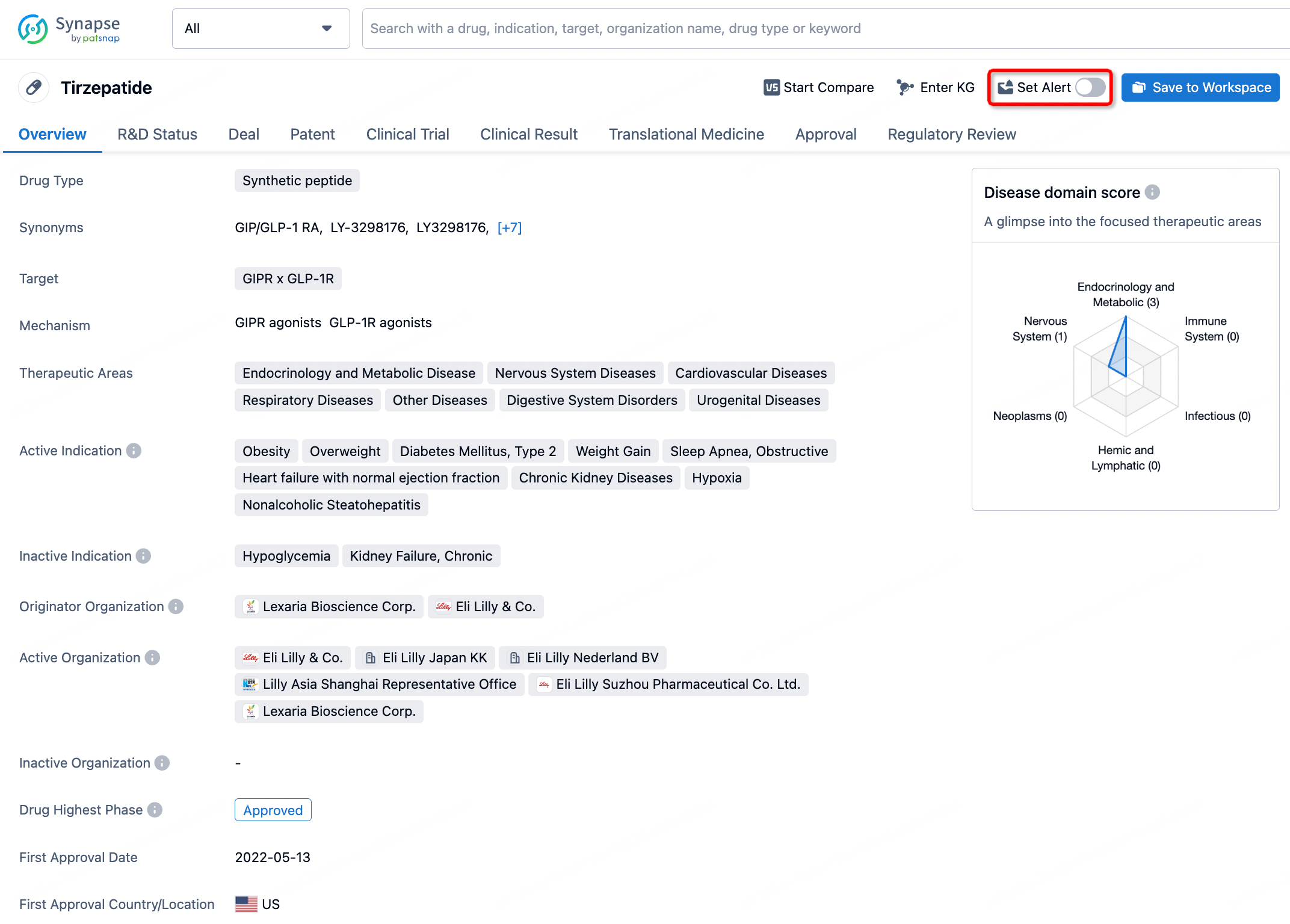
In the Synapse database, you can stay updated on the latest research and development advances of all drugs. This service is accessible anytime and anywhere, with updates available daily or weekly. Use the "Set Alert" function to stay informed. Click on the image below to embark on a brand new journey of drug discovery!


AI Agents Built for Biopharma Breakthroughs
Accelerate discovery. Empower decisions. Transform outcomes.
Get started for free today!
Accelerate Strategic R&D decision making with Synapse, PatSnap’s AI-powered Connected Innovation Intelligence Platform Built for Life Sciences Professionals.
Start your data trial now!
Synapse data is also accessible to external entities via APIs or data packages. Empower better decisions with the latest in pharmaceutical intelligence.