Request Demo
What is rExenatide-4 used for?
28 June 2024
In the rapidly evolving landscape of biopharmaceutical research, rExenatide-4 stands out as a promising new treatment, especially within the realm of metabolic disorders. Developed through the collaborative efforts of leading research institutions and pharmaceutical companies, rExenatide-4 is a synthetic version of exenatide, a glucagon-like peptide-1 (GLP-1) receptor agonist. This drug type has been increasingly recognized for its efficacy in managing type 2 diabetes mellitus (T2DM). The primary indication for rExenatide-4 is to improve glycemic control in adults with T2DM, particularly for those who struggle with managing their blood sugar levels through diet, exercise, and initial oral medications. Research progress for rExenatide-4 has been promising, with several preclinical studies and early-stage clinical trials showcasing its potential benefits and manageable safety profile.
The mechanism of action of rExenatide-4 centers around its function as a GLP-1 receptor agonist. GLP-1 is an incretin hormone that plays a significant role in regulating glucose metabolism. In a healthy individual, GLP-1 is released in response to food intake, promoting insulin secretion from pancreatic beta cells while inhibiting the release of glucagon, a hormone that raises blood glucose levels. Additionally, GLP-1 slows gastric emptying and increases satiety, thereby reducing overall food intake. rExenatide-4 mimics the effects of natural GLP-1, which leads to improved insulin secretion in response to meals, reduced hepatic glucose production, and ultimately better glycemic control. One of the key advantages of rExenatide-4 is its resistance to dipeptidyl peptidase-4 (DPP-4) degradation, which prolongs its half-life and enhances its therapeutic efficacy compared to endogenous GLP-1.
The primary indication for rExenatide-4 is the treatment of type 2 diabetes mellitus. Type 2 diabetes is a chronic condition characterized by insulin resistance and impaired insulin secretion, resulting in hyperglycemia. The goal of rExenatide-4 therapy is to improve glycemic control, which is critical for reducing the risk of diabetes-related complications such as cardiovascular disease, neuropathy, nephropathy, and retinopathy. Clinical trials have demonstrated that rExenatide-4 can significantly lower HbA1c levels, a marker of long-term glycemic control, and may also contribute to modest weight loss, which is beneficial for many patients with T2DM. Moreover, rExenatide-4 offers an alternative for patients who have not achieved adequate glycemic control with oral antidiabetic agents alone, providing a valuable addition to their therapeutic regimen.
In conclusion, rExenatide-4 represents a significant advancement in the treatment of type 2 diabetes mellitus, leveraging the beneficial effects of GLP-1 receptor agonism to achieve better glycemic control and potentially improve patient outcomes. Its development reflects the ongoing commitment of the scientific and medical communities to address the growing challenge of diabetes and its complications. With continued research and clinical trials, rExenatide-4 may soon become a cornerstone therapy for individuals struggling to manage their diabetes, offering hope for a healthier future.
The mechanism of action of rExenatide-4 centers around its function as a GLP-1 receptor agonist. GLP-1 is an incretin hormone that plays a significant role in regulating glucose metabolism. In a healthy individual, GLP-1 is released in response to food intake, promoting insulin secretion from pancreatic beta cells while inhibiting the release of glucagon, a hormone that raises blood glucose levels. Additionally, GLP-1 slows gastric emptying and increases satiety, thereby reducing overall food intake. rExenatide-4 mimics the effects of natural GLP-1, which leads to improved insulin secretion in response to meals, reduced hepatic glucose production, and ultimately better glycemic control. One of the key advantages of rExenatide-4 is its resistance to dipeptidyl peptidase-4 (DPP-4) degradation, which prolongs its half-life and enhances its therapeutic efficacy compared to endogenous GLP-1.
The primary indication for rExenatide-4 is the treatment of type 2 diabetes mellitus. Type 2 diabetes is a chronic condition characterized by insulin resistance and impaired insulin secretion, resulting in hyperglycemia. The goal of rExenatide-4 therapy is to improve glycemic control, which is critical for reducing the risk of diabetes-related complications such as cardiovascular disease, neuropathy, nephropathy, and retinopathy. Clinical trials have demonstrated that rExenatide-4 can significantly lower HbA1c levels, a marker of long-term glycemic control, and may also contribute to modest weight loss, which is beneficial for many patients with T2DM. Moreover, rExenatide-4 offers an alternative for patients who have not achieved adequate glycemic control with oral antidiabetic agents alone, providing a valuable addition to their therapeutic regimen.
In conclusion, rExenatide-4 represents a significant advancement in the treatment of type 2 diabetes mellitus, leveraging the beneficial effects of GLP-1 receptor agonism to achieve better glycemic control and potentially improve patient outcomes. Its development reflects the ongoing commitment of the scientific and medical communities to address the growing challenge of diabetes and its complications. With continued research and clinical trials, rExenatide-4 may soon become a cornerstone therapy for individuals struggling to manage their diabetes, offering hope for a healthier future.
How to obtain the latest development progress of all drugs?
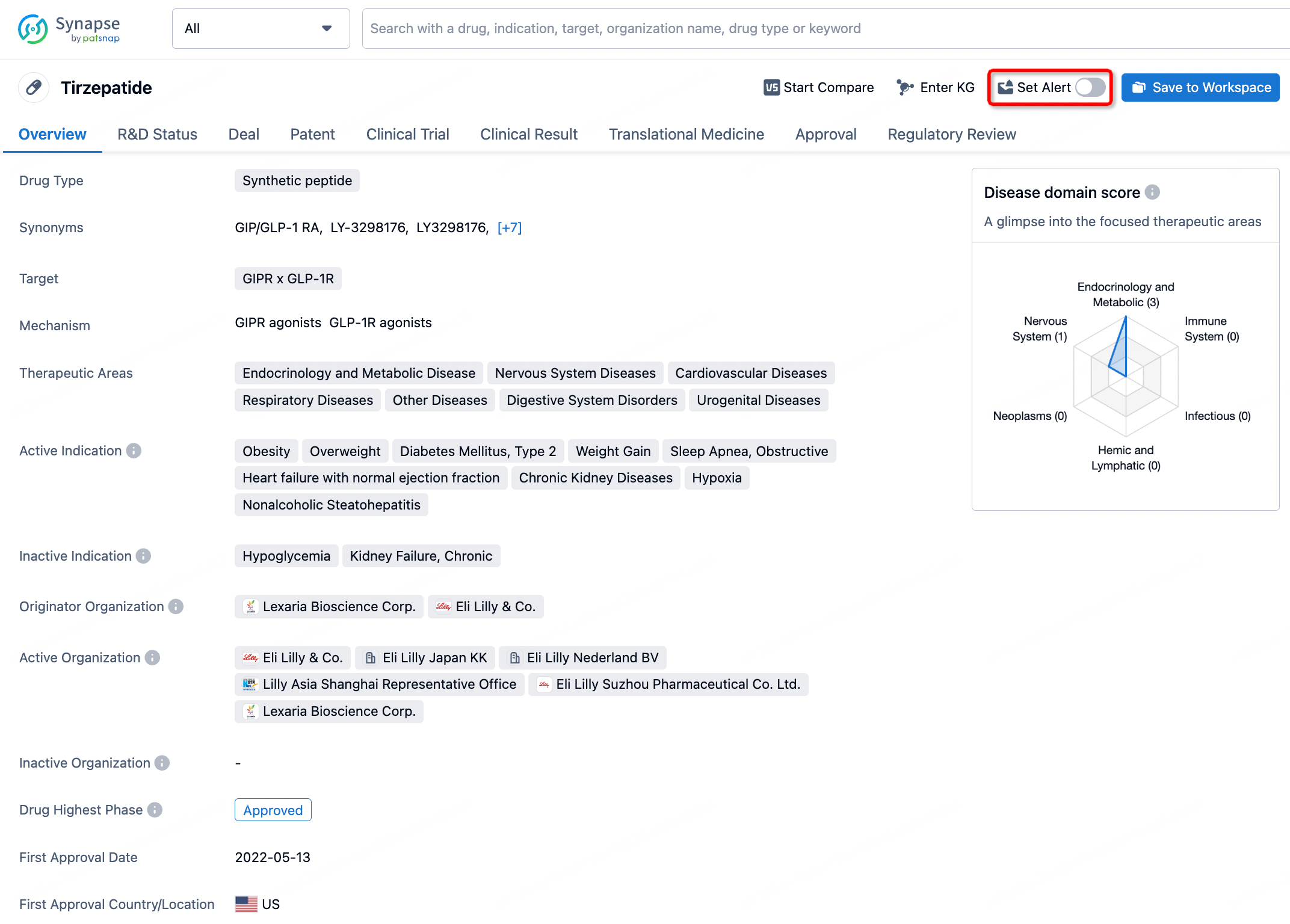
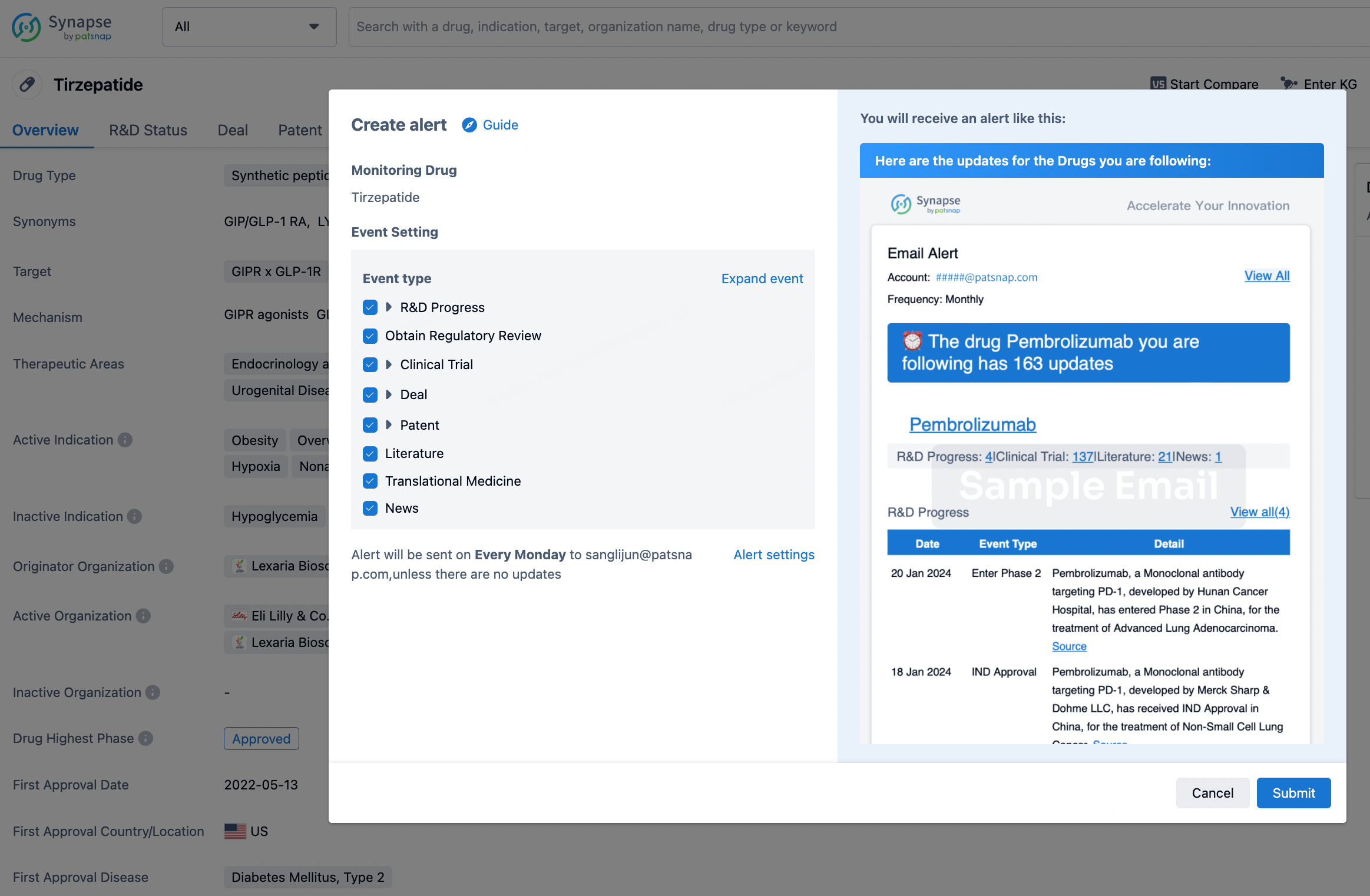
In the Synapse database, you can stay updated on the latest research and development advances of all drugs. This service is accessible anytime and anywhere, with updates available daily or weekly. Use the "Set Alert" function to stay informed. Click on the image below to embark on a brand new journey of drug discovery!
AI Agents Built for Biopharma Breakthroughs
Accelerate discovery. Empower decisions. Transform outcomes.
Get started for free today!
Accelerate Strategic R&D decision making with Synapse, PatSnap’s AI-powered Connected Innovation Intelligence Platform Built for Life Sciences Professionals.
Start your data trial now!
Synapse data is also accessible to external entities via APIs or data packages. Empower better decisions with the latest in pharmaceutical intelligence.