Request Demo
What is SKP-0130 used for?
28 June 2024
SKP-0130 is a groundbreaking investigational drug that is currently making waves in the field of medical research. Developed by a leading team of scientists at the renowned Biotech Research Institute, SKP-0130 is a small molecule inhibitor designed to target a specific pathway implicated in various diseases. The primary focus of its development has been on its potential application in treating certain types of cancer, although ongoing research is exploring its efficacy in other indications as well. The drug is still in the clinical trial phase, and early results have shown promising signs of efficacy and safety, garnering considerable interest from the medical and scientific communities.
Mechanistically, SKP-0130 operates by inhibiting a key enzyme involved in the proliferation and survival of cancer cells. This enzyme, often overexpressed in numerous malignancies, plays a critical role in the signaling pathways that regulate cell growth and apoptosis. By selectively targeting this enzyme, SKP-0130 disrupts these pathways, leading to the death of cancer cells while sparing healthy cells. This specificity not only enhances the drug’s effectiveness but also minimizes potential side effects, a common drawback of conventional chemotherapy that often damages both cancerous and healthy tissues.
To delve deeper into the mechanism of action, SKP-0130 inhibits an enzyme known as tyrosine kinase, which is essential for the activation of various proteins involved in cellular functions such as division, differentiation, and survival. Tyrosine kinase acts like a molecular switch that turns on multiple downstream signaling pathways crucial for tumor growth and metastasis. When SKP-0130 binds to the active site of the tyrosine kinase, it effectively shuts down these signaling pathways. Consequently, cancer cells lose their ability to proliferate uncontrollably and become more susceptible to programmed cell death or apoptosis. This targeted inhibition represents a significant advancement over traditional therapies that often lack such precision.
The primary indication for SKP-0130 is in the treatment of malignant tumors, particularly those that have shown resistance to existing therapies. Current preclinical studies and early-phase clinical trials have primarily focused on solid tumors such as non-small cell lung cancer (NSCLC), colorectal cancer, and certain types of breast cancer. These cancers often exhibit overactive tyrosine kinase signaling, making them suitable candidates for SKP-0130 intervention. Preliminary data indicate that patients treated with SKP-0130 experience a noticeable reduction in tumor size and improved overall survival rates compared to standard treatments. The specificity of SKP-0130 also promises a better quality of life for patients, as it reduces the incidence of adverse effects commonly associated with more aggressive treatments.
In addition to its primary focus on cancer, researchers are also investigating the potential of SKP-0130 in treating other diseases characterized by abnormal cell proliferation and survival. For instance, there is ongoing research into its application in chronic inflammatory conditions and certain types of autoimmune disorders. These conditions often share underlying mechanisms with cancer, such as dysregulated cell signaling pathways, making them potential therapeutic targets for SKP-0130. Early preclinical data suggest that SKP-0130 could modulate immune responses and reduce inflammation, although further research is needed to confirm these findings and determine the appropriate clinical contexts for its use.
In summary, SKP-0130 represents a promising new frontier in targeted cancer therapy. By selectively inhibiting a key enzyme critical for cancer cell survival, it offers a more precise and potentially less toxic alternative to traditional chemotherapy. While its primary development focus is on treating resistant forms of cancer, ongoing research may expand its indications to other diseases with similar pathological mechanisms. As clinical trials progress, the medical community eagerly anticipates further data that could pave the way for SKP-0130 to become a mainstay in the treatment of various malignancies and beyond.
Mechanistically, SKP-0130 operates by inhibiting a key enzyme involved in the proliferation and survival of cancer cells. This enzyme, often overexpressed in numerous malignancies, plays a critical role in the signaling pathways that regulate cell growth and apoptosis. By selectively targeting this enzyme, SKP-0130 disrupts these pathways, leading to the death of cancer cells while sparing healthy cells. This specificity not only enhances the drug’s effectiveness but also minimizes potential side effects, a common drawback of conventional chemotherapy that often damages both cancerous and healthy tissues.
To delve deeper into the mechanism of action, SKP-0130 inhibits an enzyme known as tyrosine kinase, which is essential for the activation of various proteins involved in cellular functions such as division, differentiation, and survival. Tyrosine kinase acts like a molecular switch that turns on multiple downstream signaling pathways crucial for tumor growth and metastasis. When SKP-0130 binds to the active site of the tyrosine kinase, it effectively shuts down these signaling pathways. Consequently, cancer cells lose their ability to proliferate uncontrollably and become more susceptible to programmed cell death or apoptosis. This targeted inhibition represents a significant advancement over traditional therapies that often lack such precision.
The primary indication for SKP-0130 is in the treatment of malignant tumors, particularly those that have shown resistance to existing therapies. Current preclinical studies and early-phase clinical trials have primarily focused on solid tumors such as non-small cell lung cancer (NSCLC), colorectal cancer, and certain types of breast cancer. These cancers often exhibit overactive tyrosine kinase signaling, making them suitable candidates for SKP-0130 intervention. Preliminary data indicate that patients treated with SKP-0130 experience a noticeable reduction in tumor size and improved overall survival rates compared to standard treatments. The specificity of SKP-0130 also promises a better quality of life for patients, as it reduces the incidence of adverse effects commonly associated with more aggressive treatments.
In addition to its primary focus on cancer, researchers are also investigating the potential of SKP-0130 in treating other diseases characterized by abnormal cell proliferation and survival. For instance, there is ongoing research into its application in chronic inflammatory conditions and certain types of autoimmune disorders. These conditions often share underlying mechanisms with cancer, such as dysregulated cell signaling pathways, making them potential therapeutic targets for SKP-0130. Early preclinical data suggest that SKP-0130 could modulate immune responses and reduce inflammation, although further research is needed to confirm these findings and determine the appropriate clinical contexts for its use.
In summary, SKP-0130 represents a promising new frontier in targeted cancer therapy. By selectively inhibiting a key enzyme critical for cancer cell survival, it offers a more precise and potentially less toxic alternative to traditional chemotherapy. While its primary development focus is on treating resistant forms of cancer, ongoing research may expand its indications to other diseases with similar pathological mechanisms. As clinical trials progress, the medical community eagerly anticipates further data that could pave the way for SKP-0130 to become a mainstay in the treatment of various malignancies and beyond.
How to obtain the latest development progress of all drugs?
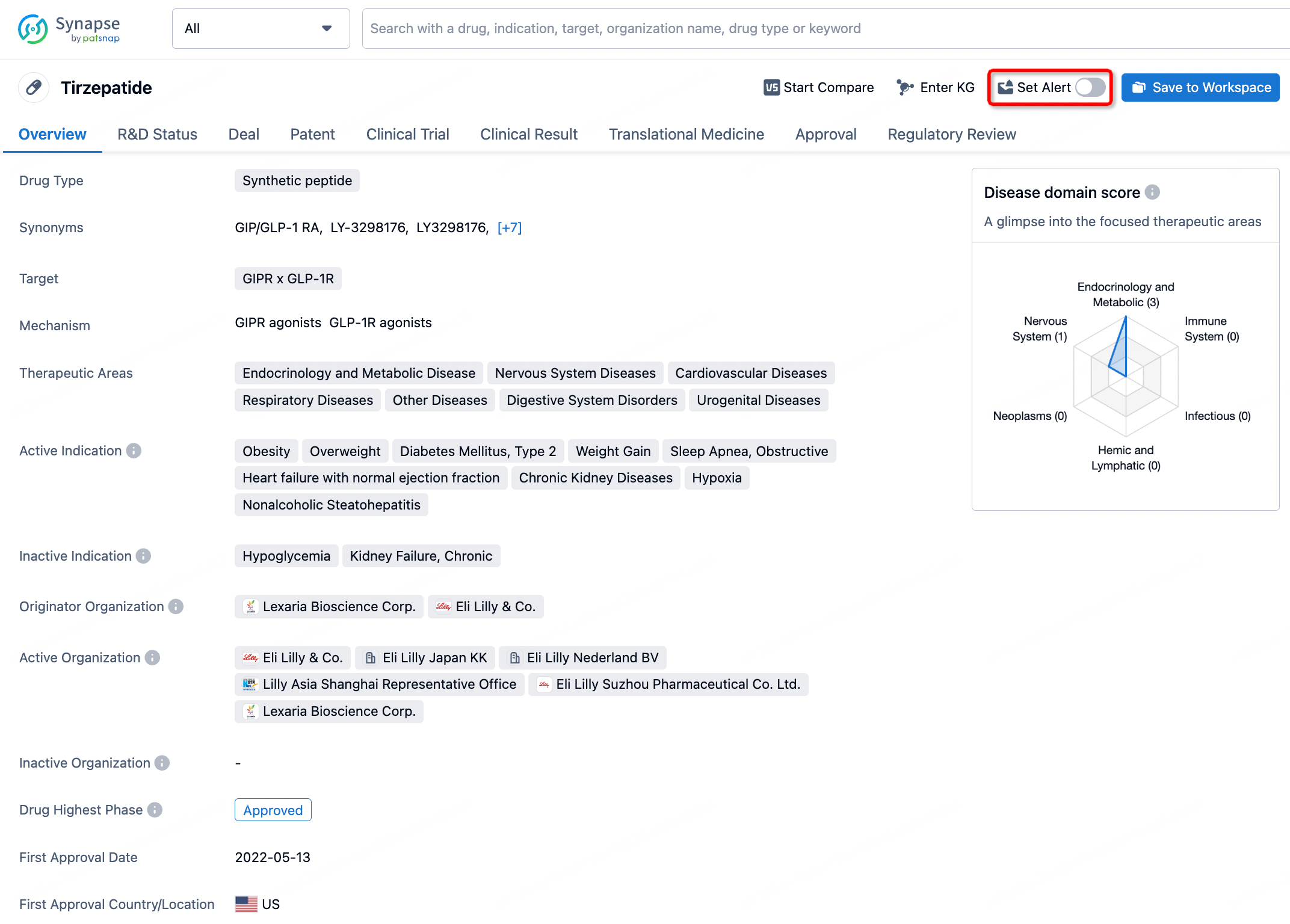
In the Synapse database, you can stay updated on the latest research and development advances of all drugs. This service is accessible anytime and anywhere, with updates available daily or weekly. Use the "Set Alert" function to stay informed. Click on the image below to embark on a brand new journey of drug discovery!


AI Agents Built for Biopharma Breakthroughs
Accelerate discovery. Empower decisions. Transform outcomes.
Get started for free today!
Accelerate Strategic R&D decision making with Synapse, PatSnap’s AI-powered Connected Innovation Intelligence Platform Built for Life Sciences Professionals.
Start your data trial now!
Synapse data is also accessible to external entities via APIs or data packages. Empower better decisions with the latest in pharmaceutical intelligence.