Request Demo
What is Strontium chloride SR-89 used for?
14 June 2024
Strontium chloride SR-89, also known by its trade name Metastron, is a radiopharmaceutical drug primarily used for the treatment of pain associated with metastatic bone cancer. Developed and researched by various institutions, including major cancer research centers and pharmaceutical companies, Strontium chloride SR-89 is a type of radiotherapeutic agent. Its primary indication is to provide palliative care to patients suffering from bone pain due to the spread of cancers like prostate cancer and breast cancer to the skeletal system. Since its advent, Strontium chloride SR-89 has undergone numerous clinical trials to assess its efficacy and safety, and it has been approved by several health authorities around the world for its specific use case.
Strontium chloride SR-89 works through a mechanism that exploits the physiological properties of strontium, a chemical element that mimics calcium. When administered, the radioisotope strontium-89 is preferentially taken up by bone tissue, particularly in areas of high bone turnover, such as metastatic lesions. These areas are often sites of intense pain for cancer patients. Once localized in the bone, strontium-89 emits beta particles, which are a form of ionizing radiation. This radiation effectively destroys the cancer cells in the immediate vicinity, thereby reducing the pain associated with bone metastases. The beta emission also has a relatively short penetration range, which helps minimize damage to the surrounding healthy tissues.
The administration of Strontium chloride SR-89 is relatively straightforward but must be conducted under strict medical supervision. It is typically given as an intravenous injection, with the dosage calculated based on the patient's body weight. The onset of pain relief usually manifests within a few days to weeks following the injection, and the effects can last several months in some patients. Often, patients might require only a single injection to achieve significant pain reduction, but subsequent doses can be administered depending on the recurrence of pain and the patient's overall health status.
Like any pharmaceutical agent, Strontium chloride SR-89 has a spectrum of side effects that patients and clinicians must be aware of. Common side effects include bone marrow suppression, which can lead to reduced blood cell counts, increasing the risk of infections, anemia, and bleeding. Other possible side effects include mild to moderate nausea, vomiting, and diarrhea. Patients with pre-existing conditions such as compromised bone marrow function or those who have undergone extensive chemotherapy may face heightened risks and therefore should use Strontium chloride SR-89 with caution. It is also contraindicated in pregnant or breastfeeding women due to potential risks to the fetus or infant.
Strontium chloride SR-89 can interact with other medications, which can alter its effectiveness or increase the likelihood of adverse effects. For instance, concurrent use with other myelosuppressive agents can amplify bone marrow suppression, leading to severe complications. Additionally, medications that affect bone metabolism, such as bisphosphonates, may influence how well Strontium chloride SR-89 localizes in the bone tissue, potentially reducing its efficacy. It is essential for patients to discuss their full medication regimen with their healthcare provider before starting treatment with Strontium chloride SR-89 to manage any possible drug interactions effectively.
In conclusion, Strontium chloride SR-89 represents a valuable tool in the palliative treatment of bone pain caused by metastatic cancers. Its targeted mechanism of action allows for localized treatment of bone metastases with minimal systemic exposure. However, like all medical treatments, it requires careful consideration and monitoring due to its potential side effects and interactions with other medications. Through ongoing research and clinical application, Strontium chloride SR-89 continues to offer hope and relief to many patients grappling with the challenging symptoms of advanced cancer.
Strontium chloride SR-89 works through a mechanism that exploits the physiological properties of strontium, a chemical element that mimics calcium. When administered, the radioisotope strontium-89 is preferentially taken up by bone tissue, particularly in areas of high bone turnover, such as metastatic lesions. These areas are often sites of intense pain for cancer patients. Once localized in the bone, strontium-89 emits beta particles, which are a form of ionizing radiation. This radiation effectively destroys the cancer cells in the immediate vicinity, thereby reducing the pain associated with bone metastases. The beta emission also has a relatively short penetration range, which helps minimize damage to the surrounding healthy tissues.
The administration of Strontium chloride SR-89 is relatively straightforward but must be conducted under strict medical supervision. It is typically given as an intravenous injection, with the dosage calculated based on the patient's body weight. The onset of pain relief usually manifests within a few days to weeks following the injection, and the effects can last several months in some patients. Often, patients might require only a single injection to achieve significant pain reduction, but subsequent doses can be administered depending on the recurrence of pain and the patient's overall health status.
Like any pharmaceutical agent, Strontium chloride SR-89 has a spectrum of side effects that patients and clinicians must be aware of. Common side effects include bone marrow suppression, which can lead to reduced blood cell counts, increasing the risk of infections, anemia, and bleeding. Other possible side effects include mild to moderate nausea, vomiting, and diarrhea. Patients with pre-existing conditions such as compromised bone marrow function or those who have undergone extensive chemotherapy may face heightened risks and therefore should use Strontium chloride SR-89 with caution. It is also contraindicated in pregnant or breastfeeding women due to potential risks to the fetus or infant.
Strontium chloride SR-89 can interact with other medications, which can alter its effectiveness or increase the likelihood of adverse effects. For instance, concurrent use with other myelosuppressive agents can amplify bone marrow suppression, leading to severe complications. Additionally, medications that affect bone metabolism, such as bisphosphonates, may influence how well Strontium chloride SR-89 localizes in the bone tissue, potentially reducing its efficacy. It is essential for patients to discuss their full medication regimen with their healthcare provider before starting treatment with Strontium chloride SR-89 to manage any possible drug interactions effectively.
In conclusion, Strontium chloride SR-89 represents a valuable tool in the palliative treatment of bone pain caused by metastatic cancers. Its targeted mechanism of action allows for localized treatment of bone metastases with minimal systemic exposure. However, like all medical treatments, it requires careful consideration and monitoring due to its potential side effects and interactions with other medications. Through ongoing research and clinical application, Strontium chloride SR-89 continues to offer hope and relief to many patients grappling with the challenging symptoms of advanced cancer.
How to obtain the latest development progress of all drugs?
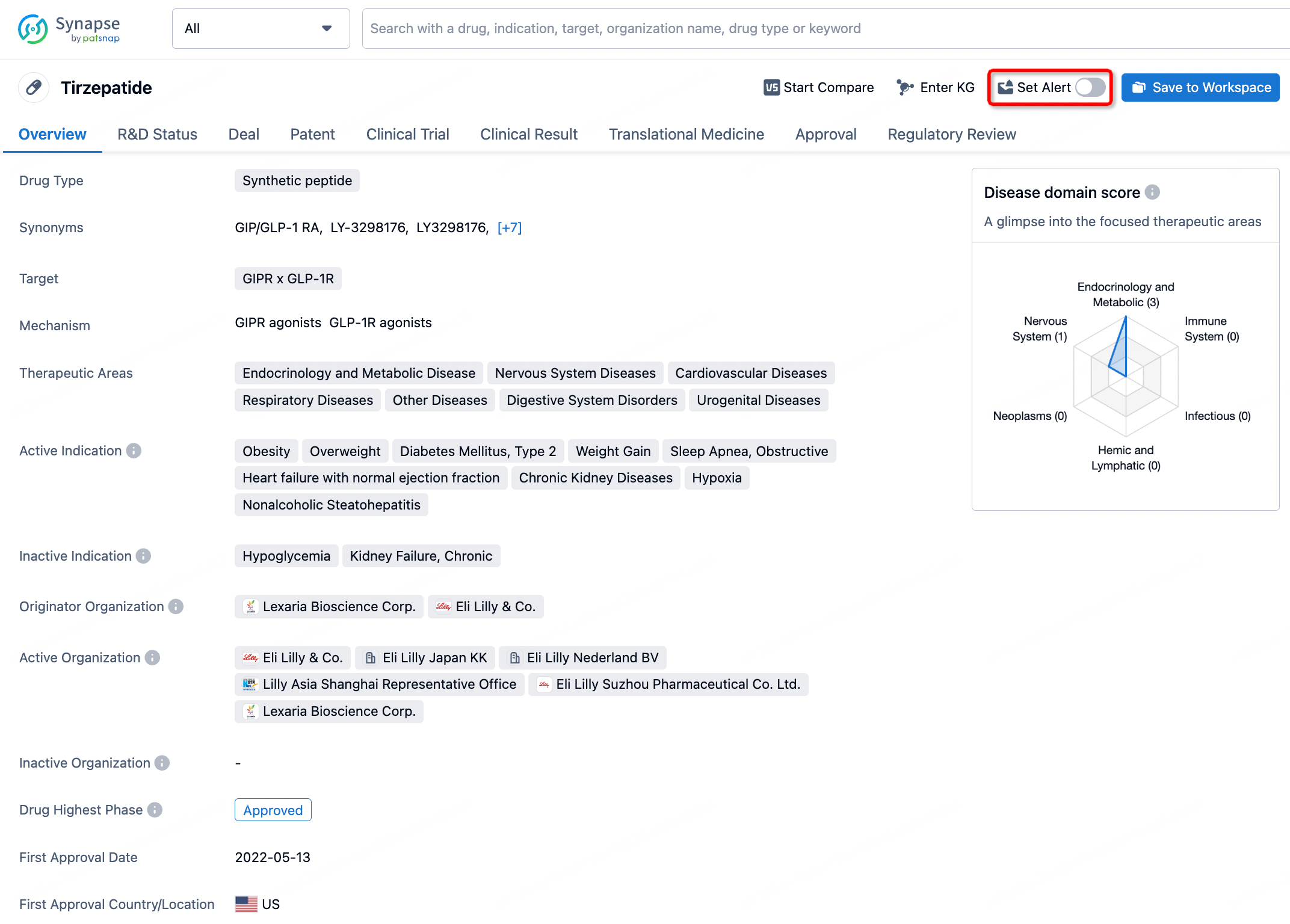
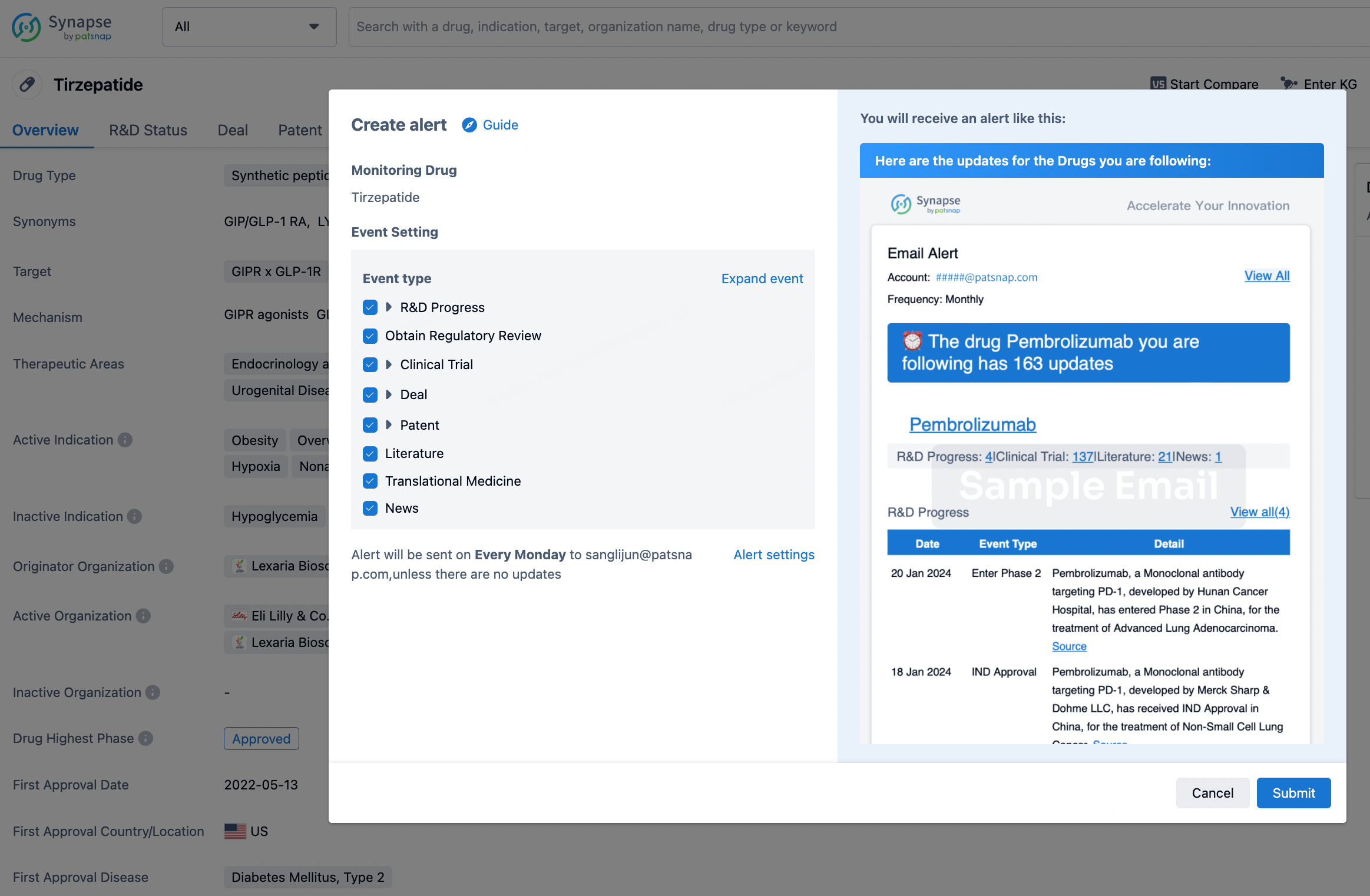
In the Synapse database, you can stay updated on the latest research and development advances of all drugs. This service is accessible anytime and anywhere, with updates available daily or weekly. Use the "Set Alert" function to stay informed. Click on the image below to embark on a brand new journey of drug discovery!
AI Agents Built for Biopharma Breakthroughs
Accelerate discovery. Empower decisions. Transform outcomes.
Get started for free today!
Accelerate Strategic R&D decision making with Synapse, PatSnap’s AI-powered Connected Innovation Intelligence Platform Built for Life Sciences Professionals.
Start your data trial now!
Synapse data is also accessible to external entities via APIs or data packages. Empower better decisions with the latest in pharmaceutical intelligence.