Request Demo
What is Taketiam used for?
14 June 2024
Introduction to Taketiam
Taketiam is a groundbreaking pharmaceutical innovation that has garnered attention across the medical community for its potential to address various conditions effectively. Marketed under several trade names, including Taktiva and Tiamdol, Taketiam is primarily explored as a small-molecule therapeutic with diverse applications. The drug has been the subject of rigorous investigations conducted by leading research institutions such as the National Institutes of Health (NIH) and various global medical universities.
Taketiam targets several biological pathways, making it a versatile candidate for managing a range of medical conditions. Currently, the primary indications for Taketiam include chronic pain, inflammation, and certain autoimmune diseases. It is also being explored for its potential in managing symptoms of neurodegenerative disorders like Parkinson's and Alzheimer's disease. The drug has shown promising results in pre-clinical trials and is now moving through various phases of clinical testing, indicating a progressive research trajectory.
Taketiam Mechanism of Action
The mechanism of action of Taketiam is intricate and multifaceted. The drug primarily works by inhibiting the activity of specific enzymes involved in the inflammatory response, such as cyclooxygenase (COX) and lipoxygenase (LOX). These enzymes are responsible for the production of pro-inflammatory molecules like prostaglandins and leukotrienes, which play a crucial role in inflammation and pain.
Apart from its anti-inflammatory properties, Taketiam also modulates the central nervous system by acting on neurotransmitter pathways. It has been shown to enhance the release of serotonin and norepinephrine, thereby exerting an analgesic effect. This dual mechanism of action—combining both anti-inflammatory and analgesic properties—makes Taketiam a potent candidate for conditions that involve chronic pain and inflammation.
Moreover, ongoing research is investigating the drug's potential neuroprotective effects. Preliminary studies suggest that Taketiam may inhibit the aggregation of amyloid-beta peptides, which are implicated in the pathology of Alzheimer's disease. This adds another layer of therapeutic potential to the drug, making it a versatile tool in the medical arsenal.
How to Use Taketiam
Taketiam is available in various forms, including oral tablets, topical creams, and injectable solutions, thereby offering flexibility in administration based on the specific needs of the patient. The oral form is the most commonly prescribed and is usually taken once or twice daily, depending on the severity of the condition and the patient's overall health profile. The onset of action for the oral form is typically within 30 to 60 minutes, with peak effects manifesting at around two to three hours post-administration.
For localized pain and inflammation, Taketiam topical creams can be directly applied to the affected area. This method allows for targeted action with minimal systemic absorption, thus reducing the risk of systemic side effects. The topical form usually takes effect within 15 to 30 minutes and provides relief for several hours.
In more severe cases, such as during acute flare-ups of autoimmune diseases, Taketiam can be administered via intravenous injection. This method ensures rapid onset of action, often within minutes, making it ideal for situations that require immediate intervention.
It is crucial to follow the prescribed dosage and administration guidelines provided by healthcare professionals to achieve optimal results and minimize potential risks. Patients are advised to take the medication with food to enhance absorption and reduce gastrointestinal discomfort.
What is Taketiam Side Effects
While Taketiam is generally well-tolerated, it is not devoid of side effects. Common adverse reactions include gastrointestinal disturbances such as nausea, vomiting, and diarrhea. Some patients may also experience headaches, dizziness, and mild skin rashes. These side effects are usually transient and tend to resolve on their own as the body adjusts to the medication.
However, there are more severe but less common side effects to be aware of. These include gastrointestinal bleeding, liver enzyme abnormalities, and increased risk of cardiovascular events such as heart attack and stroke. Patients with a history of liver disease, peptic ulcers, or cardiovascular conditions should exercise caution and consult their healthcare provider before starting Taketiam.
Contraindications for the use of Taketiam include known hypersensitivity to the drug or any of its components, active gastrointestinal bleeding, and severe hepatic or renal impairment. Pregnant and breastfeeding women are also advised to avoid Taketiam due to potential risks to the fetus or infant.
Regular monitoring of liver function tests, renal function, and complete blood counts is recommended for patients on long-term Taketiam therapy to detect any adverse effects early and manage them promptly.
What Other Drugs Will Affect Taketiam
The efficacy and safety profile of Taketiam can be influenced by interactions with other medications. Nonsteroidal anti-inflammatory drugs (NSAIDs), anticoagulants, and corticosteroids can amplify the risk of gastrointestinal bleeding when used concurrently with Taketiam. Therefore, patients are advised to avoid combining these medications unless under strict medical supervision.
Taketiam can also interact with certain antidepressants, such as selective serotonin reuptake inhibitors (SSRIs) and serotonin-norepinephrine reuptake inhibitors (SNRIs), potentially increasing the risk of serotonin syndrome. Symptoms of serotonin syndrome include agitation, hallucinations, rapid heart rate, and changes in blood pressure, and it requires immediate medical attention.
Additionally, the drug may interact with antihypertensive medications, diminishing their effectiveness and requiring dose adjustments. It is essential to inform healthcare providers of all medications, supplements, and herbs being taken to ensure that potential drug interactions are adequately managed.
In conclusion, Taketiam represents a promising therapeutic option with its multifaceted mechanism of action and diverse applications. While it offers significant benefits, it is essential to use the drug under medical supervision to mitigate potential risks and adverse effects. Ongoing research continues to explore the full therapeutic potential of Taketiam, offering hope for improved management of various medical conditions in the future.
Taketiam is a groundbreaking pharmaceutical innovation that has garnered attention across the medical community for its potential to address various conditions effectively. Marketed under several trade names, including Taktiva and Tiamdol, Taketiam is primarily explored as a small-molecule therapeutic with diverse applications. The drug has been the subject of rigorous investigations conducted by leading research institutions such as the National Institutes of Health (NIH) and various global medical universities.
Taketiam targets several biological pathways, making it a versatile candidate for managing a range of medical conditions. Currently, the primary indications for Taketiam include chronic pain, inflammation, and certain autoimmune diseases. It is also being explored for its potential in managing symptoms of neurodegenerative disorders like Parkinson's and Alzheimer's disease. The drug has shown promising results in pre-clinical trials and is now moving through various phases of clinical testing, indicating a progressive research trajectory.
Taketiam Mechanism of Action
The mechanism of action of Taketiam is intricate and multifaceted. The drug primarily works by inhibiting the activity of specific enzymes involved in the inflammatory response, such as cyclooxygenase (COX) and lipoxygenase (LOX). These enzymes are responsible for the production of pro-inflammatory molecules like prostaglandins and leukotrienes, which play a crucial role in inflammation and pain.
Apart from its anti-inflammatory properties, Taketiam also modulates the central nervous system by acting on neurotransmitter pathways. It has been shown to enhance the release of serotonin and norepinephrine, thereby exerting an analgesic effect. This dual mechanism of action—combining both anti-inflammatory and analgesic properties—makes Taketiam a potent candidate for conditions that involve chronic pain and inflammation.
Moreover, ongoing research is investigating the drug's potential neuroprotective effects. Preliminary studies suggest that Taketiam may inhibit the aggregation of amyloid-beta peptides, which are implicated in the pathology of Alzheimer's disease. This adds another layer of therapeutic potential to the drug, making it a versatile tool in the medical arsenal.
How to Use Taketiam
Taketiam is available in various forms, including oral tablets, topical creams, and injectable solutions, thereby offering flexibility in administration based on the specific needs of the patient. The oral form is the most commonly prescribed and is usually taken once or twice daily, depending on the severity of the condition and the patient's overall health profile. The onset of action for the oral form is typically within 30 to 60 minutes, with peak effects manifesting at around two to three hours post-administration.
For localized pain and inflammation, Taketiam topical creams can be directly applied to the affected area. This method allows for targeted action with minimal systemic absorption, thus reducing the risk of systemic side effects. The topical form usually takes effect within 15 to 30 minutes and provides relief for several hours.
In more severe cases, such as during acute flare-ups of autoimmune diseases, Taketiam can be administered via intravenous injection. This method ensures rapid onset of action, often within minutes, making it ideal for situations that require immediate intervention.
It is crucial to follow the prescribed dosage and administration guidelines provided by healthcare professionals to achieve optimal results and minimize potential risks. Patients are advised to take the medication with food to enhance absorption and reduce gastrointestinal discomfort.
What is Taketiam Side Effects
While Taketiam is generally well-tolerated, it is not devoid of side effects. Common adverse reactions include gastrointestinal disturbances such as nausea, vomiting, and diarrhea. Some patients may also experience headaches, dizziness, and mild skin rashes. These side effects are usually transient and tend to resolve on their own as the body adjusts to the medication.
However, there are more severe but less common side effects to be aware of. These include gastrointestinal bleeding, liver enzyme abnormalities, and increased risk of cardiovascular events such as heart attack and stroke. Patients with a history of liver disease, peptic ulcers, or cardiovascular conditions should exercise caution and consult their healthcare provider before starting Taketiam.
Contraindications for the use of Taketiam include known hypersensitivity to the drug or any of its components, active gastrointestinal bleeding, and severe hepatic or renal impairment. Pregnant and breastfeeding women are also advised to avoid Taketiam due to potential risks to the fetus or infant.
Regular monitoring of liver function tests, renal function, and complete blood counts is recommended for patients on long-term Taketiam therapy to detect any adverse effects early and manage them promptly.
What Other Drugs Will Affect Taketiam
The efficacy and safety profile of Taketiam can be influenced by interactions with other medications. Nonsteroidal anti-inflammatory drugs (NSAIDs), anticoagulants, and corticosteroids can amplify the risk of gastrointestinal bleeding when used concurrently with Taketiam. Therefore, patients are advised to avoid combining these medications unless under strict medical supervision.
Taketiam can also interact with certain antidepressants, such as selective serotonin reuptake inhibitors (SSRIs) and serotonin-norepinephrine reuptake inhibitors (SNRIs), potentially increasing the risk of serotonin syndrome. Symptoms of serotonin syndrome include agitation, hallucinations, rapid heart rate, and changes in blood pressure, and it requires immediate medical attention.
Additionally, the drug may interact with antihypertensive medications, diminishing their effectiveness and requiring dose adjustments. It is essential to inform healthcare providers of all medications, supplements, and herbs being taken to ensure that potential drug interactions are adequately managed.
In conclusion, Taketiam represents a promising therapeutic option with its multifaceted mechanism of action and diverse applications. While it offers significant benefits, it is essential to use the drug under medical supervision to mitigate potential risks and adverse effects. Ongoing research continues to explore the full therapeutic potential of Taketiam, offering hope for improved management of various medical conditions in the future.
How to obtain the latest development progress of all drugs?
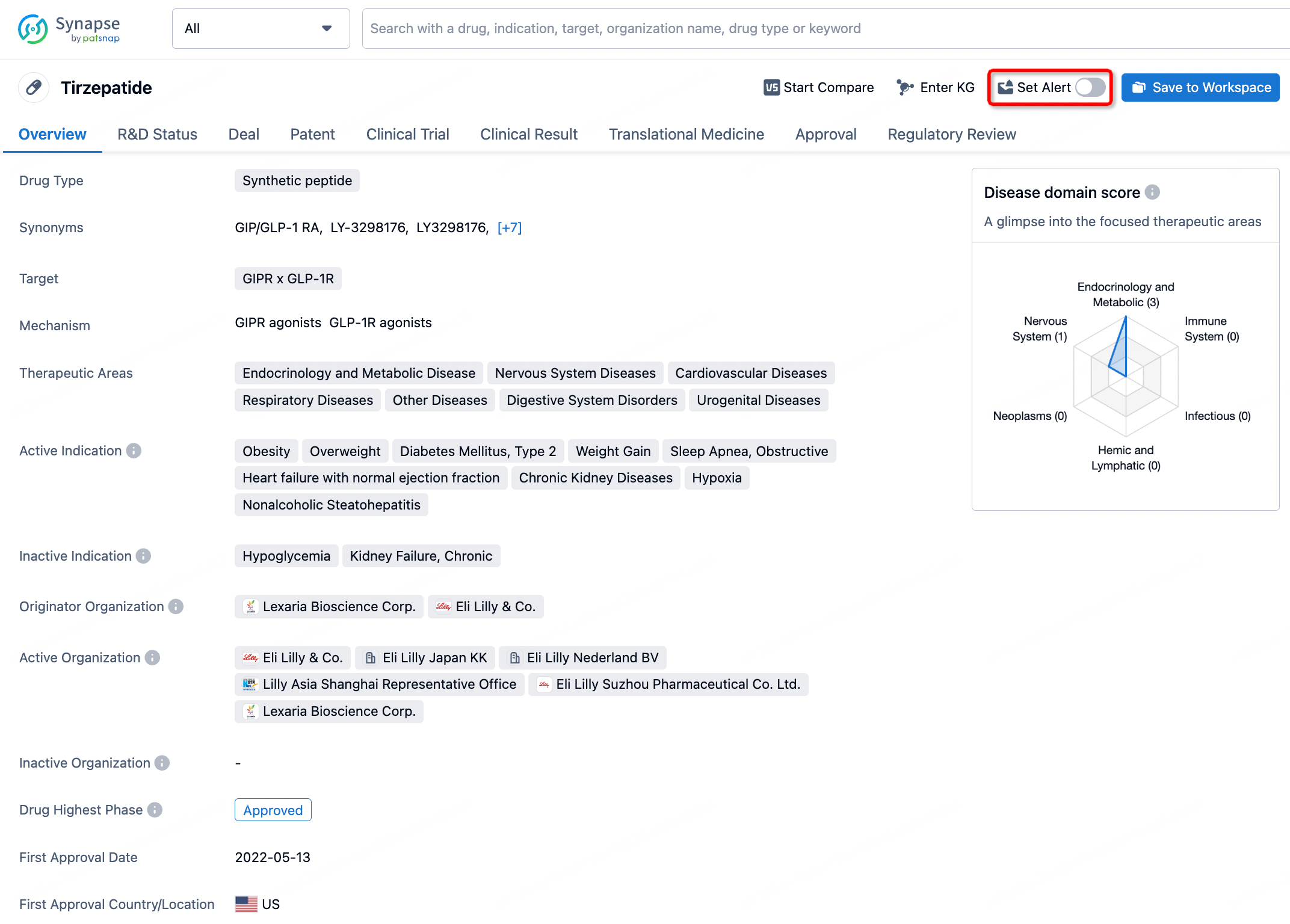
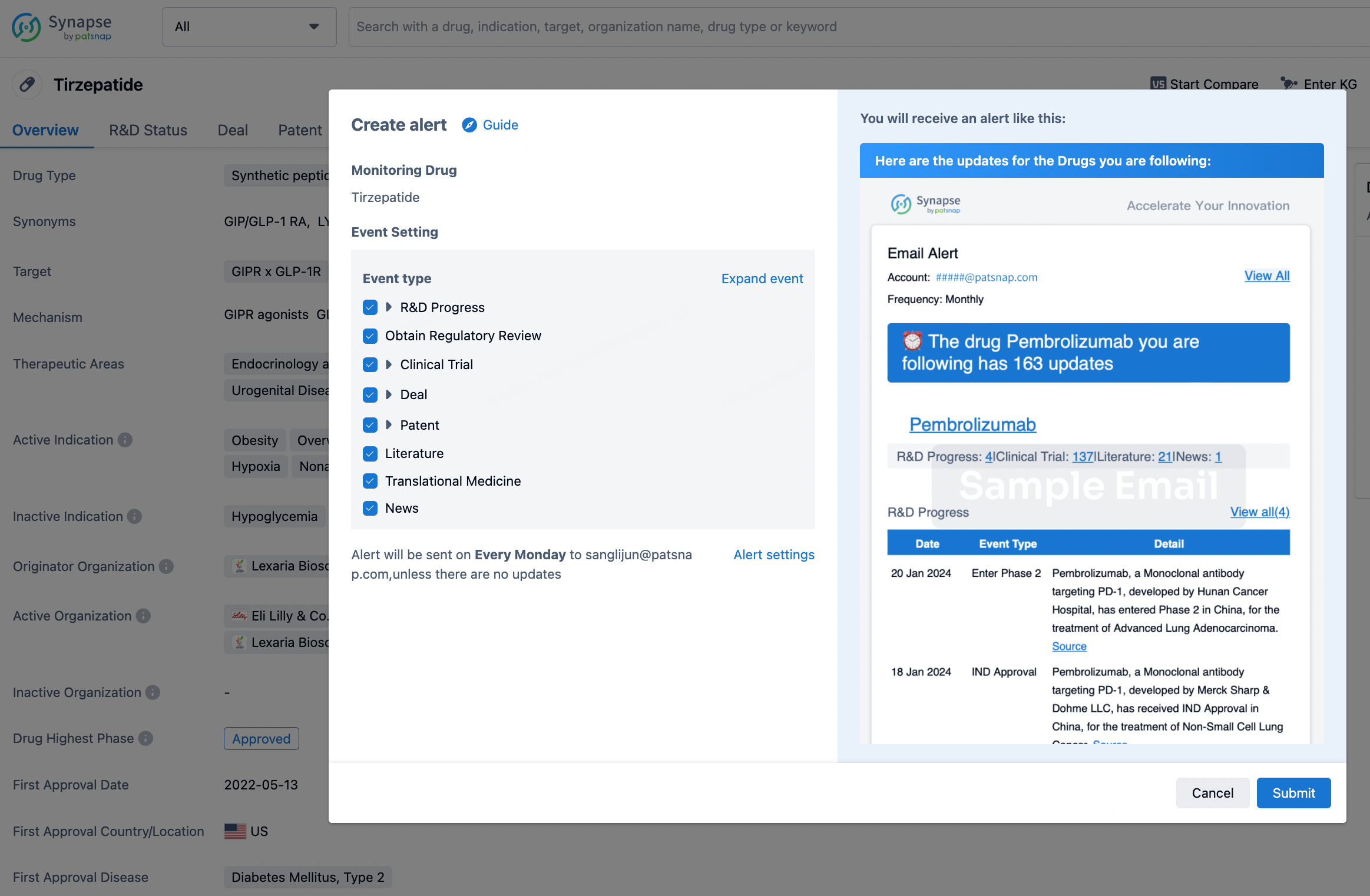
In the Synapse database, you can stay updated on the latest research and development advances of all drugs. This service is accessible anytime and anywhere, with updates available daily or weekly. Use the "Set Alert" function to stay informed. Click on the image below to embark on a brand new journey of drug discovery!
AI Agents Built for Biopharma Breakthroughs
Accelerate discovery. Empower decisions. Transform outcomes.
Get started for free today!
Accelerate Strategic R&D decision making with Synapse, PatSnap’s AI-powered Connected Innovation Intelligence Platform Built for Life Sciences Professionals.
Start your data trial now!
Synapse data is also accessible to external entities via APIs or data packages. Empower better decisions with the latest in pharmaceutical intelligence.