Request Demo
What is the mechanism of Alloferon?
17 July 2024
Alloferon is a unique peptide that has garnered significant interest due to its diverse biological activities, particularly its antiviral and immunomodulatory properties. Originally derived from the immune system of insects, Alloferon has found applications in human medicine, especially in the treatment of viral infections and as an immune system booster. Understanding the mechanism of Alloferon can provide insights into its therapeutic potentials and pave the way for future research and development.
At the molecular level, Alloferon exerts its effects by interacting with the immune system's components, primarily by activating natural killer (NK) cells and promoting the secretion of interferons. NK cells are crucial players in the body's innate immune response, acting as the first line of defense against viral infections and tumors. Alloferon enhances the cytotoxic activity of NK cells, enabling them to target and destroy infected or abnormal cells more effectively.
One of the pivotal mechanisms by which Alloferon functions is through the modulation of interferon production. Interferons are signaling proteins released by host cells in response to the presence of pathogens such as viruses, bacteria, and parasites. These proteins help in the activation of immune cells and increase the host's resistance to infections. Alloferon stimulates the production of interferon-gamma (IFN-γ), a type of interferon that plays a critical role in antiviral defense and immune regulation.
Additionally, Alloferon influences the adaptive immune response. It has been observed to enhance the proliferation of T-cells, which are essential for targeted immune responses. By promoting the activity of both NK cells and T-cells, Alloferon ensures a robust and coordinated immune response to various pathogens.
The peptide also exhibits direct antiviral activities. Studies have shown that Alloferon can inhibit the replication of certain viruses, including herpes simplex virus (HSV) and influenza. The precise antiviral mechanisms are still being investigated, but it is believed that Alloferon interferes with the viral replication machinery, thereby reducing the viral load and aiding in quicker recovery from infections.
In addition to its antiviral and immunomodulatory functions, Alloferon has shown promise in anti-inflammatory applications. By modulating the production of pro-inflammatory cytokines, Alloferon can potentially reduce inflammation and alleviate symptoms associated with chronic inflammatory conditions.
To summarize, Alloferon operates through a multifaceted mechanism involving the activation of NK cells, stimulation of interferon production, enhancement of T-cell proliferation, direct antiviral activity, and modulation of inflammatory responses. These combined actions make Alloferon a powerful agent in the fight against infections and a valuable tool in immunotherapy. As research continues, new insights into its mechanisms and applications are likely to emerge, further solidifying its role in modern medicine.
At the molecular level, Alloferon exerts its effects by interacting with the immune system's components, primarily by activating natural killer (NK) cells and promoting the secretion of interferons. NK cells are crucial players in the body's innate immune response, acting as the first line of defense against viral infections and tumors. Alloferon enhances the cytotoxic activity of NK cells, enabling them to target and destroy infected or abnormal cells more effectively.
One of the pivotal mechanisms by which Alloferon functions is through the modulation of interferon production. Interferons are signaling proteins released by host cells in response to the presence of pathogens such as viruses, bacteria, and parasites. These proteins help in the activation of immune cells and increase the host's resistance to infections. Alloferon stimulates the production of interferon-gamma (IFN-γ), a type of interferon that plays a critical role in antiviral defense and immune regulation.
Additionally, Alloferon influences the adaptive immune response. It has been observed to enhance the proliferation of T-cells, which are essential for targeted immune responses. By promoting the activity of both NK cells and T-cells, Alloferon ensures a robust and coordinated immune response to various pathogens.
The peptide also exhibits direct antiviral activities. Studies have shown that Alloferon can inhibit the replication of certain viruses, including herpes simplex virus (HSV) and influenza. The precise antiviral mechanisms are still being investigated, but it is believed that Alloferon interferes with the viral replication machinery, thereby reducing the viral load and aiding in quicker recovery from infections.
In addition to its antiviral and immunomodulatory functions, Alloferon has shown promise in anti-inflammatory applications. By modulating the production of pro-inflammatory cytokines, Alloferon can potentially reduce inflammation and alleviate symptoms associated with chronic inflammatory conditions.
To summarize, Alloferon operates through a multifaceted mechanism involving the activation of NK cells, stimulation of interferon production, enhancement of T-cell proliferation, direct antiviral activity, and modulation of inflammatory responses. These combined actions make Alloferon a powerful agent in the fight against infections and a valuable tool in immunotherapy. As research continues, new insights into its mechanisms and applications are likely to emerge, further solidifying its role in modern medicine.
How to obtain the latest development progress of all drugs?
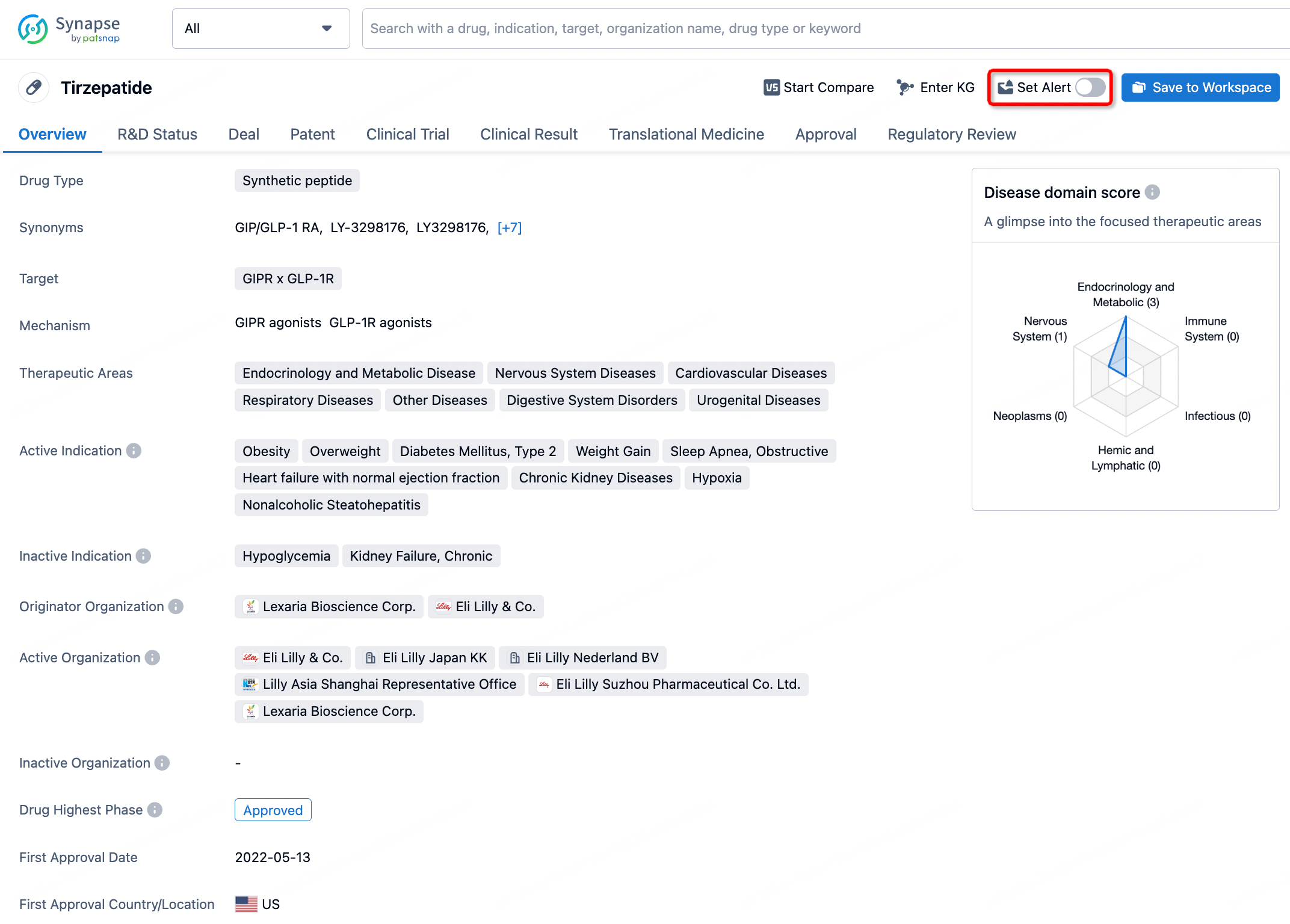
In the Synapse database, you can stay updated on the latest research and development advances of all drugs. This service is accessible anytime and anywhere, with updates available daily or weekly. Use the "Set Alert" function to stay informed. Click on the image below to embark on a brand new journey of drug discovery!


AI Agents Built for Biopharma Breakthroughs
Accelerate discovery. Empower decisions. Transform outcomes.
Get started for free today!
Accelerate Strategic R&D decision making with Synapse, PatSnap’s AI-powered Connected Innovation Intelligence Platform Built for Life Sciences Professionals.
Start your data trial now!
Synapse data is also accessible to external entities via APIs or data packages. Empower better decisions with the latest in pharmaceutical intelligence.