Request Demo
What is the mechanism of Benactyzine Hydrochloride?
18 July 2024
Benactyzine Hydrochloride, also known as Benactyzine, is a drug that belongs to the class of anticholinergic compounds. It has been used primarily for its effects on the central nervous system (CNS) and is known for its antimuscarinic properties. Understanding the mechanism of Benactyzine Hydrochloride requires delving into its pharmacodynamics, pharmacokinetics, and its overall impact on the human body.
The primary mechanism of action of Benactyzine Hydrochloride revolves around its ability to block the action of acetylcholine, a neurotransmitter, at muscarinic receptors. Acetylcholine is integral to the functioning of the parasympathetic nervous system, which controls a range of involuntary bodily functions including smooth muscle activity, glandular secretions, and heart rate. By inhibiting the effects of acetylcholine, Benactyzine Hydrochloride exerts its therapeutic effects.
When Benactyzine Hydrochloride is administered, it competes with acetylcholine for binding at muscarinic receptors in both the peripheral and central nervous systems. There are five subtypes of muscarinic receptors (M1, M2, M3, M4, and M5), and each is involved in different physiological processes. Benactyzine Hydrochloride shows a preferential affinity for M1 receptors located primarily in the CNS and M2 receptors found in the heart. By blocking these receptors, Benactyzine Hydrochloride can reduce secretions, decrease gastrointestinal motility, dilate pupils, and exert a calming effect on the CNS.
The primary therapeutic use of Benactyzine Hydrochloride is in the management of certain neurological and psychiatric conditions. It has been employed in the treatment of conditions such as Parkinson's disease, where it helps alleviate symptoms like tremors and rigidity by decreasing the cholinergic activity that contributes to these motor symptoms. Additionally, Benactyzine Hydrochloride has been used to treat depression and anxiety disorders, leveraging its central antimuscarinic effects to produce a sedative and anxiolytic outcome.
Pharmacokinetically, Benactyzine Hydrochloride is well-absorbed when administered orally. It undergoes hepatic metabolism and is excreted primarily via the kidneys. The distribution of the drug throughout the body allows it to efficiently reach the CNS, where its therapeutic effects are most prominent. The half-life of Benactyzine Hydrochloride can vary depending on individual metabolic rates and the dosage administered.
Despite its beneficial effects, the use of Benactyzine Hydrochloride is not without side effects. Due to its anticholinergic properties, patients may experience dry mouth, blurred vision, urinary retention, constipation, and elevated heart rate. In the central nervous system, higher doses can lead to confusion, hallucinations, and memory impairment. Therefore, the administration of Benactyzine Hydrochloride requires careful dosage management and monitoring, especially in populations such as the elderly, who may be more susceptible to its side effects.
In conclusion, the mechanism of Benactyzine Hydrochloride centers on its ability to block the action of acetylcholine at muscarinic receptors, thereby dampening the parasympathetic nervous system's activities and exerting a calming effect on the CNS. This pharmacological action makes it valuable in treating various neurological and psychiatric conditions. However, the potential for side effects necessitates careful management to ensure therapeutic efficacy while minimizing adverse outcomes.
The primary mechanism of action of Benactyzine Hydrochloride revolves around its ability to block the action of acetylcholine, a neurotransmitter, at muscarinic receptors. Acetylcholine is integral to the functioning of the parasympathetic nervous system, which controls a range of involuntary bodily functions including smooth muscle activity, glandular secretions, and heart rate. By inhibiting the effects of acetylcholine, Benactyzine Hydrochloride exerts its therapeutic effects.
When Benactyzine Hydrochloride is administered, it competes with acetylcholine for binding at muscarinic receptors in both the peripheral and central nervous systems. There are five subtypes of muscarinic receptors (M1, M2, M3, M4, and M5), and each is involved in different physiological processes. Benactyzine Hydrochloride shows a preferential affinity for M1 receptors located primarily in the CNS and M2 receptors found in the heart. By blocking these receptors, Benactyzine Hydrochloride can reduce secretions, decrease gastrointestinal motility, dilate pupils, and exert a calming effect on the CNS.
The primary therapeutic use of Benactyzine Hydrochloride is in the management of certain neurological and psychiatric conditions. It has been employed in the treatment of conditions such as Parkinson's disease, where it helps alleviate symptoms like tremors and rigidity by decreasing the cholinergic activity that contributes to these motor symptoms. Additionally, Benactyzine Hydrochloride has been used to treat depression and anxiety disorders, leveraging its central antimuscarinic effects to produce a sedative and anxiolytic outcome.
Pharmacokinetically, Benactyzine Hydrochloride is well-absorbed when administered orally. It undergoes hepatic metabolism and is excreted primarily via the kidneys. The distribution of the drug throughout the body allows it to efficiently reach the CNS, where its therapeutic effects are most prominent. The half-life of Benactyzine Hydrochloride can vary depending on individual metabolic rates and the dosage administered.
Despite its beneficial effects, the use of Benactyzine Hydrochloride is not without side effects. Due to its anticholinergic properties, patients may experience dry mouth, blurred vision, urinary retention, constipation, and elevated heart rate. In the central nervous system, higher doses can lead to confusion, hallucinations, and memory impairment. Therefore, the administration of Benactyzine Hydrochloride requires careful dosage management and monitoring, especially in populations such as the elderly, who may be more susceptible to its side effects.
In conclusion, the mechanism of Benactyzine Hydrochloride centers on its ability to block the action of acetylcholine at muscarinic receptors, thereby dampening the parasympathetic nervous system's activities and exerting a calming effect on the CNS. This pharmacological action makes it valuable in treating various neurological and psychiatric conditions. However, the potential for side effects necessitates careful management to ensure therapeutic efficacy while minimizing adverse outcomes.
How to obtain the latest development progress of all drugs?
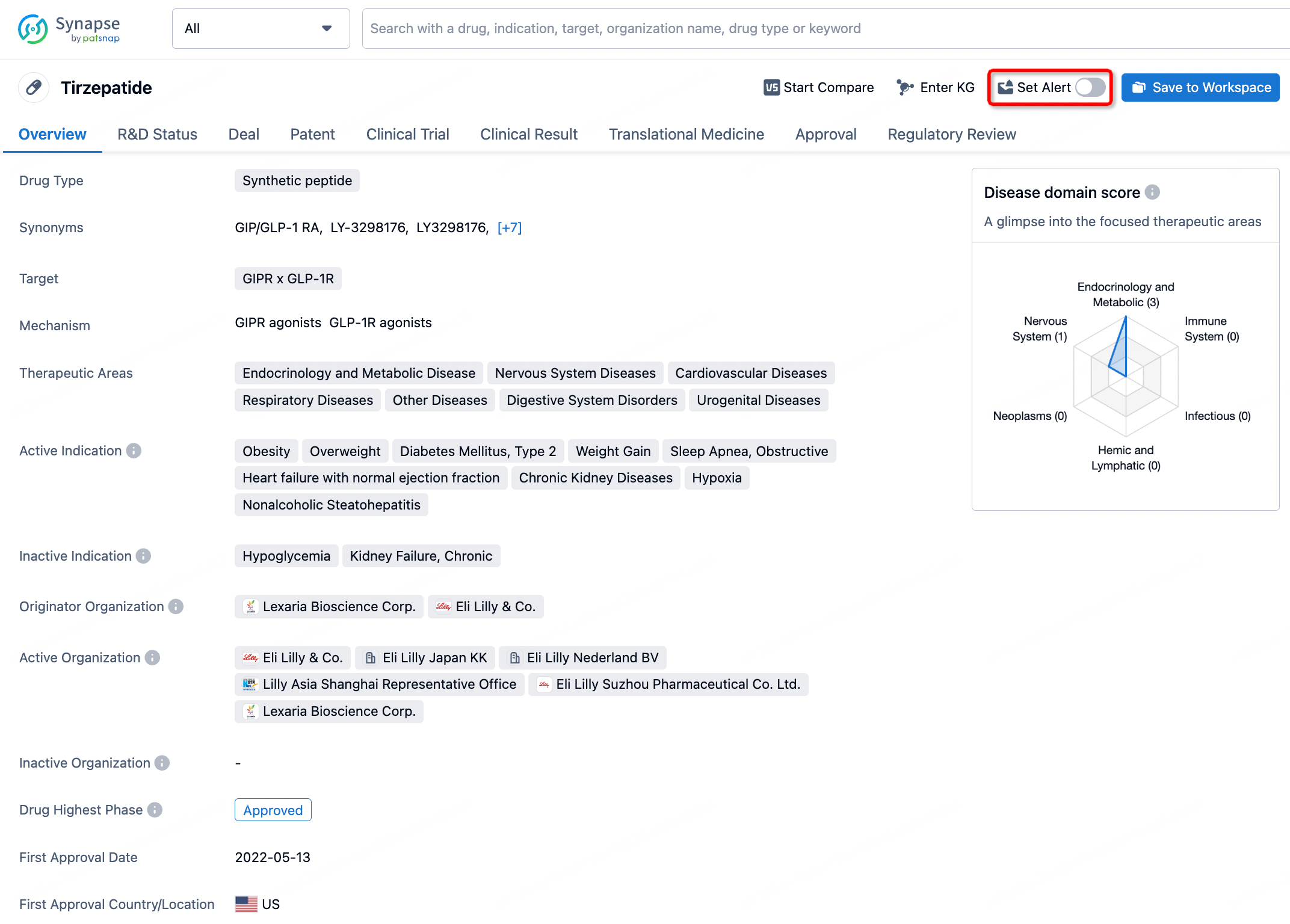
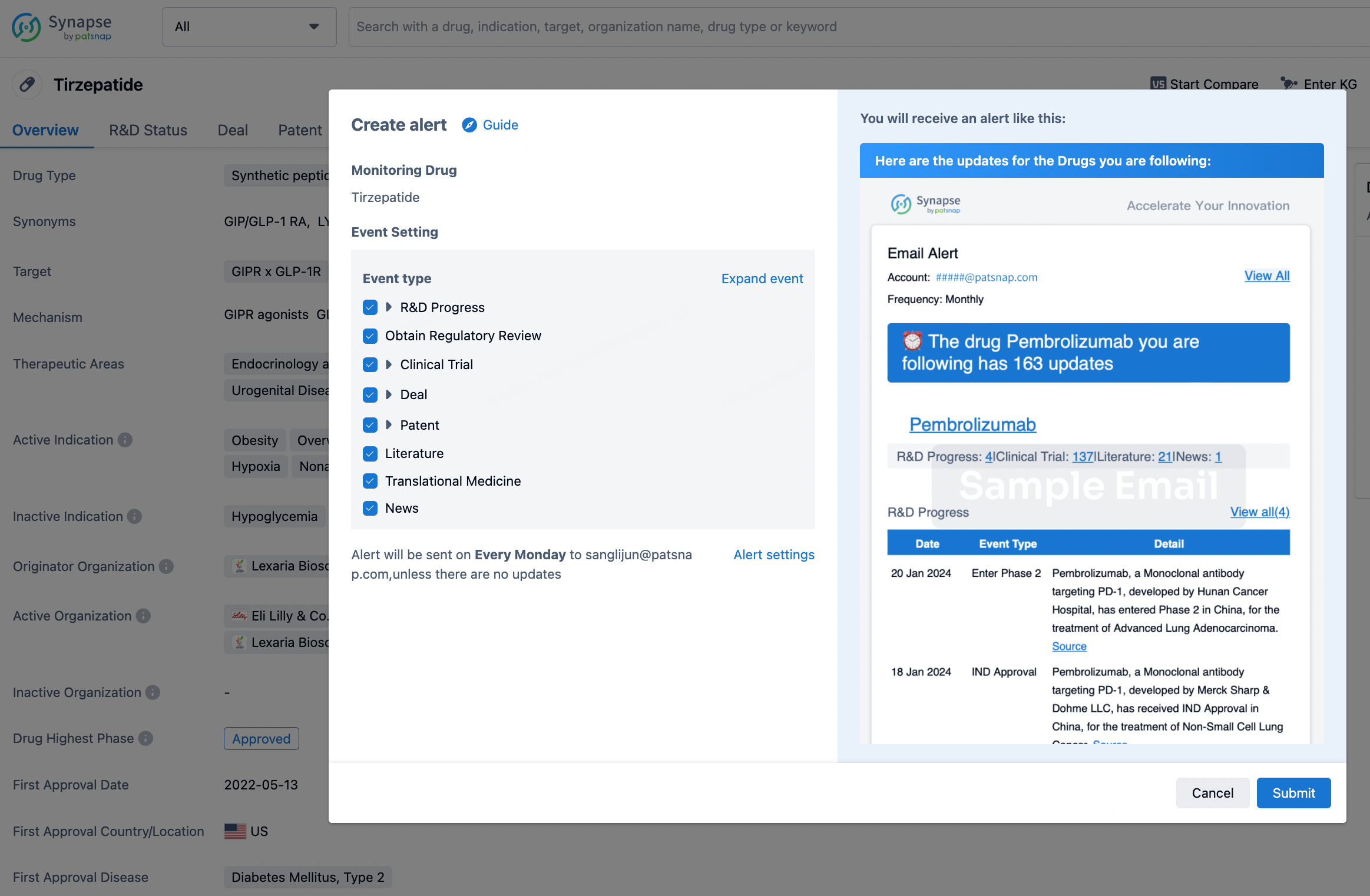
In the Synapse database, you can stay updated on the latest research and development advances of all drugs. This service is accessible anytime and anywhere, with updates available daily or weekly. Use the "Set Alert" function to stay informed. Click on the image below to embark on a brand new journey of drug discovery!
AI Agents Built for Biopharma Breakthroughs
Accelerate discovery. Empower decisions. Transform outcomes.
Get started for free today!
Accelerate Strategic R&D decision making with Synapse, PatSnap’s AI-powered Connected Innovation Intelligence Platform Built for Life Sciences Professionals.
Start your data trial now!
Synapse data is also accessible to external entities via APIs or data packages. Empower better decisions with the latest in pharmaceutical intelligence.