Request Demo
What is the mechanism of Bentiromide?
17 July 2024
Bentiromide is a diagnostic agent primarily employed to assess pancreatic exocrine function. Understanding the mechanism of Bentiromide requires a grasp of its biochemical journey through the body and its interaction with specific enzymes.
When Bentiromide is administered orally, it traverses the gastrointestinal tract until it reaches the small intestine. In the small intestine, the active enzyme chymotrypsin, which is secreted by the pancreas, acts on Bentiromide. Chymotrypsin cleaves Bentiromide, breaking it down into para-aminobenzoic acid (PABA) and another by-product. This enzymatic cleavage is crucial for the diagnostic utility of Bentiromide.
Once PABA is released, it is absorbed through the intestinal wall into the bloodstream. From the bloodstream, it is transported to the liver, where it undergoes further metabolism. The liver conjugates PABA with glycine to form N-acetyl-PABA, among other metabolites. Eventually, these metabolites are excreted by the kidneys and can be detected in the urine.
The diagnostic power of Bentiromide lies in measuring the concentration of PABA and its metabolites in the urine. Normally, a healthy pancreas secretes adequate amounts of chymotrypsin, leading to efficient cleavage of Bentiromide and subsequent appearance of PABA in the urine. However, if the pancreas is compromised and chymotrypsin secretion is deficient, the breakdown of Bentiromide is impaired. Consequently, lower levels of PABA are detected in the urine, indicating potential pancreatic dysfunction.
This diagnostic test is particularly valuable for detecting conditions such as chronic pancreatitis or pancreatic insufficiency. By quantifying urinary PABA excretion, healthcare providers can infer the functional status of the pancreas and make informed decisions regarding further diagnostic or therapeutic measures.
In summary, the mechanism of Bentiromide involves its oral administration, cleavage by pancreatic chymotrypsin in the small intestine, absorption of the resultant PABA, hepatic metabolism, and renal excretion of PABA metabolites. The effectiveness of this process helps in assessing pancreatic exocrine function, providing critical insights into pancreatic health.
When Bentiromide is administered orally, it traverses the gastrointestinal tract until it reaches the small intestine. In the small intestine, the active enzyme chymotrypsin, which is secreted by the pancreas, acts on Bentiromide. Chymotrypsin cleaves Bentiromide, breaking it down into para-aminobenzoic acid (PABA) and another by-product. This enzymatic cleavage is crucial for the diagnostic utility of Bentiromide.
Once PABA is released, it is absorbed through the intestinal wall into the bloodstream. From the bloodstream, it is transported to the liver, where it undergoes further metabolism. The liver conjugates PABA with glycine to form N-acetyl-PABA, among other metabolites. Eventually, these metabolites are excreted by the kidneys and can be detected in the urine.
The diagnostic power of Bentiromide lies in measuring the concentration of PABA and its metabolites in the urine. Normally, a healthy pancreas secretes adequate amounts of chymotrypsin, leading to efficient cleavage of Bentiromide and subsequent appearance of PABA in the urine. However, if the pancreas is compromised and chymotrypsin secretion is deficient, the breakdown of Bentiromide is impaired. Consequently, lower levels of PABA are detected in the urine, indicating potential pancreatic dysfunction.
This diagnostic test is particularly valuable for detecting conditions such as chronic pancreatitis or pancreatic insufficiency. By quantifying urinary PABA excretion, healthcare providers can infer the functional status of the pancreas and make informed decisions regarding further diagnostic or therapeutic measures.
In summary, the mechanism of Bentiromide involves its oral administration, cleavage by pancreatic chymotrypsin in the small intestine, absorption of the resultant PABA, hepatic metabolism, and renal excretion of PABA metabolites. The effectiveness of this process helps in assessing pancreatic exocrine function, providing critical insights into pancreatic health.
How to obtain the latest development progress of all drugs?
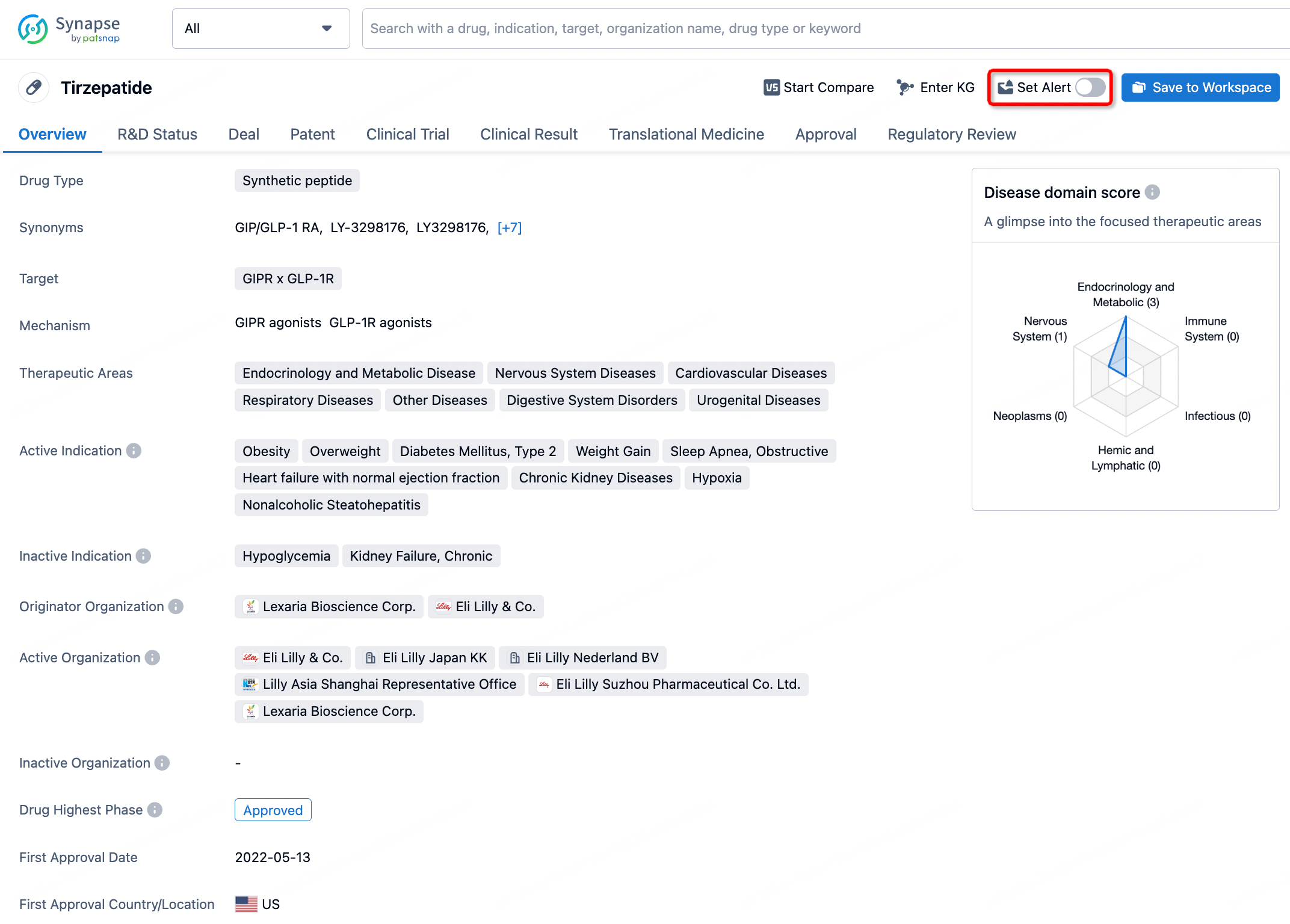
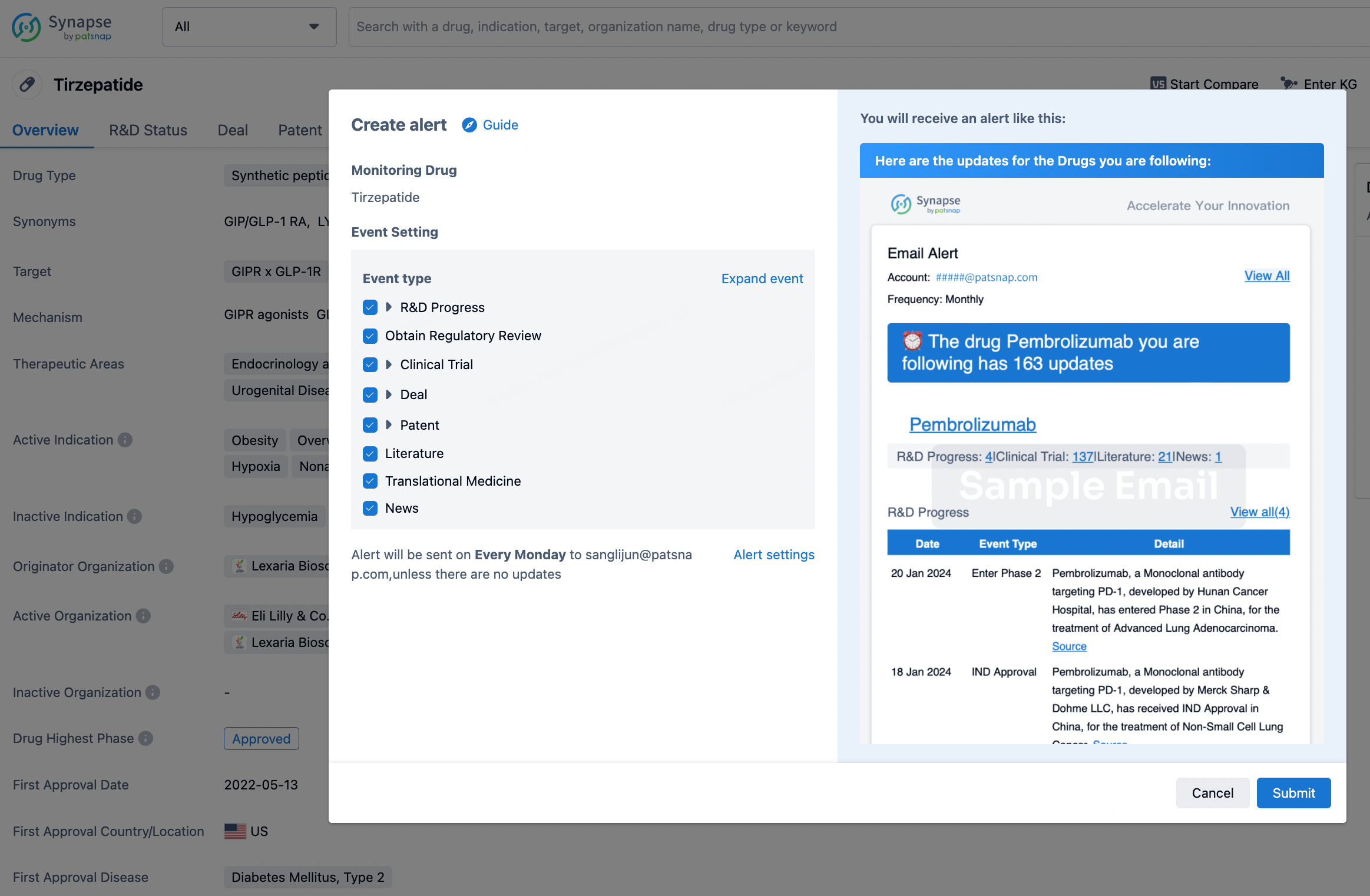
In the Synapse database, you can stay updated on the latest research and development advances of all drugs. This service is accessible anytime and anywhere, with updates available daily or weekly. Use the "Set Alert" function to stay informed. Click on the image below to embark on a brand new journey of drug discovery!

AI Agents Built for Biopharma Breakthroughs
Accelerate discovery. Empower decisions. Transform outcomes.
Get started for free today!
Accelerate Strategic R&D decision making with Synapse, PatSnap’s AI-powered Connected Innovation Intelligence Platform Built for Life Sciences Professionals.
Start your data trial now!
Synapse data is also accessible to external entities via APIs or data packages. Empower better decisions with the latest in pharmaceutical intelligence.