Request Demo
What is the mechanism of Beta-Phenylisopropylhydrazine?
18 July 2024
Beta-Phenylisopropylhydrazine, also known as pheniprazine, is a type of monoamine oxidase inhibitor (MAOI) that was originally developed for its antidepressant properties. Understanding the mechanism of Beta-Phenylisopropylhydrazine necessitates a deep dive into its interaction with neurological pathways and cellular processes.
Primarily, Beta-Phenylisopropylhydrazine functions by inhibiting the activity of monoamine oxidase (MAO), which is an enzyme responsible for breaking down neurotransmitters such as serotonin, norepinephrine, and dopamine. These neurotransmitters play critical roles in regulating mood, emotion, and cognition. By inhibiting MAO, Beta-Phenylisopropylhydrazine increases the levels of these neurotransmitters in the brain, thereby enhancing mood and emotional stability.
The inhibition of MAO by Beta-Phenylisopropylhydrazine can be categorized into two types: reversible and irreversible inhibition. Beta-Phenylisopropylhydrazine causes irreversible inhibition, meaning it forms a stable, covalent bond with the enzyme, leading to prolonged effects even after the drug has been metabolized and eliminated from the body. This attribute distinguishes it from reversible inhibitors, which bind temporarily and allow normal enzyme function to resume once the drug is cleared.
On a molecular level, Beta-Phenylisopropylhydrazine binds to the flavin adenine dinucleotide (FAD) cofactor within the MAO enzyme. The hydrazine moiety of Beta-Phenylisopropylhydrazine reacts with the FAD, forming a hydrazone complex that is chemically stable. This complex effectively inhibits the enzyme's ability to deaminate neurotransmitters, thereby increasing their synaptic concentration.
Beta-Phenylisopropylhydrazine’s inhibition of MAO can have both therapeutic and adverse effects. The therapeutic effects include alleviation of depressive symptoms due to the elevated levels of mood-enhancing neurotransmitters. However, the elevated neurotransmitter levels can also lead to side effects. For instance, high concentrations of tyramine (a naturally occurring monoamine) might not be broken down efficiently, leading to hypertensive crises, which is a known risk with all irreversible MAO inhibitors.
Another aspect worth noting is the role of Beta-Phenylisopropylhydrazine in neuroplasticity. Chronic inhibition of MAO by Beta-Phenylisopropylhydrazine is thought to influence neuroplastic changes, potentially contributing to its long-term antidepressant effects. Neuroplasticity refers to the brain's ability to reorganize itself by forming new neural connections, which is crucial for the adaptation of the brain in response to new information, sensory experiences, or damage.
Beta-Phenylisopropylhydrazine also impacts secondary metabolic pathways. By inhibiting MAO, there is a downstream effect on the regulation of other metabolic enzymes and pathways influenced by the levels of serotonin, norepinephrine, and dopamine. These secondary effects can influence various physiological processes, including appetite, sleep, and stress response.
Despite its effectiveness, Beta-Phenylisopropylhydrazine is associated with significant risks and has largely been discontinued in favor of newer antidepressants with more favorable safety profiles. The irreversible inhibition of MAO necessitates dietary restrictions to avoid hypertensive crises, and the potential for severe side effects has limited its use.
In conclusion, the mechanism of Beta-Phenylisopropylhydrazine involves the irreversible inhibition of monoamine oxidase, resulting in increased levels of key neurotransmitters that regulate mood and emotion. Although it has been largely phased out due to safety concerns, understanding its mechanism provides valuable insights into the complexity of treating mood disorders and the biochemical interactions within the brain.
Primarily, Beta-Phenylisopropylhydrazine functions by inhibiting the activity of monoamine oxidase (MAO), which is an enzyme responsible for breaking down neurotransmitters such as serotonin, norepinephrine, and dopamine. These neurotransmitters play critical roles in regulating mood, emotion, and cognition. By inhibiting MAO, Beta-Phenylisopropylhydrazine increases the levels of these neurotransmitters in the brain, thereby enhancing mood and emotional stability.
The inhibition of MAO by Beta-Phenylisopropylhydrazine can be categorized into two types: reversible and irreversible inhibition. Beta-Phenylisopropylhydrazine causes irreversible inhibition, meaning it forms a stable, covalent bond with the enzyme, leading to prolonged effects even after the drug has been metabolized and eliminated from the body. This attribute distinguishes it from reversible inhibitors, which bind temporarily and allow normal enzyme function to resume once the drug is cleared.
On a molecular level, Beta-Phenylisopropylhydrazine binds to the flavin adenine dinucleotide (FAD) cofactor within the MAO enzyme. The hydrazine moiety of Beta-Phenylisopropylhydrazine reacts with the FAD, forming a hydrazone complex that is chemically stable. This complex effectively inhibits the enzyme's ability to deaminate neurotransmitters, thereby increasing their synaptic concentration.
Beta-Phenylisopropylhydrazine’s inhibition of MAO can have both therapeutic and adverse effects. The therapeutic effects include alleviation of depressive symptoms due to the elevated levels of mood-enhancing neurotransmitters. However, the elevated neurotransmitter levels can also lead to side effects. For instance, high concentrations of tyramine (a naturally occurring monoamine) might not be broken down efficiently, leading to hypertensive crises, which is a known risk with all irreversible MAO inhibitors.
Another aspect worth noting is the role of Beta-Phenylisopropylhydrazine in neuroplasticity. Chronic inhibition of MAO by Beta-Phenylisopropylhydrazine is thought to influence neuroplastic changes, potentially contributing to its long-term antidepressant effects. Neuroplasticity refers to the brain's ability to reorganize itself by forming new neural connections, which is crucial for the adaptation of the brain in response to new information, sensory experiences, or damage.
Beta-Phenylisopropylhydrazine also impacts secondary metabolic pathways. By inhibiting MAO, there is a downstream effect on the regulation of other metabolic enzymes and pathways influenced by the levels of serotonin, norepinephrine, and dopamine. These secondary effects can influence various physiological processes, including appetite, sleep, and stress response.
Despite its effectiveness, Beta-Phenylisopropylhydrazine is associated with significant risks and has largely been discontinued in favor of newer antidepressants with more favorable safety profiles. The irreversible inhibition of MAO necessitates dietary restrictions to avoid hypertensive crises, and the potential for severe side effects has limited its use.
In conclusion, the mechanism of Beta-Phenylisopropylhydrazine involves the irreversible inhibition of monoamine oxidase, resulting in increased levels of key neurotransmitters that regulate mood and emotion. Although it has been largely phased out due to safety concerns, understanding its mechanism provides valuable insights into the complexity of treating mood disorders and the biochemical interactions within the brain.
How to obtain the latest development progress of all drugs?
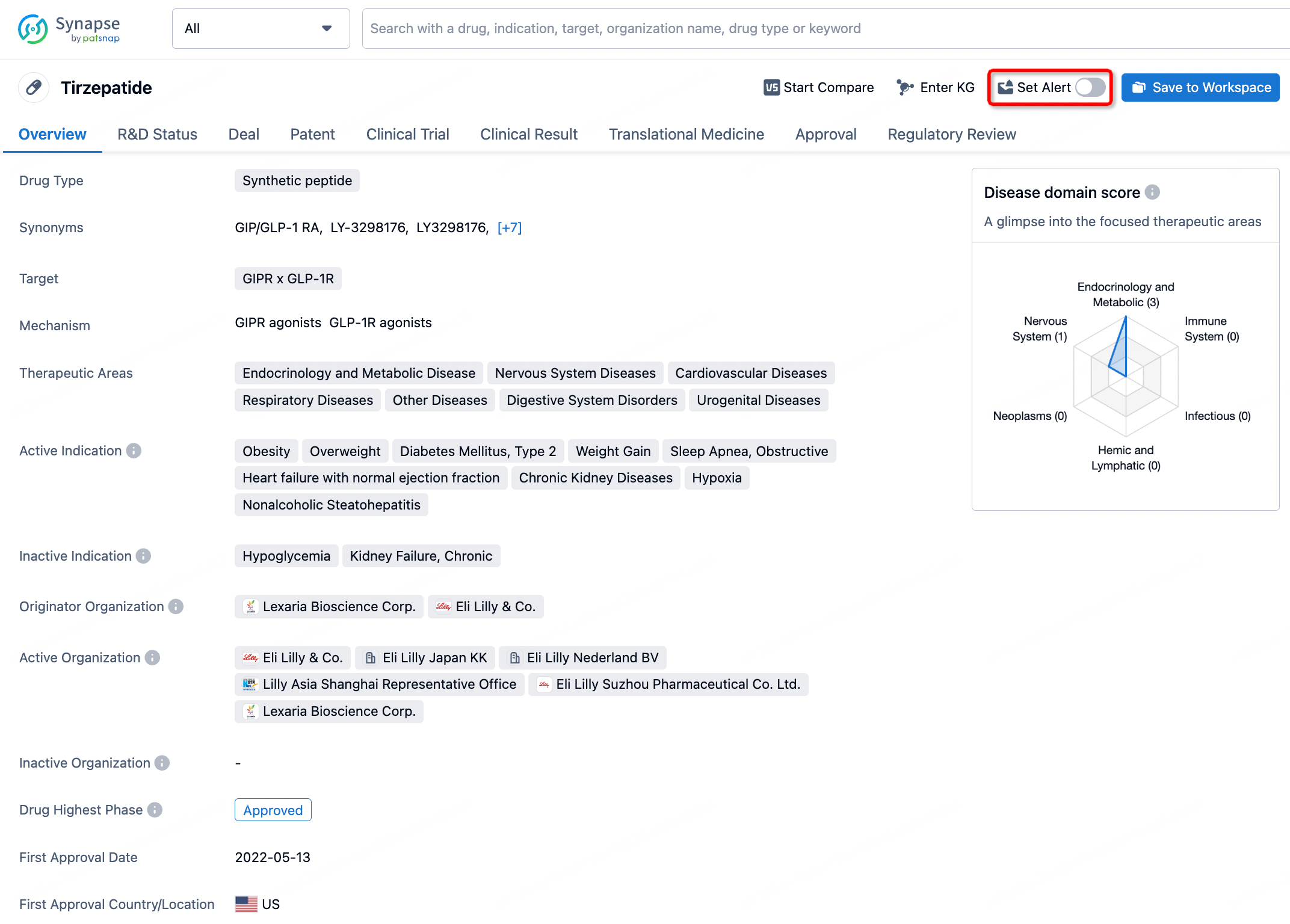
In the Synapse database, you can stay updated on the latest research and development advances of all drugs. This service is accessible anytime and anywhere, with updates available daily or weekly. Use the "Set Alert" function to stay informed. Click on the image below to embark on a brand new journey of drug discovery!


AI Agents Built for Biopharma Breakthroughs
Accelerate discovery. Empower decisions. Transform outcomes.
Get started for free today!
Accelerate Strategic R&D decision making with Synapse, PatSnap’s AI-powered Connected Innovation Intelligence Platform Built for Life Sciences Professionals.
Start your data trial now!
Synapse data is also accessible to external entities via APIs or data packages. Empower better decisions with the latest in pharmaceutical intelligence.