Request Demo
What is the mechanism of Butriptyline Hydrochloride?
18 July 2024
Butriptyline Hydrochloride is a tricyclic antidepressant (TCA) that has been utilized in the treatment of various psychiatric conditions, including depression and anxiety disorders. Understanding its mechanism of action involves delving into its pharmacodynamics and pharmacokinetics, which illuminate how this medication exerts its therapeutic effects on the brain.
At the core of Butriptyline Hydrochloride's mechanism is its ability to modulate neurotransmitter levels in the brain, specifically targeting the monoamine neurotransmitters—serotonin, norepinephrine, and, to a lesser extent, dopamine. These neurotransmitters are crucial for mood regulation and cognitive functions. Depression and other mood disorders are often associated with imbalances in these chemicals, and Butriptyline Hydrochloride helps to restore equilibrium.
Butriptyline Hydrochloride primarily functions by inhibiting the reuptake of serotonin and norepinephrine. Normally, after these neurotransmitters are released into the synaptic cleft and bind to their respective receptors on the postsynaptic neuron, they are taken back up into the presynaptic neuron for reuse or degradation. Butriptyline Hydrochloride blocks this reuptake process by binding to the transport proteins responsible for the reuptake, namely the serotonin transporter (SERT) and norepinephrine transporter (NET). By preventing reuptake, it increases the concentration of these neurotransmitters in the synaptic cleft, thereby enhancing their availability to bind to postsynaptic receptors and exert their mood-elevating effects.
In addition to its reuptake inhibition properties, Butriptyline Hydrochloride also possesses antagonistic activity at various receptor sites. It exhibits high affinity for histamine (H1) receptors, which contributes to its sedative properties. This can be particularly beneficial in patients with insomnia related to depression or anxiety. However, this antihistamine activity can also lead to common side effects such as drowsiness and weight gain.
Moreover, Butriptyline Hydrochloride antagonizes muscarinic acetylcholine receptors (M1) and alpha-adrenergic receptors. The blockade of muscarinic receptors is associated with anticholinergic side effects, including dry mouth, blurred vision, constipation, and urinary retention. The antagonism of alpha-adrenergic receptors can result in orthostatic hypotension, a condition where blood pressure drops significantly upon standing, leading to dizziness and potential fainting.
Pharmacokinetically, Butriptyline Hydrochloride is well-absorbed from the gastrointestinal tract, though it undergoes extensive first-pass metabolism in the liver. This metabolism involves hepatic enzymes, primarily the cytochrome P450 system, which transforms the drug into its active metabolites. These metabolites contribute to the overall therapeutic effects as well as the side effect profile of the medication. The drug and its metabolites are eventually excreted through the kidneys.
Due to its broad spectrum of receptor interactions, Butriptyline Hydrochloride is associated with a range of therapeutic benefits but also a variety of potential side effects. Clinicians typically start patients on a low dose, gradually increasing it to minimize adverse effects while achieving therapeutic efficacy.
In conclusion, Butriptyline Hydrochloride operates through a multifaceted mechanism involving the inhibition of serotonin and norepinephrine reuptake, as well as antagonism of various receptors. This complex interplay enhances neurotransmitter levels in the brain and modulates receptor activity, collectively contributing to its antidepressant and anxiolytic effects. While effective, the drug's broad pharmacological activity necessitates careful dosing and monitoring to balance its therapeutic benefits against potential side effects.
At the core of Butriptyline Hydrochloride's mechanism is its ability to modulate neurotransmitter levels in the brain, specifically targeting the monoamine neurotransmitters—serotonin, norepinephrine, and, to a lesser extent, dopamine. These neurotransmitters are crucial for mood regulation and cognitive functions. Depression and other mood disorders are often associated with imbalances in these chemicals, and Butriptyline Hydrochloride helps to restore equilibrium.
Butriptyline Hydrochloride primarily functions by inhibiting the reuptake of serotonin and norepinephrine. Normally, after these neurotransmitters are released into the synaptic cleft and bind to their respective receptors on the postsynaptic neuron, they are taken back up into the presynaptic neuron for reuse or degradation. Butriptyline Hydrochloride blocks this reuptake process by binding to the transport proteins responsible for the reuptake, namely the serotonin transporter (SERT) and norepinephrine transporter (NET). By preventing reuptake, it increases the concentration of these neurotransmitters in the synaptic cleft, thereby enhancing their availability to bind to postsynaptic receptors and exert their mood-elevating effects.
In addition to its reuptake inhibition properties, Butriptyline Hydrochloride also possesses antagonistic activity at various receptor sites. It exhibits high affinity for histamine (H1) receptors, which contributes to its sedative properties. This can be particularly beneficial in patients with insomnia related to depression or anxiety. However, this antihistamine activity can also lead to common side effects such as drowsiness and weight gain.
Moreover, Butriptyline Hydrochloride antagonizes muscarinic acetylcholine receptors (M1) and alpha-adrenergic receptors. The blockade of muscarinic receptors is associated with anticholinergic side effects, including dry mouth, blurred vision, constipation, and urinary retention. The antagonism of alpha-adrenergic receptors can result in orthostatic hypotension, a condition where blood pressure drops significantly upon standing, leading to dizziness and potential fainting.
Pharmacokinetically, Butriptyline Hydrochloride is well-absorbed from the gastrointestinal tract, though it undergoes extensive first-pass metabolism in the liver. This metabolism involves hepatic enzymes, primarily the cytochrome P450 system, which transforms the drug into its active metabolites. These metabolites contribute to the overall therapeutic effects as well as the side effect profile of the medication. The drug and its metabolites are eventually excreted through the kidneys.
Due to its broad spectrum of receptor interactions, Butriptyline Hydrochloride is associated with a range of therapeutic benefits but also a variety of potential side effects. Clinicians typically start patients on a low dose, gradually increasing it to minimize adverse effects while achieving therapeutic efficacy.
In conclusion, Butriptyline Hydrochloride operates through a multifaceted mechanism involving the inhibition of serotonin and norepinephrine reuptake, as well as antagonism of various receptors. This complex interplay enhances neurotransmitter levels in the brain and modulates receptor activity, collectively contributing to its antidepressant and anxiolytic effects. While effective, the drug's broad pharmacological activity necessitates careful dosing and monitoring to balance its therapeutic benefits against potential side effects.
How to obtain the latest development progress of all drugs?
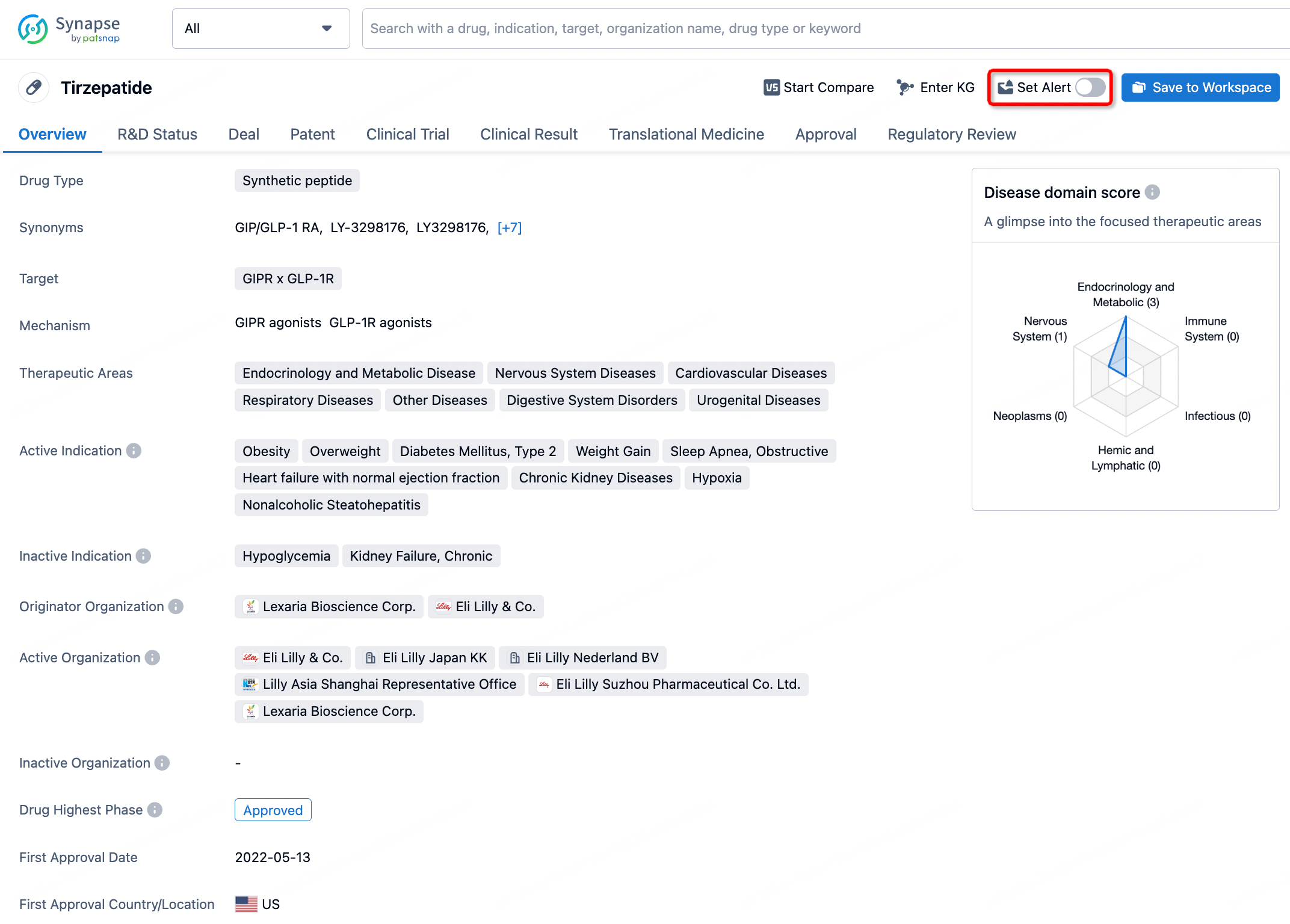
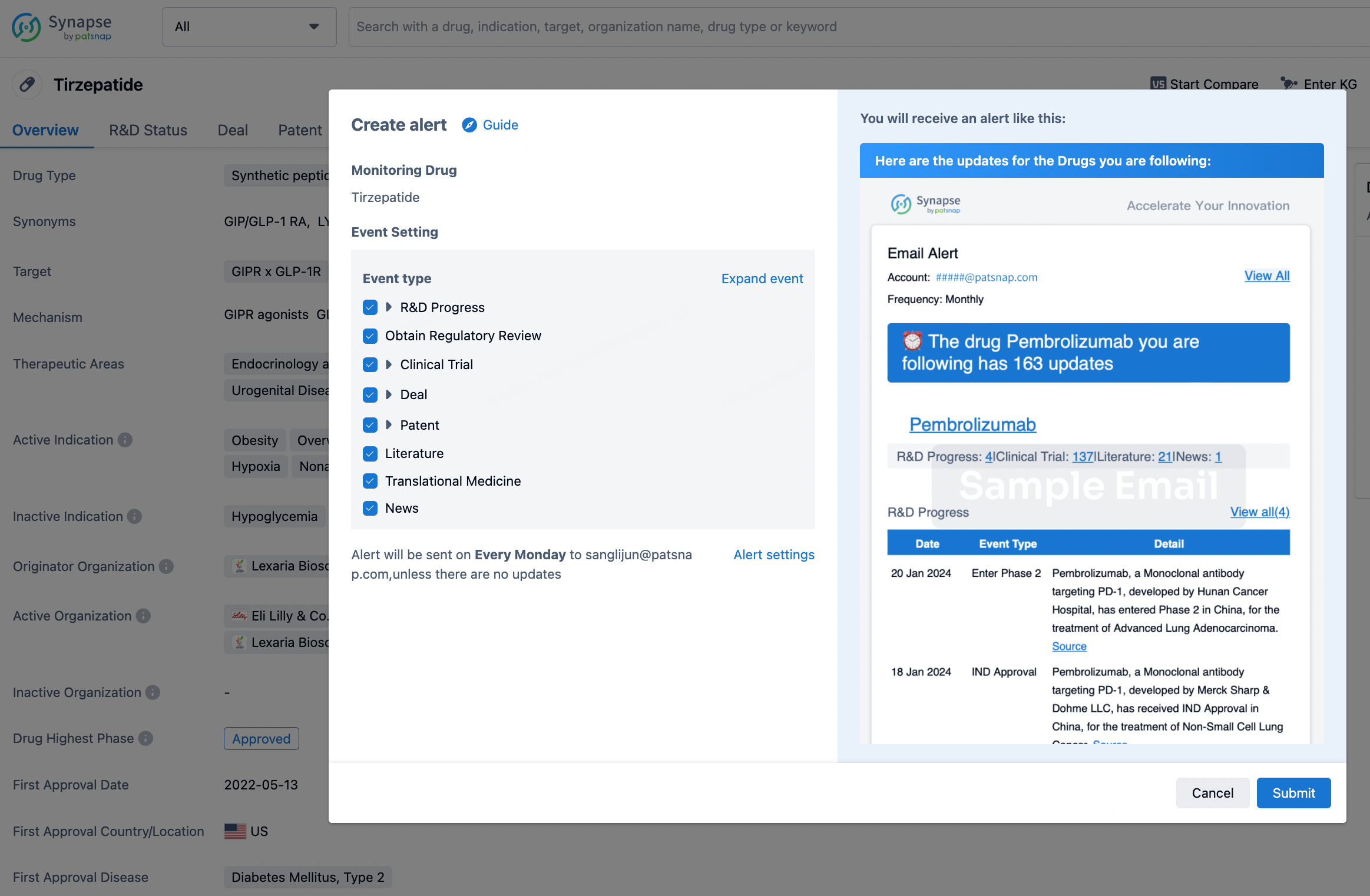
In the Synapse database, you can stay updated on the latest research and development advances of all drugs. This service is accessible anytime and anywhere, with updates available daily or weekly. Use the "Set Alert" function to stay informed. Click on the image below to embark on a brand new journey of drug discovery!

AI Agents Built for Biopharma Breakthroughs
Accelerate discovery. Empower decisions. Transform outcomes.
Get started for free today!
Accelerate Strategic R&D decision making with Synapse, PatSnap’s AI-powered Connected Innovation Intelligence Platform Built for Life Sciences Professionals.
Start your data trial now!
Synapse data is also accessible to external entities via APIs or data packages. Empower better decisions with the latest in pharmaceutical intelligence.