Request Demo
What is the mechanism of Carbromal?
18 July 2024
Carbromal is a sedative-hypnotic agent that was once widely used to manage anxiety and insomnia. Understanding its mechanism of action provides insights into how this compound influences the central nervous system to exert its calming and sleep-inducing effects.
Carbromal belongs to a class of drugs known as bromoureides, which contain bromine as a critical component. These compounds are known for their sedative properties. The primary mechanism of action of Carbromal involves its interaction with the central nervous system (CNS), particularly by enhancing the activity of gamma-aminobutyric acid (GABA), a major inhibitory neurotransmitter in the brain.
GABA is responsible for reducing neuronal excitability throughout the nervous system. It achieves this by binding to GABA_A receptors, leading to the opening of chloride channels and allowing chloride ions to enter the neuron. This influx of chloride ions hyperpolarizes the neuron, making it less likely to fire an action potential. By enhancing the GABAergic system, Carbromal effectively increases the inhibitory effects of GABA, leading to a calming effect on the brain. This increased inhibition can result in reduced anxiety, sedation, and induction of sleep.
Moreover, Carbromal may also have a mild barbiturate-like effect, although it is not a barbiturate itself. Barbiturates similarly potentiate GABAergic transmission by binding to a different site on the GABA_A receptor, thus enhancing the effects of GABA. This mechanism is somewhat shared by Carbromal, contributing further to its sedative properties.
Additionally, Carbromal exhibits anxiolytic effects, which also stem from its GABA-enhancing properties. By reducing the overall excitability of neurons, Carbromal can alleviate symptoms of anxiety and provide a sense of calm.
However, it’s essential to note that the use of Carbromal has significantly declined due to the development of safer and more effective medications. Prolonged use of Carbromal can lead to tolerance, dependence, and potentially severe withdrawal symptoms. Also, because it contains bromine, long-term use can result in bromism, a condition caused by chronic bromine intoxication, which may lead to neurological and dermatological symptoms.
In summary, Carbromal exerts its sedative and anxiolytic effects primarily through the enhancement of GABA activity in the brain, leading to increased neuronal inhibition. While it was once a common treatment for anxiety and insomnia, its use has diminished due to the availability of safer alternatives and the potential for adverse effects with long-term use. Understanding the mechanisms through which Carbromal operates offers valuable insights into its effects on the CNS and the reasons behind its decline in clinical use.
Carbromal belongs to a class of drugs known as bromoureides, which contain bromine as a critical component. These compounds are known for their sedative properties. The primary mechanism of action of Carbromal involves its interaction with the central nervous system (CNS), particularly by enhancing the activity of gamma-aminobutyric acid (GABA), a major inhibitory neurotransmitter in the brain.
GABA is responsible for reducing neuronal excitability throughout the nervous system. It achieves this by binding to GABA_A receptors, leading to the opening of chloride channels and allowing chloride ions to enter the neuron. This influx of chloride ions hyperpolarizes the neuron, making it less likely to fire an action potential. By enhancing the GABAergic system, Carbromal effectively increases the inhibitory effects of GABA, leading to a calming effect on the brain. This increased inhibition can result in reduced anxiety, sedation, and induction of sleep.
Moreover, Carbromal may also have a mild barbiturate-like effect, although it is not a barbiturate itself. Barbiturates similarly potentiate GABAergic transmission by binding to a different site on the GABA_A receptor, thus enhancing the effects of GABA. This mechanism is somewhat shared by Carbromal, contributing further to its sedative properties.
Additionally, Carbromal exhibits anxiolytic effects, which also stem from its GABA-enhancing properties. By reducing the overall excitability of neurons, Carbromal can alleviate symptoms of anxiety and provide a sense of calm.
However, it’s essential to note that the use of Carbromal has significantly declined due to the development of safer and more effective medications. Prolonged use of Carbromal can lead to tolerance, dependence, and potentially severe withdrawal symptoms. Also, because it contains bromine, long-term use can result in bromism, a condition caused by chronic bromine intoxication, which may lead to neurological and dermatological symptoms.
In summary, Carbromal exerts its sedative and anxiolytic effects primarily through the enhancement of GABA activity in the brain, leading to increased neuronal inhibition. While it was once a common treatment for anxiety and insomnia, its use has diminished due to the availability of safer alternatives and the potential for adverse effects with long-term use. Understanding the mechanisms through which Carbromal operates offers valuable insights into its effects on the CNS and the reasons behind its decline in clinical use.
How to obtain the latest development progress of all drugs?
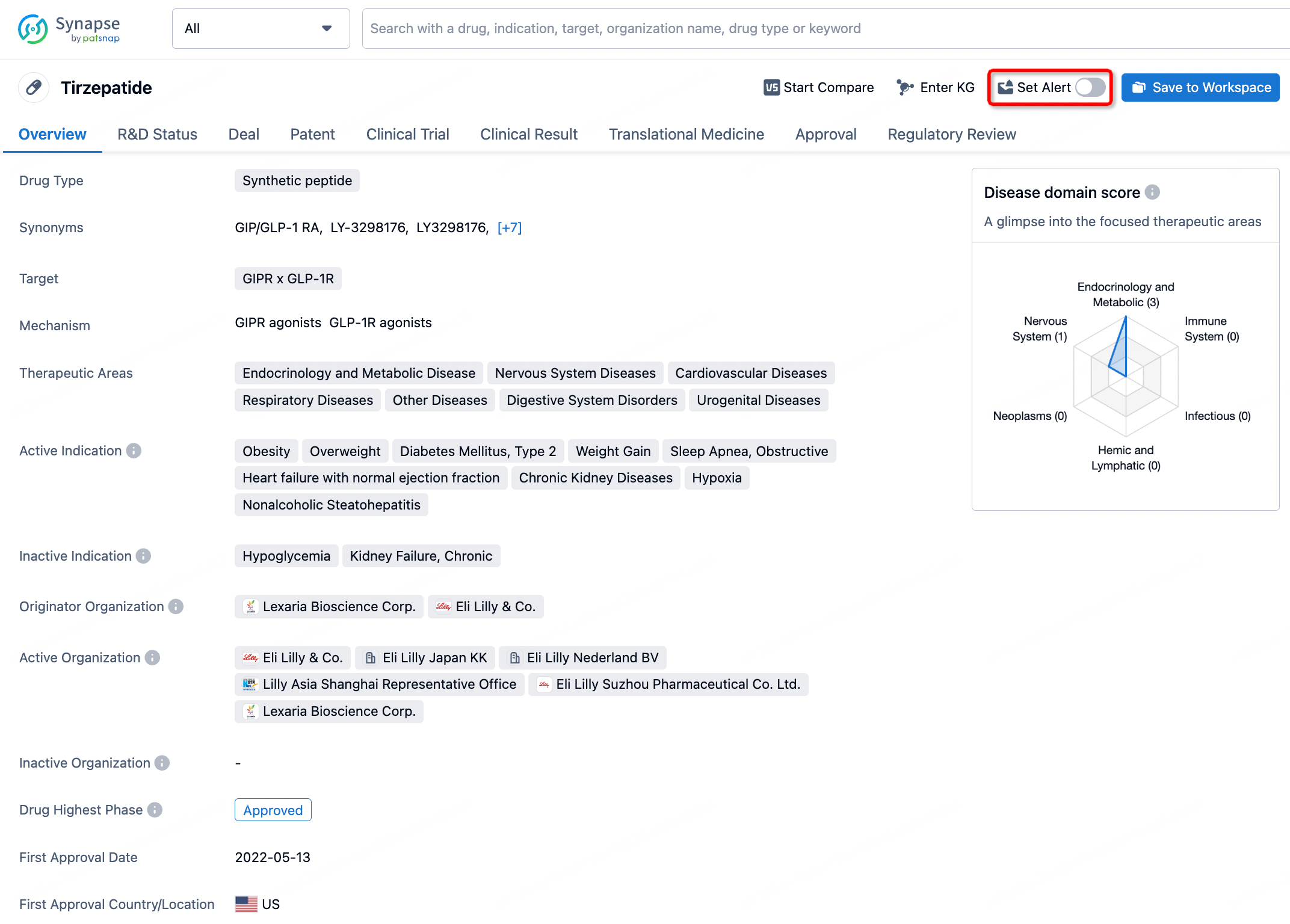
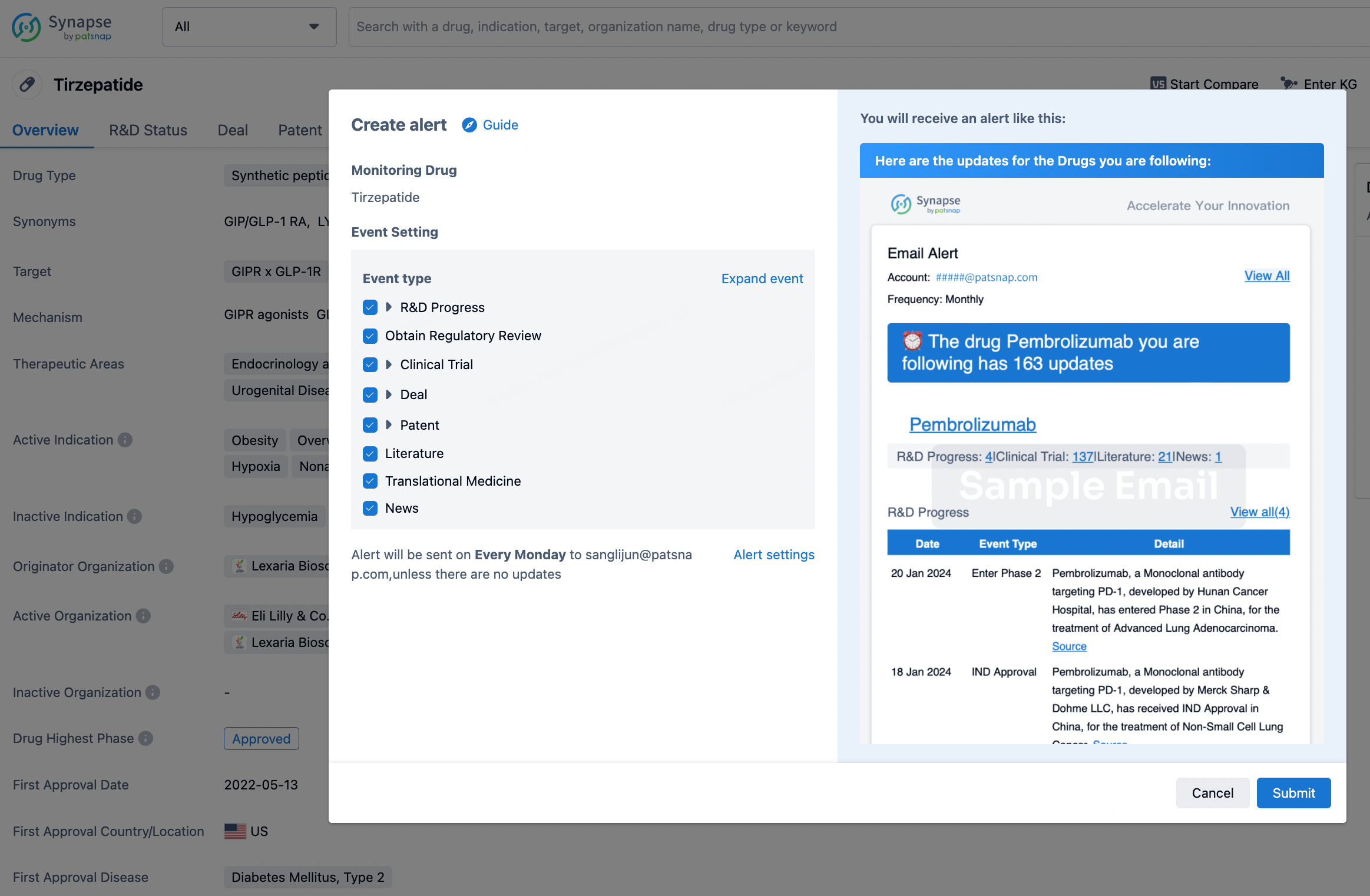
In the Synapse database, you can stay updated on the latest research and development advances of all drugs. This service is accessible anytime and anywhere, with updates available daily or weekly. Use the "Set Alert" function to stay informed. Click on the image below to embark on a brand new journey of drug discovery!
AI Agents Built for Biopharma Breakthroughs
Accelerate discovery. Empower decisions. Transform outcomes.
Get started for free today!
Accelerate Strategic R&D decision making with Synapse, PatSnap’s AI-powered Connected Innovation Intelligence Platform Built for Life Sciences Professionals.
Start your data trial now!
Synapse data is also accessible to external entities via APIs or data packages. Empower better decisions with the latest in pharmaceutical intelligence.