Request Demo
What is the mechanism of Cardiomyopeptide?
17 July 2024
Cardiomyopeptides are a group of peptides that have garnered significant interest in the field of cardiovascular research due to their potential therapeutic benefits. Understanding the mechanism of cardiomyopeptides involves delving into their molecular structure, their mode of action, and their effects on cardiac function. This article aims to elucidate the mechanism of cardiomyopeptides in a comprehensive manner.
Cardiomyopeptides are small chains of amino acids that play a pivotal role in the regulation of heart muscle function. These peptides can be endogenously produced by the body or synthetically created for therapeutic purposes. Their primary function is to modulate various aspects of cardiac physiology, including myocardial contractility, heart rate, and overall cardiac output.
The mechanism of action of cardiomyopeptides can be broken down into several key processes:
1. **Receptor Binding**:
Cardiomyopeptides exert their effects by binding to specific receptors on the surface of cardiomyocytes (heart muscle cells). These receptors are often G protein-coupled receptors (GPCRs), which are known for their role in transmitting extracellular signals into intracellular responses. Upon binding to these receptors, cardiomyopeptides initiate a cascade of biochemical events within the cardiomyocytes.
2. **Intracellular Signaling Cascades**:
Once the cardiomyopeptide binds to its receptor, it activates various intracellular signaling pathways. One of the primary pathways involved is the cyclic adenosine monophosphate (cAMP) pathway. Activation of the GPCR leads to the stimulation of adenylyl cyclase, an enzyme that converts ATP to cAMP. The increase in cAMP levels subsequently activates protein kinase A (PKA), which then phosphorylates various target proteins involved in cardiac muscle contraction and relaxation.
3. **Regulation of Calcium Dynamics**:
Calcium ions play a crucial role in the contraction and relaxation of cardiac muscle fibers. Cardiomyopeptides influence calcium dynamics by modulating the activity of calcium channels and transporters. For instance, the increased cAMP levels and PKA activity can enhance the influx of calcium through L-type calcium channels during the cardiac action potential. Additionally, cardiomyopeptides can affect the release and reuptake of calcium from the sarcoplasmic reticulum, a key intracellular calcium store in cardiomyocytes.
4. **Modulation of Myocardial Contractility**:
The ultimate effect of cardiomyopeptides on heart function is the modulation of myocardial contractility. By influencing calcium dynamics and the phosphorylation state of contractile proteins, cardiomyopeptides can enhance or reduce the force of cardiac contractions. This modulation is vital for maintaining appropriate cardiac output to meet the physiological demands of the body.
5. **Anti-apoptotic and Anti-fibrotic Effects**:
Beyond their role in modulating contractility, cardiomyopeptides also exhibit protective effects on the heart muscle. They can activate signaling pathways that promote cell survival and inhibit apoptosis (programmed cell death) in cardiomyocytes. Additionally, cardiomyopeptides have been shown to reduce fibrosis, which involves the excessive deposition of extracellular matrix proteins that can impair cardiac function.
6. **Gene Expression Regulation**:
Cardiomyopeptides can influence gene expression within cardiomyocytes by activating transcription factors and other regulatory proteins. This leads to changes in the expression of genes involved in cardiac growth, metabolism, and response to stress. Such regulation helps the heart adapt to various physiological and pathological conditions.
In summary, the mechanism of cardiomyopeptides involves a complex interplay of receptor binding, intracellular signaling cascades, regulation of calcium dynamics, modulation of myocardial contractility, and protective effects on cardiac cells. These peptides hold promise for the development of novel therapeutic strategies aimed at treating various cardiovascular diseases, including heart failure, myocardial infarction, and arrhythmias. Understanding the precise mechanisms by which cardiomyopeptides exert their effects is essential for harnessing their full potential in clinical applications.
Cardiomyopeptides are small chains of amino acids that play a pivotal role in the regulation of heart muscle function. These peptides can be endogenously produced by the body or synthetically created for therapeutic purposes. Their primary function is to modulate various aspects of cardiac physiology, including myocardial contractility, heart rate, and overall cardiac output.
The mechanism of action of cardiomyopeptides can be broken down into several key processes:
1. **Receptor Binding**:
Cardiomyopeptides exert their effects by binding to specific receptors on the surface of cardiomyocytes (heart muscle cells). These receptors are often G protein-coupled receptors (GPCRs), which are known for their role in transmitting extracellular signals into intracellular responses. Upon binding to these receptors, cardiomyopeptides initiate a cascade of biochemical events within the cardiomyocytes.
2. **Intracellular Signaling Cascades**:
Once the cardiomyopeptide binds to its receptor, it activates various intracellular signaling pathways. One of the primary pathways involved is the cyclic adenosine monophosphate (cAMP) pathway. Activation of the GPCR leads to the stimulation of adenylyl cyclase, an enzyme that converts ATP to cAMP. The increase in cAMP levels subsequently activates protein kinase A (PKA), which then phosphorylates various target proteins involved in cardiac muscle contraction and relaxation.
3. **Regulation of Calcium Dynamics**:
Calcium ions play a crucial role in the contraction and relaxation of cardiac muscle fibers. Cardiomyopeptides influence calcium dynamics by modulating the activity of calcium channels and transporters. For instance, the increased cAMP levels and PKA activity can enhance the influx of calcium through L-type calcium channels during the cardiac action potential. Additionally, cardiomyopeptides can affect the release and reuptake of calcium from the sarcoplasmic reticulum, a key intracellular calcium store in cardiomyocytes.
4. **Modulation of Myocardial Contractility**:
The ultimate effect of cardiomyopeptides on heart function is the modulation of myocardial contractility. By influencing calcium dynamics and the phosphorylation state of contractile proteins, cardiomyopeptides can enhance or reduce the force of cardiac contractions. This modulation is vital for maintaining appropriate cardiac output to meet the physiological demands of the body.
5. **Anti-apoptotic and Anti-fibrotic Effects**:
Beyond their role in modulating contractility, cardiomyopeptides also exhibit protective effects on the heart muscle. They can activate signaling pathways that promote cell survival and inhibit apoptosis (programmed cell death) in cardiomyocytes. Additionally, cardiomyopeptides have been shown to reduce fibrosis, which involves the excessive deposition of extracellular matrix proteins that can impair cardiac function.
6. **Gene Expression Regulation**:
Cardiomyopeptides can influence gene expression within cardiomyocytes by activating transcription factors and other regulatory proteins. This leads to changes in the expression of genes involved in cardiac growth, metabolism, and response to stress. Such regulation helps the heart adapt to various physiological and pathological conditions.
In summary, the mechanism of cardiomyopeptides involves a complex interplay of receptor binding, intracellular signaling cascades, regulation of calcium dynamics, modulation of myocardial contractility, and protective effects on cardiac cells. These peptides hold promise for the development of novel therapeutic strategies aimed at treating various cardiovascular diseases, including heart failure, myocardial infarction, and arrhythmias. Understanding the precise mechanisms by which cardiomyopeptides exert their effects is essential for harnessing their full potential in clinical applications.
How to obtain the latest development progress of all drugs?
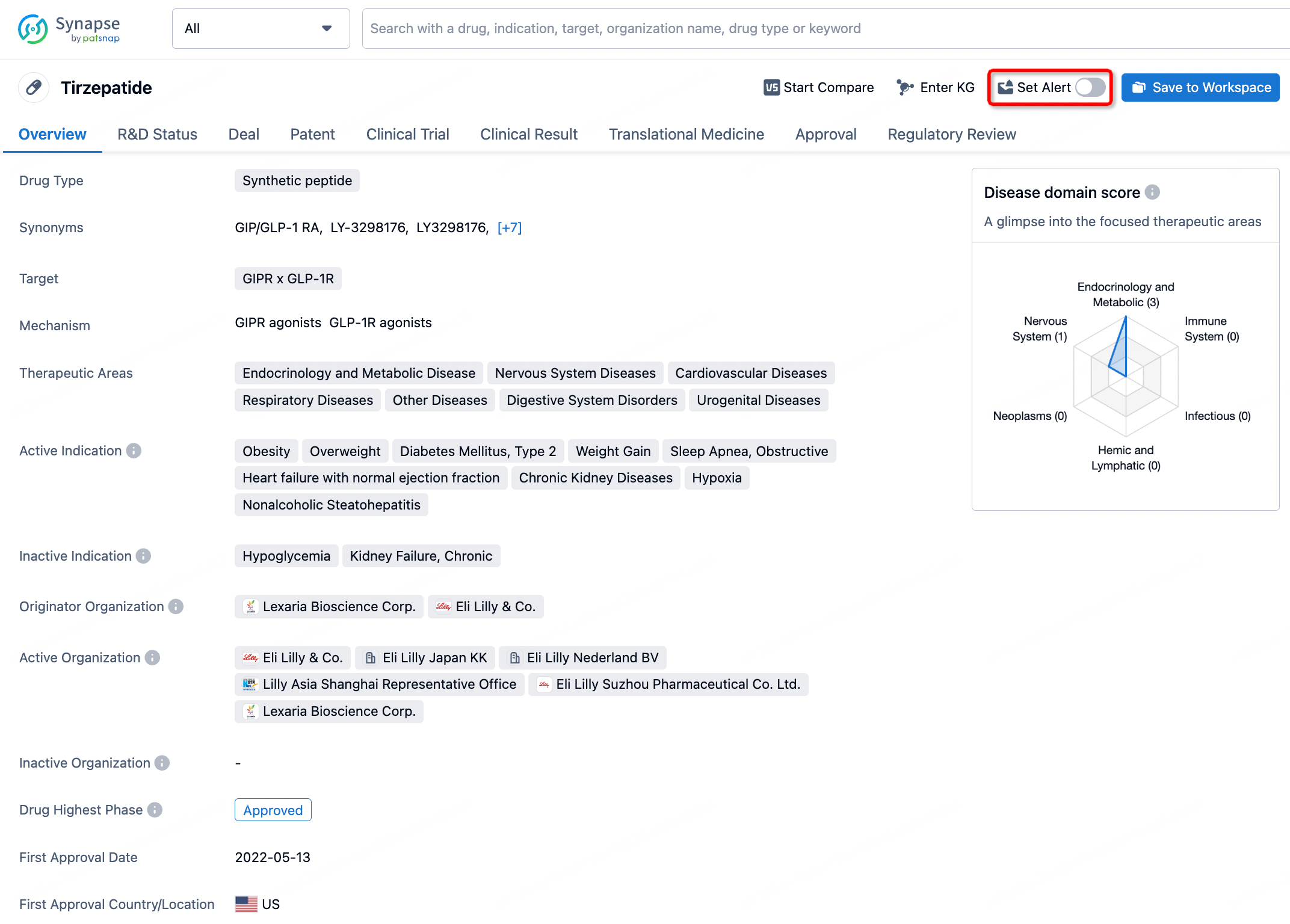
In the Synapse database, you can stay updated on the latest research and development advances of all drugs. This service is accessible anytime and anywhere, with updates available daily or weekly. Use the "Set Alert" function to stay informed. Click on the image below to embark on a brand new journey of drug discovery!


AI Agents Built for Biopharma Breakthroughs
Accelerate discovery. Empower decisions. Transform outcomes.
Get started for free today!
Accelerate Strategic R&D decision making with Synapse, PatSnap’s AI-powered Connected Innovation Intelligence Platform Built for Life Sciences Professionals.
Start your data trial now!
Synapse data is also accessible to external entities via APIs or data packages. Empower better decisions with the latest in pharmaceutical intelligence.