Request Demo
What is the mechanism of Cefuzonam?
17 July 2024
Cefuzonam is a beta-lactam antibiotic that belongs to the cephalosporin class of drugs. It is specifically classified as a third-generation cephalosporin, which is known for its broad-spectrum antibacterial activity, especially against Gram-negative bacteria. Understanding the mechanism of Cefuzonam is crucial for appreciating its therapeutic applications and the rationale behind its use in clinical settings.
The primary mechanism of action of Cefuzonam involves the inhibition of bacterial cell wall synthesis. Bacterial cell walls are composed of a strong, mesh-like polymer called peptidoglycan, which provides structural integrity. The synthesis of peptidoglycan involves a series of enzyme-mediated steps, one of the most vital being the cross-linking of peptidoglycan strands. This cross-linking is catalyzed by enzymes known as penicillin-binding proteins (PBPs).
Cefuzonam exerts its antibacterial effect by binding to these PBPs. Once bound, Cefuzonam inhibits the transpeptidase activity of PBPs, which is essential for forming cross-links between peptidoglycan chains. Without these cross-links, the bacterial cell wall becomes weak and unable to withstand osmotic pressure, leading to cell lysis and ultimately, bacterial death. This bactericidal effect is particularly effective during the active growth phase of bacteria when cell wall synthesis is at its peak.
Cefuzonam’s structure includes a beta-lactam ring, which is crucial for its interaction with PBPs. The beta-lactam ring mimics the natural substrate of PBPs, allowing Cefuzonam to competitively inhibit these enzymes. However, bacteria can develop resistance to beta-lactam antibiotics, including Cefuzonam, primarily through the production of beta-lactamases. These are enzymes that hydrolyze the beta-lactam ring, rendering the antibiotic ineffective. The development of beta-lactamase inhibitors and the use of combination therapies are strategies employed to overcome this resistance.
Moreover, Cefuzonam has been designed to have a high affinity for PBPs of Gram-negative bacteria, which often have an outer membrane that acts as a barrier to many antibiotics. Cefuzonam’s ability to penetrate this outer membrane enhances its effectiveness against these typically more resistant bacteria. Additionally, Cefuzonam has a relatively long half-life, allowing for less frequent dosing, which can improve patient compliance.
In conclusion, the mechanism of Cefuzonam revolves around its ability to inhibit bacterial cell wall synthesis by targeting penicillin-binding proteins, leading to bacterial cell death. Its efficacy against Gram-negative bacteria and the strategies to counteract resistance make it a valuable antibiotic in the clinical arsenal. Understanding this mechanism provides insights into its application and helps in the rational design of antibiotic therapies.
The primary mechanism of action of Cefuzonam involves the inhibition of bacterial cell wall synthesis. Bacterial cell walls are composed of a strong, mesh-like polymer called peptidoglycan, which provides structural integrity. The synthesis of peptidoglycan involves a series of enzyme-mediated steps, one of the most vital being the cross-linking of peptidoglycan strands. This cross-linking is catalyzed by enzymes known as penicillin-binding proteins (PBPs).
Cefuzonam exerts its antibacterial effect by binding to these PBPs. Once bound, Cefuzonam inhibits the transpeptidase activity of PBPs, which is essential for forming cross-links between peptidoglycan chains. Without these cross-links, the bacterial cell wall becomes weak and unable to withstand osmotic pressure, leading to cell lysis and ultimately, bacterial death. This bactericidal effect is particularly effective during the active growth phase of bacteria when cell wall synthesis is at its peak.
Cefuzonam’s structure includes a beta-lactam ring, which is crucial for its interaction with PBPs. The beta-lactam ring mimics the natural substrate of PBPs, allowing Cefuzonam to competitively inhibit these enzymes. However, bacteria can develop resistance to beta-lactam antibiotics, including Cefuzonam, primarily through the production of beta-lactamases. These are enzymes that hydrolyze the beta-lactam ring, rendering the antibiotic ineffective. The development of beta-lactamase inhibitors and the use of combination therapies are strategies employed to overcome this resistance.
Moreover, Cefuzonam has been designed to have a high affinity for PBPs of Gram-negative bacteria, which often have an outer membrane that acts as a barrier to many antibiotics. Cefuzonam’s ability to penetrate this outer membrane enhances its effectiveness against these typically more resistant bacteria. Additionally, Cefuzonam has a relatively long half-life, allowing for less frequent dosing, which can improve patient compliance.
In conclusion, the mechanism of Cefuzonam revolves around its ability to inhibit bacterial cell wall synthesis by targeting penicillin-binding proteins, leading to bacterial cell death. Its efficacy against Gram-negative bacteria and the strategies to counteract resistance make it a valuable antibiotic in the clinical arsenal. Understanding this mechanism provides insights into its application and helps in the rational design of antibiotic therapies.
How to obtain the latest development progress of all drugs?
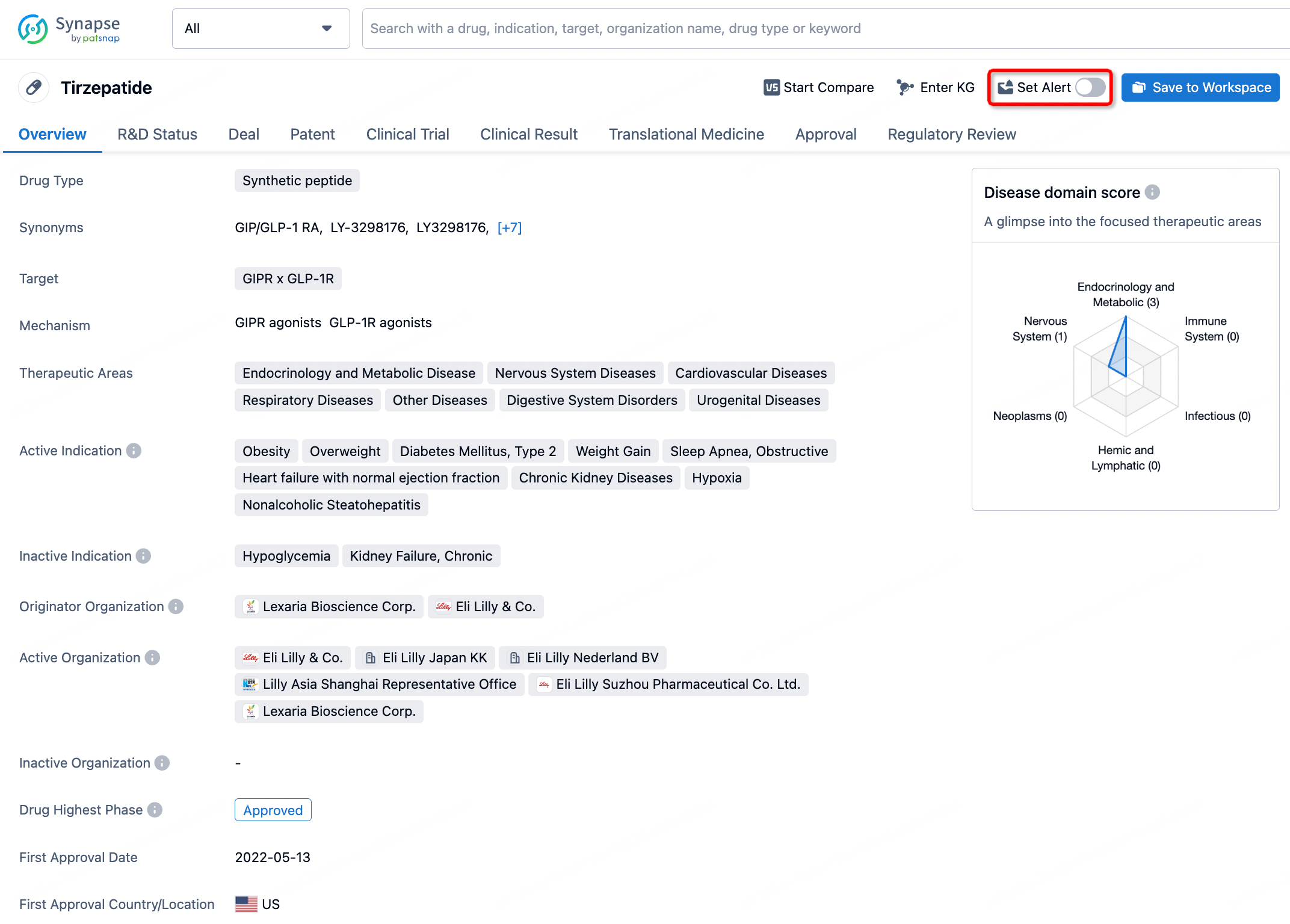
In the Synapse database, you can stay updated on the latest research and development advances of all drugs. This service is accessible anytime and anywhere, with updates available daily or weekly. Use the "Set Alert" function to stay informed. Click on the image below to embark on a brand new journey of drug discovery!

AI Agents Built for Biopharma Breakthroughs
Accelerate discovery. Empower decisions. Transform outcomes.
Get started for free today!
Accelerate Strategic R&D decision making with Synapse, PatSnap’s AI-powered Connected Innovation Intelligence Platform Built for Life Sciences Professionals.
Start your data trial now!
Synapse data is also accessible to external entities via APIs or data packages. Empower better decisions with the latest in pharmaceutical intelligence.