Request Demo
What is the mechanism of Celmoleukin?
17 July 2024
Celmoleukin is a fascinating molecule that has garnered interest in recent years due to its potential therapeutic applications. Understanding the mechanism of Celmoleukin involves delving into its biochemical properties, its mode of action in the human body, and its effects on cellular processes.
Celmoleukin is a synthetic cytokine, a type of protein that plays a crucial role in cell signaling. Cytokines are essential for the immune system, as they help coordinate the body's response to infections and other diseases. Celmoleukin mimics the activity of natural cytokines, but with enhanced stability and efficacy. The engineering behind Celmoleukin ensures that it remains active in the body for a longer duration compared to its naturally occurring counterparts.
The primary mechanism of Celmoleukin involves binding to specific receptors on the surface of target cells. These receptors are known as cytokine receptors and are part of a larger family of proteins that are responsive to signaling molecules. Upon binding to its receptor, Celmoleukin triggers a cascade of intracellular events. This process typically begins with the activation of Janus kinases (JAKs), a group of enzymes that transfer phosphate groups from ATP molecules to specific proteins. This phosphorylation event activates the signal transducer and activator of transcription (STAT) proteins.
Once activated, STAT proteins dimerize and translocate to the cell nucleus, where they bind to specific DNA sequences and promote the transcription of target genes. The genes activated by STAT proteins often encode for proteins involved in cell survival, proliferation, and the immune response. Thus, Celmoleukin exerts its effects by modulating the expression of these critical genes.
One of the most significant outcomes of Celmoleukin activity is the modulation of the immune system. By enhancing the survival and proliferation of immune cells such as T-cells and natural killer (NK) cells, Celmoleukin boosts the body's ability to fight infections and potentially cancer. This property has made Celmoleukin a candidate for immunotherapy, especially in the treatment of cancers and chronic infections where the immune system needs a boost.
Furthermore, Celmoleukin has shown promise in reducing inflammation. By regulating the activity of various immune cells, it helps maintain a balance between pro-inflammatory and anti-inflammatory signals. This balancing act is crucial in conditions such as autoimmune diseases, where an overactive immune response can cause tissue damage.
Another interesting aspect of Celmoleukin's mechanism is its potential role in tissue repair and regeneration. By promoting the survival and proliferation of certain cell types, including stem cells, Celmoleukin may aid in the repair of damaged tissues. This regenerative property opens up possibilities for its use in treating degenerative diseases and injuries.
In summary, the mechanism of Celmoleukin is rooted in its ability to mimic natural cytokines and modulate immune responses. Its action begins with binding to cytokine receptors, followed by the activation of JAK-STAT signaling pathways, ultimately leading to changes in gene expression. The enhanced immune response, along with its anti-inflammatory and regenerative properties, makes Celmoleukin a promising therapeutic agent in various medical fields. As research continues, the full potential of Celmoleukin and its applications in medicine will hopefully be realized, offering new avenues for treatment and improving patient outcomes.
Celmoleukin is a synthetic cytokine, a type of protein that plays a crucial role in cell signaling. Cytokines are essential for the immune system, as they help coordinate the body's response to infections and other diseases. Celmoleukin mimics the activity of natural cytokines, but with enhanced stability and efficacy. The engineering behind Celmoleukin ensures that it remains active in the body for a longer duration compared to its naturally occurring counterparts.
The primary mechanism of Celmoleukin involves binding to specific receptors on the surface of target cells. These receptors are known as cytokine receptors and are part of a larger family of proteins that are responsive to signaling molecules. Upon binding to its receptor, Celmoleukin triggers a cascade of intracellular events. This process typically begins with the activation of Janus kinases (JAKs), a group of enzymes that transfer phosphate groups from ATP molecules to specific proteins. This phosphorylation event activates the signal transducer and activator of transcription (STAT) proteins.
Once activated, STAT proteins dimerize and translocate to the cell nucleus, where they bind to specific DNA sequences and promote the transcription of target genes. The genes activated by STAT proteins often encode for proteins involved in cell survival, proliferation, and the immune response. Thus, Celmoleukin exerts its effects by modulating the expression of these critical genes.
One of the most significant outcomes of Celmoleukin activity is the modulation of the immune system. By enhancing the survival and proliferation of immune cells such as T-cells and natural killer (NK) cells, Celmoleukin boosts the body's ability to fight infections and potentially cancer. This property has made Celmoleukin a candidate for immunotherapy, especially in the treatment of cancers and chronic infections where the immune system needs a boost.
Furthermore, Celmoleukin has shown promise in reducing inflammation. By regulating the activity of various immune cells, it helps maintain a balance between pro-inflammatory and anti-inflammatory signals. This balancing act is crucial in conditions such as autoimmune diseases, where an overactive immune response can cause tissue damage.
Another interesting aspect of Celmoleukin's mechanism is its potential role in tissue repair and regeneration. By promoting the survival and proliferation of certain cell types, including stem cells, Celmoleukin may aid in the repair of damaged tissues. This regenerative property opens up possibilities for its use in treating degenerative diseases and injuries.
In summary, the mechanism of Celmoleukin is rooted in its ability to mimic natural cytokines and modulate immune responses. Its action begins with binding to cytokine receptors, followed by the activation of JAK-STAT signaling pathways, ultimately leading to changes in gene expression. The enhanced immune response, along with its anti-inflammatory and regenerative properties, makes Celmoleukin a promising therapeutic agent in various medical fields. As research continues, the full potential of Celmoleukin and its applications in medicine will hopefully be realized, offering new avenues for treatment and improving patient outcomes.
How to obtain the latest development progress of all drugs?
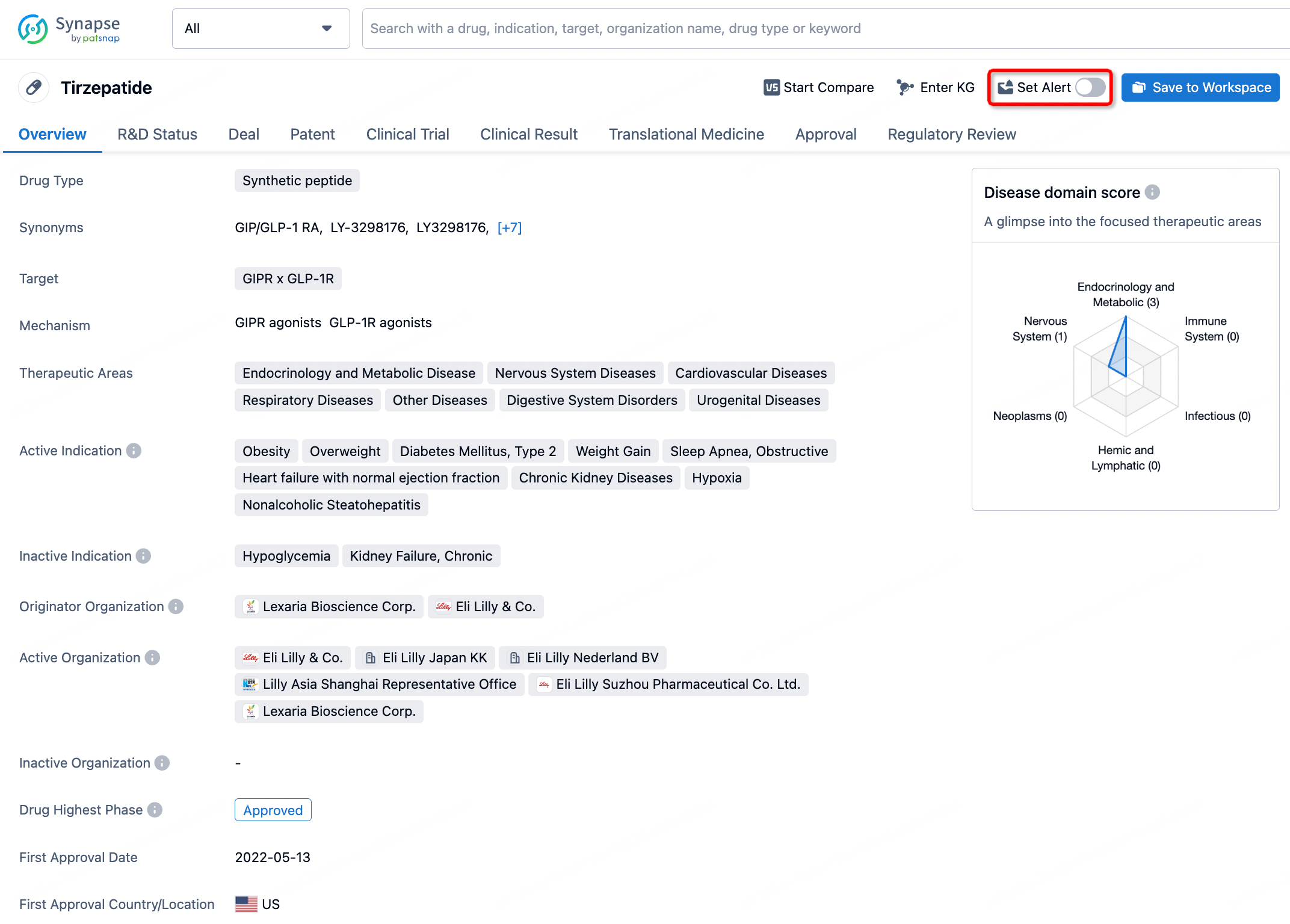
In the Synapse database, you can stay updated on the latest research and development advances of all drugs. This service is accessible anytime and anywhere, with updates available daily or weekly. Use the "Set Alert" function to stay informed. Click on the image below to embark on a brand new journey of drug discovery!


AI Agents Built for Biopharma Breakthroughs
Accelerate discovery. Empower decisions. Transform outcomes.
Get started for free today!
Accelerate Strategic R&D decision making with Synapse, PatSnap’s AI-powered Connected Innovation Intelligence Platform Built for Life Sciences Professionals.
Start your data trial now!
Synapse data is also accessible to external entities via APIs or data packages. Empower better decisions with the latest in pharmaceutical intelligence.