Request Demo
What is the mechanism of Conestat alfa?
17 July 2024
Conestat alfa is a recombinant human C1 esterase inhibitor (C1-INH) used primarily to treat hereditary angioedema (HAE), a rare genetic condition characterized by sudden, severe swelling attacks in various parts of the body. Understanding the mechanism of Conestat alfa involves diving into the pathophysiology of HAE, the role of C1-INH in the body, and how this recombinant protein mitigates the symptoms of the disorder.
HAE is fundamentally a disorder of the immune system. Patients with HAE have a deficiency or dysfunction of C1-INH, a crucial protein in the regulation of the complement system, which is part of the immune response. The complement system consists of a series of proteins that circulate in the blood and assist in clearing pathogens from an organism. Specifically, C1-INH regulates the activation of the complement and contact systems, which, if left unchecked, can lead to inflammation and tissue swelling.
In a normal individual, C1-INH works by inactivating C1r and C1s, which are two enzymes involved in the early steps of the complement cascade. It also inactivates kallikrein and factor XIIa, which are part of the contact system. The inhibition of these enzymes prevents the excessive production of bradykinin, a peptide that increases vascular permeability and leads to fluid leakage into surrounding tissues, resulting in swelling.
In patients with HAE, the absence or malfunction of C1-INH means that the cascade systems are not adequately regulated. This leads to episodes of unregulated bradykinin production, resulting in the characteristic swelling of HAE attacks. These attacks can affect various parts of the body, including the skin, gastrointestinal tract, and upper airways, and can be life-threatening if they cause airway obstruction.
Conestat alfa is a bioengineered version of human C1-INH and functions by replenishing the deficient or dysfunctional C1-INH in HAE patients. Produced using recombinant DNA technology in the milk of transgenic rabbits, Conestat alfa has an identical amino acid sequence to the naturally occurring human C1-INH. When administered to a patient, Conestat alfa mimics the activity of natural C1-INH by binding to and inactivating C1r, C1s, kallikrein, and factor XIIa, thus halting the overproduction of bradykinin. This action prevents the excessive vascular permeability that leads to the fluid leakage and swelling characteristic of HAE attacks.
The administration of Conestat alfa is usually done via intravenous infusion, allowing it to quickly enter the bloodstream and exert its effects. The onset of action is rapid, making it particularly useful for acute management of HAE attacks. By restoring the regulatory function of C1-INH, Conestat alfa effectively reduces the frequency, severity, and duration of swelling episodes in patients with HAE.
In summary, Conestat alfa acts as a replacement therapy for deficient or dysfunctional C1-INH in patients with hereditary angioedema. By inhibiting key enzymes in the complement and contact systems, it prevents the overproduction of bradykinin and consequently averts the episodes of severe swelling that characterize the disorder. This recombinant protein thus offers a life-saving intervention for individuals affected by this rare but potentially life-threatening condition.
HAE is fundamentally a disorder of the immune system. Patients with HAE have a deficiency or dysfunction of C1-INH, a crucial protein in the regulation of the complement system, which is part of the immune response. The complement system consists of a series of proteins that circulate in the blood and assist in clearing pathogens from an organism. Specifically, C1-INH regulates the activation of the complement and contact systems, which, if left unchecked, can lead to inflammation and tissue swelling.
In a normal individual, C1-INH works by inactivating C1r and C1s, which are two enzymes involved in the early steps of the complement cascade. It also inactivates kallikrein and factor XIIa, which are part of the contact system. The inhibition of these enzymes prevents the excessive production of bradykinin, a peptide that increases vascular permeability and leads to fluid leakage into surrounding tissues, resulting in swelling.
In patients with HAE, the absence or malfunction of C1-INH means that the cascade systems are not adequately regulated. This leads to episodes of unregulated bradykinin production, resulting in the characteristic swelling of HAE attacks. These attacks can affect various parts of the body, including the skin, gastrointestinal tract, and upper airways, and can be life-threatening if they cause airway obstruction.
Conestat alfa is a bioengineered version of human C1-INH and functions by replenishing the deficient or dysfunctional C1-INH in HAE patients. Produced using recombinant DNA technology in the milk of transgenic rabbits, Conestat alfa has an identical amino acid sequence to the naturally occurring human C1-INH. When administered to a patient, Conestat alfa mimics the activity of natural C1-INH by binding to and inactivating C1r, C1s, kallikrein, and factor XIIa, thus halting the overproduction of bradykinin. This action prevents the excessive vascular permeability that leads to the fluid leakage and swelling characteristic of HAE attacks.
The administration of Conestat alfa is usually done via intravenous infusion, allowing it to quickly enter the bloodstream and exert its effects. The onset of action is rapid, making it particularly useful for acute management of HAE attacks. By restoring the regulatory function of C1-INH, Conestat alfa effectively reduces the frequency, severity, and duration of swelling episodes in patients with HAE.
In summary, Conestat alfa acts as a replacement therapy for deficient or dysfunctional C1-INH in patients with hereditary angioedema. By inhibiting key enzymes in the complement and contact systems, it prevents the overproduction of bradykinin and consequently averts the episodes of severe swelling that characterize the disorder. This recombinant protein thus offers a life-saving intervention for individuals affected by this rare but potentially life-threatening condition.
How to obtain the latest development progress of all drugs?
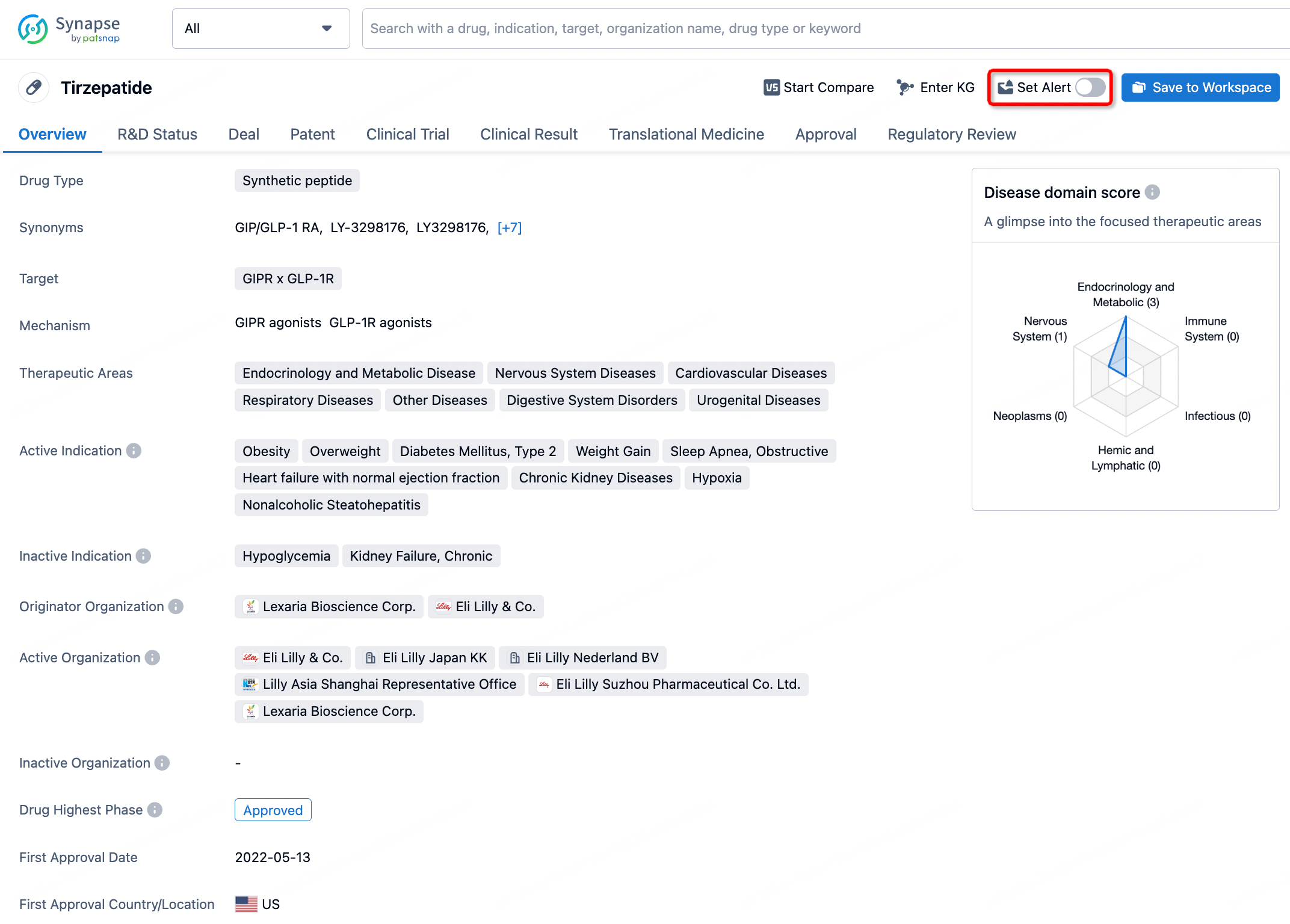
In the Synapse database, you can stay updated on the latest research and development advances of all drugs. This service is accessible anytime and anywhere, with updates available daily or weekly. Use the "Set Alert" function to stay informed. Click on the image below to embark on a brand new journey of drug discovery!

AI Agents Built for Biopharma Breakthroughs
Accelerate discovery. Empower decisions. Transform outcomes.
Get started for free today!
Accelerate Strategic R&D decision making with Synapse, PatSnap’s AI-powered Connected Innovation Intelligence Platform Built for Life Sciences Professionals.
Start your data trial now!
Synapse data is also accessible to external entities via APIs or data packages. Empower better decisions with the latest in pharmaceutical intelligence.