Request Demo
What is the mechanism of Daipin?
17 July 2024
Daipin is a pharmaceutical drug that has garnered significant interest in recent years due to its efficacy in treating specific medical conditions. The primary mechanism of Daipin involves its interaction with cellular receptors and enzymes, leading to a cascade of biochemical reactions that result in therapeutic effects.
Daipin primarily functions by targeting specific receptors on the surface of cells, most notably the protein-linked receptors known as G-protein coupled receptors (GPCRs). When Daipin binds to these receptors, it triggers a conformational change in the receptor structure, which subsequently activates the associated G-proteins. These proteins then proceed to influence various intracellular signaling pathways.
One of the critical pathways influenced by Daipin involves the adenylate cyclase enzyme. Upon activation by the G-protein, adenylate cyclase catalyzes the conversion of ATP to cyclic AMP (cAMP). The increase in cAMP levels serves as a secondary messenger that activates protein kinase A (PKA). PKA, in turn, phosphorylates specific target proteins, leading to altered cellular activities such as changes in gene expression, ion channel regulation, and metabolic enzyme activity. These changes contribute to the therapeutic effects observed in patients using Daipin.
In addition to its interaction with GPCRs, Daipin also affects ion channels directly, particularly those involved in calcium and potassium ion transport. By modulating these ion channels, Daipin can alter cellular excitability and neurotransmitter release, which is particularly beneficial in conditions characterized by abnormal cell signaling and neuronal excitability.
Another significant mechanism of Daipin involves its anti-inflammatory properties. Daipin inhibits the activity of certain enzymes such as cyclooxygenase (COX), which are involved in the synthesis of pro-inflammatory mediators like prostaglandins. By reducing the production of these mediators, Daipin helps to alleviate inflammation and its associated symptoms.
Furthermore, Daipin's impact on oxidative stress is noteworthy. It exerts antioxidant effects by scavenging free radicals and enhancing the activity of endogenous antioxidant enzymes. This helps in mitigating cellular damage caused by oxidative stress, which is a common feature in many chronic diseases.
Daipin also influences the immune response. It modulates the activity of various immune cells, including T-cells and macrophages, leading to a balanced immune response. This immunomodulatory effect is particularly useful in auto-immune diseases where the immune system erroneously targets the body's own tissues.
The pharmacokinetics of Daipin reveal that it has a high bioavailability and a relatively long half-life, which allows for sustained therapeutic effects with manageable dosing schedules. It undergoes hepatic metabolism primarily via the cytochrome P450 enzyme system, and its metabolites are excreted through the renal and biliary pathways.
In conclusion, the mechanism of Daipin is multifaceted, involving interactions with GPCRs, ion channels, anti-inflammatory pathways, oxidative stress responses, and immunomodulation. These combined actions contribute to its effectiveness in treating a variety of medical conditions, making it a valuable therapeutic agent in the clinical setting.
Daipin primarily functions by targeting specific receptors on the surface of cells, most notably the protein-linked receptors known as G-protein coupled receptors (GPCRs). When Daipin binds to these receptors, it triggers a conformational change in the receptor structure, which subsequently activates the associated G-proteins. These proteins then proceed to influence various intracellular signaling pathways.
One of the critical pathways influenced by Daipin involves the adenylate cyclase enzyme. Upon activation by the G-protein, adenylate cyclase catalyzes the conversion of ATP to cyclic AMP (cAMP). The increase in cAMP levels serves as a secondary messenger that activates protein kinase A (PKA). PKA, in turn, phosphorylates specific target proteins, leading to altered cellular activities such as changes in gene expression, ion channel regulation, and metabolic enzyme activity. These changes contribute to the therapeutic effects observed in patients using Daipin.
In addition to its interaction with GPCRs, Daipin also affects ion channels directly, particularly those involved in calcium and potassium ion transport. By modulating these ion channels, Daipin can alter cellular excitability and neurotransmitter release, which is particularly beneficial in conditions characterized by abnormal cell signaling and neuronal excitability.
Another significant mechanism of Daipin involves its anti-inflammatory properties. Daipin inhibits the activity of certain enzymes such as cyclooxygenase (COX), which are involved in the synthesis of pro-inflammatory mediators like prostaglandins. By reducing the production of these mediators, Daipin helps to alleviate inflammation and its associated symptoms.
Furthermore, Daipin's impact on oxidative stress is noteworthy. It exerts antioxidant effects by scavenging free radicals and enhancing the activity of endogenous antioxidant enzymes. This helps in mitigating cellular damage caused by oxidative stress, which is a common feature in many chronic diseases.
Daipin also influences the immune response. It modulates the activity of various immune cells, including T-cells and macrophages, leading to a balanced immune response. This immunomodulatory effect is particularly useful in auto-immune diseases where the immune system erroneously targets the body's own tissues.
The pharmacokinetics of Daipin reveal that it has a high bioavailability and a relatively long half-life, which allows for sustained therapeutic effects with manageable dosing schedules. It undergoes hepatic metabolism primarily via the cytochrome P450 enzyme system, and its metabolites are excreted through the renal and biliary pathways.
In conclusion, the mechanism of Daipin is multifaceted, involving interactions with GPCRs, ion channels, anti-inflammatory pathways, oxidative stress responses, and immunomodulation. These combined actions contribute to its effectiveness in treating a variety of medical conditions, making it a valuable therapeutic agent in the clinical setting.
How to obtain the latest development progress of all drugs?
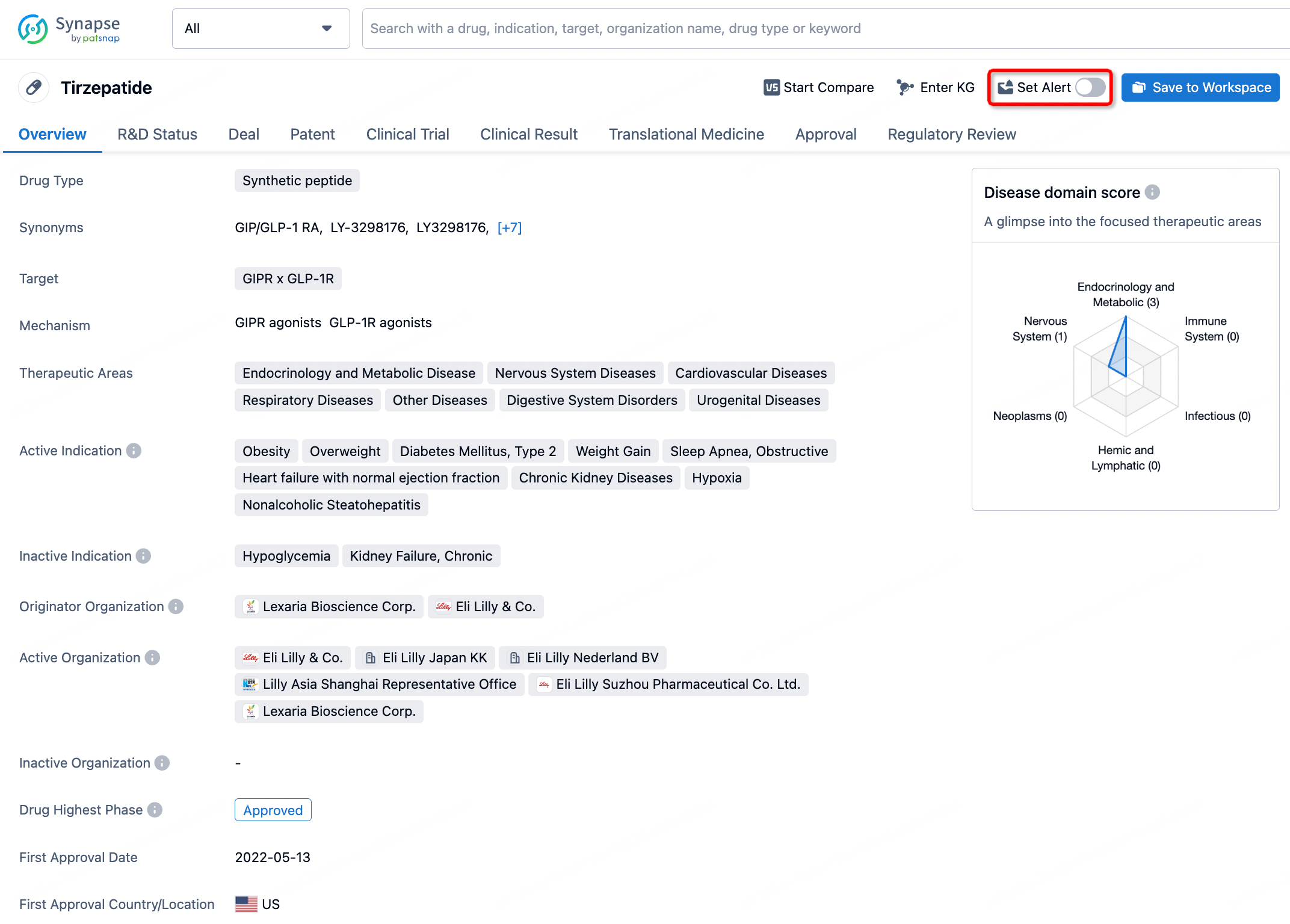
In the Synapse database, you can stay updated on the latest research and development advances of all drugs. This service is accessible anytime and anywhere, with updates available daily or weekly. Use the "Set Alert" function to stay informed. Click on the image below to embark on a brand new journey of drug discovery!

AI Agents Built for Biopharma Breakthroughs
Accelerate discovery. Empower decisions. Transform outcomes.
Get started for free today!
Accelerate Strategic R&D decision making with Synapse, PatSnap’s AI-powered Connected Innovation Intelligence Platform Built for Life Sciences Professionals.
Start your data trial now!
Synapse data is also accessible to external entities via APIs or data packages. Empower better decisions with the latest in pharmaceutical intelligence.