Request Demo
What is the mechanism of Dantron?
17 July 2024
Dantron, also known as 1,8-dihydroxyanthraquinone, is a synthetic anthraquinone derivative that has been widely studied and utilized primarily for its laxative properties. This compound is of particular interest in the medical and pharmaceutical fields due to its unique mechanism of action and efficacy in treating constipation. Understanding the mechanism of Dantron involves exploring its pharmacodynamics, pharmacokinetics, and the physiological effects it induces.
Dantron works by stimulating the motility of the colon, which facilitates the passage of stool. The primary mechanism through which Dantron exerts its laxative effect is by acting directly on the intestinal mucosa. Once ingested, Dantron is metabolized by the intestinal flora into its active form, which then interacts with the intestinal walls. This interaction prompts an increase in the secretion of water and electrolytes into the bowel lumen. The result is a softer stool and increased bowel movements.
The compound achieves this by stimulating the enteric nervous system, which is a complex network of neurons governing the function of the gastrointestinal system. Dantron activates specific receptors in the enteric nervous system, leading to enhanced peristalsis. Peristalsis refers to the series of wave-like muscle contractions that move food through the digestive tract. By enhancing these contractions, Dantron helps to accelerate the transit of fecal matter through the colon.
Furthermore, Dantron’s action also includes an influence on the balance of fluid absorption and secretion in the intestines. Normally, the colon absorbs water, but Dantron inhibits this absorption to some extent, resulting in a higher water content in the stool. This water retention in the bowel aids in maintaining stool softness and volume, which are critical factors in promoting bowel movements.
It is important to note that while Dantron is effective as a laxative, it should be used with caution due to potential side effects. Prolonged use of Dantron can lead to dependency, where the bowel becomes reliant on the medication to function properly. Additionally, certain studies have raised concerns about the carcinogenic potential of Dantron, particularly with long-term use. Consequently, its use has been restricted or banned in several countries, and it is typically recommended for short-term management of constipation under the guidance of a healthcare professional.
In summary, Dantron operates by stimulating the colonic mucosa to increase water and electrolyte secretion while enhancing peristalsis through the activation of the enteric nervous system. These actions collectively result in the effective promotion of bowel movements, making it a useful agent in the treatment of constipation. However, due to its potential side effects and risk of dependency, careful consideration and medical supervision are essential when utilizing Dantron as a therapeutic option.
Dantron works by stimulating the motility of the colon, which facilitates the passage of stool. The primary mechanism through which Dantron exerts its laxative effect is by acting directly on the intestinal mucosa. Once ingested, Dantron is metabolized by the intestinal flora into its active form, which then interacts with the intestinal walls. This interaction prompts an increase in the secretion of water and electrolytes into the bowel lumen. The result is a softer stool and increased bowel movements.
The compound achieves this by stimulating the enteric nervous system, which is a complex network of neurons governing the function of the gastrointestinal system. Dantron activates specific receptors in the enteric nervous system, leading to enhanced peristalsis. Peristalsis refers to the series of wave-like muscle contractions that move food through the digestive tract. By enhancing these contractions, Dantron helps to accelerate the transit of fecal matter through the colon.
Furthermore, Dantron’s action also includes an influence on the balance of fluid absorption and secretion in the intestines. Normally, the colon absorbs water, but Dantron inhibits this absorption to some extent, resulting in a higher water content in the stool. This water retention in the bowel aids in maintaining stool softness and volume, which are critical factors in promoting bowel movements.
It is important to note that while Dantron is effective as a laxative, it should be used with caution due to potential side effects. Prolonged use of Dantron can lead to dependency, where the bowel becomes reliant on the medication to function properly. Additionally, certain studies have raised concerns about the carcinogenic potential of Dantron, particularly with long-term use. Consequently, its use has been restricted or banned in several countries, and it is typically recommended for short-term management of constipation under the guidance of a healthcare professional.
In summary, Dantron operates by stimulating the colonic mucosa to increase water and electrolyte secretion while enhancing peristalsis through the activation of the enteric nervous system. These actions collectively result in the effective promotion of bowel movements, making it a useful agent in the treatment of constipation. However, due to its potential side effects and risk of dependency, careful consideration and medical supervision are essential when utilizing Dantron as a therapeutic option.
How to obtain the latest development progress of all drugs?
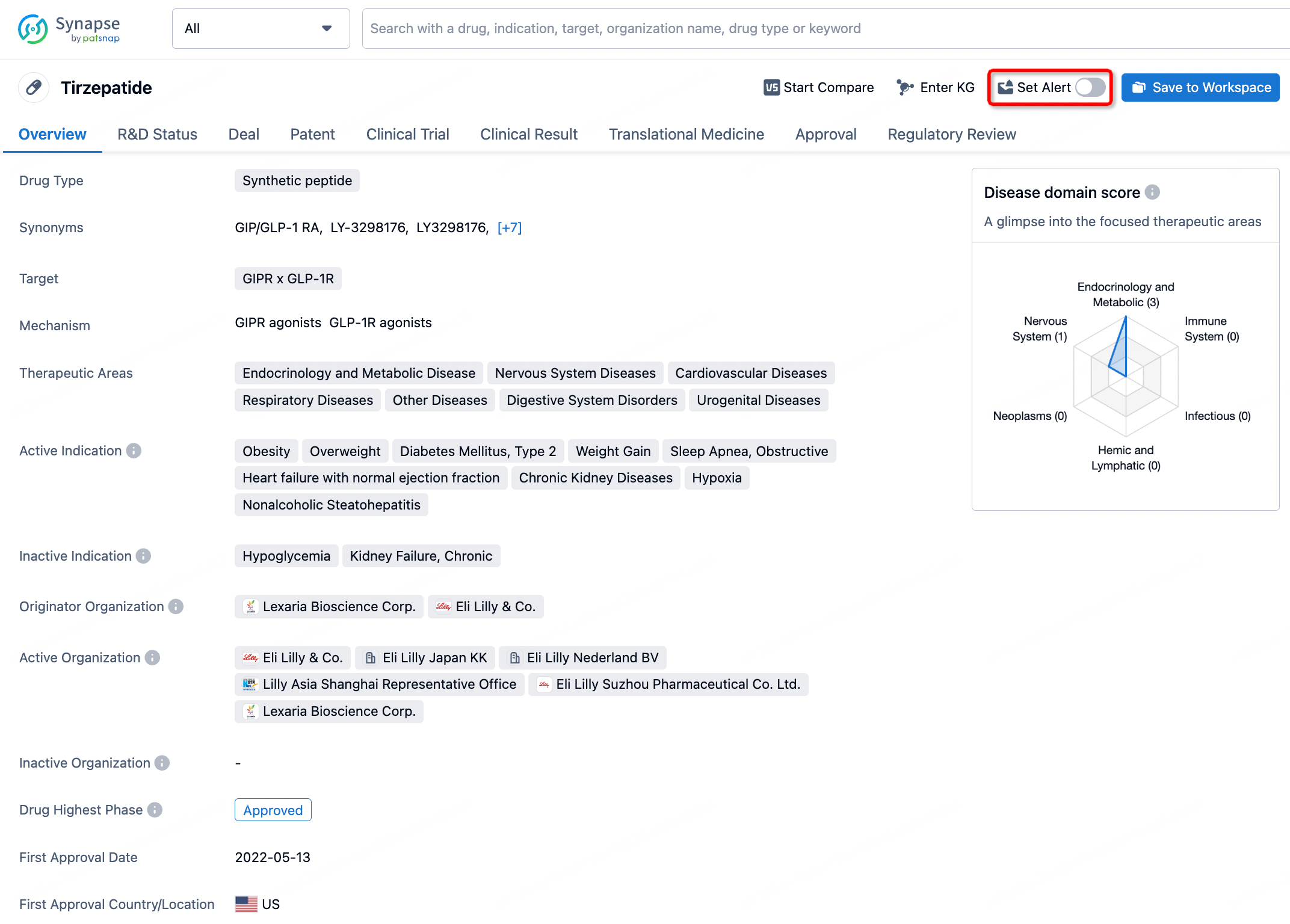
In the Synapse database, you can stay updated on the latest research and development advances of all drugs. This service is accessible anytime and anywhere, with updates available daily or weekly. Use the "Set Alert" function to stay informed. Click on the image below to embark on a brand new journey of drug discovery!


AI Agents Built for Biopharma Breakthroughs
Accelerate discovery. Empower decisions. Transform outcomes.
Get started for free today!
Accelerate Strategic R&D decision making with Synapse, PatSnap’s AI-powered Connected Innovation Intelligence Platform Built for Life Sciences Professionals.
Start your data trial now!
Synapse data is also accessible to external entities via APIs or data packages. Empower better decisions with the latest in pharmaceutical intelligence.