Request Demo
What is the mechanism of Dexetimide?
18 July 2024
Dexetimide is a medication primarily known for its anticholinergic properties, often used in the treatment of Parkinson's disease and other movement disorders. Understanding the mechanism of Dexetimide requires a dive into its pharmacological action and how it interacts with the human body at a cellular level, particularly in the central nervous system.
Firstly, it is essential to recognize that Parkinson's disease and similar movement disorders are associated with an imbalance between dopamine and acetylcholine in the brain. In Parkinson's disease, there is a marked depletion of dopamine, a neurotransmitter essential for controlling movement. The relative excess of acetylcholine contributes to the symptoms of tremors, rigidity, and bradykinesia (slowness of movement).
Dexetimide functions by blocking the muscarinic acetylcholine receptors in the brain. These receptors are part of the parasympathetic nervous system and play a crucial role in modulating bodily functions like muscle contractions and glandular secretions. By inhibiting these receptors, Dexetimide reduces the activity of acetylcholine, thus helping to rebalance the disproportionate neurotransmitter levels.
The chemical structure of Dexetimide allows it to effectively permeate the blood-brain barrier, which is crucial for its efficacy. Once in the central nervous system, it selectively binds to muscarinic receptors, particularly those located in the striatum, a region of the brain that coordinates motor control. By antagonizing these receptors, Dexetimide decreases cholinergic activity, indirectly leading to enhanced dopaminergic activity. This helps alleviate the motor symptoms associated with Parkinson's disease.
Additionally, Dexetimide has a secondary mechanism of action involving the modulation of dopamine release. Although primarily an anticholinergic agent, its influence on the dopaminergic system adds a layer of therapeutic benefit. By dampening the cholinergic overactivity, it facilitates a more balanced environment for dopamine to exert its effects, thus further improving motor function and reducing symptoms like tremors and muscle stiffness.
It is also worth noting that Dexetimide's therapeutic effects are not without potential side effects. Common anticholinergic side effects include dry mouth, blurred vision, constipation, urinary retention, and cognitive impairment. These adverse effects arise because muscarinic receptors are not only present in the brain but also throughout the peripheral nervous system. Therefore, Dexetimide’s action can extend beyond the central nervous system, affecting various bodily functions.
In conclusion, the mechanism of Dexetimide is largely centered on its ability to block muscarinic acetylcholine receptors in the brain, thereby mitigating the cholinergic overactivity that characterizes Parkinson's disease. By restoring a more balanced interaction between acetylcholine and dopamine, Dexetimide helps improve motor function and reduce symptoms. However, the benefits must be carefully weighed against potential side effects, and its use should be closely monitored by healthcare professionals. Understanding these mechanisms provides valuable insight into how Dexetimide functions and its role in the therapeutic landscape of movement disorders.
Firstly, it is essential to recognize that Parkinson's disease and similar movement disorders are associated with an imbalance between dopamine and acetylcholine in the brain. In Parkinson's disease, there is a marked depletion of dopamine, a neurotransmitter essential for controlling movement. The relative excess of acetylcholine contributes to the symptoms of tremors, rigidity, and bradykinesia (slowness of movement).
Dexetimide functions by blocking the muscarinic acetylcholine receptors in the brain. These receptors are part of the parasympathetic nervous system and play a crucial role in modulating bodily functions like muscle contractions and glandular secretions. By inhibiting these receptors, Dexetimide reduces the activity of acetylcholine, thus helping to rebalance the disproportionate neurotransmitter levels.
The chemical structure of Dexetimide allows it to effectively permeate the blood-brain barrier, which is crucial for its efficacy. Once in the central nervous system, it selectively binds to muscarinic receptors, particularly those located in the striatum, a region of the brain that coordinates motor control. By antagonizing these receptors, Dexetimide decreases cholinergic activity, indirectly leading to enhanced dopaminergic activity. This helps alleviate the motor symptoms associated with Parkinson's disease.
Additionally, Dexetimide has a secondary mechanism of action involving the modulation of dopamine release. Although primarily an anticholinergic agent, its influence on the dopaminergic system adds a layer of therapeutic benefit. By dampening the cholinergic overactivity, it facilitates a more balanced environment for dopamine to exert its effects, thus further improving motor function and reducing symptoms like tremors and muscle stiffness.
It is also worth noting that Dexetimide's therapeutic effects are not without potential side effects. Common anticholinergic side effects include dry mouth, blurred vision, constipation, urinary retention, and cognitive impairment. These adverse effects arise because muscarinic receptors are not only present in the brain but also throughout the peripheral nervous system. Therefore, Dexetimide’s action can extend beyond the central nervous system, affecting various bodily functions.
In conclusion, the mechanism of Dexetimide is largely centered on its ability to block muscarinic acetylcholine receptors in the brain, thereby mitigating the cholinergic overactivity that characterizes Parkinson's disease. By restoring a more balanced interaction between acetylcholine and dopamine, Dexetimide helps improve motor function and reduce symptoms. However, the benefits must be carefully weighed against potential side effects, and its use should be closely monitored by healthcare professionals. Understanding these mechanisms provides valuable insight into how Dexetimide functions and its role in the therapeutic landscape of movement disorders.
How to obtain the latest development progress of all drugs?
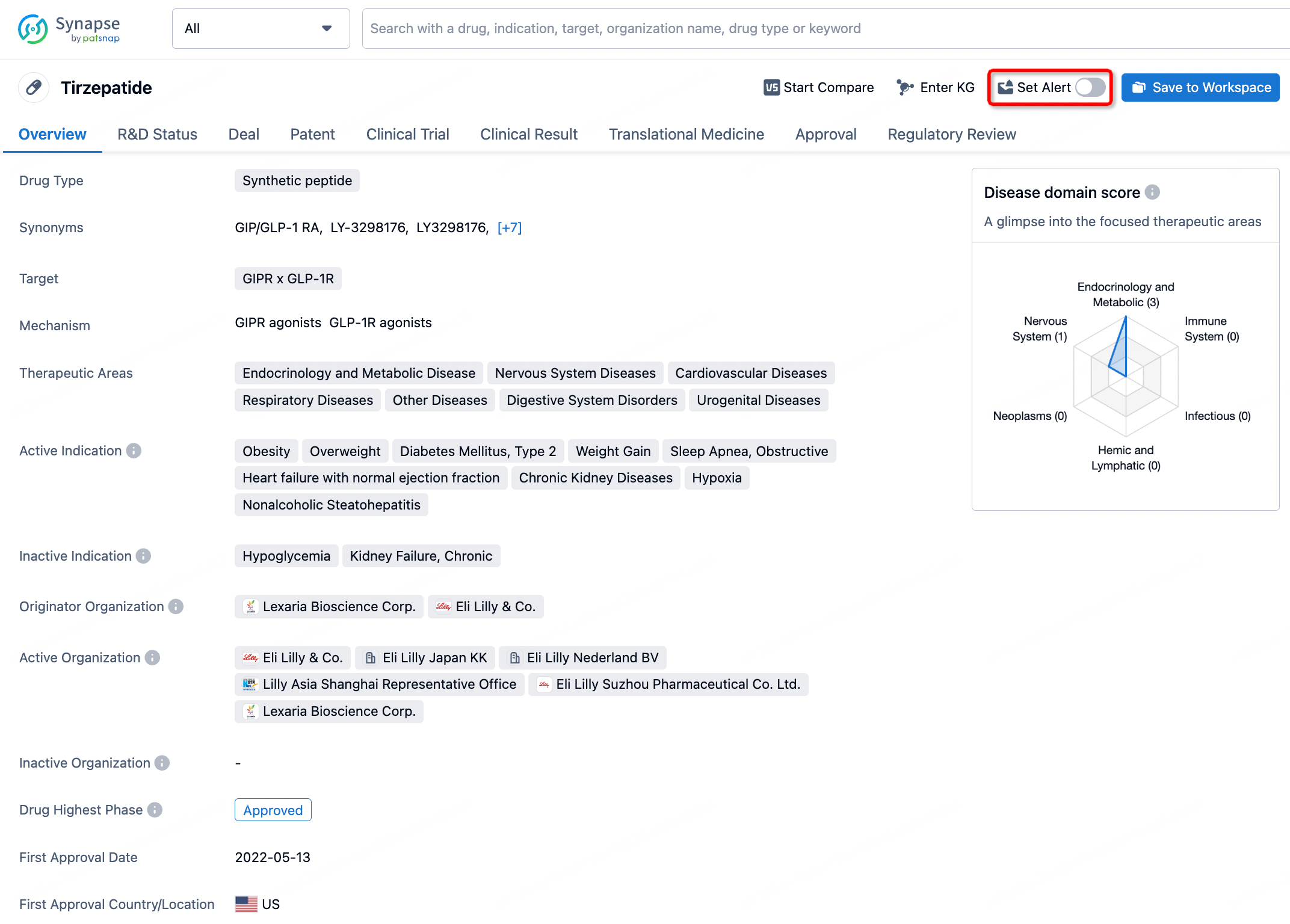
In the Synapse database, you can stay updated on the latest research and development advances of all drugs. This service is accessible anytime and anywhere, with updates available daily or weekly. Use the "Set Alert" function to stay informed. Click on the image below to embark on a brand new journey of drug discovery!


AI Agents Built for Biopharma Breakthroughs
Accelerate discovery. Empower decisions. Transform outcomes.
Get started for free today!
Accelerate Strategic R&D decision making with Synapse, PatSnap’s AI-powered Connected Innovation Intelligence Platform Built for Life Sciences Professionals.
Start your data trial now!
Synapse data is also accessible to external entities via APIs or data packages. Empower better decisions with the latest in pharmaceutical intelligence.