Request Demo
What is the mechanism of Dipyrocetyl?
18 July 2024
Dipyrocetyl is a compound that has garnered considerable interest in the fields of pharmacology and biochemistry due to its potential therapeutic applications. Understanding the mechanism of Dipyrocetyl involves delving into its biochemical interactions, pharmacodynamics, and the resultant physiological effects.
At the molecular level, Dipyrocetyl operates primarily by inhibiting specific enzymes that play critical roles in inflammatory pathways. One of the principal targets of Dipyrocetyl is cyclooxygenase (COX), an enzyme involved in the synthesis of prostaglandins. Prostaglandins are lipid compounds that have diverse roles in inflammation, pain, and fever. By inhibiting COX, Dipyrocetyl effectively reduces the production of these pro-inflammatory mediators, thereby exerting its anti-inflammatory and analgesic effects.
The inhibition of cyclooxygenase by Dipyrocetyl is both time-dependent and concentration-dependent. Studies have shown that Dipyrocetyl binds to the active site of the COX enzyme, preventing its catalytic activity. This binding is reversible, meaning that the inhibitory effect of Dipyrocetyl can be overcome by the presence of sufficient substrate concentration or by the removal of the drug.
In addition to its COX-inhibitory activity, Dipyrocetyl also affects other signaling pathways. It has been observed to modulate the activity of nuclear factor kappa B (NF-κB), a transcription factor that regulates the expression of various genes involved in immune response and inflammation. By inhibiting the activation of NF-κB, Dipyrocetyl can further suppress the inflammatory response, contributing to its therapeutic potential.
Pharmacokinetically, Dipyrocetyl is well-absorbed when administered orally, and it undergoes extensive metabolism in the liver. The major metabolic pathways involve hydroxylation and conjugation, leading to the formation of inactive metabolites that are excreted primarily via the renal route. The half-life of Dipyrocetyl is relatively short, necessitating frequent dosing to maintain its therapeutic levels in the bloodstream.
Dipyrocetyl's therapeutic effects are not limited to its anti-inflammatory properties. Emerging research suggests that it may have potential benefits in neurodegenerative diseases, such as Alzheimer's disease, due to its ability to inhibit the aggregation of amyloid-beta peptides. These peptides are implicated in the pathogenesis of Alzheimer's, and by preventing their aggregation, Dipyrocetyl could help in mitigating the progression of this debilitating condition.
The side effect profile of Dipyrocetyl is similar to other nonsteroidal anti-inflammatory drugs (NSAIDs). Common adverse effects include gastrointestinal discomfort, ulceration, and renal impairment, particularly with long-term use. However, with appropriate dosing and monitoring, the risk of these side effects can be minimized.
In conclusion, Dipyrocetyl is a multifaceted compound with significant anti-inflammatory and potential neuroprotective properties. Its primary mechanism involves the inhibition of cyclooxygenase and modulation of NF-κB signaling pathways. While further research is needed to fully elucidate its therapeutic potential and long-term safety, Dipyrocetyl represents a promising candidate in the arsenal of anti-inflammatory and neuroprotective agents.
At the molecular level, Dipyrocetyl operates primarily by inhibiting specific enzymes that play critical roles in inflammatory pathways. One of the principal targets of Dipyrocetyl is cyclooxygenase (COX), an enzyme involved in the synthesis of prostaglandins. Prostaglandins are lipid compounds that have diverse roles in inflammation, pain, and fever. By inhibiting COX, Dipyrocetyl effectively reduces the production of these pro-inflammatory mediators, thereby exerting its anti-inflammatory and analgesic effects.
The inhibition of cyclooxygenase by Dipyrocetyl is both time-dependent and concentration-dependent. Studies have shown that Dipyrocetyl binds to the active site of the COX enzyme, preventing its catalytic activity. This binding is reversible, meaning that the inhibitory effect of Dipyrocetyl can be overcome by the presence of sufficient substrate concentration or by the removal of the drug.
In addition to its COX-inhibitory activity, Dipyrocetyl also affects other signaling pathways. It has been observed to modulate the activity of nuclear factor kappa B (NF-κB), a transcription factor that regulates the expression of various genes involved in immune response and inflammation. By inhibiting the activation of NF-κB, Dipyrocetyl can further suppress the inflammatory response, contributing to its therapeutic potential.
Pharmacokinetically, Dipyrocetyl is well-absorbed when administered orally, and it undergoes extensive metabolism in the liver. The major metabolic pathways involve hydroxylation and conjugation, leading to the formation of inactive metabolites that are excreted primarily via the renal route. The half-life of Dipyrocetyl is relatively short, necessitating frequent dosing to maintain its therapeutic levels in the bloodstream.
Dipyrocetyl's therapeutic effects are not limited to its anti-inflammatory properties. Emerging research suggests that it may have potential benefits in neurodegenerative diseases, such as Alzheimer's disease, due to its ability to inhibit the aggregation of amyloid-beta peptides. These peptides are implicated in the pathogenesis of Alzheimer's, and by preventing their aggregation, Dipyrocetyl could help in mitigating the progression of this debilitating condition.
The side effect profile of Dipyrocetyl is similar to other nonsteroidal anti-inflammatory drugs (NSAIDs). Common adverse effects include gastrointestinal discomfort, ulceration, and renal impairment, particularly with long-term use. However, with appropriate dosing and monitoring, the risk of these side effects can be minimized.
In conclusion, Dipyrocetyl is a multifaceted compound with significant anti-inflammatory and potential neuroprotective properties. Its primary mechanism involves the inhibition of cyclooxygenase and modulation of NF-κB signaling pathways. While further research is needed to fully elucidate its therapeutic potential and long-term safety, Dipyrocetyl represents a promising candidate in the arsenal of anti-inflammatory and neuroprotective agents.
How to obtain the latest development progress of all drugs?
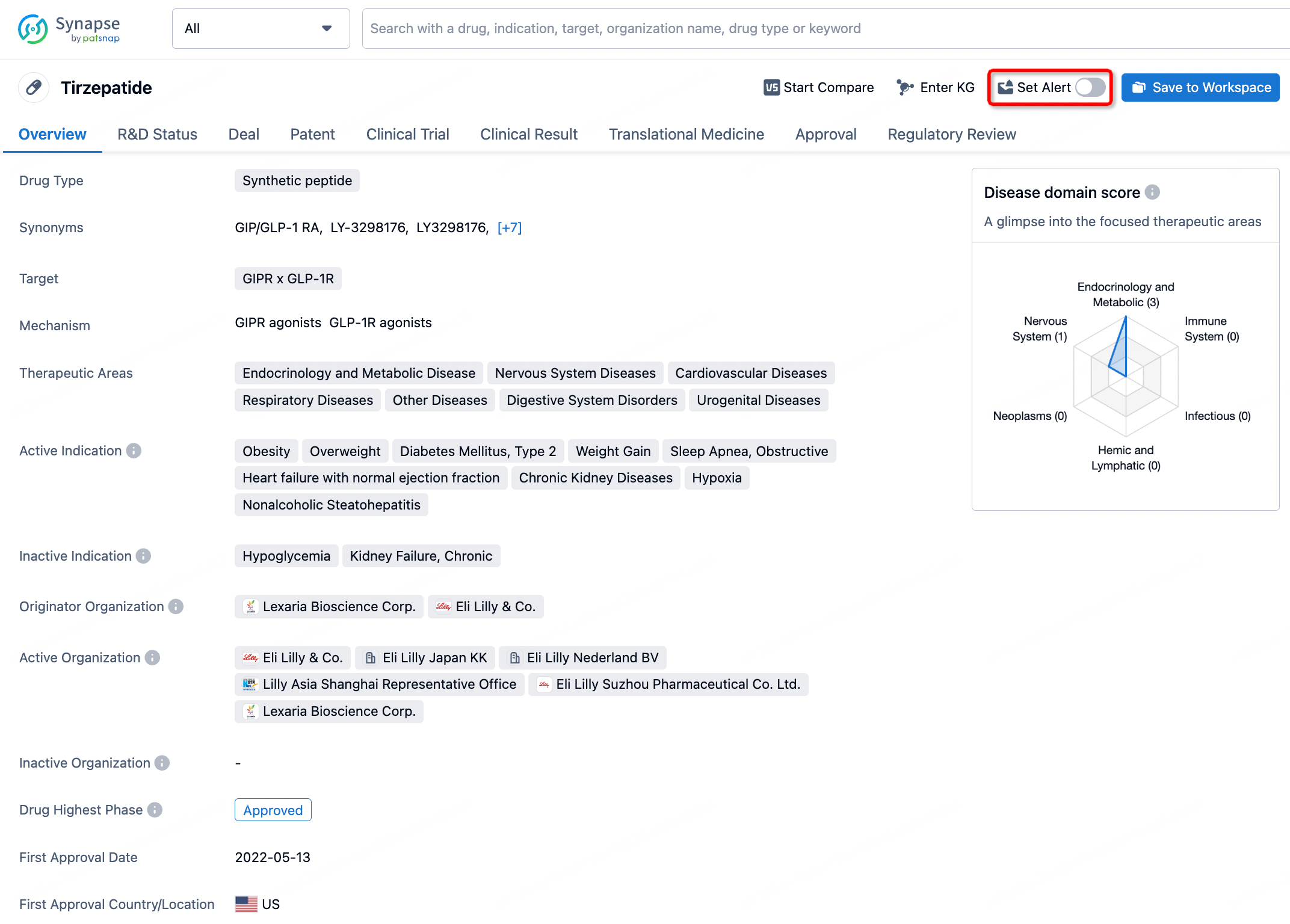
In the Synapse database, you can stay updated on the latest research and development advances of all drugs. This service is accessible anytime and anywhere, with updates available daily or weekly. Use the "Set Alert" function to stay informed. Click on the image below to embark on a brand new journey of drug discovery!


AI Agents Built for Biopharma Breakthroughs
Accelerate discovery. Empower decisions. Transform outcomes.
Get started for free today!
Accelerate Strategic R&D decision making with Synapse, PatSnap’s AI-powered Connected Innovation Intelligence Platform Built for Life Sciences Professionals.
Start your data trial now!
Synapse data is also accessible to external entities via APIs or data packages. Empower better decisions with the latest in pharmaceutical intelligence.