Request Demo
What is the mechanism of DW-166HC?
17 July 2024
DW-166HC is a compound that has garnered significant attention in the scientific community due to its potential therapeutic applications. To fully appreciate its mechanism, it's essential to delve into its chemical properties, biological interactions, and the pathways through which it exerts its effects.
DW-166HC is classified as a small molecule inhibitor, which means it interacts with specific proteins to inhibit their activity. Its primary target appears to be protein kinases, enzymes that play a critical role in the regulation of cellular activities such as growth, differentiation, and apoptosis. By inhibiting these kinases, DW-166HC can modulate signaling pathways that are often dysregulated in various diseases, including cancer.
One of the key mechanisms by which DW-166HC functions is through the inhibition of the PI3K/Akt/mTOR pathway. This pathway is crucial for cell survival and proliferation. In many cancer cells, this pathway is overactive, leading to unchecked growth and resistance to apoptosis. DW-166HC binds to the ATP-binding pocket of PI3K, preventing its activation. This blockade subsequently inhibits the phosphorylation and activation of downstream targets, including Akt and mTOR, thereby stifling cell growth and promoting apoptotic processes.
Another significant aspect of DW-166HC's mechanism is its ability to induce oxidative stress within cancer cells. By generating reactive oxygen species (ROS), it disrupts the delicate redox balance within these cells. Normal cells can typically manage ROS levels through various antioxidant mechanisms. However, cancer cells, which already experience higher baseline levels of oxidative stress, are less capable of counteracting this additional ROS burden. This oxidative stress can damage cellular components, including lipids, proteins, and DNA, leading to cell death.
In addition to its effects on intracellular signaling and oxidative stress, DW-166HC has been found to interfere with the cell cycle. Specifically, it induces cell cycle arrest at the G2/M phase. This phase is critical for cell division, and its disruption prevents the proliferation of cancer cells. The arrest is mediated through the upregulation of cyclin-dependent kinase inhibitors such as p21 and p27, which are crucial regulators of cell cycle progression.
Furthermore, DW-166HC exhibits anti-angiogenic properties. Angiogenesis, the formation of new blood vessels, is a process that tumors exploit to secure a supply of nutrients and oxygen, facilitating their growth and metastasis. DW-166HC inhibits the activity of vascular endothelial growth factor (VEGF), a key protein that promotes angiogenesis. By blocking VEGF signaling, DW-166HC can reduce the blood supply to tumors, thereby inhibiting their growth and potential spread.
It's also important to consider the pharmacokinetics of DW-166HC, which refers to how the compound is absorbed, distributed, metabolized, and excreted in the body. DW-166HC is designed to have a favorable pharmacokinetic profile, with good oral bioavailability and the ability to penetrate tissues effectively. This ensures that it reaches sufficient concentrations at the target site to exert its therapeutic effects.
In summary, DW-166HC is a multifaceted inhibitor with a complex mechanism of action that targets critical pathways involved in cancer cell survival and proliferation. Its ability to inhibit the PI3K/Akt/mTOR pathway, induce oxidative stress, disrupt the cell cycle, and exhibit anti-angiogenic properties makes it a promising candidate for cancer therapy. Ongoing research and clinical trials will continue to elucidate its full potential and optimize its use in the treatment of various cancers.
DW-166HC is classified as a small molecule inhibitor, which means it interacts with specific proteins to inhibit their activity. Its primary target appears to be protein kinases, enzymes that play a critical role in the regulation of cellular activities such as growth, differentiation, and apoptosis. By inhibiting these kinases, DW-166HC can modulate signaling pathways that are often dysregulated in various diseases, including cancer.
One of the key mechanisms by which DW-166HC functions is through the inhibition of the PI3K/Akt/mTOR pathway. This pathway is crucial for cell survival and proliferation. In many cancer cells, this pathway is overactive, leading to unchecked growth and resistance to apoptosis. DW-166HC binds to the ATP-binding pocket of PI3K, preventing its activation. This blockade subsequently inhibits the phosphorylation and activation of downstream targets, including Akt and mTOR, thereby stifling cell growth and promoting apoptotic processes.
Another significant aspect of DW-166HC's mechanism is its ability to induce oxidative stress within cancer cells. By generating reactive oxygen species (ROS), it disrupts the delicate redox balance within these cells. Normal cells can typically manage ROS levels through various antioxidant mechanisms. However, cancer cells, which already experience higher baseline levels of oxidative stress, are less capable of counteracting this additional ROS burden. This oxidative stress can damage cellular components, including lipids, proteins, and DNA, leading to cell death.
In addition to its effects on intracellular signaling and oxidative stress, DW-166HC has been found to interfere with the cell cycle. Specifically, it induces cell cycle arrest at the G2/M phase. This phase is critical for cell division, and its disruption prevents the proliferation of cancer cells. The arrest is mediated through the upregulation of cyclin-dependent kinase inhibitors such as p21 and p27, which are crucial regulators of cell cycle progression.
Furthermore, DW-166HC exhibits anti-angiogenic properties. Angiogenesis, the formation of new blood vessels, is a process that tumors exploit to secure a supply of nutrients and oxygen, facilitating their growth and metastasis. DW-166HC inhibits the activity of vascular endothelial growth factor (VEGF), a key protein that promotes angiogenesis. By blocking VEGF signaling, DW-166HC can reduce the blood supply to tumors, thereby inhibiting their growth and potential spread.
It's also important to consider the pharmacokinetics of DW-166HC, which refers to how the compound is absorbed, distributed, metabolized, and excreted in the body. DW-166HC is designed to have a favorable pharmacokinetic profile, with good oral bioavailability and the ability to penetrate tissues effectively. This ensures that it reaches sufficient concentrations at the target site to exert its therapeutic effects.
In summary, DW-166HC is a multifaceted inhibitor with a complex mechanism of action that targets critical pathways involved in cancer cell survival and proliferation. Its ability to inhibit the PI3K/Akt/mTOR pathway, induce oxidative stress, disrupt the cell cycle, and exhibit anti-angiogenic properties makes it a promising candidate for cancer therapy. Ongoing research and clinical trials will continue to elucidate its full potential and optimize its use in the treatment of various cancers.
How to obtain the latest development progress of all drugs?
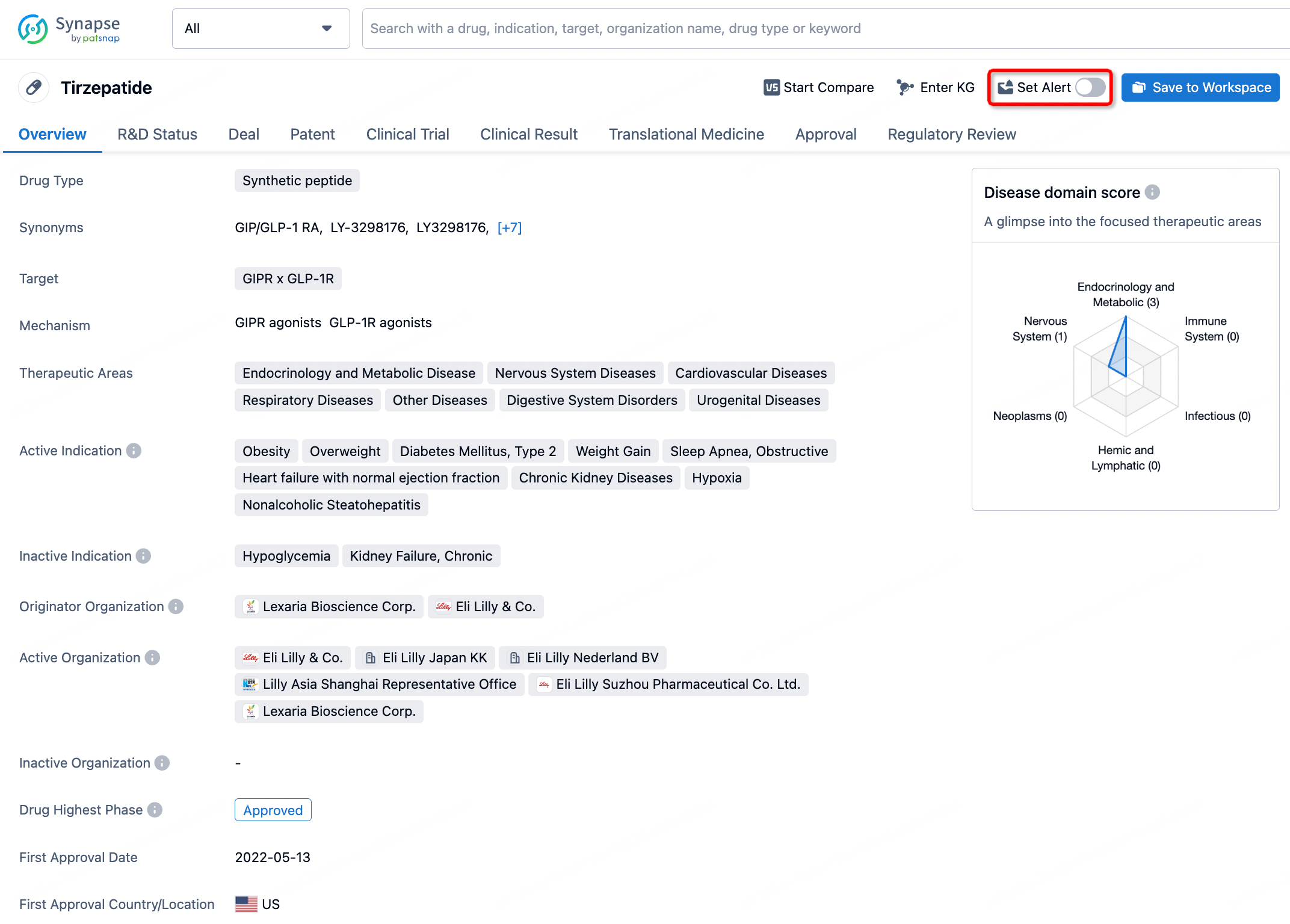
In the Synapse database, you can stay updated on the latest research and development advances of all drugs. This service is accessible anytime and anywhere, with updates available daily or weekly. Use the "Set Alert" function to stay informed. Click on the image below to embark on a brand new journey of drug discovery!


AI Agents Built for Biopharma Breakthroughs
Accelerate discovery. Empower decisions. Transform outcomes.
Get started for free today!
Accelerate Strategic R&D decision making with Synapse, PatSnap’s AI-powered Connected Innovation Intelligence Platform Built for Life Sciences Professionals.
Start your data trial now!
Synapse data is also accessible to external entities via APIs or data packages. Empower better decisions with the latest in pharmaceutical intelligence.