Request Demo
What is the mechanism of Elemene?
17 July 2024
Elemene is a collective term for a mixture of natural terpenes, which are primarily extracted from the plant Curcuma wenyujin. These compounds, predominantly β-elemene, have gained considerable attention in the medical field for their promising therapeutic properties, particularly antitumor activities. To understand the mechanism of elemene, it is essential to delve into various biological pathways and cellular processes that this compound influences.
Elemene exerts its anticancer effects through multiple mechanisms, including the inhibition of cell proliferation, induction of apoptosis, cell cycle arrest, and the inhibition of angiogenesis and metastasis.
Firstly, one of the primary mechanisms by which elemene inhibits cancer cell proliferation is through the induction of apoptosis. Apoptosis, or programmed cell death, is a crucial process that allows the body to eliminate dysfunctional cells. Elemene has been shown to upregulate pro-apoptotic proteins such as Bax and downregulate anti-apoptotic proteins like Bcl-2. This alteration in the balance of pro- and anti-apoptotic proteins leads to the activation of caspases, which are enzymes that play a vital role in the execution phase of cell apoptosis. These caspases trigger the cleavage of specific substrates within the cell, leading to apoptotic cell death.
In addition to apoptosis, elemene induces cell cycle arrest, particularly at the G2/M phase. The cell cycle is a series of events that cells go through as they grow and divide. By arresting the cell cycle at the G2/M phase, elemene prevents cells from undergoing mitosis, thereby hindering the proliferation of cancer cells. This blockage is often associated with the modulation of cyclins and cyclin-dependent kinases (CDKs), which are critical regulators of cell cycle progression.
Furthermore, elemene has been found to inhibit angiogenesis, the process by which new blood vessels form from pre-existing vessels. Angiogenesis is fundamental for tumor growth and metastasis as it supplies necessary nutrients and oxygen to the tumor. Elemene achieves this inhibition by downregulating vascular endothelial growth factor (VEGF) and its receptors, which are key players in the angiogenesis pathway. By curbing angiogenesis, elemene starves the tumor cells, leading to reduced tumor growth and spread.
Another crucial mechanism is the inhibition of metastasis, the process by which cancer cells spread from the primary site to distant organs. Elemene interferes with various signaling pathways involved in metastasis, including the epithelial-mesenchymal transition (EMT) process. EMT is a biological process that allows epithelial cells, which are normally stationary, to acquire mesenchymal properties and become motile. By inhibiting EMT, elemene reduces the invasive and metastatic potential of cancer cells.
Additionally, elemene has been reported to modulate the immune response, enhancing the body's ability to fight cancer. It can stimulate the activity of natural killer (NK) cells and cytotoxic T lymphocytes, both of which are essential components of the immune system’s response to tumors.
In summary, elemene’s anticancer mechanisms are multifaceted, involving the induction of apoptosis, cell cycle arrest, inhibition of angiogenesis and metastasis, and modulation of the immune response. These combined actions contribute to its potential as a therapeutic agent in cancer treatment. Continued research into the specific molecular pathways and interactions influenced by elemene will further elucidate its mechanisms and may lead to the development of more effective cancer therapies.
Elemene exerts its anticancer effects through multiple mechanisms, including the inhibition of cell proliferation, induction of apoptosis, cell cycle arrest, and the inhibition of angiogenesis and metastasis.
Firstly, one of the primary mechanisms by which elemene inhibits cancer cell proliferation is through the induction of apoptosis. Apoptosis, or programmed cell death, is a crucial process that allows the body to eliminate dysfunctional cells. Elemene has been shown to upregulate pro-apoptotic proteins such as Bax and downregulate anti-apoptotic proteins like Bcl-2. This alteration in the balance of pro- and anti-apoptotic proteins leads to the activation of caspases, which are enzymes that play a vital role in the execution phase of cell apoptosis. These caspases trigger the cleavage of specific substrates within the cell, leading to apoptotic cell death.
In addition to apoptosis, elemene induces cell cycle arrest, particularly at the G2/M phase. The cell cycle is a series of events that cells go through as they grow and divide. By arresting the cell cycle at the G2/M phase, elemene prevents cells from undergoing mitosis, thereby hindering the proliferation of cancer cells. This blockage is often associated with the modulation of cyclins and cyclin-dependent kinases (CDKs), which are critical regulators of cell cycle progression.
Furthermore, elemene has been found to inhibit angiogenesis, the process by which new blood vessels form from pre-existing vessels. Angiogenesis is fundamental for tumor growth and metastasis as it supplies necessary nutrients and oxygen to the tumor. Elemene achieves this inhibition by downregulating vascular endothelial growth factor (VEGF) and its receptors, which are key players in the angiogenesis pathway. By curbing angiogenesis, elemene starves the tumor cells, leading to reduced tumor growth and spread.
Another crucial mechanism is the inhibition of metastasis, the process by which cancer cells spread from the primary site to distant organs. Elemene interferes with various signaling pathways involved in metastasis, including the epithelial-mesenchymal transition (EMT) process. EMT is a biological process that allows epithelial cells, which are normally stationary, to acquire mesenchymal properties and become motile. By inhibiting EMT, elemene reduces the invasive and metastatic potential of cancer cells.
Additionally, elemene has been reported to modulate the immune response, enhancing the body's ability to fight cancer. It can stimulate the activity of natural killer (NK) cells and cytotoxic T lymphocytes, both of which are essential components of the immune system’s response to tumors.
In summary, elemene’s anticancer mechanisms are multifaceted, involving the induction of apoptosis, cell cycle arrest, inhibition of angiogenesis and metastasis, and modulation of the immune response. These combined actions contribute to its potential as a therapeutic agent in cancer treatment. Continued research into the specific molecular pathways and interactions influenced by elemene will further elucidate its mechanisms and may lead to the development of more effective cancer therapies.
How to obtain the latest development progress of all drugs?
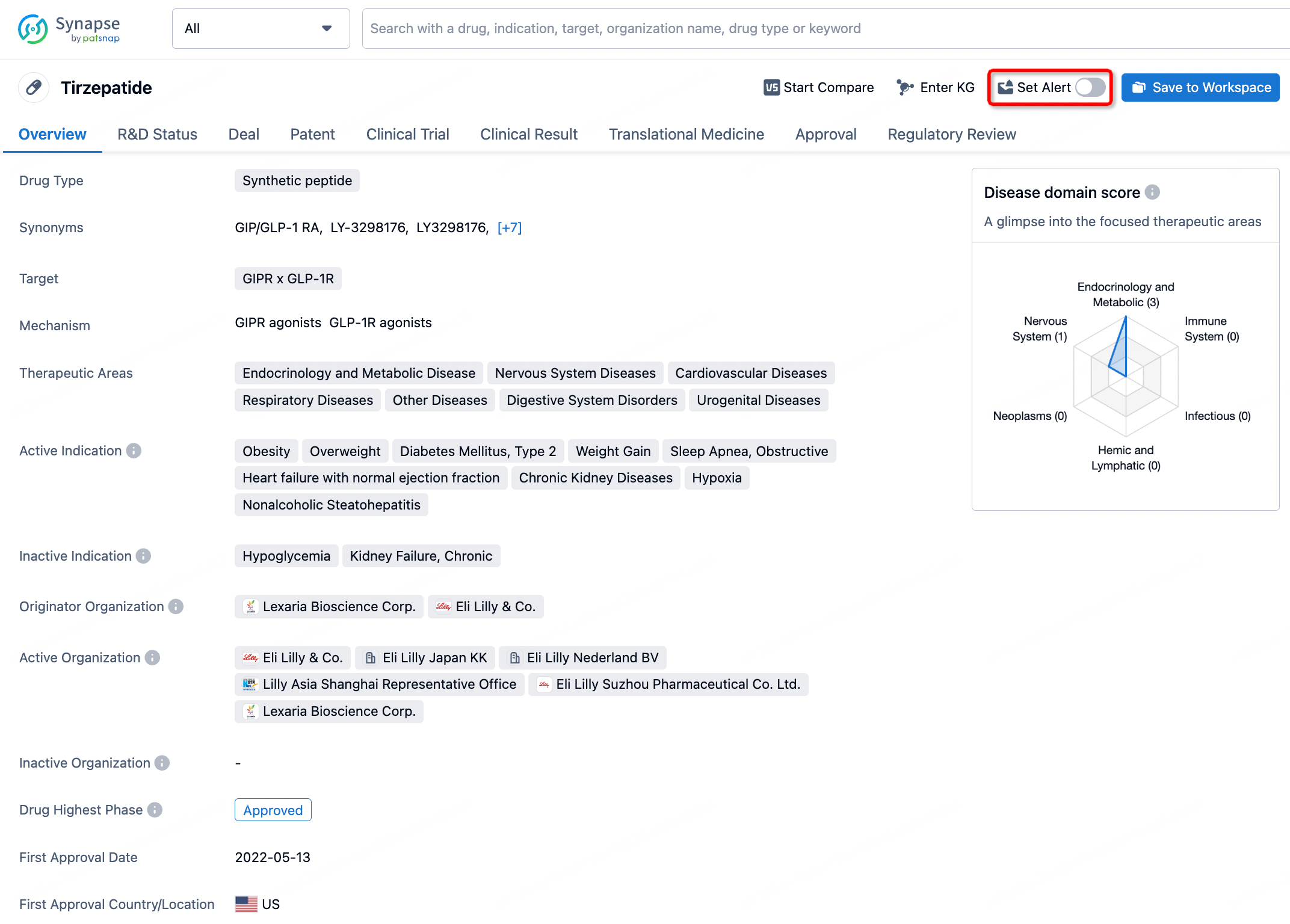
In the Synapse database, you can stay updated on the latest research and development advances of all drugs. This service is accessible anytime and anywhere, with updates available daily or weekly. Use the "Set Alert" function to stay informed. Click on the image below to embark on a brand new journey of drug discovery!


AI Agents Built for Biopharma Breakthroughs
Accelerate discovery. Empower decisions. Transform outcomes.
Get started for free today!
Accelerate Strategic R&D decision making with Synapse, PatSnap’s AI-powered Connected Innovation Intelligence Platform Built for Life Sciences Professionals.
Start your data trial now!
Synapse data is also accessible to external entities via APIs or data packages. Empower better decisions with the latest in pharmaceutical intelligence.