Request Demo
What is the mechanism of Guanoxan Sulfate?
18 July 2024
Guanoxan sulfate is a pharmacological compound that has garnered interest in the field of medicinal chemistry due to its unique mechanism of action. This compound is primarily recognized for its antihypertensive properties, making it a valuable agent in the treatment of high blood pressure. Understanding the mechanism of Guanoxan sulfate involves exploring its biochemical interactions, physiological effects, and therapeutic efficacy.
Guanoxan sulfate functions as a sympatholytic agent, which means it works by inhibiting the sympathetic nervous system. The sympathetic nervous system is responsible for the body's 'fight or flight' response and plays a significant role in regulating cardiovascular functions, such as heart rate and blood pressure. By dampening the activity of this system, Guanoxan sulfate can effectively reduce blood pressure.
At the molecular level, Guanoxan sulfate acts by interfering with the release of norepinephrine, a key neurotransmitter in the sympathetic nervous system. Norepinephrine binds to adrenergic receptors on the surface of target cells, leading to constriction of blood vessels and an increase in heart rate. Guanoxan sulfate inhibits the release of norepinephrine from nerve endings, thereby preventing these effects. The reduced availability of norepinephrine results in vasodilation, or the widening of blood vessels, which subsequently lowers blood pressure.
Another important aspect of Guanoxan sulfate's mechanism is its interaction with the central nervous system. The compound appears to exert a central inhibitory effect on sympathetic outflow from the brain. This central action further contributes to the reduction of peripheral resistance and blood pressure. By modulating both peripheral and central components of the sympathetic nervous system, Guanoxan sulfate provides a comprehensive approach to managing hypertension.
The therapeutic efficacy of Guanoxan sulfate has been demonstrated in clinical settings where patients with hypertension showed significant reductions in blood pressure upon administration of the drug. However, like many pharmacological agents, Guanoxan sulfate is not without its side effects. Common adverse effects include dizziness, fatigue, and dry mouth, which are typically associated with its sympatholytic activity. Careful monitoring and dosage adjustments are necessary to minimize these side effects while achieving the desired antihypertensive effect.
In summary, Guanoxan sulfate operates through a multifaceted mechanism that involves inhibiting norepinephrine release and modulating central sympathetic outflow. These actions collectively lead to vasodilation and a subsequent decrease in blood pressure, making Guanoxan sulfate an effective antihypertensive agent. Understanding these mechanisms is crucial for healthcare providers to optimize treatment regimens and manage potential side effects in patients with hypertension.
Guanoxan sulfate functions as a sympatholytic agent, which means it works by inhibiting the sympathetic nervous system. The sympathetic nervous system is responsible for the body's 'fight or flight' response and plays a significant role in regulating cardiovascular functions, such as heart rate and blood pressure. By dampening the activity of this system, Guanoxan sulfate can effectively reduce blood pressure.
At the molecular level, Guanoxan sulfate acts by interfering with the release of norepinephrine, a key neurotransmitter in the sympathetic nervous system. Norepinephrine binds to adrenergic receptors on the surface of target cells, leading to constriction of blood vessels and an increase in heart rate. Guanoxan sulfate inhibits the release of norepinephrine from nerve endings, thereby preventing these effects. The reduced availability of norepinephrine results in vasodilation, or the widening of blood vessels, which subsequently lowers blood pressure.
Another important aspect of Guanoxan sulfate's mechanism is its interaction with the central nervous system. The compound appears to exert a central inhibitory effect on sympathetic outflow from the brain. This central action further contributes to the reduction of peripheral resistance and blood pressure. By modulating both peripheral and central components of the sympathetic nervous system, Guanoxan sulfate provides a comprehensive approach to managing hypertension.
The therapeutic efficacy of Guanoxan sulfate has been demonstrated in clinical settings where patients with hypertension showed significant reductions in blood pressure upon administration of the drug. However, like many pharmacological agents, Guanoxan sulfate is not without its side effects. Common adverse effects include dizziness, fatigue, and dry mouth, which are typically associated with its sympatholytic activity. Careful monitoring and dosage adjustments are necessary to minimize these side effects while achieving the desired antihypertensive effect.
In summary, Guanoxan sulfate operates through a multifaceted mechanism that involves inhibiting norepinephrine release and modulating central sympathetic outflow. These actions collectively lead to vasodilation and a subsequent decrease in blood pressure, making Guanoxan sulfate an effective antihypertensive agent. Understanding these mechanisms is crucial for healthcare providers to optimize treatment regimens and manage potential side effects in patients with hypertension.
How to obtain the latest development progress of all drugs?
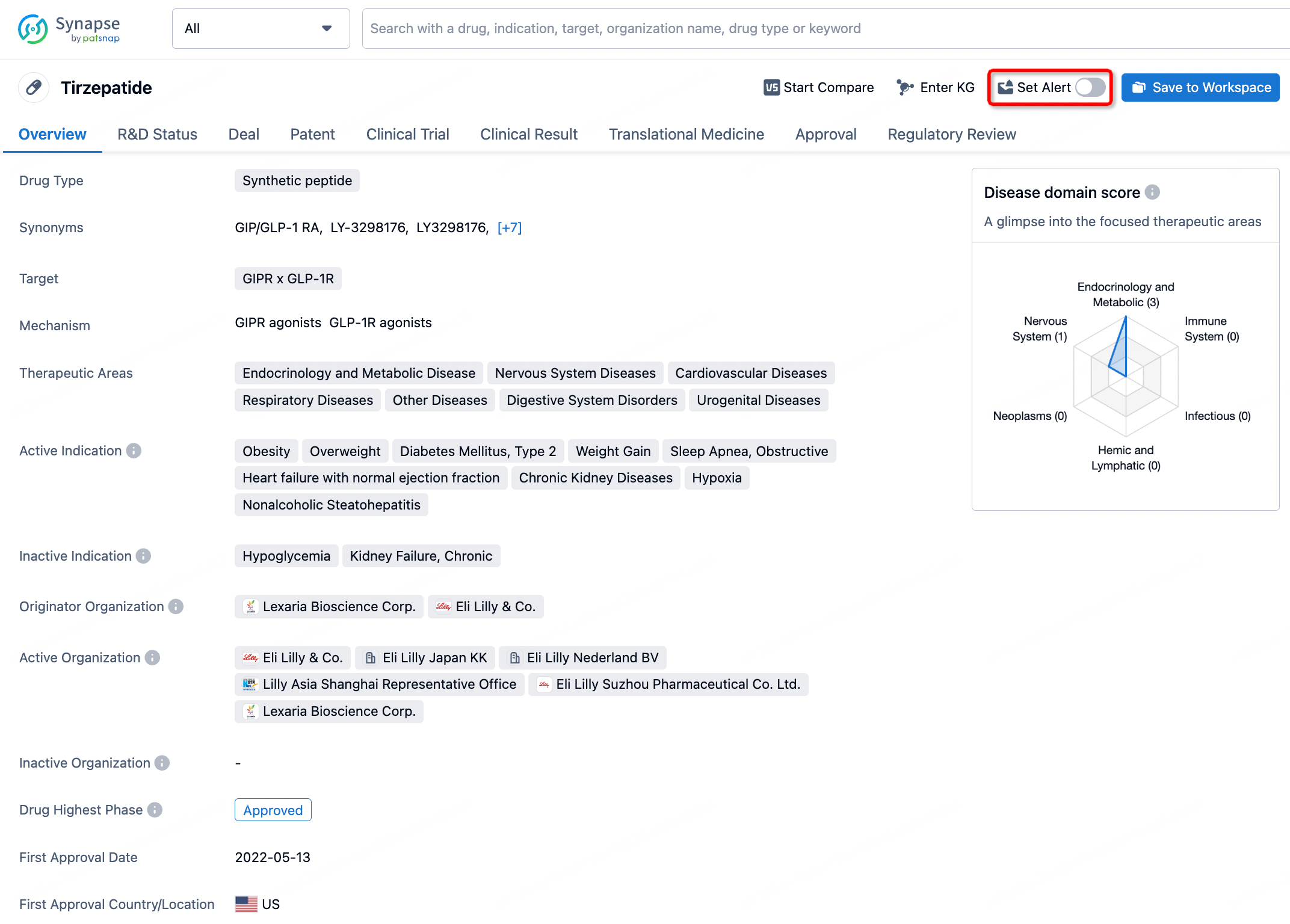
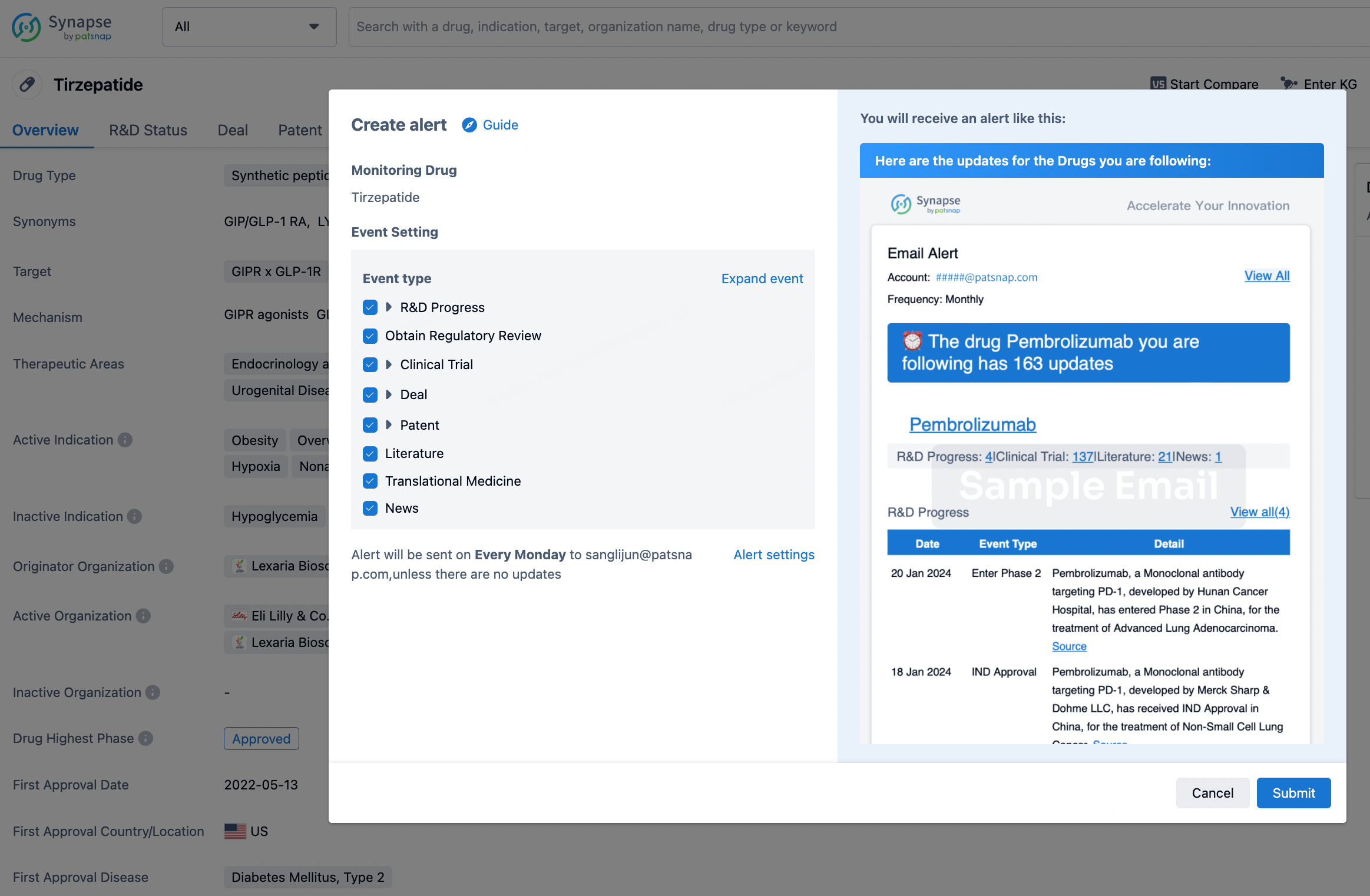
In the Synapse database, you can stay updated on the latest research and development advances of all drugs. This service is accessible anytime and anywhere, with updates available daily or weekly. Use the "Set Alert" function to stay informed. Click on the image below to embark on a brand new journey of drug discovery!
AI Agents Built for Biopharma Breakthroughs
Accelerate discovery. Empower decisions. Transform outcomes.
Get started for free today!
Accelerate Strategic R&D decision making with Synapse, PatSnap’s AI-powered Connected Innovation Intelligence Platform Built for Life Sciences Professionals.
Start your data trial now!
Synapse data is also accessible to external entities via APIs or data packages. Empower better decisions with the latest in pharmaceutical intelligence.