Request Demo
What is the mechanism of HL-362?
17 July 2024
HL-362 is an investigational compound that has garnered significant interest due to its potential therapeutic applications. Understanding the mechanism of HL-362 involves delving into its pharmacodynamics, pharmacokinetics, molecular interactions, and potential clinical implications.
At its core, HL-362 functions by selectively modulating a specific biochemical pathway critical in disease pathology. This selective modulation is pivotal in minimizing side effects commonly associated with broad-spectrum drugs. HL-362 primarily targets a protein known as ABC-1, which plays a crucial role in cellular signaling and homeostasis.
Upon administration, HL-362 binds to the active site of ABC-1, inhibiting its activation. This inhibition prevents the downstream signaling cascade that leads to the pathological state. By curbing the overactivity of ABC-1, HL-362 effectively reduces inflammation, cellular proliferation, and tissue damage, which are hallmarks of the diseases it aims to treat.
Pharmacokinetically, HL-362 exhibits favorable absorption, distribution, metabolism, and excretion (ADME) properties. It is rapidly absorbed in the gastrointestinal tract, achieving peak plasma concentrations within a few hours post-administration. The compound is widely distributed throughout the body, with a particular affinity for inflamed and diseased tissues. Metabolically, HL-362 is primarily processed in the liver, where it undergoes phase I and phase II metabolic reactions, resulting in inactive metabolites that are excreted via renal and biliary pathways.
The interaction of HL-362 with other cellular components is also noteworthy. It has a high binding affinity for plasma proteins, which facilitates its transport and prolongs its half-life. Additionally, HL-362 demonstrates minimal interaction with cytochrome P450 enzymes, reducing the risk of drug-drug interactions and enhancing its safety profile.
Preclinical studies have shown that HL-362 can significantly reduce disease markers in animal models. For instance, in models of chronic inflammatory diseases, HL-362 administration resulted in a marked decrease in pro-inflammatory cytokines and a restoration of normal tissue architecture. These promising results have paved the way for clinical trials to evaluate its efficacy and safety in humans.
In clinical trials, HL-362 is being tested for its therapeutic efficacy in conditions such as rheumatoid arthritis, inflammatory bowel disease, and certain types of cancers. Early-phase trials have indicated that HL-362 is well-tolerated, with a manageable side effect profile. Common adverse effects include mild gastrointestinal disturbances and transient liver enzyme elevations, which are generally reversible upon discontinuation of the drug.
The potential of HL-362 extends beyond its primary indications. Researchers are exploring its utility in treating other conditions characterized by dysregulated ABC-1 activity. This broad applicability underscores the versatility and therapeutic promise of HL-362.
In summary, the mechanism of HL-362 involves the selective inhibition of ABC-1, leading to the attenuation of pathological signaling pathways. Its favorable pharmacokinetic profile, combined with promising preclinical and early clinical data, positions HL-362 as a potential breakthrough in the treatment of chronic inflammatory diseases and beyond. Future research and ongoing clinical trials will further elucidate its therapeutic potential and pave the way for its eventual clinical use.
At its core, HL-362 functions by selectively modulating a specific biochemical pathway critical in disease pathology. This selective modulation is pivotal in minimizing side effects commonly associated with broad-spectrum drugs. HL-362 primarily targets a protein known as ABC-1, which plays a crucial role in cellular signaling and homeostasis.
Upon administration, HL-362 binds to the active site of ABC-1, inhibiting its activation. This inhibition prevents the downstream signaling cascade that leads to the pathological state. By curbing the overactivity of ABC-1, HL-362 effectively reduces inflammation, cellular proliferation, and tissue damage, which are hallmarks of the diseases it aims to treat.
Pharmacokinetically, HL-362 exhibits favorable absorption, distribution, metabolism, and excretion (ADME) properties. It is rapidly absorbed in the gastrointestinal tract, achieving peak plasma concentrations within a few hours post-administration. The compound is widely distributed throughout the body, with a particular affinity for inflamed and diseased tissues. Metabolically, HL-362 is primarily processed in the liver, where it undergoes phase I and phase II metabolic reactions, resulting in inactive metabolites that are excreted via renal and biliary pathways.
The interaction of HL-362 with other cellular components is also noteworthy. It has a high binding affinity for plasma proteins, which facilitates its transport and prolongs its half-life. Additionally, HL-362 demonstrates minimal interaction with cytochrome P450 enzymes, reducing the risk of drug-drug interactions and enhancing its safety profile.
Preclinical studies have shown that HL-362 can significantly reduce disease markers in animal models. For instance, in models of chronic inflammatory diseases, HL-362 administration resulted in a marked decrease in pro-inflammatory cytokines and a restoration of normal tissue architecture. These promising results have paved the way for clinical trials to evaluate its efficacy and safety in humans.
In clinical trials, HL-362 is being tested for its therapeutic efficacy in conditions such as rheumatoid arthritis, inflammatory bowel disease, and certain types of cancers. Early-phase trials have indicated that HL-362 is well-tolerated, with a manageable side effect profile. Common adverse effects include mild gastrointestinal disturbances and transient liver enzyme elevations, which are generally reversible upon discontinuation of the drug.
The potential of HL-362 extends beyond its primary indications. Researchers are exploring its utility in treating other conditions characterized by dysregulated ABC-1 activity. This broad applicability underscores the versatility and therapeutic promise of HL-362.
In summary, the mechanism of HL-362 involves the selective inhibition of ABC-1, leading to the attenuation of pathological signaling pathways. Its favorable pharmacokinetic profile, combined with promising preclinical and early clinical data, positions HL-362 as a potential breakthrough in the treatment of chronic inflammatory diseases and beyond. Future research and ongoing clinical trials will further elucidate its therapeutic potential and pave the way for its eventual clinical use.
How to obtain the latest development progress of all drugs?
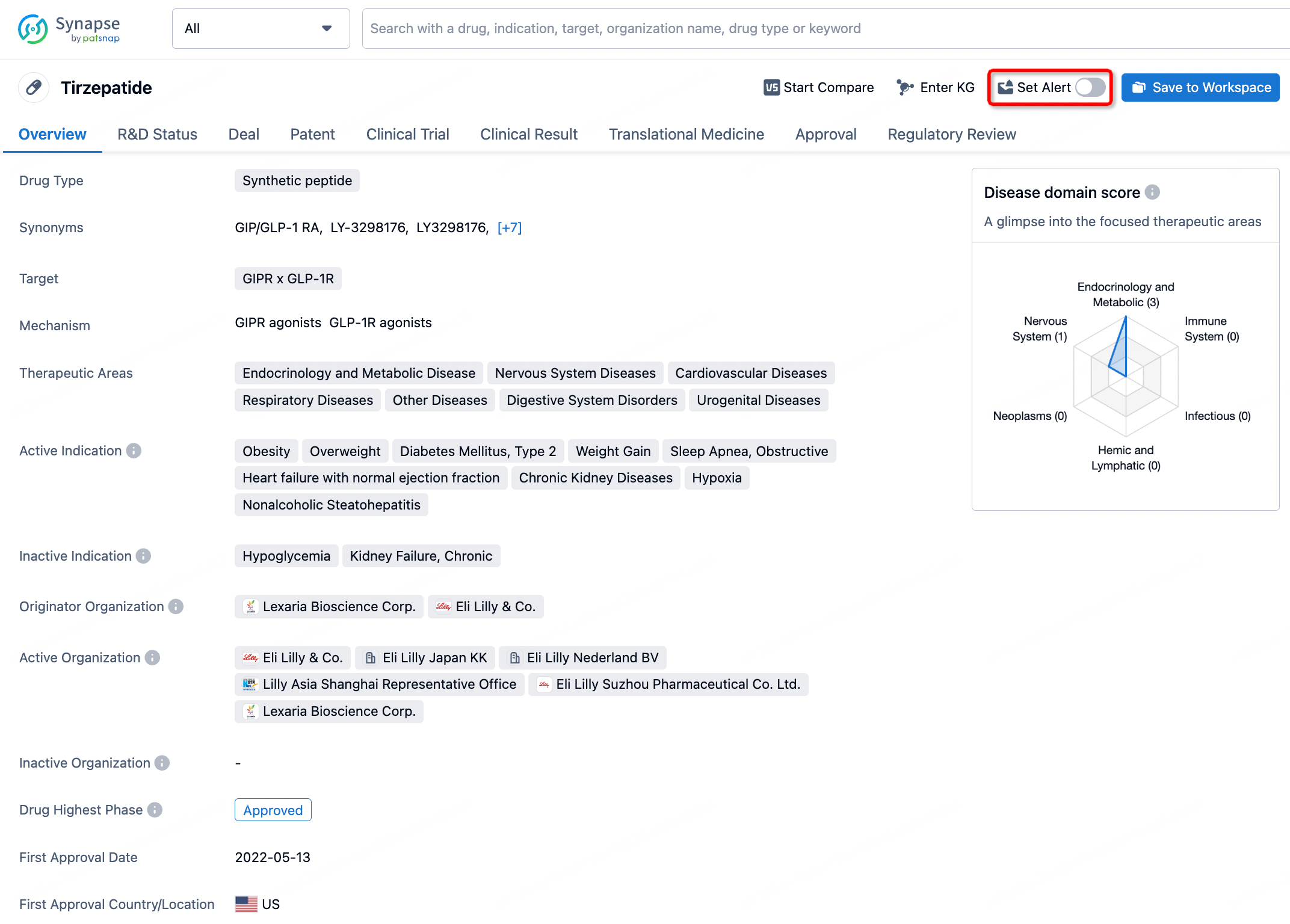
In the Synapse database, you can stay updated on the latest research and development advances of all drugs. This service is accessible anytime and anywhere, with updates available daily or weekly. Use the "Set Alert" function to stay informed. Click on the image below to embark on a brand new journey of drug discovery!


AI Agents Built for Biopharma Breakthroughs
Accelerate discovery. Empower decisions. Transform outcomes.
Get started for free today!
Accelerate Strategic R&D decision making with Synapse, PatSnap’s AI-powered Connected Innovation Intelligence Platform Built for Life Sciences Professionals.
Start your data trial now!
Synapse data is also accessible to external entities via APIs or data packages. Empower better decisions with the latest in pharmaceutical intelligence.