Request Demo
What is the mechanism of Ibopamine?
18 July 2024
Ibopamine is a synthetic catecholamine and a prodrug that has been investigated for its potential therapeutic uses, particularly in the treatment of heart failure and glaucoma. Understanding the mechanism of ibopamine involves delving into its pharmacological properties, metabolism, and physiological effects.
Ibopamine is an ester prodrug of N-methyldopamine (epinine). When administered, ibopamine is rapidly hydrolyzed by esterases in the gastrointestinal tract and liver to its active form, epinine. This active metabolite is structurally similar to dopamine, which allows it to interact with dopamine receptors in the body.
Upon conversion to epinine, ibopamine primarily exerts its effects by stimulating dopamine D1 and D2 receptors. Activation of D1 receptors, which are located in the renal vasculature, leads to vasodilation and increased renal blood flow. This action promotes diuresis and natriuresis, helping to reduce fluid overload in conditions such as heart failure. The diuretic effect is particularly beneficial as it can alleviate symptoms like edema and congestion without significantly affecting electrolyte balance.
Additionally, ibopamine's activation of D2 receptors, found presynaptically in the nervous system, inhibits the release of norepinephrine, a neurotransmitter that typically causes vasoconstriction and increased cardiac workload. By reducing norepinephrine release, ibopamine indirectly contributes to decreased peripheral vascular resistance and afterload, which can improve cardiac output and efficiency in heart failure patients.
In the context of ophthalmology, ibopamine has been studied for its potential to reduce intraocular pressure (IOP) in the treatment of glaucoma. The exact mechanism by which ibopamine affects IOP is not fully understood, but it is believed that dopamine receptor activation in the eye enhances aqueous humor outflow, thereby lowering IOP.
Ibopamine's effects on the cardiovascular system also include mild positive inotropic effects, meaning it can increase the force of cardiac contractions. This is particularly useful in heart failure management as it helps to improve the pumping capability of the heart.
However, the clinical use of ibopamine has been limited due to its side effect profile and the availability of other more effective treatments. Common side effects reported with ibopamine include headache, palpitations, and gastrointestinal disturbances. Additionally, its use has been associated with an increased risk of arrhythmias in certain patient populations.
In summary, ibopamine functions through its active metabolite, epinine, by stimulating dopamine D1 and D2 receptors. This results in renal vasodilation, diuresis, reduced norepinephrine release, and potential lowering of intraocular pressure. While its mechanism offers promising therapeutic effects for conditions like heart failure and glaucoma, its clinical application has been curtailed due to side effects and the advent of more advanced treatments. Understanding these mechanisms provides insight into the potential and limitations of ibopamine in medical practice.
Ibopamine is an ester prodrug of N-methyldopamine (epinine). When administered, ibopamine is rapidly hydrolyzed by esterases in the gastrointestinal tract and liver to its active form, epinine. This active metabolite is structurally similar to dopamine, which allows it to interact with dopamine receptors in the body.
Upon conversion to epinine, ibopamine primarily exerts its effects by stimulating dopamine D1 and D2 receptors. Activation of D1 receptors, which are located in the renal vasculature, leads to vasodilation and increased renal blood flow. This action promotes diuresis and natriuresis, helping to reduce fluid overload in conditions such as heart failure. The diuretic effect is particularly beneficial as it can alleviate symptoms like edema and congestion without significantly affecting electrolyte balance.
Additionally, ibopamine's activation of D2 receptors, found presynaptically in the nervous system, inhibits the release of norepinephrine, a neurotransmitter that typically causes vasoconstriction and increased cardiac workload. By reducing norepinephrine release, ibopamine indirectly contributes to decreased peripheral vascular resistance and afterload, which can improve cardiac output and efficiency in heart failure patients.
In the context of ophthalmology, ibopamine has been studied for its potential to reduce intraocular pressure (IOP) in the treatment of glaucoma. The exact mechanism by which ibopamine affects IOP is not fully understood, but it is believed that dopamine receptor activation in the eye enhances aqueous humor outflow, thereby lowering IOP.
Ibopamine's effects on the cardiovascular system also include mild positive inotropic effects, meaning it can increase the force of cardiac contractions. This is particularly useful in heart failure management as it helps to improve the pumping capability of the heart.
However, the clinical use of ibopamine has been limited due to its side effect profile and the availability of other more effective treatments. Common side effects reported with ibopamine include headache, palpitations, and gastrointestinal disturbances. Additionally, its use has been associated with an increased risk of arrhythmias in certain patient populations.
In summary, ibopamine functions through its active metabolite, epinine, by stimulating dopamine D1 and D2 receptors. This results in renal vasodilation, diuresis, reduced norepinephrine release, and potential lowering of intraocular pressure. While its mechanism offers promising therapeutic effects for conditions like heart failure and glaucoma, its clinical application has been curtailed due to side effects and the advent of more advanced treatments. Understanding these mechanisms provides insight into the potential and limitations of ibopamine in medical practice.
How to obtain the latest development progress of all drugs?
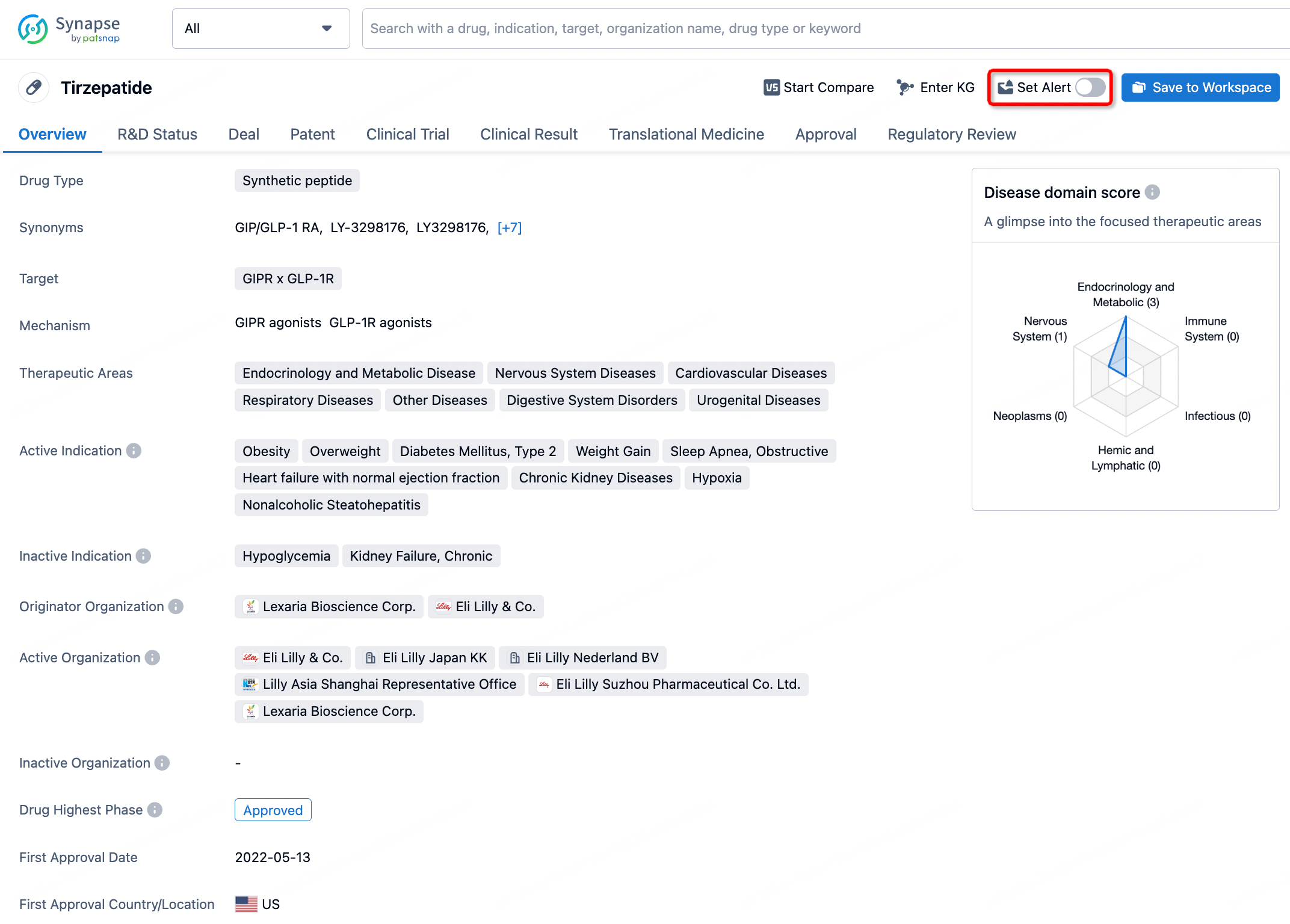
In the Synapse database, you can stay updated on the latest research and development advances of all drugs. This service is accessible anytime and anywhere, with updates available daily or weekly. Use the "Set Alert" function to stay informed. Click on the image below to embark on a brand new journey of drug discovery!

AI Agents Built for Biopharma Breakthroughs
Accelerate discovery. Empower decisions. Transform outcomes.
Get started for free today!
Accelerate Strategic R&D decision making with Synapse, PatSnap’s AI-powered Connected Innovation Intelligence Platform Built for Life Sciences Professionals.
Start your data trial now!
Synapse data is also accessible to external entities via APIs or data packages. Empower better decisions with the latest in pharmaceutical intelligence.