Request Demo
What is the mechanism of Irinotecan-eluting beads?
18 July 2024
Irinotecan-eluting beads are a sophisticated drug delivery system used primarily in the treatment of certain types of cancer, such as liver cancer. These beads provide a targeted approach to chemotherapy, aiming to maximize the therapeutic effects of the drug while minimizing systemic side effects. The mechanism of these beads involves several key components: drug loading, delivery to the tumor site, controlled release of irinotecan, and subsequent cytotoxic action on cancer cells.
The process begins with drug loading, where irinotecan, an antineoplastic agent, is incorporated into the beads. These beads are typically made of biocompatible materials such as polyvinyl alcohol (PVA) or other hydrophilic polymers that can efficiently absorb and retain the drug. The beads are engineered to have a high surface area and porosity, which facilitates the loading of a substantial amount of irinotecan into their matrix.
Once the beads are loaded with irinotecan, they are ready for administration. The beads are usually delivered through a minimally invasive procedure known as transarterial chemoembolization (TACE). During TACE, a catheter is inserted through the blood vessels and guided to the artery supplying the tumor. The irinotecan-eluting beads are then infused directly into the tumor's blood supply. This localized delivery ensures that a high concentration of the drug reaches the tumor site, thereby enhancing the efficacy of the treatment while sparing the rest of the body from high drug exposure.
Upon reaching the tumor site, the next crucial step is the controlled release of irinotecan. The beads are designed to release the drug over an extended period, ensuring a sustained therapeutic effect. The release mechanism is typically driven by the diffusion of irinotecan out of the bead matrix into the surrounding tumor tissue. The rate of drug release can be modulated by altering the composition and structure of the beads, allowing for customization based on the specific needs of the patient and the characteristics of the tumor.
The released irinotecan then exerts its cytotoxic action on the cancer cells. Irinotecan works by inhibiting topoisomerase I, an enzyme essential for DNA replication and transcription in rapidly dividing cells. By blocking this enzyme, irinotecan induces DNA damage and prevents cancer cells from multiplying. The localized high concentration of irinotecan ensures that the tumor cells are effectively targeted, leading to tumor shrinkage and, in many cases, improved patient outcomes.
In addition to direct cytotoxic effects, the beads also contribute to the therapeutic outcome through a process called embolization. As the beads lodge in the tumor vessels, they obstruct the blood flow, depriving the tumor of oxygen and nutrients. This ischemic effect further potentiates the anticancer activity of irinotecan, leading to enhanced tumor cell death.
Overall, the mechanism of irinotecan-eluting beads is a synergistic combination of targeted drug delivery, controlled release, and cytotoxic action, augmented by ischemic effects due to embolization. This innovative approach not only maximizes the antitumor efficacy of irinotecan but also minimizes the adverse effects commonly associated with systemic chemotherapy. As research and development in this field continue, irinotecan-eluting beads hold great promise for improving the standard of care for cancer patients worldwide.
The process begins with drug loading, where irinotecan, an antineoplastic agent, is incorporated into the beads. These beads are typically made of biocompatible materials such as polyvinyl alcohol (PVA) or other hydrophilic polymers that can efficiently absorb and retain the drug. The beads are engineered to have a high surface area and porosity, which facilitates the loading of a substantial amount of irinotecan into their matrix.
Once the beads are loaded with irinotecan, they are ready for administration. The beads are usually delivered through a minimally invasive procedure known as transarterial chemoembolization (TACE). During TACE, a catheter is inserted through the blood vessels and guided to the artery supplying the tumor. The irinotecan-eluting beads are then infused directly into the tumor's blood supply. This localized delivery ensures that a high concentration of the drug reaches the tumor site, thereby enhancing the efficacy of the treatment while sparing the rest of the body from high drug exposure.
Upon reaching the tumor site, the next crucial step is the controlled release of irinotecan. The beads are designed to release the drug over an extended period, ensuring a sustained therapeutic effect. The release mechanism is typically driven by the diffusion of irinotecan out of the bead matrix into the surrounding tumor tissue. The rate of drug release can be modulated by altering the composition and structure of the beads, allowing for customization based on the specific needs of the patient and the characteristics of the tumor.
The released irinotecan then exerts its cytotoxic action on the cancer cells. Irinotecan works by inhibiting topoisomerase I, an enzyme essential for DNA replication and transcription in rapidly dividing cells. By blocking this enzyme, irinotecan induces DNA damage and prevents cancer cells from multiplying. The localized high concentration of irinotecan ensures that the tumor cells are effectively targeted, leading to tumor shrinkage and, in many cases, improved patient outcomes.
In addition to direct cytotoxic effects, the beads also contribute to the therapeutic outcome through a process called embolization. As the beads lodge in the tumor vessels, they obstruct the blood flow, depriving the tumor of oxygen and nutrients. This ischemic effect further potentiates the anticancer activity of irinotecan, leading to enhanced tumor cell death.
Overall, the mechanism of irinotecan-eluting beads is a synergistic combination of targeted drug delivery, controlled release, and cytotoxic action, augmented by ischemic effects due to embolization. This innovative approach not only maximizes the antitumor efficacy of irinotecan but also minimizes the adverse effects commonly associated with systemic chemotherapy. As research and development in this field continue, irinotecan-eluting beads hold great promise for improving the standard of care for cancer patients worldwide.
How to obtain the latest development progress of all drugs?
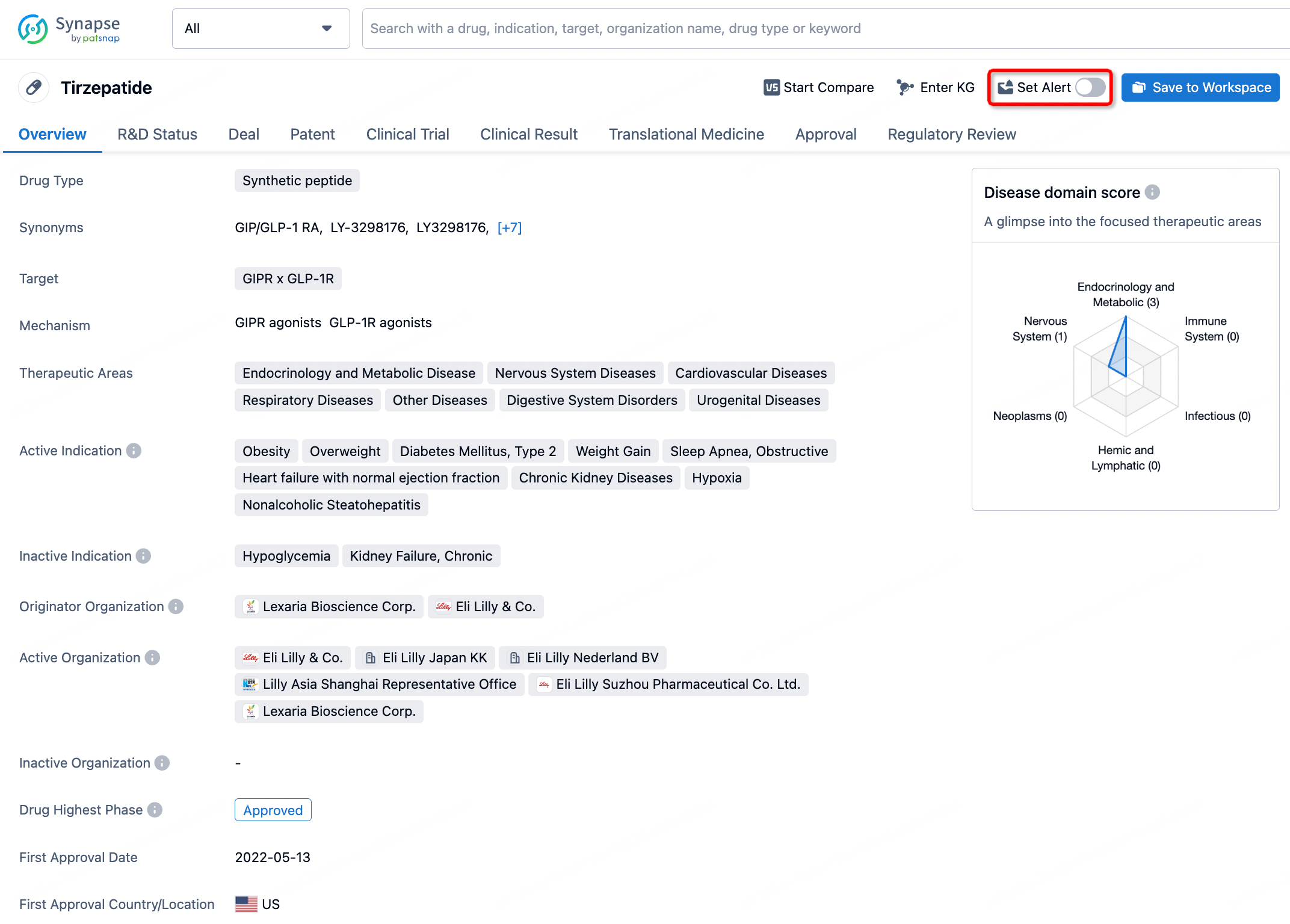
In the Synapse database, you can stay updated on the latest research and development advances of all drugs. This service is accessible anytime and anywhere, with updates available daily or weekly. Use the "Set Alert" function to stay informed. Click on the image below to embark on a brand new journey of drug discovery!


AI Agents Built for Biopharma Breakthroughs
Accelerate discovery. Empower decisions. Transform outcomes.
Get started for free today!
Accelerate Strategic R&D decision making with Synapse, PatSnap’s AI-powered Connected Innovation Intelligence Platform Built for Life Sciences Professionals.
Start your data trial now!
Synapse data is also accessible to external entities via APIs or data packages. Empower better decisions with the latest in pharmaceutical intelligence.