Request Demo
What is the mechanism of Laton?
17 July 2024
Laton is a complex biochemical mechanism that plays a crucial role in various physiological processes. Understanding its mechanism involves delving into the intricate interactions between proteins, enzymes, and various cellular components. This discussion aims to provide an in-depth look at how Laton operates at the molecular level.
Firstly, Laton begins with the activation of a specific receptor on the cell surface. This receptor is usually a protein that can bind to a particular ligand, such as a hormone or neurotransmitter. Once the ligand binds to the receptor, it undergoes a conformational change, which triggers a cascade of intracellular events. This initial step is crucial as it sets the stage for subsequent biochemical reactions.
Upon receptor activation, a series of secondary messengers are produced within the cell. These secondary messengers, such as cyclic AMP (cAMP) or calcium ions, amplify the signal received by the receptor. The production of secondary messengers is often mediated by enzymes like adenylate cyclase or phospholipase C. These enzymes are activated by G-proteins, which are coupled to the receptor. The G-proteins play a pivotal role in transducing the signal from the receptor to the enzymes that generate secondary messengers.
Once the secondary messengers are produced, they interact with various intracellular targets to bring about the desired cellular response. For instance, cAMP can activate protein kinase A (PKA), which then phosphorylates specific proteins to alter their activity. This phosphorylation can lead to changes in gene expression, enzyme activity, or ion channel function. Similarly, elevated levels of calcium ions can activate protein kinase C (PKC) or calmodulin-dependent kinases, which also phosphorylate target proteins to elicit cellular responses.
The specificity and regulation of the Laton mechanism are achieved through several feedback loops and regulatory proteins. For example, phosphodiesterases can degrade cAMP, thereby attenuating the signal. Similarly, calcium ions can be sequestered back into the endoplasmic reticulum by calcium pumps, reducing their cytoplasmic concentration and dampening the signal. These regulatory mechanisms ensure that the Laton pathway is tightly controlled and can be rapidly turned on or off as needed.
Furthermore, the Laton mechanism is not isolated to a single cell type or tissue. It is ubiquitous and can be found in various organs and systems within the body. For example, in the nervous system, Laton mediates neurotransmitter release and synaptic plasticity, which are essential for learning and memory. In the endocrine system, Laton regulates hormone secretion and action, influencing metabolic processes and homeostasis.
Additionally, dysregulation of the Laton mechanism can lead to several pathological conditions. For instance, aberrant signaling through the Laton pathway has been implicated in cancer, where overactive signaling can drive uncontrolled cell proliferation. Similarly, defects in Laton signaling can contribute to neurodegenerative diseases, where impaired signal transduction can lead to neuronal loss and cognitive decline. Therefore, understanding the Laton mechanism not only provides insights into normal physiology but also highlights potential therapeutic targets for various diseases.
In summary, the Laton mechanism is a sophisticated and highly regulated biochemical pathway that plays a vital role in numerous physiological processes. It involves the activation of cell surface receptors, production of secondary messengers, and interaction with intracellular targets to elicit specific cellular responses. The tight regulation and widespread presence of Laton underscore its importance in maintaining cellular and systemic homeostasis. Understanding its intricacies offers valuable insights into both normal biological function and potential therapeutic avenues for disease intervention.
Firstly, Laton begins with the activation of a specific receptor on the cell surface. This receptor is usually a protein that can bind to a particular ligand, such as a hormone or neurotransmitter. Once the ligand binds to the receptor, it undergoes a conformational change, which triggers a cascade of intracellular events. This initial step is crucial as it sets the stage for subsequent biochemical reactions.
Upon receptor activation, a series of secondary messengers are produced within the cell. These secondary messengers, such as cyclic AMP (cAMP) or calcium ions, amplify the signal received by the receptor. The production of secondary messengers is often mediated by enzymes like adenylate cyclase or phospholipase C. These enzymes are activated by G-proteins, which are coupled to the receptor. The G-proteins play a pivotal role in transducing the signal from the receptor to the enzymes that generate secondary messengers.
Once the secondary messengers are produced, they interact with various intracellular targets to bring about the desired cellular response. For instance, cAMP can activate protein kinase A (PKA), which then phosphorylates specific proteins to alter their activity. This phosphorylation can lead to changes in gene expression, enzyme activity, or ion channel function. Similarly, elevated levels of calcium ions can activate protein kinase C (PKC) or calmodulin-dependent kinases, which also phosphorylate target proteins to elicit cellular responses.
The specificity and regulation of the Laton mechanism are achieved through several feedback loops and regulatory proteins. For example, phosphodiesterases can degrade cAMP, thereby attenuating the signal. Similarly, calcium ions can be sequestered back into the endoplasmic reticulum by calcium pumps, reducing their cytoplasmic concentration and dampening the signal. These regulatory mechanisms ensure that the Laton pathway is tightly controlled and can be rapidly turned on or off as needed.
Furthermore, the Laton mechanism is not isolated to a single cell type or tissue. It is ubiquitous and can be found in various organs and systems within the body. For example, in the nervous system, Laton mediates neurotransmitter release and synaptic plasticity, which are essential for learning and memory. In the endocrine system, Laton regulates hormone secretion and action, influencing metabolic processes and homeostasis.
Additionally, dysregulation of the Laton mechanism can lead to several pathological conditions. For instance, aberrant signaling through the Laton pathway has been implicated in cancer, where overactive signaling can drive uncontrolled cell proliferation. Similarly, defects in Laton signaling can contribute to neurodegenerative diseases, where impaired signal transduction can lead to neuronal loss and cognitive decline. Therefore, understanding the Laton mechanism not only provides insights into normal physiology but also highlights potential therapeutic targets for various diseases.
In summary, the Laton mechanism is a sophisticated and highly regulated biochemical pathway that plays a vital role in numerous physiological processes. It involves the activation of cell surface receptors, production of secondary messengers, and interaction with intracellular targets to elicit specific cellular responses. The tight regulation and widespread presence of Laton underscore its importance in maintaining cellular and systemic homeostasis. Understanding its intricacies offers valuable insights into both normal biological function and potential therapeutic avenues for disease intervention.
How to obtain the latest development progress of all drugs?
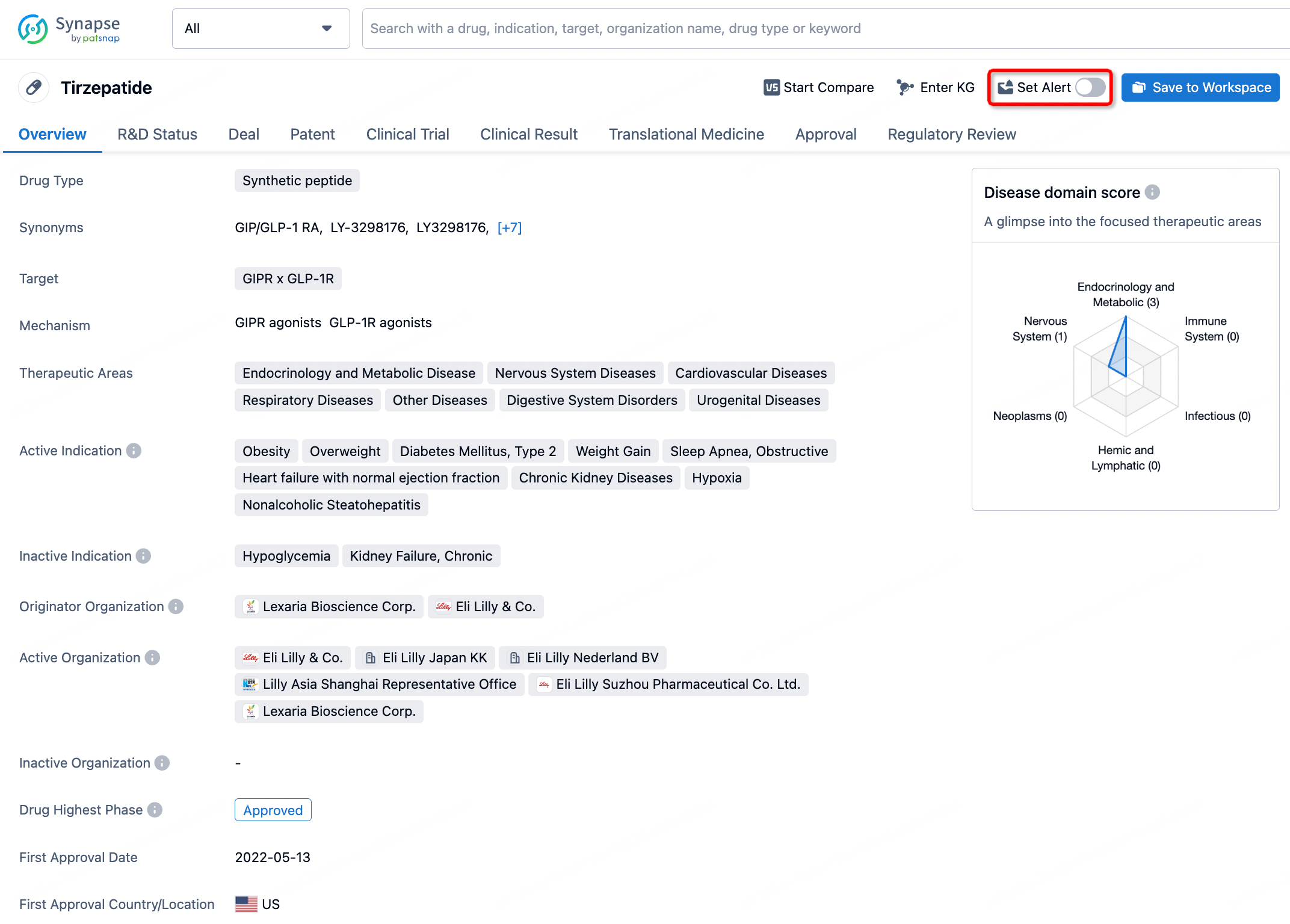
In the Synapse database, you can stay updated on the latest research and development advances of all drugs. This service is accessible anytime and anywhere, with updates available daily or weekly. Use the "Set Alert" function to stay informed. Click on the image below to embark on a brand new journey of drug discovery!


AI Agents Built for Biopharma Breakthroughs
Accelerate discovery. Empower decisions. Transform outcomes.
Get started for free today!
Accelerate Strategic R&D decision making with Synapse, PatSnap’s AI-powered Connected Innovation Intelligence Platform Built for Life Sciences Professionals.
Start your data trial now!
Synapse data is also accessible to external entities via APIs or data packages. Empower better decisions with the latest in pharmaceutical intelligence.