Request Demo
What is the mechanism of Mitolactol?
18 July 2024
Mitolactol, a chemotherapeutic agent known for its antineoplastic properties, has garnered attention for its mechanism of action in combating cancer. This compound, also known by its trade name Dibromodulcitol, belongs to the family of alkylating agents, which are pivotal in the treatment of various malignancies. Understanding the mechanism of Mitolactol involves delving into how it interacts with cellular components to inhibit cancer cell proliferation and induce cytotoxicity.
The primary mechanism of action of Mitolactol revolves around its ability to alkylate DNA. Alkylating agents work by adding alkyl groups to the DNA molecule, which leads to the formation of cross-links between DNA strands. These cross-links interfere with the DNA replication process, ultimately disrupting the cell cycle and preventing cancer cells from dividing and proliferating. The addition of alkyl groups also causes mispairing of nucleotides during DNA synthesis, resulting in mutations that can trigger apoptosis, or programmed cell death.
Mitolactol's effectiveness is attributed to its bifunctional nature, meaning it has two reactive sites that can form cross-links within the DNA. This bifunctionality enhances the stability of the cross-links and increases the likelihood of significant disruptions in DNA function. When Mitolactol interacts with DNA, it predominantly targets the N7 position of guanine bases, which is one of the most nucleophilic sites in the DNA double helix. The resulting DNA adducts and cross-links impede the unwinding of the DNA helix, which is essential for replication and transcription processes.
Moreover, the cytotoxic effects of Mitolactol are not limited to its interaction with DNA. The compound can also interfere with RNA and protein synthesis, further contributing to its antineoplastic activity. By hindering the synthesis of essential biomolecules, Mitolactol imposes additional stress on cancer cells, which are already compromised due to DNA damage. This multifaceted approach enhances the overall cytotoxicity of the drug and increases its efficacy against rapidly dividing tumor cells.
It is worth noting that, like many chemotherapeutic agents, Mitolactol does not exclusively target cancer cells. Normal, healthy cells that are rapidly dividing, such as those in the bone marrow, gastrointestinal tract, and hair follicles, may also be affected by the drug. This off-target activity is responsible for some of the common side effects associated with Mitolactol treatment, including myelosuppression, gastrointestinal disturbances, and alopecia.
To mitigate these side effects and optimize the therapeutic index of Mitolactol, careful dosing and scheduling strategies are employed. Oncologists often tailor the treatment regimen based on the patient's overall health, the type and stage of cancer, and the response to initial treatment cycles. Combination therapy, where Mitolactol is used alongside other chemotherapeutic agents, is another approach to enhance efficacy while potentially reducing adverse effects through synergistic mechanisms.
While Mitolactol has been a valuable tool in the fight against cancer, ongoing research continues to explore ways to improve its therapeutic profile. Advances in drug delivery systems, such as encapsulation in liposomes or nanoparticles, aim to enhance the selective targeting of cancer cells while sparing healthy tissue. Additionally, the development of biomarkers to predict patient response to Mitolactol could lead to more personalized and effective treatment strategies.
In conclusion, Mitolactol's mechanism of action as an alkylating agent underpins its role in cancer therapy. By inducing DNA damage, inhibiting replication, and triggering apoptosis, the drug exerts its antineoplastic effects. Despite its potential side effects, Mitolactol remains an important option in the oncologist's arsenal, with ongoing research striving to maximize its benefits and minimize its drawbacks.
The primary mechanism of action of Mitolactol revolves around its ability to alkylate DNA. Alkylating agents work by adding alkyl groups to the DNA molecule, which leads to the formation of cross-links between DNA strands. These cross-links interfere with the DNA replication process, ultimately disrupting the cell cycle and preventing cancer cells from dividing and proliferating. The addition of alkyl groups also causes mispairing of nucleotides during DNA synthesis, resulting in mutations that can trigger apoptosis, or programmed cell death.
Mitolactol's effectiveness is attributed to its bifunctional nature, meaning it has two reactive sites that can form cross-links within the DNA. This bifunctionality enhances the stability of the cross-links and increases the likelihood of significant disruptions in DNA function. When Mitolactol interacts with DNA, it predominantly targets the N7 position of guanine bases, which is one of the most nucleophilic sites in the DNA double helix. The resulting DNA adducts and cross-links impede the unwinding of the DNA helix, which is essential for replication and transcription processes.
Moreover, the cytotoxic effects of Mitolactol are not limited to its interaction with DNA. The compound can also interfere with RNA and protein synthesis, further contributing to its antineoplastic activity. By hindering the synthesis of essential biomolecules, Mitolactol imposes additional stress on cancer cells, which are already compromised due to DNA damage. This multifaceted approach enhances the overall cytotoxicity of the drug and increases its efficacy against rapidly dividing tumor cells.
It is worth noting that, like many chemotherapeutic agents, Mitolactol does not exclusively target cancer cells. Normal, healthy cells that are rapidly dividing, such as those in the bone marrow, gastrointestinal tract, and hair follicles, may also be affected by the drug. This off-target activity is responsible for some of the common side effects associated with Mitolactol treatment, including myelosuppression, gastrointestinal disturbances, and alopecia.
To mitigate these side effects and optimize the therapeutic index of Mitolactol, careful dosing and scheduling strategies are employed. Oncologists often tailor the treatment regimen based on the patient's overall health, the type and stage of cancer, and the response to initial treatment cycles. Combination therapy, where Mitolactol is used alongside other chemotherapeutic agents, is another approach to enhance efficacy while potentially reducing adverse effects through synergistic mechanisms.
While Mitolactol has been a valuable tool in the fight against cancer, ongoing research continues to explore ways to improve its therapeutic profile. Advances in drug delivery systems, such as encapsulation in liposomes or nanoparticles, aim to enhance the selective targeting of cancer cells while sparing healthy tissue. Additionally, the development of biomarkers to predict patient response to Mitolactol could lead to more personalized and effective treatment strategies.
In conclusion, Mitolactol's mechanism of action as an alkylating agent underpins its role in cancer therapy. By inducing DNA damage, inhibiting replication, and triggering apoptosis, the drug exerts its antineoplastic effects. Despite its potential side effects, Mitolactol remains an important option in the oncologist's arsenal, with ongoing research striving to maximize its benefits and minimize its drawbacks.
How to obtain the latest development progress of all drugs?
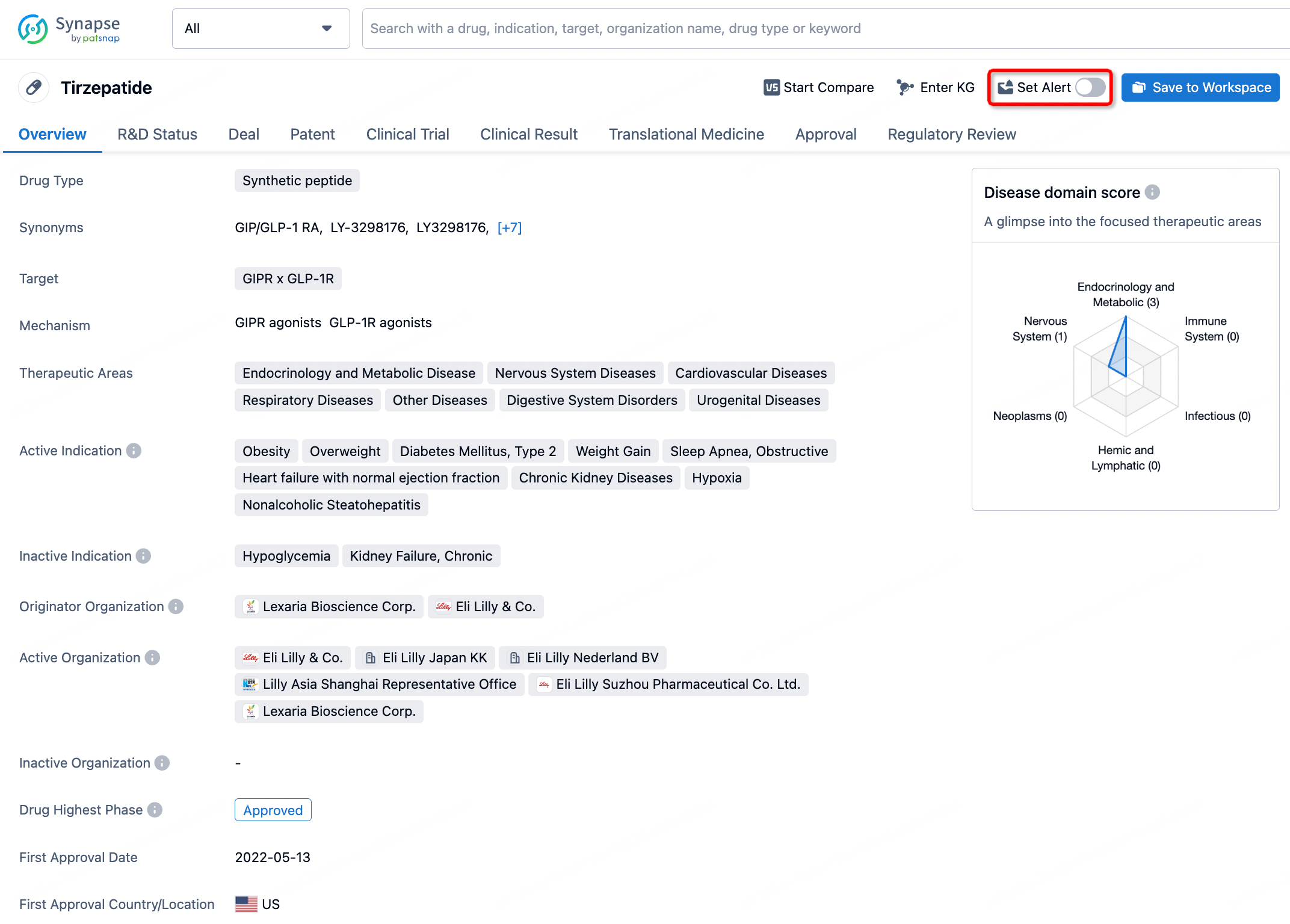
In the Synapse database, you can stay updated on the latest research and development advances of all drugs. This service is accessible anytime and anywhere, with updates available daily or weekly. Use the "Set Alert" function to stay informed. Click on the image below to embark on a brand new journey of drug discovery!

AI Agents Built for Biopharma Breakthroughs
Accelerate discovery. Empower decisions. Transform outcomes.
Get started for free today!
Accelerate Strategic R&D decision making with Synapse, PatSnap’s AI-powered Connected Innovation Intelligence Platform Built for Life Sciences Professionals.
Start your data trial now!
Synapse data is also accessible to external entities via APIs or data packages. Empower better decisions with the latest in pharmaceutical intelligence.