Request Demo
What is the mechanism of Noscapine?
18 July 2024
Noscapine is a naturally occurring alkaloid derived from the opium poppy plant, Papaver somniferum. It has been used for over a century as a cough suppressant in many countries. However, more recent research has illuminated its potential as an anti-cancer agent. Understanding the mechanism of Noscapine's action can provide significant insights into its therapeutic potential and pave the way for new treatments.
Noscapine operates primarily through its interaction with microtubules, which are structural components within cells that play critical roles in cell division, intracellular transport, and maintain cellular structure. Microtubules are dynamic structures composed of α- and β-tubulin subunits that constantly undergo polymerization and depolymerization. This dynamic instability is crucial for many cellular functions, including mitosis.
In cancer cells, Noscapine exerts its effects by binding to tubulin, the building block of microtubules. Unlike traditional microtubule-targeting agents like taxanes and vinca alkaloids, which either stabilize or destabilize microtubules extensively, Noscapine modulates microtubule dynamics without completely arresting their function. This subtler modulation results in the inhibition of mitotic spindle formation, causing cell cycle arrest at the metaphase stage. Consequently, cancer cells are unable to properly divide, leading to apoptosis or programmed cell death.
Additionally, Noscapine's mechanism involves the activation of the apoptotic pathways. Upon disrupting the microtubule dynamics, Noscapine induces stress within the cancer cells, leading to the activation of the intrinsic and extrinsic apoptotic pathways. The intrinsic pathway is triggered by the release of cytochrome c from the mitochondria, which then activates caspases, the enzymes responsible for executing apoptosis. The extrinsic pathway involves death receptors on the cell surface, ultimately leading to caspase activation. Both pathways converge to ensure the effective elimination of the cancer cells.
Moreover, Noscapine has shown anti-angiogenic properties, which means it can inhibit the formation of new blood vessels. This is particularly important in cancer therapy as tumors require a constant blood supply to provide oxygen and nutrients for their growth. By inhibiting angiogenesis, Noscapine helps starve the tumor, thereby hindering its growth and potential metastasis.
One of the advantages of Noscapine is its selective toxicity. Traditional chemotherapy agents often come with severe side effects as they target rapidly dividing cells indiscriminately. Noscapine, however, exhibits a higher degree of selectivity towards cancer cells, sparing normal, healthy cells to a greater extent. This selective action reduces the side effects typically associated with chemotherapy, leading to better patient outcomes and quality of life.
Furthermore, Noscapine's oral bioavailability and relatively low toxicity profile make it an attractive candidate for long-term therapeutic regimens. Its ability to cross the blood-brain barrier also opens the door for treating brain tumors, which are notoriously difficult to manage with conventional therapies.
Recent studies have explored the combination of Noscapine with other chemotherapeutic agents to enhance its efficacy. Synergistic effects have been observed, indicating that Noscapine could be part of combination therapies that maximize cancer cell kill rates while minimizing side effects.
In summary, Noscapine's mechanism of action is multifaceted, involving the modulation of microtubule dynamics, induction of apoptosis, and inhibition of angiogenesis. These properties not only make it a valuable therapeutic agent for treating cancer but also highlight its potential for integration into existing treatment regimens to improve their effectiveness. Continued research into Noscapine could unlock further applications and refine its use in clinical settings, offering hope for more targeted and less toxic cancer therapies in the future.
Noscapine operates primarily through its interaction with microtubules, which are structural components within cells that play critical roles in cell division, intracellular transport, and maintain cellular structure. Microtubules are dynamic structures composed of α- and β-tubulin subunits that constantly undergo polymerization and depolymerization. This dynamic instability is crucial for many cellular functions, including mitosis.
In cancer cells, Noscapine exerts its effects by binding to tubulin, the building block of microtubules. Unlike traditional microtubule-targeting agents like taxanes and vinca alkaloids, which either stabilize or destabilize microtubules extensively, Noscapine modulates microtubule dynamics without completely arresting their function. This subtler modulation results in the inhibition of mitotic spindle formation, causing cell cycle arrest at the metaphase stage. Consequently, cancer cells are unable to properly divide, leading to apoptosis or programmed cell death.
Additionally, Noscapine's mechanism involves the activation of the apoptotic pathways. Upon disrupting the microtubule dynamics, Noscapine induces stress within the cancer cells, leading to the activation of the intrinsic and extrinsic apoptotic pathways. The intrinsic pathway is triggered by the release of cytochrome c from the mitochondria, which then activates caspases, the enzymes responsible for executing apoptosis. The extrinsic pathway involves death receptors on the cell surface, ultimately leading to caspase activation. Both pathways converge to ensure the effective elimination of the cancer cells.
Moreover, Noscapine has shown anti-angiogenic properties, which means it can inhibit the formation of new blood vessels. This is particularly important in cancer therapy as tumors require a constant blood supply to provide oxygen and nutrients for their growth. By inhibiting angiogenesis, Noscapine helps starve the tumor, thereby hindering its growth and potential metastasis.
One of the advantages of Noscapine is its selective toxicity. Traditional chemotherapy agents often come with severe side effects as they target rapidly dividing cells indiscriminately. Noscapine, however, exhibits a higher degree of selectivity towards cancer cells, sparing normal, healthy cells to a greater extent. This selective action reduces the side effects typically associated with chemotherapy, leading to better patient outcomes and quality of life.
Furthermore, Noscapine's oral bioavailability and relatively low toxicity profile make it an attractive candidate for long-term therapeutic regimens. Its ability to cross the blood-brain barrier also opens the door for treating brain tumors, which are notoriously difficult to manage with conventional therapies.
Recent studies have explored the combination of Noscapine with other chemotherapeutic agents to enhance its efficacy. Synergistic effects have been observed, indicating that Noscapine could be part of combination therapies that maximize cancer cell kill rates while minimizing side effects.
In summary, Noscapine's mechanism of action is multifaceted, involving the modulation of microtubule dynamics, induction of apoptosis, and inhibition of angiogenesis. These properties not only make it a valuable therapeutic agent for treating cancer but also highlight its potential for integration into existing treatment regimens to improve their effectiveness. Continued research into Noscapine could unlock further applications and refine its use in clinical settings, offering hope for more targeted and less toxic cancer therapies in the future.
How to obtain the latest development progress of all drugs?
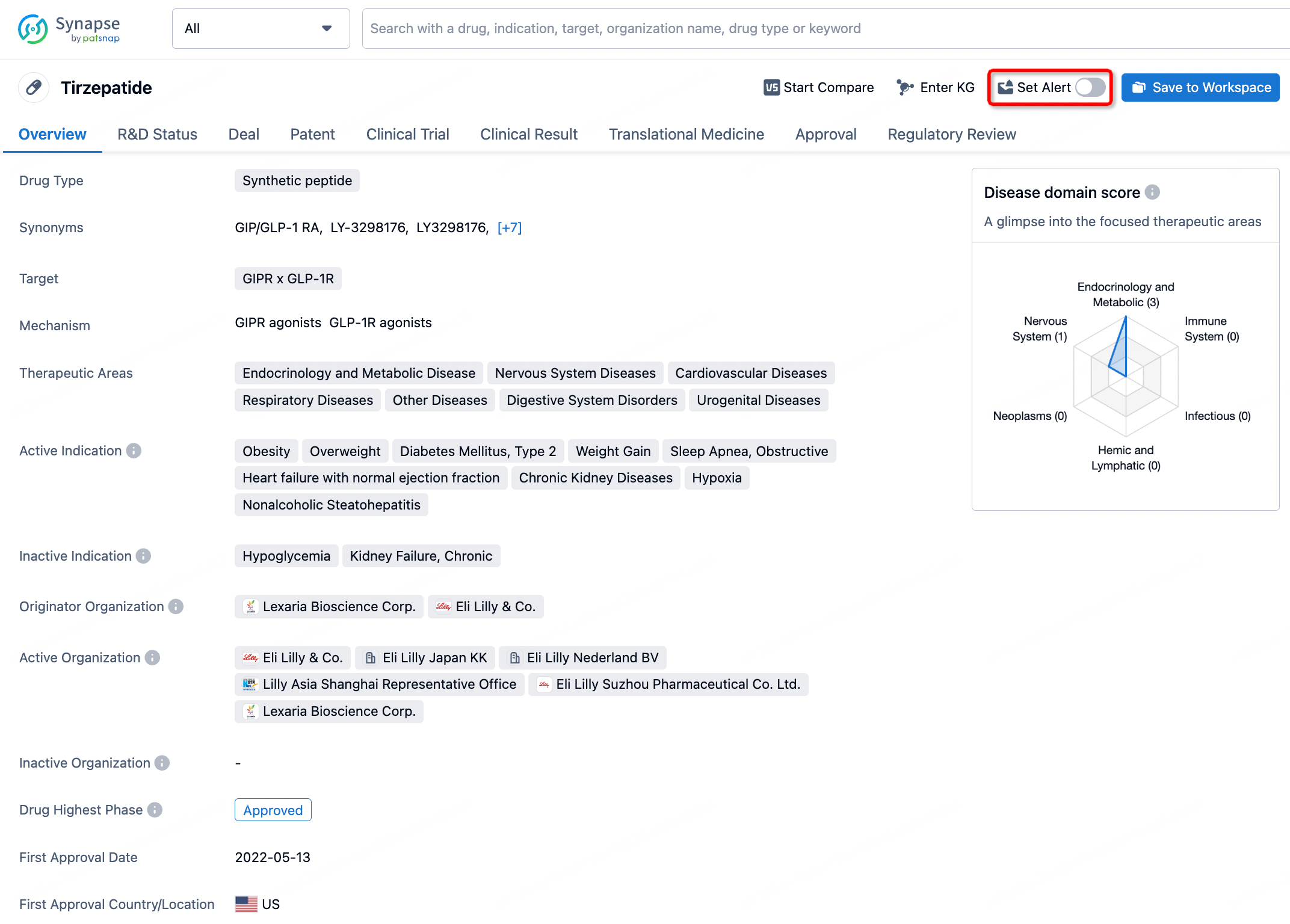
In the Synapse database, you can stay updated on the latest research and development advances of all drugs. This service is accessible anytime and anywhere, with updates available daily or weekly. Use the "Set Alert" function to stay informed. Click on the image below to embark on a brand new journey of drug discovery!

AI Agents Built for Biopharma Breakthroughs
Accelerate discovery. Empower decisions. Transform outcomes.
Get started for free today!
Accelerate Strategic R&D decision making with Synapse, PatSnap’s AI-powered Connected Innovation Intelligence Platform Built for Life Sciences Professionals.
Start your data trial now!
Synapse data is also accessible to external entities via APIs or data packages. Empower better decisions with the latest in pharmaceutical intelligence.